







 Language
How to volunteer in Asia: Requirements and best programs
Volunteer opportunities in Asia are as diverse as the continent itself. Discover the best programs in its most popular countries.

Volunteering in Asia gives you the chance to experience completely different cultures while contributing to local communities that genuinely need support. Every year, thousands of travelers choose Asia for volunteer programs focused on education, conservation, healthcare, and community support. Here, volunteering is not just about helping others; it’s an immersive cultural experience that gives you a closer look at everyday life in communities most tourists never experience.
Planning ahead is important, especially because every destination in Asia works differently. Volunteering in the mountains of Vietnam is completely different from working on the beaches of Bali or in the rural communities of India. Every country has its own rules, climate, and cultural norms. Good preparation helps you adapt faster and contribute more effectively once you arrive.
Asia is often known as the continent of smiles, but it is also home to some of the world’s greatest challenges. Economic inequality, access to education, and the protection of endangered species are just some of the areas where your support can make a real difference in 2026. Choosing Asia means becoming part of a global community committed to building a more balanced and sustainable future.
In this guide, we’ll walk you through the top five destinations in Asia for volunteering. We’ll cover the benefits of volunteering abroad, the legal requirements you need to know, and some of the most trusted programs in each country. You’ll also find useful tips on budgeting and handling your expenses in local currency. By the end, you’ll have a clear idea of how to plan your volunteering experience in Asia.
If you’re ready to make a positive impact in the world, this article is for you. You’ll learn how to choose the volunteer project that best fits your skills and interests, while exploring ancient cultures with respect and understanding.
What are the benefits of volunteering in Asia?
Asia can feel overwhelming at first, but that’s also what makes volunteering here so rewarding. For travelers who want to make a difference, volunteering in this region is a life-changing experience.
In 2026, this destination has become even more attractive, with new visa options and better local infrastructure making travel easier than ever. Still, the advantages go well beyond simplified bureaucracy. Here are some of the biggest reasons travelers choose Asia for volunteering:
- Exposure to different ways of life: Countries like India or Thailand give you the chance to connect with Buddhism, Hinduism, and meditation practices that can completely shift the pace of your everyday life. Learning to slow down is one of the most valuable takeaways you’ll get from this experience.
- Extremely low cost of living: If you work remotely, Asia can be one of the most affordable regions for long-term travel. In places like Vietnam or Cambodia, you can live on a fraction of what you’d spend in Europe or the US, making it much easier to stretch your volunteering stay over several months.
- Real social and environmental impact: Asia is facing urgent challenges, from cleaning up plastic waste on Bali’s beaches to supporting children’s education in rural Cambodia. In the communities where these programs take place, you’ll often see the impact of your efforts almost right away.
- Opportunities to meet remote workers: As a global hub for tech and travel, you’ll meet professionals from all kinds of industries. The people you volunteer alongside could end up becoming future business partners or close friends.
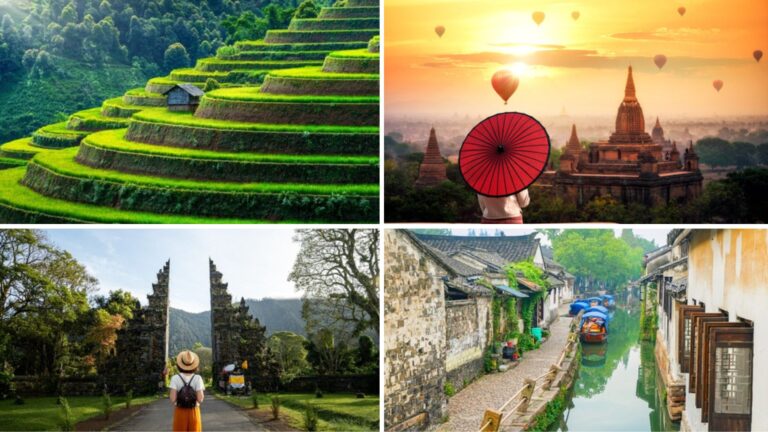
- Delicious cuisine and breathtaking landscapes: Working in the morning and spending your afternoons exploring places like Angkor Wat in Cambodia or the rice terraces in Indonesia is hard to beat. The food is healthy, diverse, and very affordable, making it easy to keep a balanced lifestyle.
- Development of adaptability skills: Moving through cultures that are so different from Western ones will help you build communication and problem-solving skills that are highly valued in today’s job market.
Choosing Asia means choosing diversity. You can go from the peaceful stillness of an elephant sanctuary in Chiang Mai to the energetic, creative buzz of a startup in Ho Chi Minh City. It’s a continent that pushes you out of your comfort zone, but rewards you with memories and connections that last a lifetime.
What are the requirements for volunteering in Asia?
Volunteering abroad means getting your paperwork sorted first. In 2026, many Asian countries have made things easier with e-visas, but entry rules still vary from place to place. The information below is a good starting point, but always double-check official immigration websites before booking your trip.
By the way, if you’re a digital nomad, you’ll be glad to know that several of these destinations now offer special visas that make longer stays much easier. Here are the main visa requirements for some of the most popular volunteering destinations in Asia.
Legal documentation and visas
Depending on the country you choose, the type of visa may vary. Don’t rely solely on a tourist visa if you’re planning a long-term volunteer program:
- Thailand: In 2026, Thailand’s new Destination Visa (DTV) is a great option for digital nomads and volunteers, allowing stays of up to 180 days. For shorter volunteer trips, many countries also offer visa-free stays of up to 60 days.
- Indonesia (Bali): You’re required to arrange a B211 or C6B visa before arrival if you plan to take part in social projects. Don’t try to volunteer on a standard tourist visa (VoA), as the authorities are very strict about this.
- Vietnam and India: Both countries mainly use e-visas. In India, if you’re going through a formal organization, you may need a specific volunteer visa, which usually requires an invitation letter from a local NGO.
- Cambodia: It is one of the easiest countries to visit, as it offers a Visa on Arrival or e-Visa, which you can easily extend once you’re in the country.
Volunteer profile and skills
Organizations in Asia are looking for people who have deep respect for local hierarchies and traditions. Basic requirements include:
- Minimum age: Usually 18 years old. Some programs in India or Thailand accept 17-year-olds with a notarized parental consent form.
- Criminal background check: In 2026, this is a mandatory requirement for any project involving children, schools, or work with vulnerable communities.
- International health insurance: In Asia, this is non-negotiable. Many countries require insurance that covers at least $50,000 in medical expenses, including hospital stays for tropical illnesses and repatriation.
Health and vaccination in 2026
Before you travel, it’s important to visit a tropical medicine clinic. While you won’t always be asked for a vaccination card at the airport (except for yellow fever if you’re coming from a risk area), the standard recommendations are:
- Hepatitis A and B and typhoid fever: Essential due to differences in food and water management in rural areas.
- Tetanus and Japanese encephalitis: Highly recommended if you plan to work on farms, at animal sanctuaries, or in rice paddies.
- Mental and physical health: The tropical climate, with its intense heat and humidity, can be very draining. You need to be in good physical shape to handle long days working under the sun.
Enough funds
Some countries may require proof that you have enough money to support yourself, usually around $1,500 to $2,000 in your bank account. This helps show the authorities that you won’t be looking for paid work locally, which is not allowed under most volunteer visas.
How do you connect to the internet while volunteering in Asia?
Staying connected while volunteering in Asia is key to feeling secure and at ease. Imagine you’re in a rural village in Vietnam or at an elephant sanctuary in northern Thailand. You’ll need maps to get around, translation apps to communicate with locals, and of course a reliable connection if you’re working remotely as a digital nomad.
Even though Asia is highly developed in tech, internet access can vary a lot. Big cities like Bangkok or Ho Chi Minh City usually have fast connections, but in rural areas or remote islands where volunteering often happens, Wi-Fi can be weak or sometimes unavailable. Using public networks can also put your data and work at risk.
Fortunately, at Holafly, we offer a variety of solutions for internet access in Asia:
- eSIM by destination: It’s the most efficient option if you’re only visiting one country for a short stay. You just select the country, choose how many days you’ll need, make the payment, and scan the QR code before boarding your flight or right after you arrive. You’ll have unlimited data for the entire trip.
- eSIM for Asia: This is a good option if you’re planning to volunteer in more than one country, as you’ll have unlimited data for all or most of the continent.
- Holafly monthly plans: Ideal for longer stays or for combining remote work with volunteering. Their global eSIM works in over 160 countries, including many destinations across Asia. That means you can cross borders freely knowing you’ll stay connected wherever you go.
In short, using a Holafly eSIM means you avoid language barriers when trying to buy a local SIM card, and you get unlimited data in most Asian destinations.
If you’re volunteering for a month in Bali and then moving on to Cambodia, you can manage your connection from a single app. This is especially important for remote workers who need to stay available for virtual meetings without relying on whether the local café has good Wi-Fi or not. Plus, having data from the moment you land lets you book safe transport from the airport straight to your project.

What are the best volunteer programs in Asia?
Asia is a huge continent, and choosing where to volunteer can feel overwhelming. To make things easier, we’ve picked out the best program in five of the most popular destinations for digital nomads and international volunteers. These projects stand out for their transparency and the real impact they have on local communities.
Here are the top 5 recommended programs for 2026:
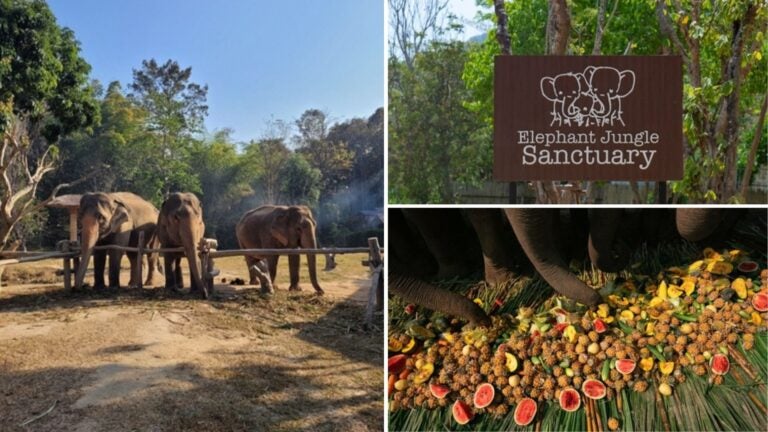
1. Thailand: Elephant Nature Park (Chiang Mai)
It is the most ethical and well-known elephant sanctuary in the country. It is dedicated to rescuing animals that have been abused in the tourism industry or subjected to forced labor.
As a volunteer, you’ll help prepare food (tons of fruit and vegetables), clean the shelters, maintain the sanctuary, and observe elephant behavior in a free-roaming environment.
To take part in this kind of program, you need to be over 18, in good physical shape (there’s a lot of walking in the sun), and not have severe allergies to dust or animals.
The program lasts at least one week, and the fee (around $450 per week) includes accommodation at the sanctuary, three daily meals (vegan/vegetarian), and transfers from Chiang Mai.
Want to learn about other volunteer programs in Thailand? Here are some other options!
2. Vietnam: Friends for Asia (Hanoi and rural areas)
Vietnam is another top destination for volunteering in Asia. Friends for Asia runs educational programs that immerse you in local culture while helping give disadvantaged young people the skills and opportunities they need for the future.
The program mainly focuses on teaching English in rural schools and community centers. They also run a project in children’s hospitals, where volunteers support kids going through long-term treatments.
To join as a volunteer, you’ll need a good level of English (it doesn’t have to be your native language), a clean criminal background check, and strong cultural adaptability.
The program runs for at least two weeks and includes volunteer housing, breakfast, an initial cultural orientation, and 24/7 local support. The cost is around $700 for the first two weeks.
3. Indonesia (Bali): Yayasan Akasha Asia (Ubud)
If you’re a digital nomad, this project on the outskirts of Ubud is a great fit. It blends art, permaculture, and environmental education within a creative, eco-conscious community.
As a volunteer, you’ll take part in art workshops for local children and support projects focused on recycling, organic farming, and teaching digital skills or languages.
What you need is an open mind, a genuine interest in sustainability, and respect for Balinese religious ceremonies that are woven into daily life. This type of volunteering also requires at least a four-week commitment.
The program requires a monthly contribution of around $350, which helps cover shared villa accommodation, some communal meals, access to coworking spaces, and local coordination support.
Looking for other options? Here are some more ideas for volunteering in Indonesia.
4. Cambodia: Globalteer (Siem Reap)
Near the Angkor Wat temples, this program focuses on sustainable community development, with a strong emphasis on improving access to clean water and quality education.
The program involves a range of activities, from installing water filters in rural villages to supporting educational centers where children receive extra classes, sports, and arts activities.
To take part, you must be over 18 and fully committed to the organization’s child protection policies. The program runs from one week to three months and includes accommodation in the Volunteer House, daily transport to the project site, and all necessary work materials.
The cost? Approximately $500 for the first two weeks.
5. India: Volunteering With India (Jaipur)
India is one of the most exciting volunteering destinations in Asia. This project, based in the vibrant “Pink City” of Jaipur, offers one of the most authentic and colorful experiences in the country, working directly with vulnerable communities.
Your role will involve supporting orphanages, helping empower women through sewing or language workshops, and taking part in the well-known “Street Children” project, which provides basic education and healthcare.
You’ll need an intermediate level of English, the emotional maturity to work in very challenging environments, and a strong respect for local dress codes. The program can last anywhere from one to twelve weeks.
It includes accommodation with local Indian families for a full cultural immersion, traditional meals, and airport pickup in Jaipur. The cost starts at around $400 for the first two weeks.
Other volunteer destinations in Asia
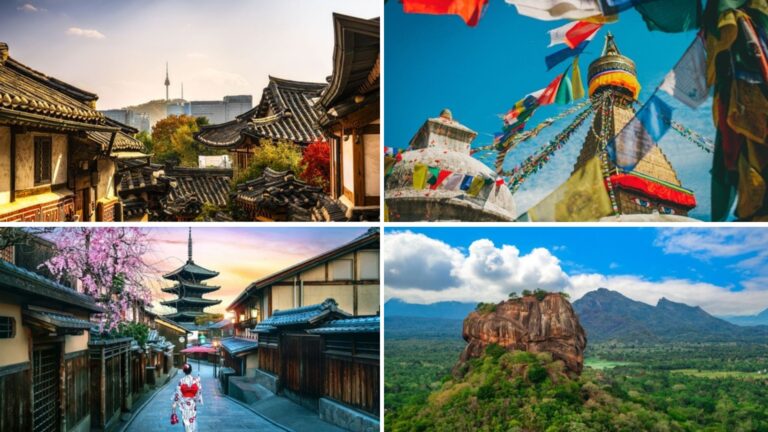
We’ve only covered five countries on the vast Asian continent. If you’re looking to broaden your horizons, here are some other options:
- Volunteering in South Korea.
- Volunteering in Nepal.
- Volunteering in Japan.
- Volunteering in Sri Lanka.
What are the main types of volunteer projects in Asia?
Asia offers something for almost every type of traveler, from digital nomads sharing their skills to people who prefer hands-on work with nature or animals. Because it’s such a large and diverse continent, volunteer projects are often closely tied to the local environment.
These are the main types of projects you’ll find in the region:
Wildlife conservation
This is one of the most popular types of volunteering in Southeast Asia. The region’s biodiversity is under threat, and sanctuaries play a crucial role in protecting endangered species and supporting rehabilitation programs.
- Elephant sanctuaries: Especially in Thailand and Laos. You’ll focus on feeding the animals, caring for their environment, and educating visitors about responsible tourism.
- Sea turtle conservation: Very common on the beaches of Bali and Sri Lanka. The work includes monitoring nesting sites at night, relocating eggs to protected hatcheries, and helping release hatchlings into the sea.
- Primate rescue: In countries such as Vietnam or Indonesia, you’ll work with centers that rehabilitate gibbons and orangutans that have fallen victim to the illegal trade.
Education and community empowerment
In Asia, education is a key way to break the cycle of poverty. Volunteers help create opportunities that allow young people to build a better future.
- Language instruction: English is still the most in-demand skill. Teaching in rural schools in Cambodia or Vietnam helps open doors for local students in tourism and trade.
- Digital skills: If you work remotely, you can contribute by teaching digital literacy, basic programming, or design skills. This is highly valued in fast-growing cities.
- Support for women: In India, there are projects that offer sewing workshops, small business training, and legal rights education to help strengthen women’s economic independence.
Agriculture and sustainable development
Many Asian countries are still mostly agricultural. Helping out in the countryside is a great way to experience real rural life and learn traditional farming methods that have been used for generations.
- Permaculture and organic gardens: Projects in Bali or northern Thailand where you’ll learn how to grow food sustainably while respecting the local ecosystem.
- Eco-friendly construction: You’ll help build schools or homes using local materials such as bamboo, clay, or recycled bricks.
- Clean water systems: Especially in Cambodia, where you will help install wells and filters in villages that lack access to clean drinking water.
Child health and care
This type of volunteer work requires a high degree of emotional maturity and, in some cases, prior knowledge.
- Volunteering at orphanages or daycare centers: You’ll provide care, playtime, and emotional support to vulnerable children in India or Vietnam.
- Health brigades: If you have medical or nursing training, you can join programs that provide basic healthcare to mountainous areas or remote islands.
Choosing a volunteer program in Asia means thinking about how you can really contribute. It’s not only about traveling, but also about adapting to the local culture and way of life. Whether you volunteer in a rural area or a big city, the experience will involve a strong cultural exchange.
How much does it cost to volunteer in Asia?
Asia is known for being a budget-friendly destination for travelers and digital nomads, but volunteering still involves some expenses that vary depending on the country and the program. Living costs in places like India or Vietnam are usually very low, while destinations such as Bali and Thailand tend to be more expensive because of their popularity with tourists.
Here is a breakdown of what you can expect to spend each month in 2026, based on the five selected destinations.
What you save by volunteering
One of the biggest ways to save money while volunteering in Asia is on accommodation. In places like Ubud in Bali or Chiang Mai in Thailand, a decent rental for a digital nomad can easily cost between $500 and $800.
When you contribute to a project, the cost is usually reduced to a minimal maintenance fee or is completely free in exchange for your work.
Breakdown of costs by country (monthly average)
To help you manage your finances, here is a table showing estimated expenses, including food, local transportation, and leisure:
| Country | Cost of Living (Monthly) | Program Tuition (Average) | Estimated Total |
| India | $250–350 | $200–400 | $450–750 |
| Vietnam | $300–450 | $300–500 | $600–950 |
| Cambodia | $300–400 | $250–450 | $550–850 |
| Thailand | $450–600 | $400–600 | $850–1,200 |
| Indonesia | $400–550 | $300–500 | $700–1,050 |
Other major expenses to consider
- International flights: This is the biggest expense. Depending on where you’re coming from, a round-trip flight to Asia in 2026 could cost between $800 and $1,400.
- Travel insurance: As we mentioned earlier, it is mandatory. Expect to pay around $60 to $90 per month for comprehensive coverage.
- Visas: Prices vary. A visa for India or Vietnam costs around $25–50, while Thailand’s DTV visa may be more expensive but is valid for much longer.
- Connectivity: Holafly’s plans for Asia are a small investment (approx. $40–60) that saves you a lot of money on roaming charges.
“Backpacker” vs. “Digital Nomad” Budget
If you keep a simple lifestyle and eat mostly at local street food spots, you can spend very little while living in Asia. On the other hand, if you work remotely and need coworking spaces or comfortable cafés with air conditioning, you should plan to spend about $150 extra per month.
If you manage your money well, Asia is very affordable. What you spend is small compared to the cultural experience and the satisfaction of helping in meaningful community projects.
Asia can seem distant and complicated at first. But with the right information, it quickly becomes one of the most rewarding regions for volunteering. Now that you know the basics, it’s time to choose your destination and program and get started.
Frequently asked questions about volunteering in Asia
Statistically, Asia is one of the safest regions in the world for travelers. Countries like Thailand, Vietnam, and Indonesia have very low crime rates against tourists. As a volunteer, you’ll usually be based with a community or NGO that provides ongoing support. That said, it’s still important to respect local dress codes and use common sense in big cities.
It’s not strictly required, but it definitely helps. In animal and environmental conservation projects, English is usually the main working language. In social projects, learning a few basic phrases in Thai, Vietnamese, or Hindi can really help you connect with people on a more personal level. Many organizations also include short language lessons as part of their onboarding.
Absolutely. Asia is one of the main hubs for digital nomads. In 2026, many volunteers use their free time to keep working on personal or professional projects. To do that reliably, having a Holafly eSIM with unlimited data lets you stay connected and work from anywhere.
India is a country of strong contrasts and can feel overwhelming at first. The key is to go with an open mind and no judgments. The noise, smells, and pace of life are very different, but people’s gratitude is huge. Volunteer organizations usually offer an orientation week to help you gradually adjust before starting your work.
Some programs last just a week, but 4 to 8 weeks is usually best. It gives you time to settle in, understand the project, and connect with the community. The longer you stay, the deeper the experience and the lower the weekly cost.
Plans that may interest you


Hi! I'm a Spanish-English copywriter working with Holafly, helping bring travel content to life for curious travelers. As a digital nomad with a passion for exploring, I'm always adding new spots to my bucket list. If you love to travel like me, stick around because you're in the right place to find inspiration for your next trip! ✈️🌍
