







 Language
How to volunteer in Indonesia: Requirements and best programs
A guide to everything you need to know about volunteer work in Indonesia: from general requirements to the best programs and costs.

Volunteering in Indonesia lets you experience the country beyond Bali resorts and bucket-list temples. Across its thousands of islands, stunning landscapes sit alongside environmental issues and communities that genuinely need support. For digital nomads and long-term travelers, volunteering offers a more personal way to experience Indonesia while supporting local communities.
Volunteering in Indonesia means getting involved in local community life. You could help protect coral reefs in the Gili Islands, support children’s education in small villages in Flores, or assist at orangutan rescue centers in Borneo. It’s a chance to experience the local culture, learn the meaning of “Gotong Royong” (working together as a community), and share your own skills along the way.
In this guide, we’ll cover everything you need to know before starting your volunteer experience in Indonesia. You’ll learn why the country is such a popular choice, what visa and health requirements you should be aware of for 2026, and how to stay connected so your remote work runs smoothly. We’ll also break down the most trusted volunteer programs and the typical costs involved, so you can plan your budget with confidence. If you want your trip to feel more rewarding than a typical backpacking route, this guide will help you get started.
Why volunteer in Indonesia?
Volunteering in Indonesia is more than just a way to help local communities; it’s an experience that can change the way you see the world. For digital nomads and travelers who want something more meaningful than the usual tourist route, Indonesia offers the perfect mix of purpose, cultural connection, and a creative atmosphere that inspires new ideas and perspectives.
Here are the main benefits of joining a project in the archipelago:
- Authentic cultural immersion: Unlike a typical holiday, volunteering gives you the chance to experience Indonesia from a much deeper perspective. You become part of local communities, get to know their traditions firsthand, and gain a better understanding of daily life outside Indonesia’s main tourist hubs.
- Direct environmental impact: Indonesia is one of the most biodiverse places on Earth. You can take part in protecting critical ecosystems like Borneo’s rainforests or coral reefs, and actually see the real, tangible impact of your work.
- Skill development in complex environments: Working on social projects in areas with limited resources helps you develop stronger problem-solving skills and adaptability. These are highly valued qualities in today’s professional world.
- Savings on living expenses: Many volunteer programs provide accommodation and sometimes even cover meals, which helps keep your travel costs low. That way, your budget lasts longer while you’re doing something with real purpose.
- Networking: You’ll meet other volunteers, professionals, and local leaders who share similar interests. Many volunteers stay in touch long after the trip ends.
What are the requirements for volunteering in Indonesia?
As of 2026, Indonesia’s entry requirements haven’t changed much, but there are still a few important things volunteers need to prepare before traveling. A little preparation before your trip can save you a lot of stress once you arrive.
Here’s what you need to consider:
- Valid passport: Your passport must be valid for at least six months from the date of your entry into the country.
- Volunteer visa: If you’re only staying for a short period (under 30 or 60 days), many travelers use the Visa on Arrival (VoA). However, for formal volunteering or longer stays, you’ll likely need a B211A visitor visa, which requires a local sponsor. Visa rules can change, so check with the Indonesian embassy or official immigration website before booking your trip.
- Minimum age: Most international organizations operating in the archipelago require volunteers to be at least 18 years old. Some do accept 16- or 17-year-olds, as long as they have parental consent.
- Health and travel insurance: Having health insurance that covers hospital care and repatriation is essential. Even though the cost of living is low, private healthcare in Indonesia can be expensive for foreigners.
- Criminal background check: Many projects, especially those working with children or vulnerable communities, will require a clean criminal background check.
- Language: You don’t need to speak Indonesian (Bahasa Indonesia) to take part, but making an effort to learn a few everyday phrases goes a long way. In rural areas or when working closely with local communities, even basic language skills can really enrich your experience.
- Minimum commitment: Most structured programs usually ask for at least a two-week commitment so volunteers have enough time to properly contribute.
- Adaptability: Things in Indonesia often move at a different pace than what you might be used to. Patience and the ability to work well with others are essential.
How to connect to the internet while volunteering in Indonesia
While many volunteer programs in cities like Bali or Jakarta offer WiFi, the connection can be unstable and isn’t always secure enough for handling sensitive work.
In this case, having your own internet access while traveling between islands makes things much easier. You can use maps, translation apps, and stay in touch with family and friends anytime.
To avoid the hassle of searching for physical SIM cards every time you travel or facing high roaming charges, the best option is to use an eSIM.
If you’re only volunteering for a couple of weeks and staying in Indonesia the whole time, Holafly’s eSIM for Indonesia is a great option, since it gives you unlimited data for the duration of your trip. That way, you don’t have to worry about unexpected charges and can browse freely without limits.
On the other hand, if you’re a frequent traveler and plan to continue your route through Southeast Asia after finishing your project, Holafly’s monthly plans are a much smarter option.
- Global coverage: You’ll have internet access in over 160 countries, which is perfect if you plan to cross borders into neighboring countries like Thailand or Malaysia.
- Monthly subscription: This works with an automatic monthly payment, so you don’t have to worry about manually renewing your subscription while you’re in remote areas.
- 24/7 support: If you encounter any technical issues, Holafly’s support team is available around the clock to assist you.

What are the best volunteer programs in Indonesia?
Volunteering in Indonesia means stepping into a mix of incredible landscapes, from Borneo’s rainforests to the beaches of Nusa Penida. Below, you’ll find a selection of 2026 programs known for their strong impact and solid organization.
1. Sea Turtle Conservation in Nusa Penida – The Green Lion
This program is one of the most highly rated for those who love marine life and want to protect endangered species in a tropical island environment.
What will you do? You’ll help protect sea turtles by cleaning beaches, identifying species, collecting eggs, and monitoring the release of hatchlings into the ocean. You may also help maintain tanks and help with local conservation education projects.
- Specific requirements: You must be at least 18 years old (or 16 with parental permission), have no criminal record, and be fluent in English. You’ll also need to arrange the appropriate visa (B211 or C6B) before arriving.
- Duration: 2 to 12 weeks.
- What’s included: Accommodation in a volunteer host’s home with a pool, three meals a day, cultural orientation, and ongoing support at your destination.
- Price: Starting at $450 for two weeks.
2. Teaching English in Ubud – International Volunteer HQ (IVHQ)
Ubud is the cultural heart of Bali, and this program aims to empower local communities through language education.
Your role will be to teach English in schools and community centers for both children and adults. You’ll likely spend part of your mornings preparing lessons, and your afternoons teaching in a fun, interactive way using games and songs.
- Specific requirements: Minimum age of 16 (families welcome), fluent English, and a clean criminal record.
- Duration: 1 to 12 weeks.
- What’s included: Full board, three meals a day (on weekdays), airport transfer, and an orientation session.
- Estimated price: Starting at $395 for the first week.
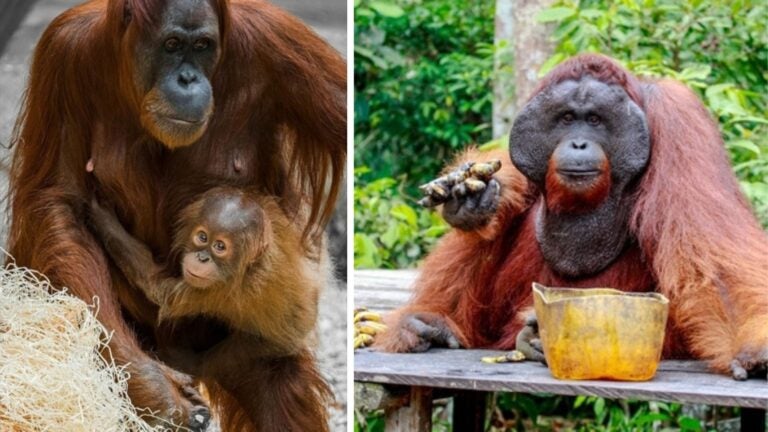
3. Orangutan Conservation in Borneo – Salvaje Travel
This program offers one of the most immersive experiences and is vital to the survival of great apes in the rainforests of Kalimantan.
This volunteer project in Indonesia is perfect for anyone who wants to fully immerse themselves in one of Indonesia’s most biodiverse regions. Your work will involve joining reforestation efforts to restore habitats damaged by fires and the palm oil industry.
Your tasks will include monitoring wildlife from traditional boats, maintaining native tree nurseries, and helping out at field stations that rehabilitate orangutans before releasing them back into the wild.
- Specific requirements: You must be at least 18 years old, in good physical condition for hiking in hot, humid tropical weather, and have medical insurance that includes rescue coverage in remote areas. A strong respect for wildlife is essential, as the program keeps human interaction to a minimum to ensure successful reintroduction into the wild.
- Duration: Scheduled expeditions lasting 10 to 15 days, with the option to extend your stay for research projects.
- What’s included: Accommodation is provided in traditional houseboats (klotoks) or base camps, with full meals based on local cuisine. Internal transfers from the regional airport are included, along with support from experienced guides specializing in biology and conservation.
- Estimated price: Please inquire for pricing based on the expedition (starting at $550 for a 10-day program).
Types of volunteer projects in Indonesia
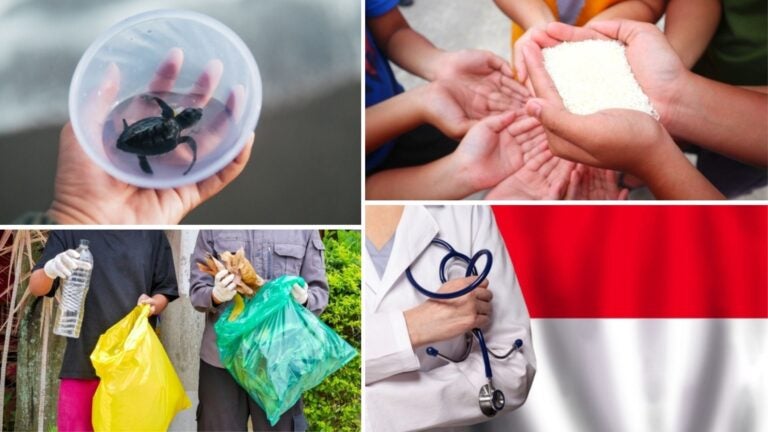
Like other places with big social and geographic contrasts, Indonesia has many different volunteer projects focused on its most urgent needs. As a volunteer, you can pick the area where your skills will have the most real and direct impact.
Here are the most common types of projects you’ll find in the archipelago:
School education and training
It’s one of the most common volunteer projects, especially on less developed islands like Flores or Lombok. You’ll find it both in cities and in small villages where rural schools have very limited resources.
These projects involve supporting basic school subjects, teaching English to help improve young people’s future job opportunities, and running fun, interactive workshops.
As a volunteer, your presence helps ease the workload of local teachers, who often have to manage several grade levels at once. In tourist areas, English is also a key skill that helps young people access better job opportunities and avoid being left out of the job market.
Environmental care and marine conservation
Given that it is an archipelago with remarkable biodiversity, protecting the environment is a top priority.
You may help clean up plastic waste along the coast, take part in marine wildlife surveys, and assist with restoring coral reefs damaged by overfishing or climate change.
Depending on the island and season, you may also find projects focused on well-known species like Komodo dragons, orangutans, or Sumatran elephants.
Women’s empowerment and gender
Although Indonesia has made progress in the area of women’s rights, challenges remain regarding economic independence and the gender gap in the workforce in rural areas.
Many volunteers support these efforts by providing professional training or mentoring for small businesses run by women. The goal is to build confidence and develop leadership skills so women can take a more active role in decision-making within their communities.
Community health and prevention
In many provinces far from the capital, access to basic health services is limited.
If you have a background in medicine, nursing, or nutrition, you can join awareness campaigns on hygiene, healthy eating, and sexual health. As a volunteer, you may also help organize local clinics and assist with recording health data in vulnerable communities.
Animal care and protection (pets)
In major cities and tourist destinations, pet abandonment is becoming a growing issue. That’s why many animal shelter projects rely on volunteers to help with feeding, socializing, and caring for animals, as well as keeping rescue centers clean and running smoothly.
You will also help promote adoption events and educate the public about responsible pet ownership to reduce the stray animal population.
How much does it cost to volunteer in Indonesia?
When planning your budget for Indonesia, you should separate program fees from daily costs. The country is cheap compared to Western standards, but volunteering usually involves an upfront fee to cover your stay and support services.
Here’s a realistic breakdown of what you can expect to spend in 2026:
Mandatory program expenses
Most NGOs charge a fee to cover basic logistics. On average, these are the amounts:
- Program fee: Between $350 and $550 for the first two weeks. This amount typically covers your accommodation, orientation, and most of your meals.
- International flight: Depending on your departure location and the season, a ticket to Denpasar (Bali) or Jakarta can cost around $900–1,400.
- Travel insurance: This is a mandatory requirement that costs approximately $50–100 per month, depending on the coverage.
Daily living expenses and extras
If you decide to explore on your own during your days off, here are some reference prices:
- Additional meals: A meal at a warung (local diner) costs about $2–4, while dinner at a Western-style restaurant can run as high as $10–15.
- Local transportation: Renting a scooter for a day costs around $5–8. If you prefer to use apps like Grab or Gojek, short motorcycle rides cost less than $2.
- Leisure and excursions: Admission to temples or surf lessons usually costs between $5 and $20.
What you save by volunteering
It’s important to note that volunteering allows you to cut out expenses you would otherwise incur as a typical tourist:
- Accommodation: You save on the cost of hotels or hostels, which can be expensive in tourist areas.
- Meals: Since the program covers two or three meals a day, your food expenses are significantly reduced.
- Local support: You have access to 24/7 assistance, which helps you avoid unexpected expenses.
Frequently asked questions about volunteering in Indonesia
It’s not required in most programs, since English is commonly used. Learning a few simple phrases in Bahasa Indonesia is also very appreciated and helps you fit in better with the local community.
Yes, it’s generally a very safe destination as long as you follow basic safety advice and go with a trusted organization. Most projects provide a secure environment and ongoing support. For remote work, the country also has a growing digital infrastructure, especially in hubs like Bali, which makes it a good choice if you need to stay connected at all times.
It depends on the area, but the dry season (April to October) is usually best for outdoor work like marine conservation or reforestation. If you’re going to southern islands like Bali or Lombok, try to avoid December and January because heavy rain can make travel by scooter or boat harder.
Most programs require you to be at least 18 years old when you start. However, some organizations accept 16- or 17-year-olds with written permission from a parent or legal guardian. There are also options for families who want to take part in volunteer work together with their children.
If you’re staying under 90 days and your country is visa-exempt, you might be able to enter as a tourist in some situations. But for official volunteering, you’ll need the correct permit. Always check with the Indonesian embassy before you travel, since requirements can change and some programs require you to have a local sponsor arranged in advance.
Plans that may interest you


Hi! I'm a Spanish-English copywriter working with Holafly, helping bring travel content to life for curious travelers. As a digital nomad with a passion for exploring, I'm always adding new spots to my bucket list. If you love to travel like me, stick around because you're in the right place to find inspiration for your next trip! ✈️🌍
