Language
The 7 underrated beach destinations in Europe that locals keep to themselves
Skip the overcrowded tourist hotspots and discover 7 underrated European beach destinations, from quiet Greek islands to hidden Spanish coastlines.

Places like Santorini and the Amalfi Coast may look like bliss on Instagram, but the reality is often very different.
Head there in July or August, and you’ll find overcrowded beaches, overpriced restaurants, impossible parking, and streets packed shoulder-to-shoulder with tourists.
Maybe you’ve experienced that disappointment yourself, or perhaps you’ve heard horror stories and want to avoid making that mistake.
Well, you can. Beyond these tourist traps, Europe still has plenty of beach destinations that feel genuinely peaceful.
In this article, we’re sharing 7 beautiful places where locals escape the crowds each summer. Read on to learn where they are, why they remain under the radar, and what to do there.
Why many European beaches are more crowded than ever
For years, budget airlines, social media, and booking platforms have been funneling millions of travelers toward the same handful of European summer destinations.
But if you go to the places most heavily promoted, you’ll end up where everyone else is.
Savvy travelvers avoid this with a little research, and you can too. The following seven places exist precisely because they have not been marketed the same way as Ibiza, Santorini, or Positano.
The 7 European beach destinations worth discovering this summer
These destinations are not top secret; international tourists simply skip them in favor of the better-known, more promoted destinations. But locals love them, often returning year after year to enjoy the peace and authenticity.
| Destination | Country | Best for | Crowds vs. Mainstream |
|---|---|---|---|
| Luštica | Montenegro | History + swimming | Less touristy than Kotor Bay |
| Comporta | Portugal | Dunes, rice fields, stillness | No high-rises, almost no tourists |
| Gozo | Malta | Diving, local food | Often overlooked next to Malta |
| Vis Island | Croatia | Unspoiled coves | Car-free, limited ferries |
| Amorgos | Greece | Beaches + villages | Much quieter than Santorini or Mykonos |
| Gargano Peninsula | Italy | Cliffs, blue water | Italy’s Adriatic secret |
| Costa da Morte | Spain | Dramatic coastal scenery, wild beaches | Budget-friendly, local, rugged |
1. Luštica Peninsula, Montenegro
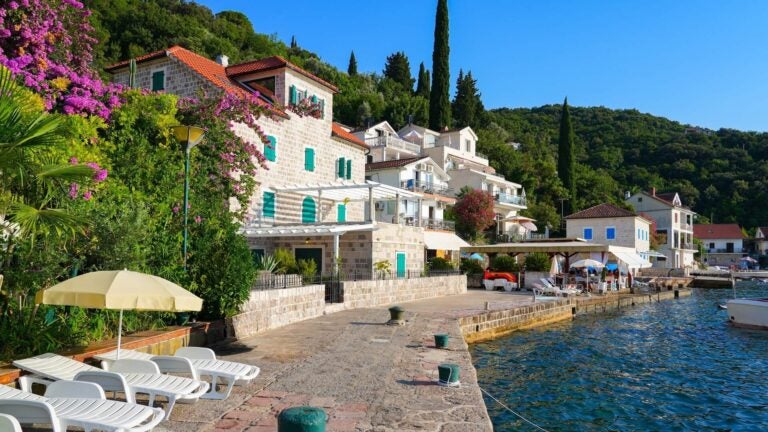
Waterfront promenade of Rose, a fishing village at the tip of the Luštica Peninsula on the eastern shore of the mouth of the bay of Kotor along the coast of the Adriatic Sea in Montenegro
Luštica Peninsula is close to the famous Kotor Bay but has a much quieter, less developed vibe. While Kotor can get a crowded cruise-ship atmosphere in the summer, Luštica is harder to reach without a car, which keeps international tourism away.
What to do there: Swim in the clear Adriatic water, explore the hidden coves, and wander through the stone villages and olive groves.
Best time to visit: September, when the sea is at its warmest.
2. Comporta, Portugal
Comporta feels relatively empty compared to the Algarve. It’s rural and untouched, with no large resorts or crowded promenades. Instead, you’ll find huge empty beaches and gorgeous rice fields and pine forests, ideal for nature lovers and outdoor enthusiasts.
What to do there: Hiking and sunset walks along the beach.
Best time to visit: Anytime except August, when domestic tourism from Lisbon peaks.
3. Gozo, Malta
Gozo, next to the mainland Malta, is not completely unknown, but most tourists who visit Malta never cross the 25-minute ferry to see it. Compared to the mainland, the pace is slower, the coastline is wilder, and the atmosphere is much more local.
What to do there: Explore the sleepy villages, dine at the local seafood restaurants, and dive or snorkel at Dwejra Bay.
Best time to visit: Anytime from May to October.
4. Vis Island, Croatia
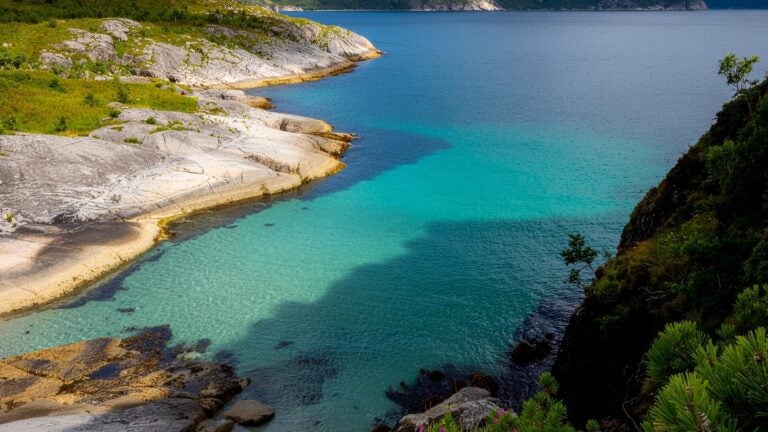
Stiniva Bay, located on the southern coast of Vis Island in Croatia, is a hidden cove famous for its dramatic cliffs and crystal-clear turquoise waters.
Croatia is one of the cheapest countries in Europe, but certain areas, like Hvar and Dubrovnik, have become heavily internationalized. Vis Island is an exception; it remains genuinely quiet because it’s not easy to reach, with no airport and limited ferry service.
What to do there: Hire a small boat from Vis Town to explore the coves, and eat at the seafood restaurants in Komiža fishing village.
Best time to visit: July or August for the most frequent ferry schedule.
5. Amorgos, Greece
Amorgos is only reachable by ferry, naturally filtering out mass international tourism. Unlike Santorini or Mykonos, you won’t find large-scale development here. Instead, there are traditional whitewashed villages, dramatic mountain landscapes, and incredibly clear water.
What to do there: Hike up to the Monastery of Hozoviotissa and swim at Agia Anna Beach.
Best time to visit: Anytime from June to September.
6. Gargano Peninsula, Italy
Scenic view of Vieste, a charming seaside town on Italy’s Gargano Peninsula, with sandy beach and whitewashed houses, Apulia, Italy.
The Gargano Peninsula is a quieter alternative to the touristy Amalfi Coast. It’s relatively unknown to international travelers but popular among Italians. It has a scenic, rocky coastline, white sandy beaches, and a laid-back holiday vibe.
What to do there: Take the boat to the Tremiti Islands for a day. These three tiny islands have some of the clearest water in the Adriatic.
Best time to visit: June or September. Avoid August when it gets fairly crowded with domestic tourists.
7. Costa da Morte, Spain
Costa da Morte in northwest Spain is popular with locals but rarely visited by international tourists. It makes a far quieter alternative to the Mediterranean coastal towns, with dramatic scenery and wild beaches rather than bustling beach clubs.
What to do there: Hike a section of the famous Camino de Santiago and eat seafood paella in Muxía and Cabo Fisterra.
Best time to visit: August or September for warm temperatures and calm seas.
The best time to visit these under-the-radar beaches
While each of these 7 locations differs, May, June, and September are generally the sweet spots for most of these beach destinations.
In particular, June is ideal for European travel as flights are generally still cheap, while September is another good option as this is when the ocean is at its warmest. Most domestic tourism occurs in July and August, making these the busiest months.
Planning your trip: what to book early and what to leave flexible
When planning your European trip, there are a few things to consider:
Some of these destinations are small and have limited accommodation. Those hotels may book up in advance for July and August, when locals are visiting. So if you’re planning to visit in the height of summer, book in advance.
These destinations don’t have international airports, which means you’ll need to fly into a nearby major city/island. This creates the opportunity for a short layover in a hub city like Athens, Lisbon, or Bari.
Finally, before booking anywhere, map out your entire route, as these places require a bit of time and intention to reach. For example, ferries to Vis or Gozo run on limited schedules.
Stay connected while exploring Europe’s quieter coastlines
These destinations take real planning: ferry schedules, rural roads, limited Wi-Fi. A Holafly eSIM keeps you online throughout, with unlimited data, 5G speeds, and instant activation across Europe. No roaming fees, no SIM swaps, no stress.
Every Holafly eSIM also includes Always On: 1 GB of monthly backup data at no additional cost, active in 70+ destinations for as long as your eSIM stays installed. Miss a ferry, take a wrong turn, lose the signal on a coastal road. It is there when you need it.
Moving between multiple countries on this trip? Holafly Plans offers pay-monthly coverage across 170+ destinations worldwide, so you can cross borders without buying a new eSIM each time.

Unlimited data. Peace of mind.
Make sure you have travel data that's there when you need it most.
Plans that may interest you

Hi, I'm Mika, a South Korean writer living in the US. I cover travel and live events, focusing on the practical stuff that makes your trip smoother, whether you're navigating a new city or heading to a major international event.I'm also the founder of Search SEOul, South Korea's leading SEO conference, bringing together search marketing experts and speakers from around the world.