



 Language


 No results found
Surf in Famara: Best beaches and prices
Discover everything about surf in Famara: best beaches, prices for lessons and equipment rental, and seasons.

If you dream of riding clean waves in a laid back setting, Famara is one of those places you should not miss. Surf in Famara has become a must for anyone visiting Lanzarote, thanks to its consistent swell, affordable surf schools, and the strong surf culture you feel throughout the village. There is something for everyone here, from complete beginners stepping on a board for the first time to experienced surfers looking for bigger challenges. Prices are flexible too, with options to suit every budget, whether you want a single lesson, a full course, or just to rent equipment.
Depending on the time of year, Famara offers different conditions, with gentler waves in summer for beginners and more powerful surf in winter for those chasing adrenaline. In short, it is a place where surfing, nature, and good vibes come together naturally. And this is just the beginning. In the next sections, you will discover the best spots to surf in Famara, what it really costs to enjoy the experience, and the best time of year to get in the water. Keep reading and start planning your next surf adventure.
Best places to surf in Famara
This beach in Lanzarote is known not only for its relaxed, authentic atmosphere, but also for the wide range of surf spots along its coastline. From gentle, forgiving waves for first timers to powerful reef breaks that draw experienced surfers from around the world, there is always a place here to enjoy the ocean.
Below, we tell you about the best places to surf in Famara, what makes them special, and what you should know before jumping into the water.
1. Famara Beach (the beach center)
It is located in Caleta de Famara, along a long stretch of sandy beach at the base of the Famara cliffs. This is the classic area for learning to surf, and many surf schools use it for lessons thanks to its sandy bottom, wide open space, and generally safe conditions. It is ideal if you are just starting out or when the sea is not too rough. Wave difficulty ranges from beginner to intermediate, with waves that are usually not very powerful, especially in summer or on days with moderate swell. It is well suited for beginners, skill refresh sessions, and intermediate surfers.
2. San Juan (Left of San Juan)
It is located about 800 meters past the end of the village of Famara and can be reached via a dirt track from Caleta de Famara. This is a well known, high quality wave with a solid reef bottom. It is a fast left that can produce barrels when conditions line up. It is usually less crowded than the main beach when the swell is big. The wave suits intermediate to advanced surfers, as it breaks over rock, has currents, and features more demanding sections. It is not recommended for beginners.
3. El Muelle (Famara)
It is located in the village of Caleta de Famara, around the pier area. When a solid north or northwest swell hits, this spot can deliver high quality waves with both lefts and rights. The conditions are more demanding, with rock bottom breaks that can create powerful sections such as barrels and fast walls. It is a spot for surfers looking for something more technical. Wave difficulty is advanced, and it is not recommended for beginners due to the rocky bottom and the need to handle larger, more powerful waves with confidence.
4. El Codito
It sits right at the entrance to the village of Caleta de Famara, on the western end of the beach. This spot is a good option on days when the main beach is too rough. It offers some natural protection and often delivers cleaner waves than the central sections when the swell picks up. You’ll find a mix of right and left breaks over both rock and sand. The wave difficulty ranges from intermediate to advanced, and while experienced intermediates can surf here when the swell is not too big, extra care is needed with the rocks and changing tides.
5. El Bunker
It is located below the Famara Bungalows, along the shoreline on the opposite side of the main beach. Its biggest advantage is that it is less crowded than the central beach, making it perfect for quieter days or when the main area is packed. The waves are moderate and often provide good right-handers for practicing maneuvers. Wave difficulty ranges from beginner to intermediate, making it a great spot for a more relaxed session without powerful waves.
- Highlights: San Juan has hosted ASP WQS events, which are professional surf competitions. Overall, Famara has a strong surf culture that really comes alive during good swell seasons, with local contests, surf activities, and a tight-knit surf community. (Dates for events aren’t always fixed, except for the larger competitions.)
- Precautions: Be aware of rocky bottoms, sea urchins, strong currents, and changing tides. At reef breaks like San Juan or El Muelle, it’s best to go with an experienced surfer, have the right gear, and check conditions in advance, including the swell, tides, and wind.
Connectivity while surfing in Famara
Surfing in Famara is amazing, but you probably want to capture that perfect wave on video, share photos, or just stay connected. Here’s how you can do it hassle-free. One popular option among tourists, travelers, and surfers is Holafly’s monthly plans, which provide mobile data through a Spain eSIM, including coverage in the Canary Islands.
Important: If you are a frequent traveler and want to stay connected without worrying about expensive roaming or looking for a new SIM at every destination, Holafly’s subscription plans are for you. With a single eSIM, enjoy internet in more than 160 countries for a fixed price and no surprises on your bill. Travel without limits and connect easily and securely! 🚀🌍

Recommended seasons for surfing in Famara
The best time to surf in Famara is usually from October to March, when Atlantic swells are at their strongest. During these months, the ocean is more consistent and powerful, with waves that can challenge even the most experienced surfers. It’s the high season for surfing, ideal for those with intermediate or advanced skills who want to push their progression.
The weather is cooler than in summer, but still very pleasant for spending time on the beach, and the mornings often bring clean, smooth conditions. On top of that, outside of the holiday season, accommodations tend to be more affordable than in peak summer, and surf competitions or local events add plenty of energy to the scene.
The shoulder seasons, from April to May and again in September to early October, are a perfect balance for many surfers. The waves are a good size without the harsh power of winter, making them easier for experienced beginners and intermediate surfers to handle. The weather is pleasant, with sunny days and lighter winds than in summer, and there are fewer people in the water and at accommodations. It’s a great time for those looking for good waves, a relaxed vibe, and more affordable prices.
In summer (June, July, and August), Famara offers gentler conditions. The sea is usually calmer or with smaller waves, perfect for beginners or for those who want longer sessions without tackling big surf. Keep in mind that the trade winds tend to pick up around midday, so the best time to surf is early in the morning when the water is still clean.
The water is warmer, the atmosphere more lively and social, and the weather invites you to mix surfing with beach days, excursions, or just relaxing. It’s also a great time to find surf schools open, offering plenty of options to learn in a safe and fun environment.
Costs for surfing in Famara
Surfing in Famara can fit any budget, from hourly board and wetsuit rentals to full surf camps with lessons and accommodation. Prices vary depending on the season and type of experience, but there are always options for both beginners and advanced surfers.
- Equipment rental: If you just want to hit the water without paying for lessons, renting is a great option. At places like Waterman Lanzarote, a foam surfboard costs around $22 per day, an epoxy board about $27 per day, and a wetsuit around $9. If you are staying for several days, the rates drop proportionally. A week of rental can cost roughly $100 to $125 for the board, depending on the type, foam or epoxy.
- Lessons/courses for beginners: A half day group lesson of about two hours usually costs around $55, including everything you need, like a board, wetsuit, and insurance. A full day of surfing, around four hours, costs about $77. Multi day surf courses reduce the cost per lesson. For example, a three day course with daily lessons typically runs between $154 and $220 at several schools.
- Private lessons: If you prefer one on one attention, private lessons are significantly more expensive. For example, a two hour private lesson for one person can cost around $165. There are also private lesson packages, such as five lessons over a set number of hours, which can help spread the cost if you plan to surf for several days.
- Surf camps/packages: Surf camps that include accommodation, multiple lessons, and equipment offer good value if you stay for several days. For example, a five night surf camp with about eight hours of lessons costs around $380 per person if you travel with someone, and slightly more if you go solo. There are also longer options, 10 to 14 nights, or intensive programs with more lessons, which naturally raise the price.
- Costs for residents/discounts: If you live in Lanzarote or elsewhere in the Canary Islands, some surf schools offer special rates or discounted packages. For example, Calima Surf has multi day passes for residents that lower the cost per lesson, making it more affordable.
How to start surfing in Famara
If you have never been on a board or are just starting out, surfing in Famara is the perfect place to take your first steps. Its gentle waves, laid back atmosphere, and wide range of surf schools make learning much easier than you might expect.
In this guide, we will walk you through each step so you can start safely and make the most of your experience riding the waves in Famara.
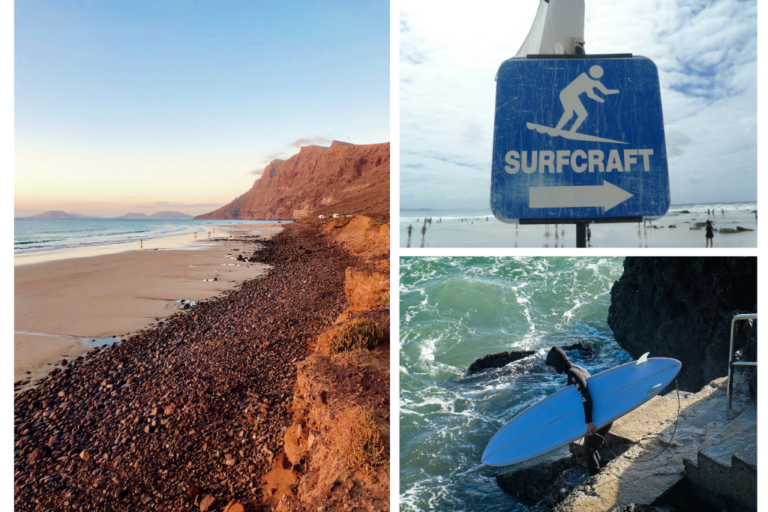
- Decide when and book in advance: Before buying your tickets, choose a time that suits your experience, autumn and winter for bigger waves, summer for softer conditions. Consider signing up for a beginner lesson or a full package with a trusted local surf school. Many schools in Famara include hotel pickup, gear, and insurance, making it much simpler to get started.
- Check the conditions and wave forecast: Check the surf report for wave height, swell direction, wind, and tides the day before and the morning you plan to surf. Conditions in Famara can change quickly, so it is best to go out when the forecast shows waves suitable for beginners, clean and with light wind. Use a reliable surf forecast website for Famara before heading into the water.
- Choose a school and see what’s included: Look for a surf school that works with small groups, provides a board and wetsuit, includes insurance, has certified instructors, and offers some theory and practice on the sand before hitting the water. Also ask if they offer hotel or village pickup and exactly where you will meet for the lesson, as many schools pick up directly from the village.
- Prepare the right equipment for the season: Water temperatures in Famara usually range from around 17 to 24 °C depending on the time of year. In summer it can reach 22 to 24 °C, while in winter it drops to 17 to 19 °C. Be sure to bring a rash guard or UV shirt, a leash for your board, and water resistant sunscreen.
- First steps with the school: In your first surf lesson in Famara, you will start on the sand, practicing how to pop up on the board, learning basic rules, and doing some warm up exercises. This makes it much easier to catch your first waves once you get in the water.
- Entering the water safely (progression for beginners): In your first surf session in Famara, you will start on small waves. You will practice paddling, positioning yourself on the board, and popping up in the white water, always using a leash and following your instructor.
- Learn to recognize and respond to currents and rip currents: There can be currents in Famara, so always follow the instructions of the lifeguards and your instructor. If you get caught in one, do not fight it. Swim parallel to the shore or calmly signal for help.
- Post-class session: feedback and maintenance: At the end of your session, ask your instructor for specific feedback on what to improve for next time. Make sure you know how to store the equipment, some schools return it cleaned while others ask you to rinse it. Take a moment to check the forecast for the next day, if the swell is too high it might be safer to wait for calmer conditions.
- Tip: Take several short lessons on consecutive days, three days is ideal, to really lock in your technique. Supplement with exercises out of the water, focusing on core strength, endurance, flexibility, and practicing your pop up on the sand. If you want to progress faster, consider private lessons or video feedback sessions.
Frequently asked questions about surfing in Famara
Yes, surfers consider Famara one of the best spots in Europe for beginners. The beach stretches over six kilometers, offering gentle waves perfect for those just starting out, while also providing more challenging peaks for experienced surfers. On top of that, the village’s laid back atmosphere makes the whole experience even more enjoyable.
Basic surfboard rental is around $22 per day, with a wetsuit costing about $9 extra. If you rent for several days, the rates go down. A week can cost between $100 and $125 for the board.
The peak season runs from October to March, when the waves are bigger and more consistent, ideal for intermediate and advanced surfers. From April to May and again in September, conditions are milder, making it perfect for improving your skills. In summer, from June to August, the waves are gentler and the atmosphere more lively, making it great for absolute beginners.
It is not necessary to bring your own gear. Local surf schools and shops offer board, wetsuit, and accessory rentals. If you are experienced and have your own board, you can bring it, but many travelers choose to rent it to save on airline transport.
You don’t need to be a professional athlete, but having basic fitness and a willingness to move helps. Surfing involves paddling, quickly popping up on the board, and keeping your balance, so staying active is useful. Many schools suggest doing stretches and core exercises before your trip.
Plans that may interest you


Hi! I'm a Spanish-English translator working with Holafly, helping bring travel content to life for curious travelers. As a digital nomad with a passion for exploring, I'm always adding new spots to my bucket list. If you love to travel like me, stick around because you're in the right place to find inspiration for your next trip! ✈️🌍