Language
Japan’s Hydrangea season: When, where, and how to see Ajisai in bloom (2026)
Japan’s hydrangea season takes place from early June to mid-July. This article discusses the best places to see hydrangeas, festivals, and travel tips.
Japan’s hydrangea season takes place in early summer, typically from early June to mid-July, when colorful hydrangeas, or ajisai, bloom across the country. During this time, some of the best places to see hydrangeas in full bloom are Kamakura, Tokyo, and Kyoto.
In this article, we cover everything you need to know about Japan’s hydrangea season, including when the flowers bloom, the best places to see them, festivals celebrating the season, and tips to make the most of your trip.

An eSIM you can rely on
Join over 10 million Holafly customers and get connected with our trusted, global services.
What is Hydrangea season in Japan?
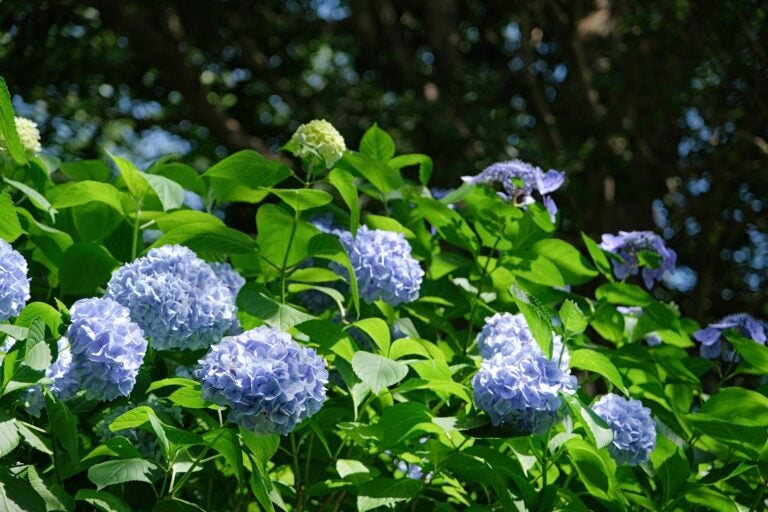
Hydrangea season in Japan refers to the period when hydrangeas bloom across the country, usually during the rainy season known as tsuyu. The flowers thrive in Japan’s humid, wet early-summer climate, which helps produce the bright and vibrant blooms the season is known for.
Hydrangeas hold a special place in Japanese culture and are often associated with the arrival of summer, the rainy season, and themes of gratitude, emotion, and changing beauty. Across Japan, you’ll find hundreds of dedicated ajisai viewing spots, from temple gardens and parks to mountain paths and flower festivals.
Japan’s hydrangea season is one of the country’s most celebrated seasonal flower events outside of cherry blossom season, so it’s definitely something you should consider when planning a trip to Japan.
When is Hydrangea season in Japan?
Hydrangea season in Japan typically runs from early June to mid-July, with mid-June marking peak bloom in most parts of the country. However, bloom timing varies depending on the region’s climate, elevation, and yearly weather patterns.
| Region | Hydrangea bloom period |
|---|---|
| Tokyo/Kamakura | Early June to late June |
| Kyoto | Mid-June to early July |
| Osaka | Early June to late June |
| Tohoku | Mid-June to early July |
| Hokkaido | Late June to mid-July |
Northern and cooler areas tend to bloom later, while warmer southern and lower-elevation areas may start earlier. The rainy season also affects the exact bloom dates each year, so the best time to visit Japan during the hydrangea season can shift slightly.
Peak Hydrangea season (Mid-June)
Mid-June marks the peak hydrangea season in much of Honshu, when the flowers reach their fullest and most vibrant state. The rainy season’s moisture enhances their color and creates the lush, atmospheric scenery Japan’s hydrangea season is known for.
This is also when hydrangea displays look their best, so many temples and gardens host seasonal festivals and special events, making it the busiest and most crowded period to visit — especially in popular destinations like Kamakura, Tokyo, and Kyoto.
Early and late season blooms
Hydrangea season in Japan does not follow a single timeline, so visiting just outside the mid-June peak can offer a quieter experience. In late May to early June, some early-blooming spots begin to show color, including famous temples like Hase-dera in Kamakura.
By contrast, cooler northern regions reach their peak later, with blooms extending from late June into July in areas like Tohoku and Hokkaido. Traveling during these early or late windows often means fewer crowds while still offering beautiful views of hydrangeas at different stages of bloom.
Best places to see Hydrangeas in Japan
Each region in Japan offers a different hydrangea-viewing experience, from temple gardens and coastal paths to mountain parks and countryside flower fields. Below is an overview of Japan’s top hydrangea-viewing regions and what each offers.
Kamakura
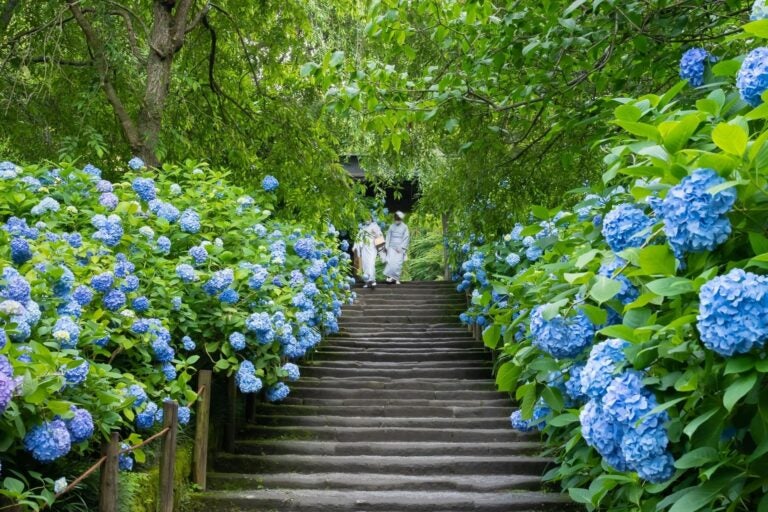
Kamakura is widely considered Japan’s most famous hydrangea destination with its scenic mix of historic temples, forested hillsides, and coastal charm. The city’s most popular viewing spots are Hase-dera Temple, known for hillside gardens overlooking the sea, and Meigetsu-in Temple, often nicknamed “Hydrangea Temple” for its dense blue blooms lining the temple paths.
Hydrangeas here usually reach peak bloom in mid- to late June, but the area becomes extremely crowded during this period, so arriving early in the morning is strongly recommended. Keep in mind that most temples also charge a small admission fee.
Tokyo
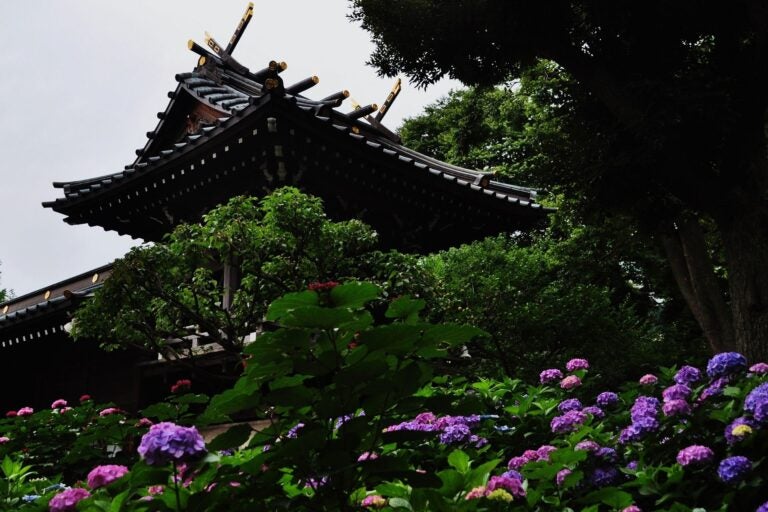
There are many things to do in Tokyo, and hydrangea viewing is no exception. Visitors can find beautiful displays across parks, shrines, and gardens, with standout spots like Hakusan Shrine, known for the annual Bunkyo Hydrangea Festival, and Asukayama Park, which features scenic paths lined with seasonal blooms.
The flowers typically bloom from early to mid-June, and many Tokyo locations are free or inexpensive to visit, so it’s an ideal destination for travelers who want to enjoy hydrangeas without leaving the city.
Kyoto
Kyoto is known for combining the hydrangea season with its iconic historic atmosphere, making it one of the best places to visit in Japan, especially for temples, gardens, and traditional architecture.
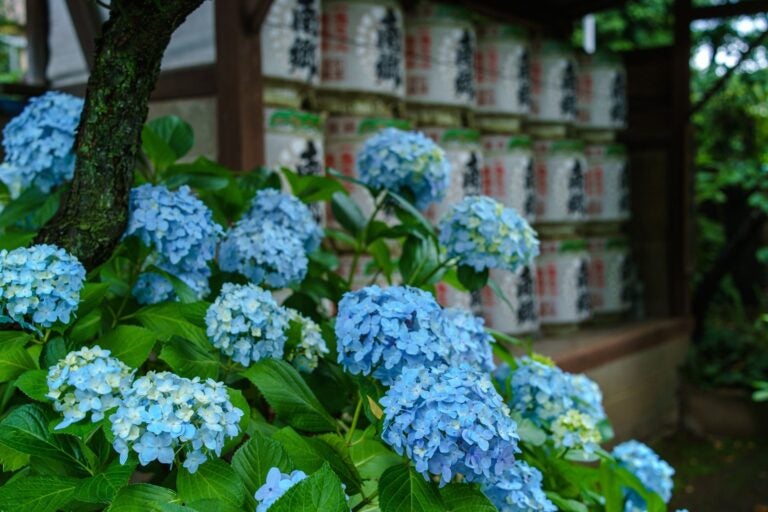
The city’s standout hydrangea destination is Mimuroto-ji Temple, which is celebrated for its expansive garden featuring thousands of hydrangeas in dozens of varieties, while Fujinomori Shrine is another favorite for its seasonal hydrangea festival.
Bloom season typically peaks in mid-June, and while the crowds are generally lighter than in Kamakura, popular temple gardens can still become busy and often require paid admission.
Hidden gems in other regions
Beyond Japan’s major cities, several lesser-known areas offer memorable hydrangea displays worth adding to your itinerary. In Kitakyushu, Takatoyama Park and the Wakamatsu Hydrangea Festival showcase hillside blooms with fewer crowds, while near Nagoya, Ajisai-no-Sato in Gamagori is beloved for its flower-lined walking paths.
Travelers heading farther north can also catch later blooms in the cooler climates of the Tohoku Region and Hokkaido, where hydrangea season often extends into July.
Hydrangea festivals in Japan
Japan’s hydrangea season is celebrated with festivals across the country, where you can experience the blooms while exploring local traditions and attractions.
Bunkyo Hydrangea Festival (Tokyo)
Held at Hakusan Shrine in Tokyo, the Bunkyo Hydrangea Festival is one of the capital’s best-known flower events. It features thousands of hydrangeas in bloom alongside food vendors, performances, and weekend festivities.
Fujinomori Shrine Ajisai Matsuri (Kyoto)
Hosted at Fujinomori Shrine in Kyoto, this festival is famous for its peaceful hydrangea garden surrounding the historic shrine grounds. Visitors can enjoy colorful blooms while experiencing a quieter, more traditional festival atmosphere.
Kaisei-machi Ajisai Matsuri (Kanagawa)
Located in Kaisei, this festival showcases thousands of hydrangeas blooming against scenic rice fields and mountain backdrops. Its countryside setting offers a more relaxed and spacious alternative to busier city festivals.
Tokamachi Ajisai Park Festival (Niigata)
Held in Tokamachi Ajisai Park, this festival features hillside paths lined with colorful hydrangeas overlooking the surrounding landscape. It is known for its scenic views and laid-back local atmosphere.
Mt. Ohira Hydrangea Festival (Tochigi)
Set on the slopes of Mount Ōhira in Tochigi, this festival features hydrangeas blooming along stone stairways and hillside walking paths. The elevated setting provides beautiful panoramic views alongside the seasonal flowers.
Tips for visiting Japan during Hydrangea season
Hydrangea season is a beautiful but rainy time to visit Japan, so plan ahead and keep the following tips in mind.
- Visit early in the morning to avoid the largest crowds, especially at famous hydrangea temples during peak bloom.
- Plan your trip for mid- to late June when most of Japan’s top hydrangea spots reach full bloom.
- Embrace rainy weather since hydrangeas often appear more vibrant after rainfall and light mist adds to the scenery.
- Include breathable clothing and waterproof gear in your Japan packing list to stay comfortable in Japan’s warm, humid, and rainy early-summer climate.
- Use trains for popular spots like Kamakura, as parking is limited and roads can get congested during peak season.
- Reserve tickets when possible or arrive before opening time at famous temples to avoid long queues.
- Take comfort if you have allergies since hydrangeas produce minimal airborne pollen compared to many spring flowers.
- Use a travel eSIM or a Japan SIM card to stay connected throughout your trip.
Stay connected in Japan with Holafly
Enjoy the beautiful ajisai during Japan’s hydrangea season without worries with Holafly’s eSIM for Japan, and get unlimited data, 24/7 customer support, flexible validity periods from 1 to 90 days, hotspot sharing allowance, and instant and reliable connection.
Plans start at $3.90 USD for 1 day of unlimited data, with longer plans going as low as $1.55 per day. For long-term coverage or frequent travel, Holafly Plans offer a pay-monthly eSIM subscription with no long-term commitments and up to unlimited data in 170+ destinations worldwide.

Get an unlimited data eSIM
Use code MYESIMNOW5 for 5% off at checkout
Plans that may interest you

哈囉我是來自台灣的 Wen,平常最喜歡旅遊,也喜歡將旅遊的種種化成文字跟大家分享,希望大家能在我的文章中找到有用的資訊,加上 Holafly 的 eSIM,讓你的旅程更美好!✈️✈️✈️ Hi! I'm Wen, a passionate content writer and travel enthusiast from Taiwan. I transform my wanderlust adventures into engaging stories and practical guides, helping fellow travelers make the most of their journeys.Through my articles, I strive to provide travel tips while introducing how our eSIM technology can enhance your travel experience - keeping you connected wherever your adventures take you!