Language


 No results found
Easter in Italy: Traditions, Holy Week events, and essential travel tips
Easter in Italy is the second biggest religious holiday in Italy, celebrated as part of Holy Week. This guide talks about traditions and Holy Week events.
In 2026, Easter in Italy falls on the 5th of April, with Holy Week leading up to it. Known as Pasqua, it’s the second biggest religious holiday in the country after Christmas. It’s celebrated over several days, beginning on Palm Sunday, building up to Easter Sunday, and continuing into Easter Monday, or Pasquetta.
In this guide, we break down how Easter is celebrated in Italy, what to eat, practical Easter travel tips, and what makes Italy one of the best Easter destinations in the world.

An eSIM you can rely on
Join over 10 million Holafly customers and get connected with our trusted, global services.
How is Easter celebrated in Italy?
Easter in Italy is celebrated through church services, public processions, and family meals. During Holy Week, many people attend mass, while towns hold religious events that reenact the final days of Christ’s life.
Families usually gather for a large Easter Sunday lunch, and the celebrations continue into Easter Monday with picnics and time spent with friends and family. While specific customs and dishes can vary by region, the focus of Easter in Italy remains on religion, food, and quality time.

Holy Week in Italy
Holy Week in Italy is the most important period leading up to Easter, with a mix of religious observances and local traditions taking place across the country.
Churches hold special masses, and many towns organize processions. While some events are quiet and reflective, others are large public gatherings that draw both locals and visitors.
Here’s a simple rundown of the key days during Holy Week:
- Palm Sunday (Domenica delle Palme): Marks the start of Holy Week. People attend mass and receive blessed olive branches.
- Holy Thursday (Giovedì Santo): Commemorates the Last Supper, with evening mass and church visits.
- Good Friday (Venerdì Santo): The most solemn day, with processions and reenactments held in many towns.
- Holy Saturday (Sabato Santo): A quieter day focused on preparation, ending with evening vigil services.
- Easter Sunday (Pasqua): Celebrates the resurrection, with mass and large family meals.
- Easter Monday (Pasquetta / Angel Monday): A national holiday spent outdoors on trips, picnics, and social gatherings.
Easter Sunday in Italy (Pasqua)
Easter Sunday is the most important day of Holy Week, as it marks the resurrection of Jesus. On this day, Italians attend church services and gather for a large family meal to celebrate. Major masses also take place across the country.
After church, families sit down for a long lunch that often includes roasted lamb, seasonal vegetables, and dishes made with eggs, along with desserts like colomba and chocolate eggs. In some cities, local events also take place, such as Florence’s Scoppio del Carro.
Easter Monday in Italy (Pasquetta)
Easter Monday, known as Pasquetta or Angel Monday, is a public national holiday and is often considered a day to relax. People usually spend it outdoors with friends and family, going on picnics, short trips, or meetings in parks, the countryside, or by the coast.
Food is simple and informal, with meals often prepared in advance or made from Easter Sunday leftovers. Public transport and popular outdoor spots can be busy, and many shops and businesses are closed, especially in smaller towns.
Unique Easter traditions in Italy
Below are some of the traditions that make Easter in Italy stand out. Keep in mind that each region celebrates Easter a little differently, so what you experience can vary depending on where you’re traveling in Italy.
Good Friday processions across Italy
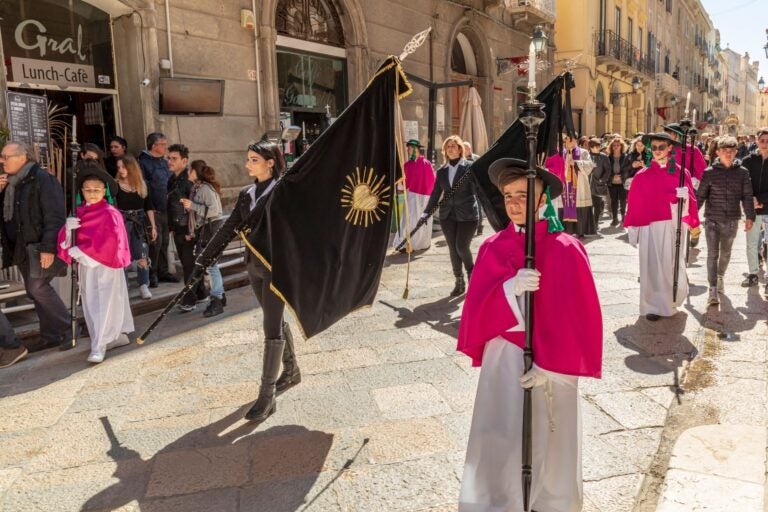
On Good Friday, many towns hold processions that move slowly through the streets, often at night. Statues of Jesus and the Virgin Mary are carried by locals, with some followed by people in traditional robes or hoods.
The atmosphere in these processions is quiet and reflective, and entire communities usually take part in them. In smaller towns, these processions can feel especially intimate.
Via Crucis in Rome
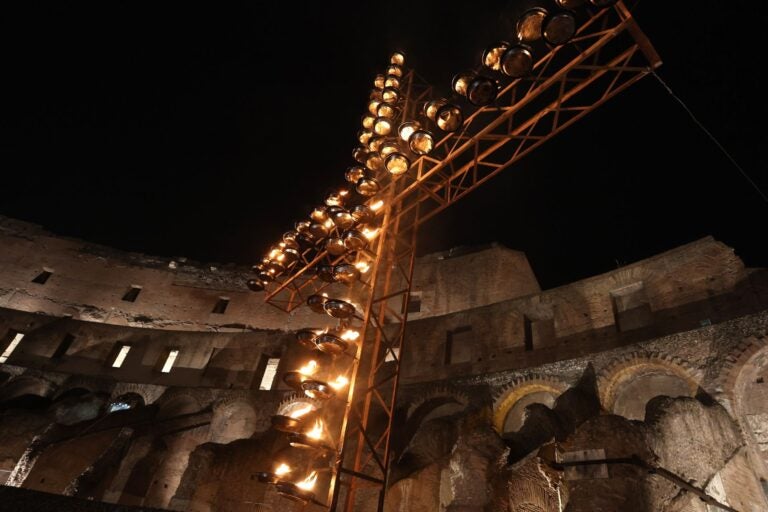
In Rome, the Via Crucis takes place near the Colosseum on Good Friday and is led by the Pope. It follows the 14 stations of the cross, which recount the path of Christ to the crucifixion, with readings and prayers at each stop. Do expect large crowds and tight security if you plan to attend this event.
Scoppio del Carro in Florence
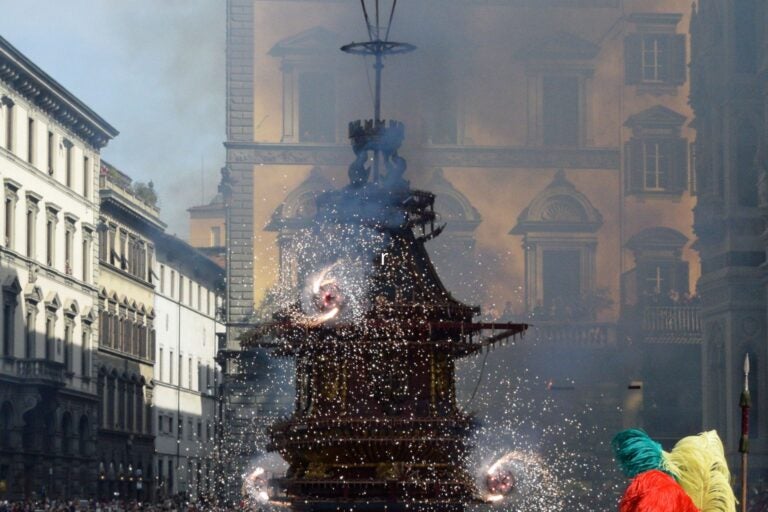
In Florence, Easter Sunday features the Scoppio del Carro, which means “Explosion of the cart.”
This is easily one of the most unique Easter traditions in the world, as it features a large, decorated cart filled with fireworks in front of the Cathedral of Santa Maria del Fiore. A mechanical dove then travels along a wire from inside the church to the cart and ignites the fireworks.
The event dates back centuries and is believed to bring good fortune for the year ahead. Crowds gather in the square to watch, so it’s best to arrive early if you want a good view.
Best places to experience Easter in Italy
Where you spend Easter in Italy shapes the kind of experience you’ll have. Some places focus on large religious events, while others highlight local traditions and community celebrations.
Rome and the Vatican
Rome is the center of Catholic Easter celebrations, with many of the main events taking place in Vatican City, located within the city. The Pope leads key services at St. Peter’s Basilica, including the Easter Sunday mass and the Urbi et Orbi blessing in St. Peter’s Square.
With major events scheduled throughout Holy Week, it’s a good place to experience Easter through its most important religious traditions.
Florence
Florence combines church traditions with a well-known public event. The Scoppio del Carro takes place in Piazza del Duomo on Easter Sunday and is one of the city’s main highlights.
Outside of this, Florence offers a walkable setting where you can attend services, see local traditions, and explore the city at the same time.
Southern Italy and Sicily
Southern Italy and Sicily are known for Good Friday processions and Easter reenactments that take place in towns and villages. These often include statues carried through the streets, scenes from the Passion of Christ, and groups dressed in traditional robes.
Some places also hold Easter Sunday events that symbolize the meeting of Jesus and the Virgin Mary, with statues brought together in public squares. These traditions vary by location but often involve the whole community and follow long-established practices.
Traditional Easter food in Italy
Food in Italy plays a central role in Easter celebrations, with dishes varying by region but following similar themes. Meals often include a mix of savory breads, cured meats, lamb dishes, and traditional desserts, many of which have symbolic meaning tied to the holiday.
- Lamb (Agnello): A common Easter main dish across Italy, symbolizing sacrifice and renewal.
- Pizza di Pasqua al formaggio: A savory cheese bread often eaten at breakfast, especially in central Italy.
- Ciauscolo: A soft, spreadable cured sausage commonly served with bread during Easter meals.
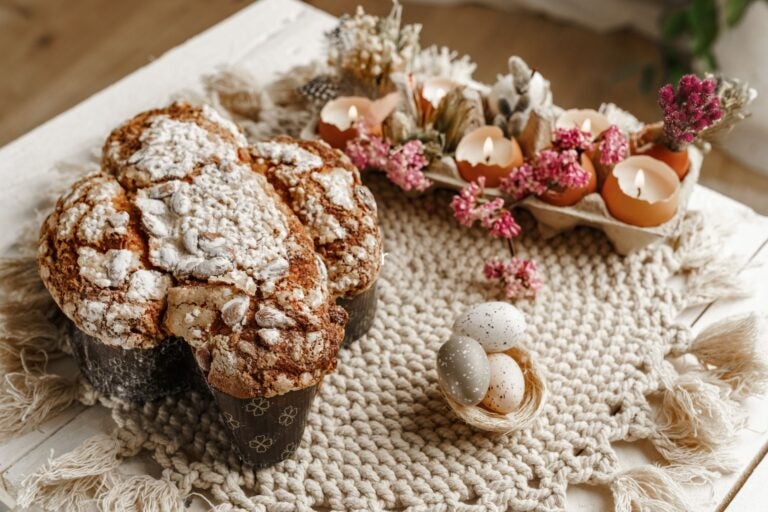
- Colomba: A dove-shaped sweet bread from northern Italy, similar to panettone, usually topped with almonds and sugar.
- Pinza Pasquale: A slightly sweet bread or cake, popular in northeastern regions, often flavored with citrus.
- Casatiello: A savory bread from Naples filled with cheese and cured meats, sometimes baked with whole eggs on top.
- Pastiera Napoletana: A traditional Neapolitan tart made with ricotta, wheat, and orange blossom water.
- Coratella: A dish made with lamb offal, often cooked with herbs and artichokes.
- Abbacchio alla romana: A Roman-style lamb dish cooked with garlic, rosemary, and olive oil.
- Chocolate Easter eggs: Large hollow chocolate eggs, often filled with surprises, especially popular with children.
Practical travel tips for Easter in Italy
Easter is one of the busiest travel periods in Italy, so planning can help you avoid any travel mishaps along the way. Here are some things to keep in mind:
- Plan your itinerary around Easter events and processions.
- Book accommodation and transport early, especially in major cities.
- Check opening hours for attractions, shops, and restaurants.
- Include some cash in your Italy packing list for smaller towns and local vendors.
- Arrive early at churches and event locations for a better spot.
- Reserve restaurants in advance for Easter Sunday meals.
- Check transport schedules as services may be limited.
- Respect local customs during religious events by dressing appropriately and keeping noise to a minimum.
- Stay connected throughout Holy Week with an Italy SIM card or travel eSIM.
Stay connected during Easter in Italy with Holafly
Get a fast and reliable connection with unlimited data wherever you go in Italy this Easter with Holafly’s eSIM for Italy. Plus, you get 24/7 customer support, hotspot sharing, and up to 5G coverage, with no hidden fees and no need for top-ups.
Frequent travelers can check out Holafly Plans — a monthly data plan with global coverage in over 160 destinations, unlimited data, unlimited hotspot sharing, and travel perks, with no lock-in contracts. Plans start at $49.90/month.

Get an unlimited data eSIM
Use code MYESIMNOW5 for 5% off at checkout
Plans that may interest you


哈囉我是來自台灣的 Wen,平常最喜歡旅遊,也喜歡將旅遊的種種化成文字跟大家分享,希望大家能在我的文章中找到有用的資訊,加上 Holafly 的 eSIM,讓你的旅程更美好!✈️✈️✈️ Hi! I'm Wen, a passionate content writer and travel enthusiast from Taiwan. I transform my wanderlust adventures into engaging stories and practical guides, helping fellow travelers make the most of their journeys.Through my articles, I strive to provide travel tips while introducing how our eSIM technology can enhance your travel experience - keeping you connected wherever your adventures take you!