Language


 No results found
Easter in Germany: traditions, celebrations, and essential travel tips
Easter in Germany is a major public holiday in spring. Learn when it takes place, key traditions, public holiday closures, and travel tips for visitors.
Easter is one of the most important holidays in Germany, combining Christian observances with long-standing springtime traditions. The exact date changes every year, but Easter typically falls between late March and mid-April.
For visitors, Easter in Germany offers a mix of religious ceremonies, seasonal customs, and quieter city rhythms shaped by public holidays. This guide explains when Easter happens, how it’s celebrated, and what to expect when travelling during the holiday period.

An eSIM you can rely on
Join over 10 million Holafly customers and get connected with our trusted, global services.
When is Easter in Germany?
Easter in Germany follows the Christian calendar and takes place on the first Sunday after the full moon following the March equinox. Because of this, Easter Sunday can fall anywhere between late March and mid-April.
The important thing to note is that Easter is not just one day. The Easter period usually includes Good Friday, Easter Sunday, and Easter Monday, all of which play a role in how the holiday is observed across the country.
Is Easter a public holiday in Germany?
Several days during Easter are official public holidays in Germany, which directly affects travel plans.
Good Friday and Easter Monday are public holidays nationwide, while Easter Sunday is widely observed even though it’s technically covered under Sunday trading laws.
For visitors, this usually means:
- Shops and supermarkets are closed on public holidays
- Restaurants, cafés, and tourist attractions often remain open
- Public transport runs on a holiday schedule
Planning ahead will be helpful, especially if you’ll be travelling between cities or relying on shops for essentials.
Easter traditions in Germany
Easter traditions in Germany reflect both religious meaning and seasonal renewal. Many customs are family-focused and tied to welcoming spring after winter.
Decorating Easter eggs
Decorating eggs is one of the most recognisable Easter traditions in Germany. Eggs are dyed, painted, or decorated with patterns and then displayed in bowls, branches, or windows.
In some regions, decorated eggs are hung from tree branches, creating colourful Easter trees that symbolise new life and the arrival of spring.

Easter egg hunts
Easter egg hunts are especially popular with children. Eggs, chocolate, and small gifts are hidden in gardens, parks, or homes, often said to be delivered by the Easter Bunny.
This tradition is widespread and informal, making it easy to spot in both cities and smaller towns during the Easter weekend.

Easter fires
In northern and central parts of the country, large outdoor Easter fires are lit on Holy Saturday and Easter Sunday. These fires traditionally symbolise the end of winter and the return of light.
Today, Easter fires are often community events, drawing locals together rather than formal religious ceremonies.

Easter fountains
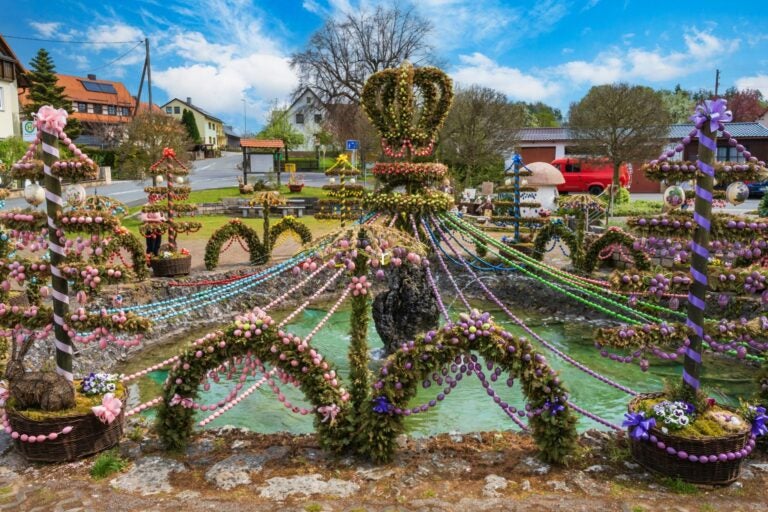
In some southern regions, particularly Bavaria and Franconia, fountains are decorated with flowers, greenery, and painted eggs. These Easter fountains celebrate water as a symbol of life and renewal.
They’re a seasonal highlight in smaller towns and villages and are usually on display for several weeks around Easter.
Easter markets
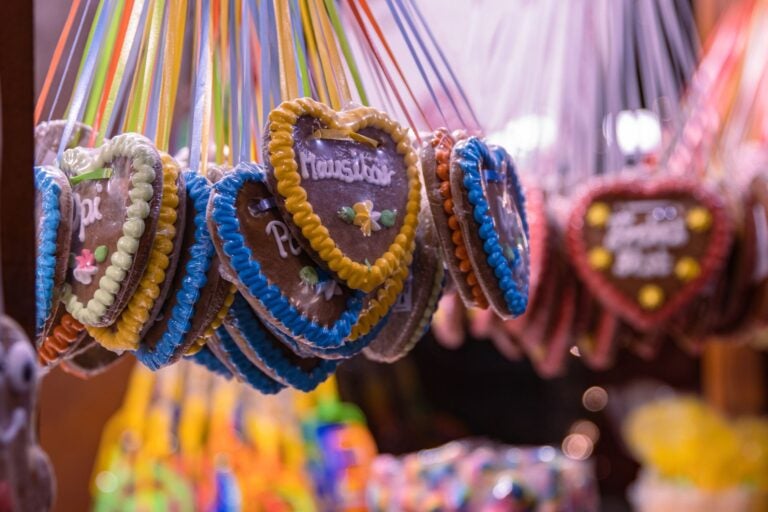
In the weeks leading up to Easter, some German towns host small seasonal markets focused on crafts, decorations, and regional food. These markets are usually more local and relaxed than Germany’s famous Christmas markets.
For visitors, Easter markets offer an easy way to experience Easter traditions. They’re typically held in town squares and make for a low-key cultural stop during a spring trip.
Traditional Easter food in Germany
Food plays a quieter role at Easter compared to Christmas, but certain dishes are closely associated with the holiday.
Easter bread (Osterbrot), often slightly sweet and sometimes braided, is common across many regions. Lamb-shaped cakes (Osterlamm) are also popular, reflecting religious symbolism tied to Easter.
Egg-based dishes are common during Easter weekend as well, especially at breakfast. You’ll often see boiled eggs served with bread rolls, cheese, and cold cuts, which fit the holiday theme without feeling overly formal.
In some regions, families also serve roast lamb or other simple roast dishes for Easter Sunday lunch. The exact meal varies by area, but it’s usually a sit-down family-style meal rather than a fixed national menu.

Practical travel tips for Easter in Germany
Travelling during Easter in Germany is generally pleasant, but a few practical considerations can help avoid surprises.
- Plan around public holidays: Expect shop closures on Good Friday and Easter Monday, especially outside major cities
- Book transport early: Trains and domestic flights can fill up around the long weekend
- Check restaurant hours: Many restaurants stay open, but reservations are recommended in popular areas
- Be respectful at religious events: Churches may be crowded during services, and photography is often discouraged
- Stay connected while travelling: Mobile data helps with transport schedules, digital tickets, and last-minute changes during holiday hours
If your Easter trip continues elsewhere in Europe, understanding how Easter in Greece, Easter in Spain, or Easter in Italy is celebrated can also help you plan cross-border travel more smoothly, especially when comparing the best Easter holiday destinations or broader Easter traditions around the world.
Stay connected during Easter in Greece with Holafly
With coverage across more than 200 destinations, Holafly offers unlimited data and flexible options for travellers moving between countries during busy holiday periods.
You can get an eSIM in Germany before departure through the Holafly eSIM shop, activate it on arrival, and stay connected without changing physical SIM cards. If you’re planning a wider Easter itinerary or comparing destinations to visit in Easter, choosing a reliable eSIM for international travel helps keep your trip running smoothly from start to finish.

Get an unlimited data eSIM
Use code MYESIMNOW5 for 5% off at checkout
Plans that may interest you


哈囉我是來自台灣的 Wen,平常最喜歡旅遊,也喜歡將旅遊的種種化成文字跟大家分享,希望大家能在我的文章中找到有用的資訊,加上 Holafly 的 eSIM,讓你的旅程更美好!✈️✈️✈️ Hi! I'm Wen, a passionate content writer and travel enthusiast from Taiwan. I transform my wanderlust adventures into engaging stories and practical guides, helping fellow travelers make the most of their journeys.Through my articles, I strive to provide travel tips while introducing how our eSIM technology can enhance your travel experience - keeping you connected wherever your adventures take you!