Language


 No results found
Driving in Montenegro: Tips and requirements
Driving in Montenegro can be an unforgettable experience, but it is important to be aware of local regulations and customs.

Driving around Montenegro keeps you on your toes. You can go from a coastal road hugging the Adriatic to steep, narrow mountain roads in what feels like minutes. It’s a small country, but the drive is never repetitive: tunnels blasted through rock, quiet coves, winding mountain routes, and medieval towns that suddenly come into view after a sharp curve.
If you’re thinking of exploring Montenegro by car, it’s a really good choice. You can cover a lot in a short time, the scenery does most of the work for you, and getting around feels refreshingly flexible. It has its own quirks, and the way people drive there can catch you off guard if you’re used to calmer, more structured roads.
In this guide, you’ll find everything you need to drive safely in Montenegro and actually enjoy the journey. We cover which licenses are accepted, the requirements you need to meet, how road signs work, how to rent a car, and all the key things to know about driving in a country where the road feels more like part of the adventure than just a way to get from one place to another.
Which licenses are valid for driving in Montenegro?
One key thing to keep in mind is that even though Montenegro is a small country, there are clear rules about who can drive. No matter if your plans take you to the Bay of Kotor, up into the Durmitor mountains, or along the beaches of Budva, driving is easy as long as your license is valid. Border officials are also very familiar with international drivers, so visitors rarely run into issues.
Licenses accepted for tourists and short stays
If your stay is under 90 days, you can drive in Montenegro using your valid national driver’s license, as long as it is written in the Latin alphabet. If it isn’t, you’ll need to carry an International Driving Permit along with it.
What does this mean in practice? If you’re coming from countries like Spain, Mexico, Argentina, Chile, Colombia, the United States, Canada, the UK, or Australia, you can drive in Montenegro without any extra permits. Latin American and European licenses are widely recognized by local authorities, as long as they clearly show the correct vehicle category.
Please note that Montenegro does not accept digital copies, photos on mobile phones, or provisional certificates. The license must be physical and in good condition.
Valid licenses for longer stays
Montenegro can be a really appealing spot for a longer stay while working remotely. If that’s your plan, the rules for driving are a bit different. You can use your current license for the first three months, but after that, you’ll need to get a Montenegrin license or exchange your existing one for a local version.
The exchange process depends on each nationality:
- Countries with direct recognition agreements: Some European states can exchange licenses without a practical exam.
- Countries without agreements: This covers most of Latin America, the U.S., Canada, and Australia. In these cases, you’ll usually need to pass a written test and, in many instances, a practical driving exam as well.
For tourists and short-term visitors this is not really an issue since 90 days is plenty of time to see the whole country. But if you are a digital nomad or planning to study in Montenegro for a longer period you will need to keep it in mind.
Type of license required to drive in Montenegro
To drive a car in Montenegro you need a category B license, which is the standard car license in most countries. Keep in mind that the roads can be narrow and winding, so even with a B license, local authorities advise taking extra care on mountain routes.
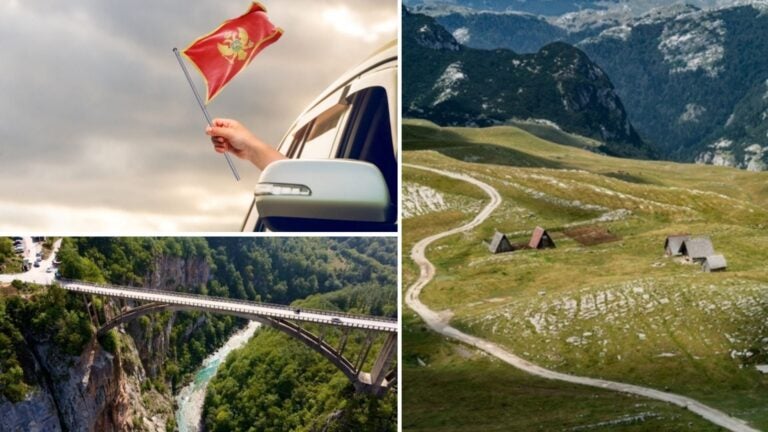
What are the requirements and documentation needed to drive in Montenegro?
Driving in Montenegro is not difficult, but it is a country that takes road order seriously. The rules are straightforward, the requirements fair, and checks are common, especially in tourist areas and on mountain roads.
With your documents in order and a reliable car, driving in Montenegro is surprisingly easy and relaxing, even on the trickiest roads.
Minimum age for driving
As in most European countries, you have to be at least 18 to drive a car in Montenegro. Rental companies, however, usually require drivers to be 21 or older, and many charge extra for anyone under 25.
Required documentation while driving
Whenever a Montenegrin officer stops you (and it is normal to encounter checkpoints on coastal roads and mountain crossings) you must have the following documents at hand:
- Your valid driver’s license (national or along with the IDP if applicable).
- Your passport or identity document.
- A document proving your entry into the country (stamp, entry record, or immigration card).
- The vehicle insurance policy, valid in Montenegro.
- A vehicle registration certificate (saobraćajna dozvola).
With rental cars, the required paperwork is usually already in the vehicle, and police are familiar with checking it. Even so, it’s smart to make sure everything is in order before you set off.
Compulsory insurance
Liability insurance is required to drive in Montenegro. Beyond being a legal requirement, it also gives peace of mind knowing you’re covered in case of an accident or any unexpected situation on the road.
Rental cars always come with it included, but if you’re bringing your own vehicle from a neighboring country like Croatia, Bosnia and Herzegovina, Serbia, or Albania, you’ll need to make sure your insurance covers you internationally.
At the borders, if you do not have adequate coverage, you are required to purchase a Green Card (international insurance), which allows you to drive in the country.
Vehicle conditions
Montenegro requires that all vehicles on the road meet certain basic requirements:
- Lights and brakes in perfect working order.
- Appropriate tires for the season (including winter).
- Emergency triangle.
- Basic first aid kit.
- Reflective vest accessible from inside the vehicle.
In winter, mountain areas like Kolašin or Žabljak may require winter tires or chains, depending on the conditions. Even though Montenegro is small, the difference between the coast and the mountains can be huge, so it’s a good idea to check the weather before you head out.
Drinking and driving
Montenegro leaves no room for doubt here. The legal alcohol limit is 0.03% (0.3 g/L), one of the lowest in Europe.
If you’re caught over the limit, you’ll automatically face a fine, and in serious cases your car could be temporarily impounded. Montenegro carries out frequent checks along the coast in summer and in the mountain areas on weekends.
Cell phone use
The rule is the same as in most countries. You can only use your phone hands-free, and holding, texting, or fiddling with it while driving is a serious offense and one of the most commonly fined in Montenegro.
Other important requirements
- Seat belts are mandatory for all occupants.
- Children must travel in appropriate restraint systems.
- In tunnels, which are common in Montenegro, lights must remain on even during the day.
- The police may ask you for identification at any checkpoint; this is normal and does not imply any violation.
Staying connected on the road
Montenegro has rural areas and mountain roads where mobile signal can be spotty. Having a Holafly eSIM lets you use GPS, check detours, and call for help without relying on hotel Wi-Fi. You get unlimited data for the duration of your trip, and all you need to do is activate it as soon as you arrive in Montenegro.
Are you planning to stay a while or travel through other Balkan countries while working remotely? A road trip through Serbia, Bosnia, Albania, or North Macedonia can be really exciting. In that case, a more convenient option is Holafly Plans, a monthly subscription that gives you an eSIM usable in over 160 countries.
Having a reliable connection makes a big difference in a country where one wrong turn can land you on a closed mountain pass or a coastal road under construction.
Important: If you are a frequent traveler and want to stay connected without worrying about expensive roaming or looking for a new SIM at every destination, Holafly’s subscription plans are for you. With a single eSIM, enjoy internet in more than 160 countries for a fixed price and no surprises on your bill. Travel without limits and connect easily and securely! 🚀🌍

What are the traffic rules and signs in Montenegro?
Driving in Montenegro takes some attention and flexibility. Roads can change quickly from wide highways to tight, winding lanes, tunnels appear often, and locals tend to drive a little more boldly than in other parts of Europe. Even so, if you stay aware and drive carefully, seeing the country by car can be a truly enjoyable experience.
Direction of traffic and right of way
Like most European countries, driving in Montenegro is on the right, with overtaking done on the left. In theory, right-of-way rules are clear, but in practice it’s wise to be extra careful in:
- Intersections without traffic lights in small towns.
- Rural roads with few signs.
- Mountain areas where visibility is limited.
Pedestrians have the right of way at marked crossings, but outside of towns not everyone follows this strictly, so it’s smart to slow down early.
Speed limits for driving in Montenegro
The limits are universal and strictly enforced:
- 50 km/h in urban areas.
- 80 km/h on secondary roads.
- 100 km/h on highways and main roads.
- 120 km/h on some modernized sections near the coast.
Speed cameras, both fixed and mobile, are common, especially in the summer when tourist traffic increases. Fines can be steep compared to the local cost of living, so it’s best to stick to the limits. On mountain roads, the steep slopes and tight curves will naturally slow you down anyway.
Cell phone use
In Montenegro, only hands-free phone use is allowed. Holding your phone, texting, or using apps while driving is heavily fined. Enforcement has become stricter in recent years, so it’s important to stay careful.
Seat belts and transporting children
Seat belts are required for everyone in the car, no exceptions. Children must use age- and size-appropriate car seats or booster seats in line with European regulations.
Lights, tunnels, and narrow roads
Montenegro has a lot of tunnels, even on rural roads. The rule is simple: keep your low beams on at all times, not just in tunnels. This makes it easier to see on roads squeezed between mountains or full of tight curves.
In mountainous areas (such as Durmitor National Park or the surroundings of Kolašin), it is common to find:
- Narrow roads with only one lane in each direction.
- Sections where two cars can barely fit side by side.
- Cliffs without barriers, typical of scenic routes.
In these cases, slow down and give way if you encounter large vehicles such as buses or trucks, especially on descents.
Drinking and driving
Montenegro has one of the strictest blood alcohol limits in Europe:
- 0.03% (0.3 g/L) for private drivers.
- 0.00% for professional or novice drivers.
Checks are common along the coast in summer, in places like Budva, Kotor, and Bar, and on weekends in the mountains. Alcohol is part of the local culture, but when it comes to driving, the rule is simple: don’t drink at all.
Traffic signs in Montenegro
Road signs in Montenegro follow European standards and use universal symbols, so they’re easy for any driver to understand. Most informational signs, electronic boards, warnings, and destination markers are in Montenegrin/Serbo-Croatian. On tourist routes, you might see some additional signs in English, but that’s not very common.
When driving on mountain roads, pay attention to the following signs:
- Dangerous curves.
- Rockfalls.
- Steep slopes.
- Strong winds in gorges and passes.
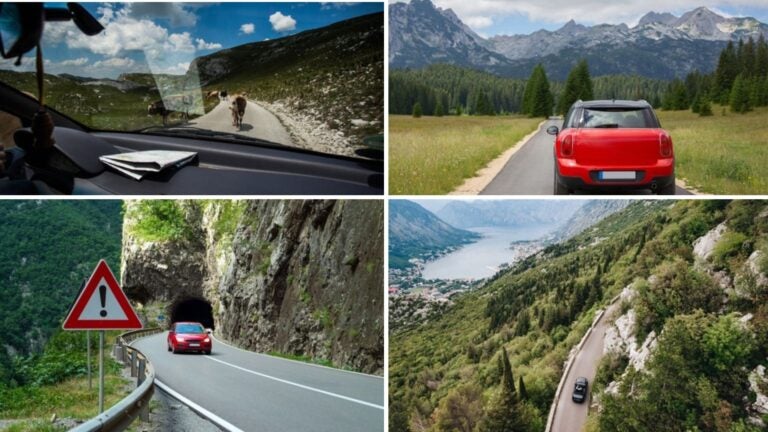
Driving in Montenegro – Areas where you should pay special attention
Montenegro is a small country, but there are spots where extra caution is needed. In the Bay of Kotor, for example, the roads run right along the water and are very narrow, so it’s best to drive slowly and be ready to give way when passing other vehicles.
Another stretch that calls for extra caution is the Cetinje – Kotor road, known as the serpentine. It’s incredibly scenic but full of sharp turns and steep drops. The same goes for the borders with Albania, where police presence and checkpoints are more frequent. In the Durmitor region, the weather can change quickly, fog is common, and animals sometimes cross the road. Stay alert and take it slow.
Penalties and controls
Montenegro uses a progressive fine system. The most common violations include speeding, drunk driving, not wearing a seat belt, using a phone while driving, and unsafe overtaking. For foreigners, fines are usually collected on the spot if there’s a risk they might leave the country without paying.
As a guide, here is a table showing the approximate values of the most common fines in Montenegro.
| Offense | Approximate fine |
| Speeding | $47-1,200 |
| Using a cell phone without a hands-free device | $47-150 |
| Driving under the influence of alcohol (0.03–0.05%) | $80-240 |
| Blood alcohol level above 0.05% | $360-$2,400 |
| Failure to wear a seatbelt | $40-90 |
| Transporting children without an appropriate restraint system | $70-180 |
| Improper overtaking on mountains or sharp curves | $120-360 |
| Parking in prohibited areas | $25-180 |
| Driving without lights on (mandatory 24 hours a day) | $35-80 |
| Failure to carry mandatory documentation | $35-70 |
| Vehicle without valid insurance | $240-1,200 |
| Refusal to take a breathalyzer test | $360-1,800 |
How do tolls work and how do you refuel in Montenegro?
Montenegro is a small country, so its roads are simple. There aren’t long highways or many tolls. Still, there are scenic routes, steep climbs, and places where it’s smart to fill up your tank. Knowing how fuel stations and the few tolls work will make your trip easier.
Tolls in Montenegro – Few but significant
Unlike neighboring countries like Croatia or Serbia, Montenegro doesn’t have an extensive network of toll highways. In fact, most roads are free to use.
The two main exceptions are:
- The Sozina Tunnel, which connects Podgorica with the coast. The approximate cost of the toll is $4–6 depending on the vehicle. It is paid at the booth, in cash or by card.
- The Bar–Boljare motorway (first section open): It’s the most modern highway in the country, featuring both electronic tolls and traditional booths. The cost depends on the section and type of vehicle, but for regular cars it’s usually around $3-5 euros per trip.
Outside these areas, you will not have to pay anything to drive.
Fuel in Montenegro – Types and prices
Gas stations are common in towns and along main roads, but they can be few and far between in mountainous or rural areas. If you’re heading inland, it’s a good idea to start with at least half a tank. The types of fuel available are:
- Euro Super 95 (unleaded)
- Euro Super 98
- Euro Diesel
Prices can vary a bit, but gasoline usually costs around $1.60–$1.85 per liter, and diesel about $1.55–$1.70 per liter. Fuel prices in Montenegro are updated weekly, so they tend to be more stable than in other countries in the region.
How to refuel in Montenegro
Refueling is easy, although there are a few peculiarities:
- Most stations operate on an assisted self-service basis. The employee activates the pump, and you pay when you’re done.
- At modern stations, you can pay by card directly at the cash register.
- In rural areas, some gas stations may only accept cash, so it is useful to carry a few euros or Montenegrin dinars.
If you plan to drive through national parks or highland areas like Durmitor, Prokletije, or Bjelasica, make sure to fill up before you go, as gas stations can be far apart in these regions.
How difficult or easy is it to park in Montenegro?
Parking in Montenegro can be easy or a bit tricky, depending on where you are. In cities like Podgorica or Nikšić, things are fairly well organized, but in coastal towns or historic areas spaces are limited, so it’s best to arrive early. Signs are clear, but each town sets its own rules and rates. Still, it’s helpful to have a general idea of how it works.
Parking in cities (Podgorica, Nikšić, Bijelo Polje)
In the larger cities, parking is divided between regulated street spots, where the city controls rates and time limits, private parking lots, and areas with municipal meters.
Most urban areas use a color-coded hourly parking system:
- Red zone: Higher rates and stricter time limits (usually 1–2 hours).
- Yellow zone: Moderate rates and greater availability.
- Green zone: The most economical, ideal for long stays.
Payment is usually made through ticket machines, by sending an SMS to the number on the sign, or using local parking apps. Prices range from about $0.45 to $1.35 per hour depending on the area, while private lots cost around $5–$11 per day. These are the best option if you plan to leave your car for several hours and don’t want to worry about extending the ticket.
Parking in coastal towns (Budva, Kotor, Tivat, Bar)
Along the coast, especially in summer, finding parking can be tricky because of the heavy tourist traffic. Streets fill up quickly, and most towns have a pay-by-the-hour system on main roads. There are also municipal lots near beaches and historic centers, as well as designated areas for tourists with daily rates.
Reference rates are between $2–3 per hour in central areas and between $10–17 per day in large car parks along the coast.
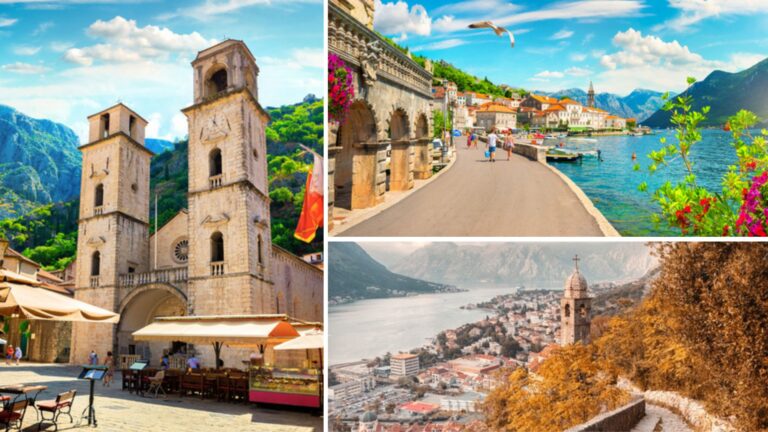
An important detail is that in Kotor, vehicles are not allowed to enter the old town. You will need to leave your car in one of the car parks on the outskirts and walk.
Parking in inland towns and rural areas
Parking inland in Montenegro, in places like Durmitor, Cetinje, or Plav, is usually much easier. In most small towns, parking is free with no time limits, and the streets generally have plenty of space outside of peak season.
In national parks and hiking areas, there are sometimes designated parking lots that charge around $2–$6 per day, especially near popular lakes or viewpoints.
How to rent a car to drive in Montenegro?
You can get around Montenegro without a car since public transport works well, but renting one gives you much more freedom. You can explore at your own pace, stop to enjoy the scenery whenever you like, and really take in the country. Visiting outside of peak season makes driving even more enjoyable.
If you’re not very confident or experienced on mountain roads, it’s best to rent an automatic car. It takes a lot of stress off driving, letting you focus fully on the road instead of the gears.
That said, there is a wide range of rental options available, but these vary considerably between the coast, major cities, and mountainous areas.
At Podgorica and Tivat airports, you’ll find major international rental companies like Hertz, Sixt, and Europcar, as well as several local firms that often offer better rates. The same goes for coastal cities like Budva, Kotor, and Bar, where small offices operate year-round, though availability can be limited in winter.
Overall, rental fleets are modern and well-maintained, thanks to Montenegro’s strong tourist traffic. Still, with smaller agencies it’s a good idea to carefully check the car’s condition before signing the contract.
What type of car is best for you?
It depends a lot on your route:
- Compact cars and sedans: Ideal for cities, coastal roads, and short trips.
- SUVs: Recommended if you plan to visit national parks such as Durmitor or Prokletije, where roads can be narrower or uneven.
- Automatic: These are less common than manual transmissions, so if you prefer this type of transmission, book in advance.
Montenegro has lots of winding roads and mountain passes with tight curves. While a compact car is fine for most travelers, an SUV can give you extra safety and better control on the trickier sections.
Approximate prices
Prices vary considerably between high season (June–September) and the rest of the year:
- Economy cars: $30–50 per day in low season / $50–75 in summer.
- SUVs: $60–95 per day in low season / $95–150 in summer.
- Weekly rental: $170–300 (economy cars) and $400–600 (SUVs).
- Monthly rental: Available at local agencies for $450–780 depending on category.
In Montenegro, there are plenty of rental options in summer, but demand is high too, so it’s wise to book ahead if your trip falls during the tourist season or local holidays.
Standard conditions of car rental agencies
- Minimum age: 21 years old (some accept 18 with extra charges).
- Deposit: Credit card required.
- Mileage: Many companies offer unlimited mileage, but not all.
- Insurance: Basic civil liability insurance is included; it is advisable to add extended insurance if you are going to drive in the mountains.
- Borders: If you plan to cross into Croatia, Albania, Serbia, or Bosnia, you must notify the company. They almost always charge an extra fee for border authorization.
Final tips for driving in Montenegro
Driving in Montenegro is an unforgettable experience, but it also calls for patience, focus, and a bit of adaptability. The roads are stunning, yet narrow, winding, and often steep.
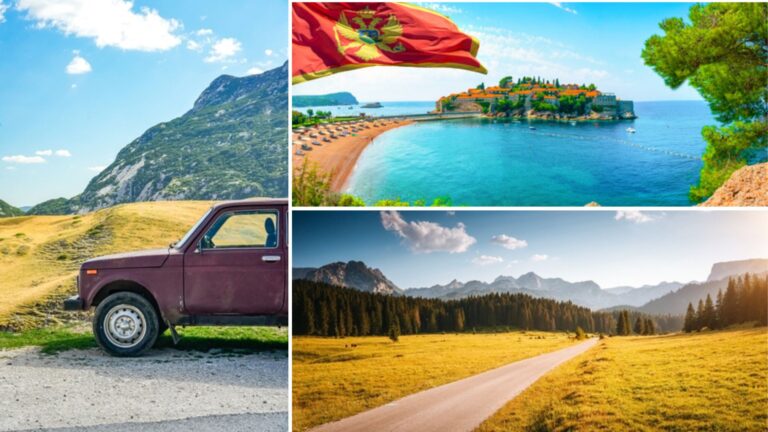
- For safety, try to avoid driving at night in mountainous or rural areas. Lighting is limited, and animals can appear on the road unexpectedly. In national parks like Durmitor or Prokletije, fog can roll in and reduce visibility within minutes.
- Make sure to keep your tank at least half full at all times. Gas stations are plentiful along the coast, but in the mountainous interior they can be far apart. Top up before heading out on scenic routes like Plužine to Žabljak or the Kotor serpentine.
- Watch out for the local driving habits. Many Montenegrin drivers don’t always use turn signals, overtake quickly, or follow closely on narrow roads. Staying cautious and alert will help you handle these situations safely and without stress.
- If you’re driving in Montenegro during the summer, start your day early. The coast, especially Budva, Kotor, and Tivat, is stunning and draws a lot of tourists, which can quickly lead to traffic. Leaving early helps you avoid congestion and makes finding parking much easier.
- Make sure your rental car comes with a spare tire, jack, and warning triangle. They’re required, and in remote mountain areas, they can make a real difference. Montenegro has incredible scenic roads, but there are also stretches where a flat tire could leave you far from the nearest town.
- Montenegro carries out frequent checks, especially in coastal areas and at border crossings.
- If a police officer stops you, show your documents, respond normally, and follow their instructions. Checks are usually brief and respectful.
- If you see signs warning of falling rocks or strong winds, take them seriously. On scenic roads, these warnings aren’t just for show. Montenegro has exposed areas where rockslides are a real risk during rainy seasons.
- Keep to the speed limits, no matter what other drivers are doing. Cameras are everywhere, and fines can add up fast, even for small infractions. Montenegro also tends to enforce rules promptly, particularly for visitors.
Montenegro is one of those countries where the road trip is part of the journey. If you take it easy, the memory of the views will stay with you for the rest of your life.
Plans that may interest you


Hi! I'm a Spanish-English translator working with Holafly, helping bring travel content to life for curious travelers. As a digital nomad with a passion for exploring, I'm always adding new spots to my bucket list. If you love to travel like me, stick around because you're in the right place to find inspiration for your next trip! ✈️🌍