







 Language


 No results found
Driving in Austria: Tips and requirements
Driving in Austria can be an unforgettable experience, as roads are in excellent condition. Find out everything you need to know.

Driving in Austria doesn’t feel like simply getting from point A to point B. It is more like moving through a postcard. One moment you are driving past lakes that look like mirrors, and the next you are slipping into tunnels that cut straight through entire mountains. Roads wind their way past Alpine villages, green valleys, and motorways where everything runs with near surgical precision. But behind that picture perfect scenery, there are also clear rules, specific requirements, and small local habits worth knowing before you turn the key and hit the road.
If you plan to drive in Austria as a tourist, student, digital nomad, or seasonal traveler, you will notice that the country blends natural beauty with a highly organized road system. That said, Austrians are strict when it comes to rules. Understanding how digital tolls work, what kind of license you need, and how driving in mountain areas differs will help you avoid unpleasant surprises.
This guide is here to walk you through it all, helping you enjoy the journey with confidence and ease. If you are ready to explore one of the most scenic countries in Europe, let’s begin!
Which licenses are valid for driving in Austria?
Before you start driving in Austria, it helps to understand that the country draws a clear line between short stay visitors and people who settle there. The system is structured and firmly regulated, but also easy to navigate. As long as you have the appropriate license, you can legally drive from the moment you arrive without hassle.
Valid licenses for tourists and short stays
If you are visiting Austria as a tourist or staying for less than six months, you can drive with:
- Your valid national license, provided it is written in the Latin alphabet.
- License + International Driving Permit (IDP) if your license is not in the Latin alphabet (e.g., Chinese, Arabic, or Cyrillic).
- Licenses issued by countries in the European Economic Area (EEA) and Switzerland, without any additional formalities.
In practice, travelers from Spain, Mexico, Argentina, Chile, Colombia, the United States, the United Kingdom, Australia, and Canada can drive using their national driver’s license without needing an international permit, since those licenses are considered clear and easily readable by Austrian authorities.
Car rental agencies are strict about one thing. Your driver’s license must be the original physical card, valid, and in good condition. Photos, digital copies, or temporary documents are not accepted. So if you are planning a trip to Austria and intend to rent a car, one of the first things you should do is make sure your license is up to date and in proper condition.
Cases in which you do need an International Driving Permit (IDP)
Austria requires or recommends an IDP in very specific situations:
- Licenses with languages that are not recognized or do not use Latin characters.
- Licenses that do not clearly indicate categories or restrictions.
- Countries whose licenses have non-standard formats (several Asian, African, and Eastern European countries).
Remember that the IDP does not replace the original license, but only accompanies it as a valid translation.
Licenses for those who become residents
If you plan to stay in Austria for more than six months, the rules change and the regulations become stricter, depending on your country of origin.
- European Union/EEA/Switzerland licenses: They are fully valid and let you drive for as long as you like, with no time restrictions. You also have the option to exchange your home country license for an Austrian one if you want, but it isn’t required.
- Licenses from countries with partial exchange agreements: Austria has special agreements with certain countries, mainly in Europe and some regions with recognized licenses. In these cases, you can exchange your license without taking a full driving test, or sometimes only need to pass a simplified version.
- Licenses from countries without agreements: This covers most of Latin America, the U.S., Canada, the United Kingdom, Australia, and Mexico. As a new resident, you can drive for up to six months with your national license. After that, you’ll need to exchange it for an Austrian license and may have to take a written or practical test if your country doesn’t have a recognized agreement.
This is the case for travelers from Argentina, Chile, Uruguay, Colombia, Peru, Mexico, the U.S., Canada, Australia, New Zealand, and the United Kingdom. They can drive without any issues as tourists, but once they become residents, they need to go through the local licensing process.
Type of license required to drive a car in Austria
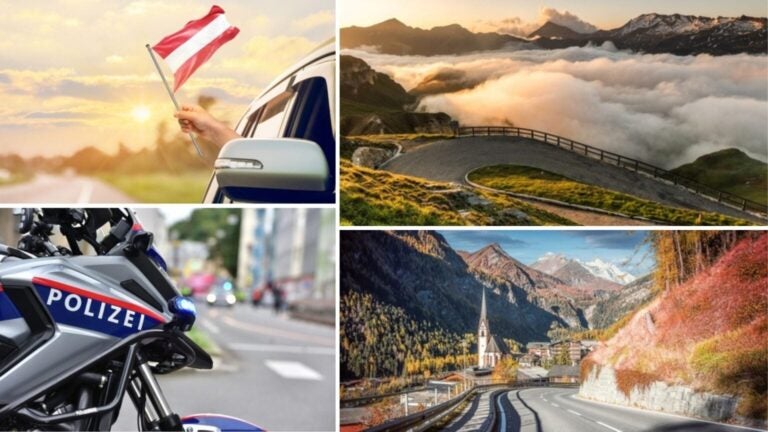
Austria follows the European category system. For regular cars, you need a Class B license, which is equivalent to a standard driver’s license in most countries.
What are the requirements and documents needed to drive in Austria?
Driving in Austria is easy once you stick to the essential rules. The traffic authorities are firm but fair, and with the proper documents and a road-ready vehicle, you can enjoy smooth travel on highways, mountain routes, and through towns.
Minimum driving age
To drive a regular car (Class B) in Austria, you must be at least 18 years old. Renting a car generally has the same minimum age requirement, though it can vary depending on the type of vehicle, and your license must be at least one year old. Drivers under 25 may also have to pay an additional young driver fee.
Mandatory documentation in the vehicle
Whenever you drive in Austria, you must carry:
- Valid driver’s license (national or with IDP if applicable).
- Passport or identity document.
- Vehicle rental agreement, if it is not your own vehicle.
- Car insurance certificate.
- Zulassungsbescheinigung Teil I (vehicle registration document).
In rental cars, all these documents are kept in the glove compartment or in an official company envelope.
Compulsory insurance
To drive in Austria, your vehicle must have valid liability insurance recognized in the European Union. Rental cars always include this, so you don’t need to worry. If you’re bringing your own car from outside the EU, you may be asked for a “Green Card,” an international certificate showing that your insurance is valid in Europe.
Vehicle requirements
Austria is very strict about vehicle technical conditions, and these requirements become even more stringent during the winter. The vehicle must have:
- Fully functional lights.
- Tires in good condition.
- Reflective vest.
- Emergency triangle.
Driving in Austria in winter
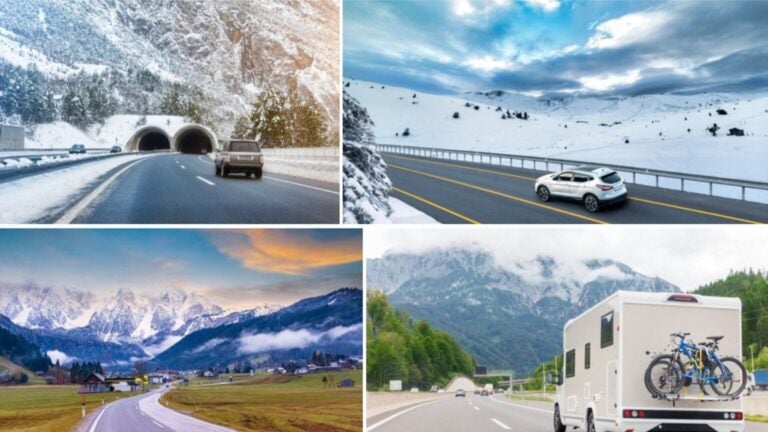
As we mentioned before, driving in Austria becomes more demanding during the winter months. From November to April, roads, especially in the Alps, can be icy, snowy, or slick. That is why, besides having your lights, warning triangle, and reflective vest, your car needs to be properly equipped for winter weather.
Winter tires are essential whenever there is snow or ice on the road. If you rent a car, it will most likely already have them, but it is always a good idea to double-check before you set off. In addition, if you are driving in mountain areas, carrying snow chains is mandatory, and you need to watch for signs that require their use. In certain stretches, you may have to put them on before continuing.
Austria also requires something that is often overlooked. Before driving, you must completely clear snow and ice from your vehicle, including the roof, to prevent dangerous chunks from falling while on the road.
Finally, keep in mind that in winter some road signs and markings may be partially hidden by snow. It is important to drive more cautiously, slow down, and allow for longer braking distances. While Austria keeps its main roads well maintained with plowing and salting, secondary roads can take longer to clear, so extra care is needed when driving.
Alcohol and driving
Austria has one of the lowest blood alcohol limits in Europe:
- 0.5 g/L for most drivers.
- 0.1 g/L for novice drivers with less than two years’ driving experience.
- 0.0 g/L for professional transport.
The fines for violating this limit are very high and may include immobilization of the vehicle.
Use of cell phones and electronic devices
As in almost every country, you can only use your phone hands-free while driving in Austria. Holding it or texting behind the wheel is a serious offense, and authorities issue immediate fines during random checks.
Pickerl – Another requirement for driving in Austria
In addition to the required equipment, Austria requires all registered vehicles to display the Pickerl, a sticker that shows the car has passed the mandatory technical inspection (§57a).
This sticker shows when the next inspection is due, and driving without it can lead to heavy fines. Rental cars already meet this requirement, but anyone driving a privately owned Austrian vehicle must make sure the sticker is up to date. Foreign vehicles do not need a Pickerl, but they must comply with their country’s technical standards and meet Europe’s minimum safety requirements.
Important: If you are a frequent traveler and want to stay connected without worrying about expensive roaming or looking for a new SIM at every destination, Holafly’s subscription plans are for you. With a single eSIM, enjoy internet in more than 160 countries for a fixed price and no surprises on your bill. Travel without limits and connect easily and securely! 🚀🌍

What are the main traffic rules and signs in Austria?
Driving in Austria is usually calm and well organized. Roads are in excellent condition and the traffic system is easy to follow, with clear signs and rules that are taken seriously. Still, there are some local specifics, particularly on Alpine motorways and in rural areas, that are worth keeping in mind.
Direction of traffic and right of way
As across most of Europe, driving in Austria is on the right side of the road. In urban areas, intersections are typically well signposted, but in smaller towns the rule of giving way to traffic from the right often applies unless indicated otherwise. It is an easy principle, yet it can surprise drivers from countries where junctions follow different rules.
At pedestrian crossings, walkers have full right of way, and this is taken very seriously in Austria. If someone approaches a crosswalk, drivers are expected to stop, so be ready for it.
Speed limits
Speed limits are consistent throughout the country:
- 50 km/h in urban areas, unless otherwise indicated.
- 100 km/h on rural roads.
- 130 km/h on highways (Autobahnen).
In rain, snow, or poor visibility, authorities may impose variable speed limits shown on electronic signs. In Alpine areas, these limits can drop significantly, even on days with strong winds.
Seat belts
Seat belts are mandatory for everyone in the vehicle, no exceptions. If you are traveling with children, they must use child restraint systems appropriate for their age, height, and weight, in line with European regulations.
Lights and special conditions
Headlights must be used at night and whenever visibility is reduced by fog, heavy rain, or snowfall. In tunnels, which are very common in Austria, switching on low beam headlights is mandatory.
In winter, as we have already seen, snow can cover road signs or markings, so it is essential to reduce speed and drive cautiously.
Austria also carries out noise and emissions checks, especially in mountain regions, where motorcycles and sports cars are regulated to help protect the environment.
Traffic signs in Austria
Austrian traffic signs follow European standards, but with some useful nuances:
- Warning signs are triangular with a red border.
- Prohibition or restriction signs are circular.
- Direction and information signs are rectangular or square.
- Highways (Autobahn) are marked in blue, while main roads (Bundesstraßen) are marked in yellow.
- In Alpine areas, it is common to see signs warning of steep gradients, sharp bends, rockfalls, and sections where snow chains are mandatory.
- You will also find specific signs warning of wildlife, which is very common near forests or nature reserves.
Most common penalties and fines in Austria
Austria enforces strict fines that are often collected on the spot, especially on motorways. The most common penalties are similar to those in many other countries, such as speeding or using a phone while driving. However, there are also fines linked to Austria’s terrain, like making dangerous overtakes on Alpine roads.
The amounts can be high, and in serious cases, the authorities may impound the vehicle until the situation is resolved. Here are some examples:
| Offense | Approximate fine |
| Minor speeding (city or highway) | $35–70 |
| Moderate speeding | $80–175 |
| Serious speeding (motorway or controlled areas) | $350–2,370 |
| Driving without a vignette or with an invalid vignette | $140–350 |
| Using a mobile phone without a hands-free device | $60–120 |
| Not wearing a seat belt | $35 |
| Driving under the influence of alcohol | From $350 |
| Driving with unsuitable tires in winter | $70–170 |
| Overtaking prohibited in alpine areas | $80–240 |
| Crossing a pedestrian crossing without giving way | $95–170 |
| Parking in prohibited areas | $23–105 |
| Leaving snow or ice on your vehicle | $30–60 |
How do tolls work and how do you refuel when driving in Austria?
Driving in Austria is comfortable and efficient, but the road system works a bit differently than in other countries, with very few traditional toll booths. Highways use a digital system, and every vehicle needs a vignette, a mandatory temporary pass. Knowing how gas stations operate and what fuels are available will also make your journey much easier.
The vignette – Austria’s mandatory toll
The vignette is a highway pass. Austria doesn’t charge based on distance traveled but on time, so every vehicle using its highways must display a valid vignette.
You can purchase it for periods of 10 days, two months, or one year, and there are two formats:
- The traditional sticker, which is placed on the windshield, and
- The increasingly popular digital vignette, which is linked directly to the vehicle’s license plate.
Cameras on the highways automatically check whether a vehicle has a valid vignette. Driving without one carries a hefty fine, usually issued on the spot. If you are renting a car, always confirm whether it is included in your rental agreement as most companies provide it. If not, you can buy a vignette at gas stations near the border, from authorized dealers, or directly on ASFINAGs official website, the agency that manages Austrias highways.
In addition, some Alpine tunnels and special passes have separate tolls that must be paid even if you already have a vignette.
Fuel availability and prices in Austria
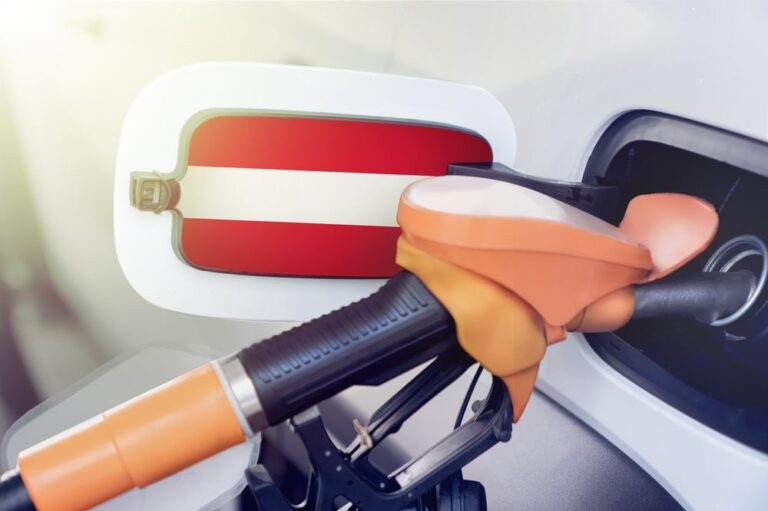
Austria has a well-spread network of gas stations, particularly along highways and main roads. The most common fuels are Eurosuper 95 (unleaded 95), Super Plus 98, and diesel.
Prices vary by region, but Austria is generally around the European average. As a reference, a liter of gasoline is usually between $1.60 and $1.85, while diesel is often a bit cheaper. To save money, it is a good idea to fill up outside the highways, where fuel tends to be more expensive than in towns or cities.
In cities, you will find stations from well-known brands like OMV, Shell, and ENI, while on the roads you may come across automated self-service stations that are open 24 hours.
How to refuel in Austria
The process is straightforward, though it can vary by station. Most are self-service, where you select the pump, fill up, and pay at the counter or at an automatic terminal. There are also staffed stations, especially in urban areas.
Essential advice for traveling in Austria
If you plan to drive through Alpine areas, keep in mind that some mountain passes close in winter or have special restrictions. Checking the ASFINAG app or the road conditions before you set off can help you avoid delays, especially on snowy or windy days.
How does parking work in Austria?
Parking in Austria is generally straightforward as long as you stick to designated areas. Major cities like Vienna, Salzburg, and Graz use time-limited parking systems, while Alpine towns and tourist spots often mix free spaces with small municipal lots. The key is to read the signs carefully and know whether you need a ticket, a parking disc, or if it’s better to head for a private lot.
Parking in large cities
In Vienna, most districts have “Kurzparkzonen,” or short-term parking areas. You can only park there for a limited time, usually between one and three hours, and you need a parking disc or a digital ticket. They are easy to spot thanks to blue signs and generally operate during weekdays in the daytime, though exact hours can vary by district.
In many cities, you will also find digital parking meters or official apps that let you pay for the exact time without having to display anything on your windshield. Rates are usually around $2 to $3 per hour, depending on the area.
If you plan to spend several hours exploring the city center, it’s usually better to use underground or multi-storey parking. They typically cost between $16 and $32 per day but provide security, space, and the peace of mind of not worrying about time limits.
Where you cannot park
Austria is strict about prohibited areas. Avoid:
- Parking in front of building entrances or exits.
- In areas marked with a yellow line or a prohibition sign.
- At bus or tram stops.
- On emergency lanes or tunnel entrances.
Fines are common and checks are very regular, especially in cities with high tourist traffic.
Parking in tourist towns and alpine areas
In small towns or mountain destinations like Hallstatt, Zell am See, Innsbruck, or the Tirol region, parking is generally more straightforward than in big cities. Many areas offer:
- Municipal parking lots near the center, with daily rates between $6 and $15.
- Free parking areas on the outskirts, specially marked for visitors.
- Streets where parking is allowed on one side only, depending on the time of year.
In extremely popular spots like Hallstatt, cars are not allowed in the historic center. You will need to park in one of the designated lots and explore on foot, which is well worth it.
Special rules in winter
In winter, temporary parking restrictions can be in place in Alpine towns due to snow buildup or street cleaning. For example, some areas may ban parking during certain hours to allow snowplows to pass. The signs clearly show the rules, so all you need to do is pay attention.
Where to rent a car to drive in Austria?
Renting a car in Austria is a great way to explore the country at your own pace, especially if you want to visit Alpine valleys, lakes, traditional villages, or scenic routes that public transport doesn’t always reach easily. There are plenty of options, and rental companies generally maintain high standards for safety and vehicle upkeep.
At airports in Vienna, Salzburg, Graz, and Innsbruck, you can choose from major international rental companies like Hertz, Avis, Sixt, Europcar, and Enterprise, as well as several reputable local agencies. Most provide modern cars prepared for winter and already include the highway vignette, but it is always wise to confirm before you pick up the vehicle.
The most popular cars for tourists are compact cars and sedans, perfect for city streets and highways. If you plan to drive in the mountains, an SUV can offer more stability, especially in winter or on steep, winding roads.
When it comes to prices, Austria falls into the mid-to-upper range in Europe. Costs also rise in winter, especially in ski regions like Tirol, Vorarlberg, and Salzburg, where demand is high. As a general guide:
- Economy cars: $50–$75 per day
- SUVs or family models: $100–$150 per day
- Weekly rental: $300–$530 depending on season
- Monthly rental: $1,100–$1,660
Most rental companies require a credit card for the deposit and a minimum age of 18, sometimes 21, to rent a car. Some also charge an extra fee for drivers under 25. Austria places a strong emphasis on road safety, so insurance policies tend to offer good coverage, and vehicles are carefully inspected before and after each rental.
Final tips for driving in Austria
Driving in Austria is a mix of well-organized roads, reliable safety, and stunning Alpine landscapes. Still, with strict regulations and sometimes demanding terrain, a few practical tips can help your trip go much more smoothly.
If you plan to drive through mountainous areas, be ready for plenty of twists, turns, and steep slopes. In the valleys of Tirol and regions like Salzkammergut, roads can narrow suddenly, and the weather can change quickly. It’s a good idea to check road conditions before setting out, especially in winter or after heavy rain.
One key point is to always stick to the speed limits. Austria relies heavily on automated enforcement, and advance warnings are rare. On highways, it’s common to see signs with variable limits based on weather or traffic, so make sure to follow them closely.
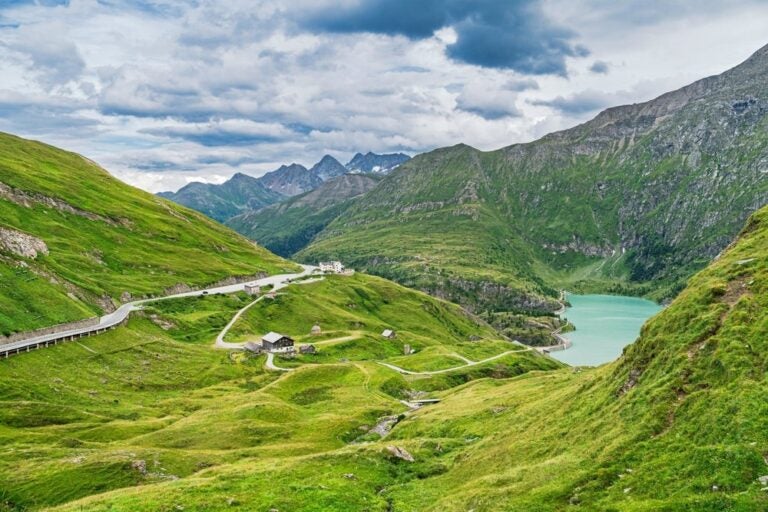
To make the most of your trip, consider taking some of Austria’s most scenic routes. One of the most spectacular is the Grossglockner High Alpine Road, winding through glaciers, lookout points, and snow-capped peaks. The road around Lake Wolfgangsee and the stretches along the Danube between Melk and Krems are also worth exploring, especially if you enjoy peaceful, picturesque landscapes.
When it comes to parking, try to stick to official lots in cities and tourist towns. They are safe, clearly marked, and help you avoid unnecessary fines. In very busy destinations like Hallstatt, it’s best to park on the outskirts and explore on foot.
Finally, even though Austria is an extremely safe country, always stay alert and respectful during police or customs checks. Show any requested documents, respond calmly, and follow instructions.
One extra tip is that having unlimited data makes it much easier to check maps, monitor road conditions and the weather, use local apps, and more. Monthly plans from Holafly can be a big help. The best part is that their eSIM works in over 160 countries, allowing you to cross borders and keep driving without interruptions.
Frequently asked questions about driving in Austria
Most traffic signs in Austria use symbols rather than text, following the universal European standard. This means that even if you don’t speak German, you’ll understand almost all signs, as the symbols are recognized across the European Union. When text does appear, such as on city signs, electronic boards, or specific informational panels, it is in German. In heavily touristed areas like Tirol, Salzburg, or Vienna, some supplementary signs may include brief English terms, but this is not common.
That depends on the rental company. Many include the vignette with the car, but some do not. Before hitting the highway, double-check that it is active, since driving without it can lead to significant fines.
Yes, as long as you follow the signs and adjust your speed accordingly. In winter, there may be temporary restrictions or a requirement to use snow chains. Austria keeps its roads in excellent condition, but the weather can change quickly.
No. Winter tires are mandatory whenever there is snow or ice. Authorities enforce this strictly, and fines are steep. Rental cars usually come equipped, but it’s always wise to double-check before heading out.
No. Austria uses the digital vignette as a general toll. Only some tunnels and Alpine passes have additional fees that are paid separately.
Plans that may interest you


Hi! I'm a Spanish-English translator working with Holafly, helping bring travel content to life for curious travelers. As a digital nomad with a passion for exploring, I'm always adding new spots to my bucket list. If you love to travel like me, stick around because you're in the right place to find inspiration for your next trip! ✈️🌍
