



 Language


 No results found
What is Carnival in Brazil? History, culture, and how to celebrate
What is Carnival in Brazil? A deep dive into the festival’s history, samba parades, street parties, and why it’s central to Brazilian culture.

Carnival in Brazil is one of the country’s most iconic cultural events, known for its music, parades, and street celebrations that take over entire cities each year.
In this guide, you’ll learn what Carnival is in Brazil, how it’s celebrated today, and what makes each destination different.
If you’re planning to join the festivities, you’ll also find practical tips on choosing the right city, navigating crowds, and staying connected throughout your trip with an eSIM for Brazil.

Feel like a local everywhere
Get your eSIM from Holafly and use translator apps as much as you need.
History and purpose of Carnival in Brazil
The Brazilian Carnival is a major annual festival where the country’s history, religion, and cultural diversity come together in one week-long national celebration.
Understanding where Carnival comes from helps you see why it plays such an important role in Brazilian life today.
Origins of Carnival
Carnival in Brazil originated in the early 18th century from Portuguese pre-Lent traditions, specifically the period leading up to Ash Wednesday, marking the start of Lent.
Early Carnival celebrations in Brazil were based on Entrudo, a traditional three-day festival from the Azores and Cape Verde regions in Portugal, known for its masked characters, public games, and throwing water or flour.
Over time, African rhythms and Indigenous influences infused these customs with music, dance, and performance, turning Carnival into a structured yet deeply expressive celebration central to Brazilian culture today.
Purpose and cultural meaning
Carnival originally marked the days before Lent in the Catholic calendar, a period of fasting and reflection that traditionally included giving up meat. It is a final moment of celebration before the 40 days leading up to Easter.
Over time, Carnival grew beyond its religious roots. Today, it gives communities space to express identity, creativity, and social life openly, turning streets and neighborhoods into shared spaces of music, dance, and collective celebration.
When is Carnival in Brazil?
Carnival in Brazil usually takes place in February or early March, depending on the Easter calendar. In 2026, Carnival in Brazil starts Friday, February 13, and runs through Ash Wednesday until February 18, 2026.
How long does Carnival last?
Carnival lasts five to six days, beginning on Friday and ending at midday on Ash Wednesday. In practice, many cities in Brazil, like Rio, start celebrating earlier and continue after, depending on the local traditions and events.
Main cities that celebrate Carnival
Brazil hosts one of the biggest Carnivals in the world, with celebrations taking over cities like Rio de Janeiro, São Paulo, Salvador, and Recife. If you plan to join this year’s celebrations, here’s a quick look at the best cities to celebrate Carnival in Brazil:
- Rio de Janeiro Carnival is known for its world-famous samba school parades and large street parties across the city.
- São Paulo combines competitive samba parades with a growing bloco scene spread across the city’s neighborhoods.
- Salvador centers its Carnival on massive street celebrations led by music trucks (trios elétricos).
- Recife offers a more traditional Carnival, focused on frevo and maracatu music and daytime parades.
What happens during Carnival in Brazil?
Carnival in Brazil is a massive nationwide celebration happening on the streets, in stadiums, and across entire neighborhoods. What you experience during Carnival in Brazil depends on where you are, but you can expect music, movement, and public festivity almost everywhere.
Here are some things to consider if you plan to visit Brazil for Carnival.
Parades and samba schools
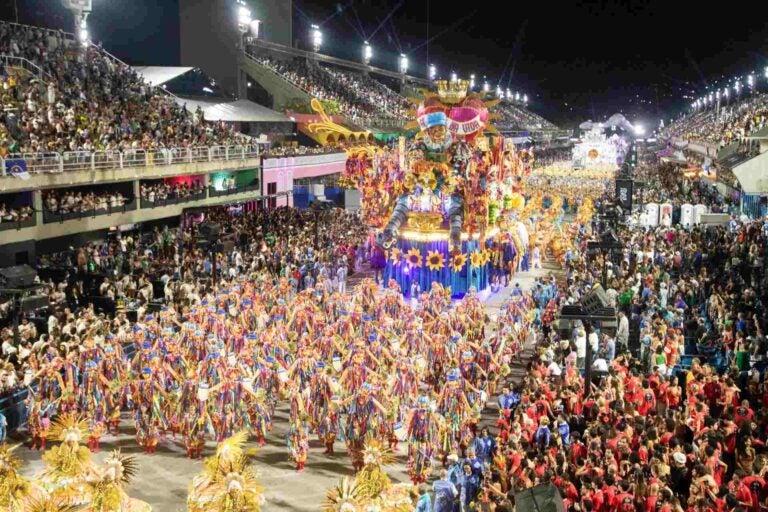
Carnival parades in Brazil, and especially in Rio de Janeiro, are known for the samba schools competing in tightly choreographed performances.
Each parade follows a set structure, led by a samba-enredo (theme song), flag bearers, and large, story-driven floats, with schools judged on drumming, theme, costumes, and choreography.
Street parties and blocos
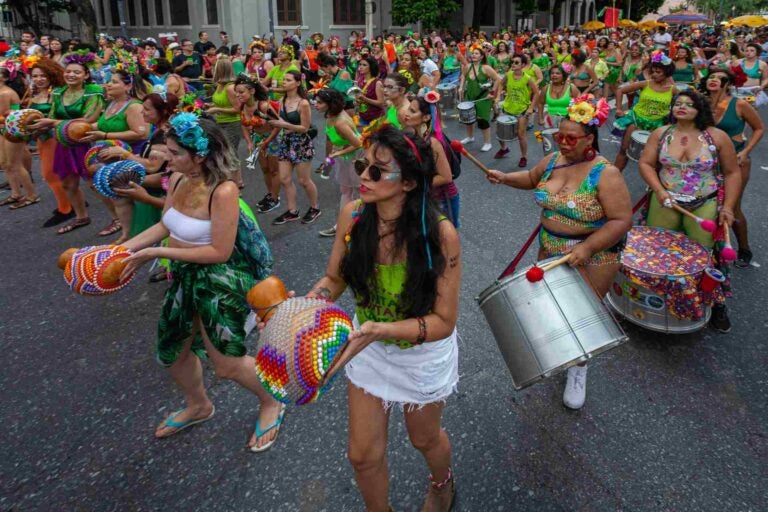
Apart from formal parades, many cities in Brazil host blocos, open street parties you can join to enjoy the free spirit of Carnival.
These community-led street parties feature live bands or sound systems, dancing, and crowds moving through neighborhoods, making them one of the most accessible ways to experience Carnival.
Costumes and cultural practices
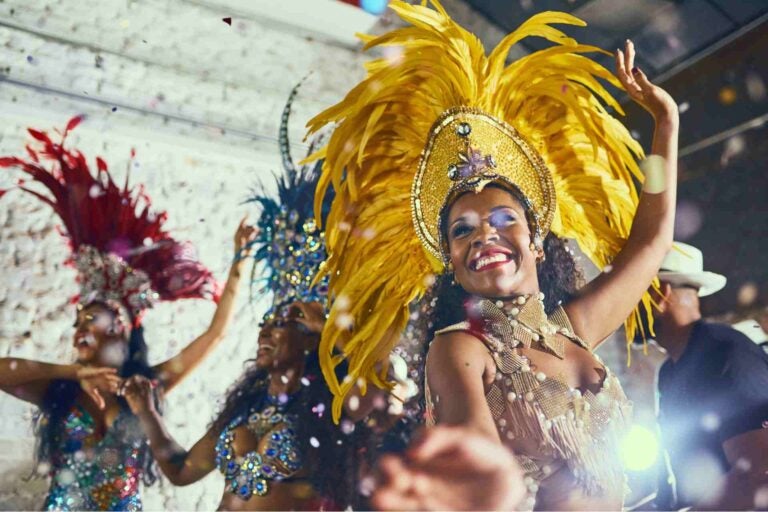
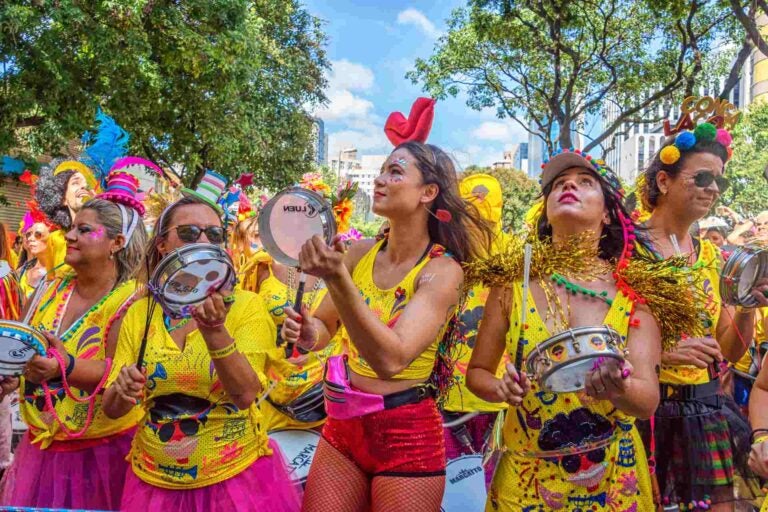
Costumes play a central role during Carnival, ranging from full samba outfits to simple masks, body paint, and colorful clothing. But beyond appearance, Carnival fashion symbolizes freedom and transformation, allowing people to step outside everyday roles and express creativity, humor, and identity in public.
If you’re deciding what to wear for Carnival in Brazil, remember that comfort is key. You can pack basics and then buy a costume or outfit locally once you arrive. Many people choose to purchase Carnival costumes in Brazil, where street markets and shops sell affordable, festive options that fit the mood in each city and celebration.
What Brazilians do during Carnival?
Even though Carnival is not a nationwide public holiday in Brazil, many Brazilians adjust their work and school routines to take part in it.
Beyond major parades and events, locals gather in neighborhoods for blocos, house parties, informal music sessions, and street celebrations that focus more on community than spectacle.
For many Brazilians, Carnival is less about watching events and more about spending time together, celebrating music, and enjoying shared traditions close to home.
How to experience Carnival as a visitor?
To have the best Carnival experience in Brazil, choosing the right city matters, as each offers a different style of celebration, from large-scale parades to informal street parties.
Understanding the difference between ticketed parade events and free blocos helps you plan ahead, manage crowds, and decide how structured or spontaneous you want your Carnival experience to be.
Is Carnival in Rio de Janeiro worth it?
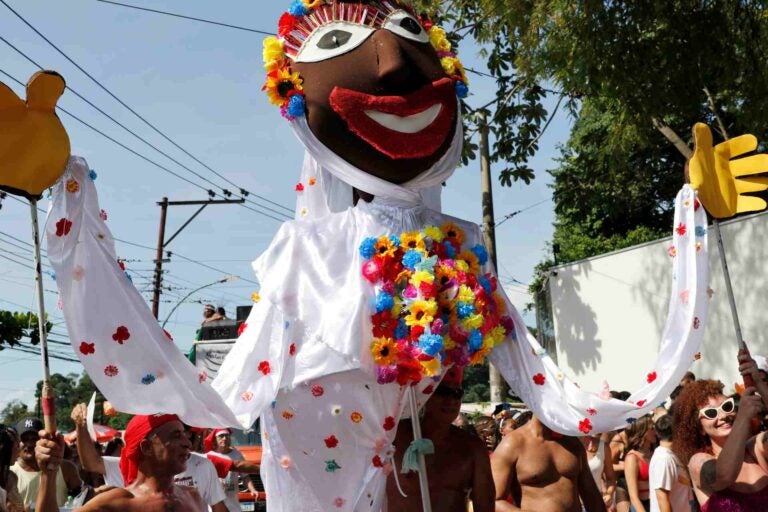
Carnival in Rio is worth it if you want the most iconic and high-energy version of the festival, with world-famous samba parades and nonstop street parties.
At the same time, the scale brings heavy crowds, higher costs, and complex planning, which is why you might prefer smaller cities for a more relaxed experience.
Staying connected during Carnival in Brazil
Holafly travel eSIM helps you stay connected throughout Carnival in Brazil without the usual setup hassles.
The eSIM activation is instant through a QR code, so you’re online as soon as you land, with no need to visit a store or swap SIM cards. Depending on how long you’re traveling, you can choose daily or monthly Holafly Plans with transparent pricing and unlimited data.
Having reliable mobile data during Carnival in Brazil helps you navigate the city better and adjust your plans in real time, making the experience smoother and less stressful.

Get connected quicker
Buy, set up, and activate a Holafly eSIM for Brazil in no more than a few of minutes.
Plans that may interest you


Formerly a travel journalist turned marketing copywriter, I found my way back to the travel world with Holafly—my dream company that made remote work possible. My motto? “Dream big and make it happen.” I’m passionate about writing, exploring the world, and staying active through walking, running, swimming, and hiking. I also love learning, reflecting, and connecting with inspiring minds.