Language


 No results found
Surf in Thailand: Best beaches and prices
Want to surf in Thailand? We’ll tell you the most popular spots, the costs, and the best seasons to plan your surf in Thailand adventure.

Exploring this Southeast Asian country can mean much more than visiting its famous Buddhist temples. You can lose yourself in its tropical landscapes or enjoy a relaxing swim on its paradise beaches. You can also take advantage of its more than 2,500 kilometres of coastline and go surfing in Thailand. Thanks to the warm waters of the Andaman Sea and the Gulf of Thailand, you enjoy this sport all year round.:
So, throughout this article, you have all the information you need to surf in this country, such as the best places and beaches to do it, which schools have the best reputation, and the competitions that take place in each area. We also explain the recommended seasons to come surfing in Thailand, the costs involved, and other tips that help you become number one on the board. Do you dare?
The 5 Best Places For Surfing In Thailand
Besides the travellers who visit the country and add a surfing experience in Thailand to their trip, you may already live here as a student or work remotely as a digital nomad. If you fancy meeting new people and doing sport, you can try joining a group surfing lesson on one of its beaches. Here you have the best places for surfing:
1. Phuket
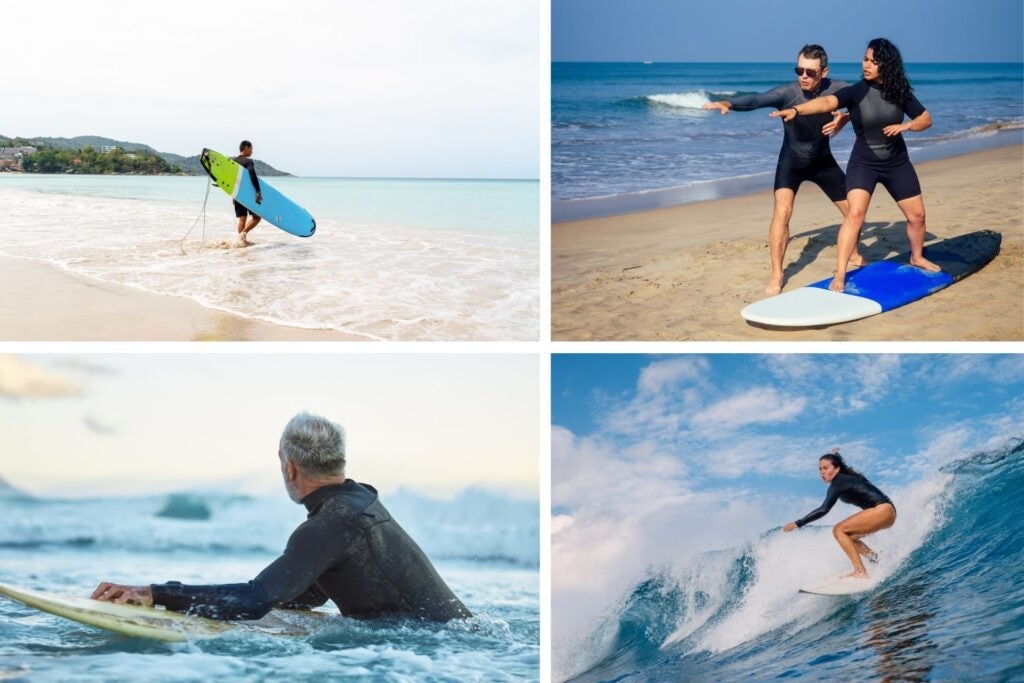
On the Andaman Sea coast, in the south of the country, you find the city of Phuket, which many travellers see as the epicentre of surfing in Thailand. Its beaches stand out for their golden sand and consistent waves that invite you to paddle out. If you have no experience, we recommend Kata Beach, with small waves and many surf schools, such as Phuket Surfing School or Saltwater Dreaming Surf School.
However, for surfers who already handle the board well, Nai Harn Beach offers more powerful and faster waves. If you come between June and September, you can join several surfing events that include competitions and workshops, such as the Phuket Surf Series festival.
2. Khao Lak
About 80 kilometres north of Phuket, you find a small coastal town called Khao Lak. Because it does not receive so many tourists, you can surf in Thailand in a calmer way, without crowds and with more affordable accommodation. The beaches of Pakarang Beach and Bang Niang Beach are the main surf spots in this area, with waves that break over a sandy bottom, so they feel safe if you still do not master the technique.
You can take lessons at Memories Beach Bar Surf School or Andaman Surfing and, as standout events, Khao Lak hosts several competitions, such as the Khao Lak Surf Festival and Tipi Jabrik’s Grom Patrol, which attract young national and international surfers, with cultural activities and environmental awareness campaigns.
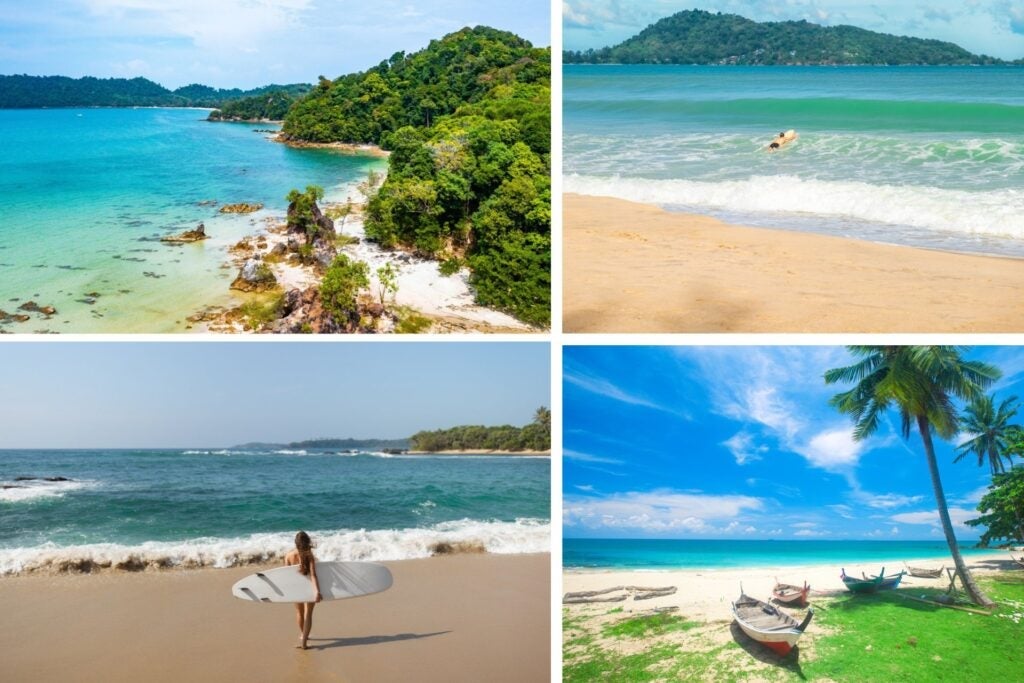
3. Koh Phayam
Another of the best places for surfing in Thailand lies in Ranong province, near the border with Myanmar. It ‘s a small island with an unspoilt natural atmosphere, few tourists, and no large resorts. The best beach for surfing is Aow Yai Beach, with medium-sized, very consistent waves between May and November, recommended if you already have some experience and an intermediate level.
Here you can find Phayam Surf School or Surf Koh Phayam and, although no competitions take place, the calm atmosphere on the island makes it special if you prefer quieter spots.
4. Koh Lanta
We continue our journey through the best places to surf in Thailand and head to the south of the Andaman Sea, in Krabi province. This island, around 25 kilometres long, has nine beaches, such as Klong Dao Beach and Long Beach (Phra Ae), perfect for starting out in surfing with calmer waters, and Kantiang Bay, with fast waves that require a more advanced technique. If you need a first lesson, we recommend the schools Lanta Paddlesports, Lanta Surf House, or KoHub Surf.
5. Rayong
Finally, we end this guide with another spot for surfing in Thailand located in the gulf, very close to Pattaya. Although this area remains less known, it gains popularity every day among surfers who look for new waves in a setting away from mass tourism and in an environment that feels more connected with traditional Thai culture.
The main beach for surfing is Mae Ramphueng Beach, with waves that usually reach up to one and a half metres, with consistency and beach breaks on a sandy bottom. Therefore, it suits beginners or intermediate surfers. However, if you want new challenges, you can visit Suan Son Beach and Laem Mae Phim Beach, with much faster waves and strong south-westerly winds. If you need lessons, you can go to Rayong Surf School or Surfhouse Rayong.
Connectivity While You Surf In Thailand
Start your trip on the right foot and land at the airport with your internet connection already active through an app. How? It is very simple, because Holafly makes activating its eSIM easy, so you stop searching for Wi-Fi networks or paying extra for international roaming.
For this reason, we recommend the eSIM for Thailand if your trip lasts only a few days, because you enjoy unlimited data and a stable connection only for the days you need. However, for a longer stay, the Holafly monthly plans guarantee stable, unlimited connectivity in Thailand and in up to 170 destinations, without changing eSIM.
If you choose the 25 GB plan or the unlimited one, you can share your data with other devices, use GPS without disconnections, enjoy 5G coverage on any beach, and activate the eSIM in just a few seconds, from €45.45 ($50.50) per month and with no contract. Now you can check the surf forecast for beaches such as Phuket, Khao Lak, or Koh Lanta, see wave quality, review conditions, and share the experience instantly on social media.
Important: If you are a frequent traveler and want to stay connected without worrying about expensive roaming or looking for a new SIM at every destination, Holafly’s subscription plans are for you. With a single eSIM, enjoy internet in more than 170 countries for a fixed price and no surprises on your bill. Travel without limits and connect easily and securely! 🚀🌍

Recommended Seasons For Surfing In Thailand
Surfing in Thailand divides into two main coasts: The Andaman Sea on the west coast and the Gulf of Thailand on the east coast, each with different conditions. Throughout the year, the country enjoys a warm tropical climate, with water temperatures between 27 °C and 30 °C, even in the rainy season. Below, we detail the best time for each area:
- From May to October: In this period, the best area for surfing is the Andaman coast, in Phuket, Khao Lak, Krabi, and Koh Lanta, with large, consistent waves from one to three metres, recommended for intermediate and advanced levels. In addition, you find fewer tourists than in high season, and accommodation prices stay lower.
- From November to March: This is the best season for beginners who want to surf on the gulf coast, in Koh Samui, Koh Phangan, Hua Hin, or Rayong, with gentle waves up to one and a half metres. As it’s high season, this part of the country has more atmosphere, with events, festivals, and sunny, dry weather.
- From April to November: If you travel in this intermediate period, you can find occasional waves in either of the two coasts mentioned above, depending on the eswind.
Costs For Surfing In Thailand
The cost of living in Thailand ranks among the lowest in Southeast Asia, which makes it an ideal place for a long trip, exploring the country in depth and trying different activities, such as surfing, without allocating too much of your monthly budget. Prices for lessons or equipment rental vary by area, because rates in Phuket are higher than in other regions, such as Rayong, for example. Take a look at the following table to get an idea of typical surfing costs in Thailand:
| Service | Rates |
|---|---|
| Equipment rental | From $5.75 (€5) per day |
| Beginner group class | From $17 (€15) for 2 hours |
| Basic 3- to 5-day course | From $86 (€75) in total |
| Private lesson | From $32 (€28) for 2 hours |
| Advanced lesson (coaching) | From $43 (€38) for 2 hours |
| Water sports insurance | From $40 (€35) per month |
| Surf camp with accommodation, equipment and classes | From $163 (€141) for 7 days |
| New soft-top board | From $130 (€113) |
Approximate cost of surfing in Thailand.
How To Start Surfing In Thailand
Now that you already have the key information to get into surfing in Thailand, such as the best places, seasons, and costs, it is also important to follow guidelines for behaviour and responsibility, so you practise this sport with the safety and respect it deserves. If you have no experience and want to start from zero, follow these steps to do things properly from the beginning:
- Choose the place and season according to your level: If you are a beginner, look for gulf beaches between November and March. For an intermediate level, the best beaches lie in Phuket, Koh Lanta, or Khao Lak between May and October.
- Book a recognised school: It must have certified instructors, good reviews online, and small groups.
- Pay attention in the first lesson: It’s the most important for learning technique on the board and the basic safety rules in the sea, including currents, wave reading, and right of way.
- Progress step by step: Don’t rush if you still do not control the technique. Your instructor decides when you move on to surfing green waves. That moment does not arrive if you’ve not mastered the pop-up (standing up) or paddling timing.
- Show responsible behaviour: Respect the surf etiquette (who has priority on the wave), keep a safe distance, avoid surfing in zones with strong currents if you lack experience, and always use a board with a leash.
- Stay consistent: Dedicate at least several consecutive days to progress and enjoy each improvement, because this sport demands plenty of practice and patience.
Frequently Asked Questions About Surfing In Thailand
No, you do not. There are schools that teach you from scratch and beaches with gentle, calm waves for learning, such as Kata Beach or Khao Lak.
The most popular destinations for surfing in Thailand are Phuket, Khao Lak, Koh Lanta, Koh Phayam, and Rayong, each with its own conditions.
Yes, the beaches are calm and the waters feel warm. Even so, you should always check the state of the sea and its currents. It’s always advisable to surf with other people, even if you already have experience.
Yes, you can, although on the Andaman Sea coast the best time runs from May to October and, in the Gulf of Thailand, the best conditions arrive between November and March.
Yes, the country hosts local and international surf competitions, such as the Phuket Surf Fest, held at Kata Beach between July and September, with contests and workshops.