Language


 No results found
Surf in Costa Rica: Best beaches and prices
Want to surf in Costa Rica? Discover the best guide so you don't miss out on the most powerful waves in this country.

For surf lovers, there is an enviable destination to practise this sport thanks to its consistent waves all year round, warm waters, and an environment that perfectly combines nature and adventure. So, if you’re travelling in this country and want to surf in Costa Rica, you can’t miss the guide we’ve prepared for you.
You’ll find calm beaches if you’re a beginner, and perfect tube waves if you already have some experience. In this article, we tell you the best places to surf on both the Pacific and Caribbean coasts. You’ll also learn about lesson fees, available schools, the best time to practise this water sport, and the steps you need to take. Don’t think twice—experience the thrill on your surfboard and enjoy the ¡pura vida!.
Best Places to Surf in Costa Rica
With over 1,200 kilometres of coastline and dozens of beaches internationally recognised for the quality of their waves, surfing in Costa Rica has become a must-visit destination for sport enthusiasts. Did you know that this country currently ranks fifth in best quality of life in America? The 2025 Numbeo Quality of Life Index confirms this, and among the many nature activities you can enjoy here, surfing is one of the most fun.
So, whether you’re visiting for tourism, studying, or living here temporarily while working remotely as a digital nomad, we recommend starting this adventure.
1. Tamarindo Beach – Guanacaste, Northern Pacific Coast
This beach in Guanacaste province is considered the epicentre of surfing on Costa Rica’s northern Pacific coast. It is a calm area with shops, bars, and schools right on the beach, making it ideal for all types of surfers, from beginners at low tide to advanced surfers at high tide, with consistent waves throughout the year.
We highlight the surfing event held here, Tamarindo Surf Classic, along with other local tournaments organised by the Costa Rican Surf Federation. Here, you can learn to surf at Jungle Surf Tamarindo, White Sand Surf School, or Iguana Surf Camp & Surf Shop.
2. Santa Teresa – Puntarenas, Nicoya Peninsula
Another top spot for surfing in Costa Rica is the coastal town of Santa Teresa, on the Nicoya Peninsula, about 150 kilometres from San José. It’s part of the so-called Costa Rican surf triangle, along with Tamarindo and Nosara, thanks to its wide white sand beaches and powerful waves.
You can surf on a beach surrounded by tropical forest, with fast, clean waves, perfect for intermediate and advanced surfers. The most recognised schools are Santa Teresa Surf School, Lapoint Surf Camp Costa Rica, and Santa Teresa Extreme Center. Among its famous competitions are the ALAS Pro Tour and the Quiksilver Cup.
3. Hermosa Beach – Jacó, Central Pacific Coast
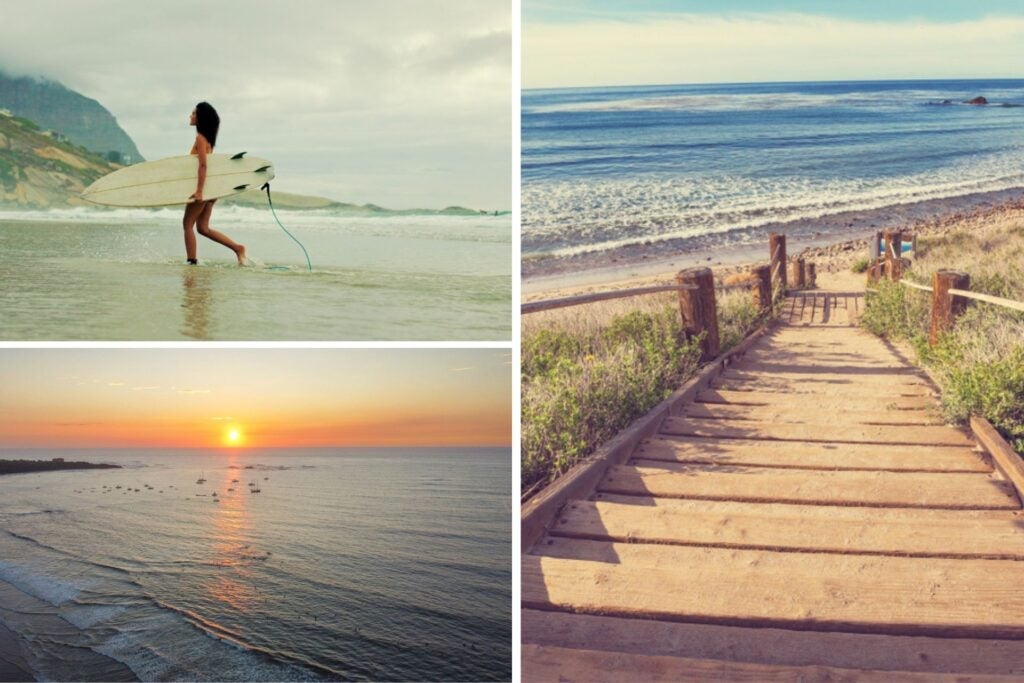
This beach hosts the Costa Rica National Surf Championship every year, so it has excellent infrastructure including hotels, restaurants, shops, and surf schools like Take Off Surf School or Perfect Sunset School.
Hermosa Beach is located on the central Pacific coast, in Puntarenas province, and features seven kilometres of dark volcanic sand with very powerful tube waves that remain consistent year-round. We recommend it if you already have some experience. Surfing conditions are so good that in 2009 it was declared a World Surfing Reserve by Save The Waves.
4. Pavones – Golfito, Southern Pacific Coast
Pavones is a small town in the Golfito canton, at the far south of the Pacific, near the Panamanian border. This place is famous in Costa Rica surfing for having one of the longest left-hand waves in the world, stretching up to one kilometre.
If you’re a beginner, you can start on calmer sections of the sea, but generally, visitors are intermediate or advanced surfers, as it has waves that allow you to ride for over a minute. Surf schools here include Pavones Tours and Art Surf Camp, although you can also combine yoga and surf retreats with Kuruva.
5. Puerto Viejo – Limón, Caribbean Coast
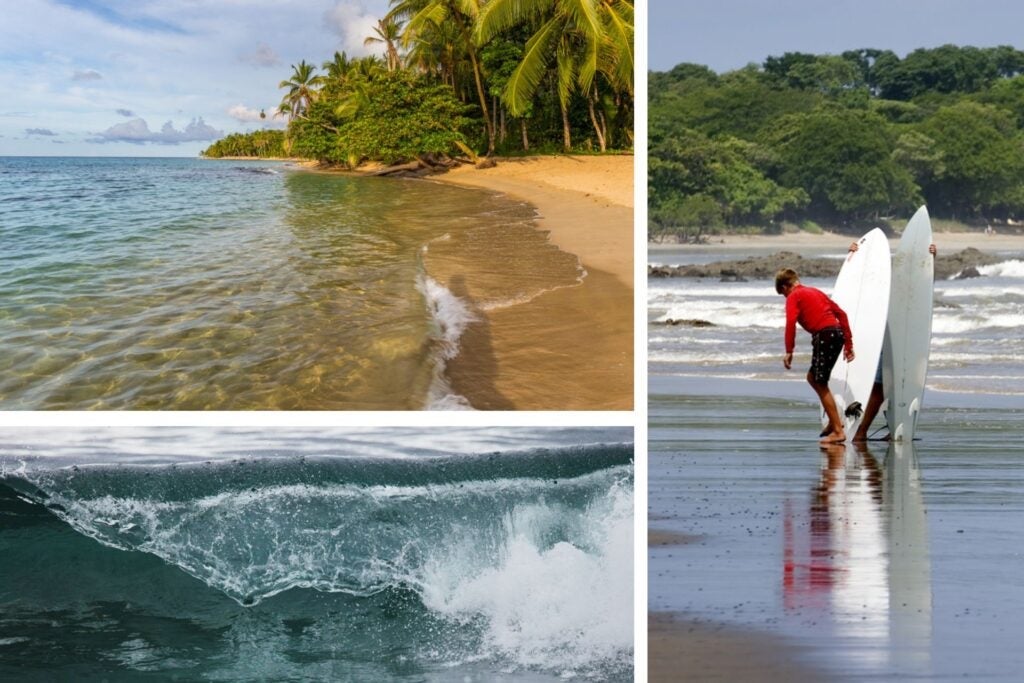
Finally, we finish this tour of the best surfing spots in Costa Rica on the Caribbean coast. Puerto Viejo is located in Limón province and is known not only for its Afro-Caribbean, indigenous, and Latin cultural mix, but also for having the Caribbean’s most challenging wave, called Salsa Brava.
This famous fast, powerful tube wave breaks over sharp coral, so it is recommended only for very experienced surfers due to the dangers involved. However, if it’s your first time on a board, you can practise at Playa Negra, which has gentler waves. This spot hosts several international and local events, like the Salsa Brava Surf Contest and Puerto Viejo Open. You can also find various schools, such as Caribbean Surf School & Camp or Pirate Surf School.
Connectivity While Surfing in Costa Rica
If you’re going surfing in Costa Rica in remote areas like Santa Teresa, Hermosa Beach, or Puerto Viejo, where coverage may be weak, it’s important to have the best connectivity on your smartphone. Holafly can be your best ally alongside your surfboard to find the best GPS routes, book lessons, or check sea conditions.
If you’re visiting for just a few days, we recommend the eSIM for Costa Rica, offering unlimited data only for the days you need. For longer stays, any of Holafly’s monthly plans (from 25 GB to unlimited data) provide fast and secure internet to explore the entire coast. You can also travel to neighbouring countries since the same eSIM works in over 170 destinations. Activation is very easy: Just open the Holafly app upon landing and start your eSIM in seconds.
Important: If you are a frequent traveler and want to stay connected without worrying about expensive roaming or looking for a new SIM at every destination, Holafly’s subscription plans are for you. With a single eSIM, enjoy internet in more than 170 countries for a fixed price and no surprises on your bill. Travel without limits and connect easily and securely! 🚀🌍

Recommended Seasons for Surfing in Costa Rica
Although you can surf in Costa Rica at any time of year, each region presents different conditions that affect its waves, such as the swell, which is the set of waves generated offshore that travel to the beaches. To help you understand the sea conditions in each season, we explain them in detail:
- North Pacific: The best season runs from November to March, with dry weather, sunny days, westerly/northwesterly swell, and clean waves, perfect for beginners.
- Central and South Pacific: From April to November, there are fewer tourists and the waves become more challenging, with southerly/southwesterly swell that make them bigger and more consistent, suitable for intermediate or advanced surfers.
- Caribbean: The best season is from December to March, with north Atlantic swell, powerful waves breaking over reefs, recommended for experienced surfers.
Costs of Surfing in Costa Rica
The costs of surfing in Costa Rica vary depending on the area, as the North Pacific is slightly more expensive than the south or the Caribbean, and prices also depend on high or low season, as well as whether accommodation or transport is included. Usually, the price of a class includes board and wetsuit rental, transfers, and taxes. Here are approximate prices from the main surf schools in the country:
| Service | Rates |
|---|---|
| Equipment rental (board and wetsuit) | from $16 (€14) per day |
| Beginner group class | from $40.70 (€35) for 2 hours |
| Pack of 3 beginner classes | from $70 (€60) |
| Private lesson | from $70 (€60) for 2 hours |
| Surf camp with accommodation, equipment and classes | from $1,045 (€900) for 8 days |
Approximate costs for surfing in Costa Rica.
How to Start Surfing in Costa Rica
Sometimes, starting a new activity can feel confusing, but now that you know the best places to surf in Costa Rica, all that’s left is planning your first day as a surfer. Here’s a simple guide to make the most of your time on the waves:
- Choose the right area: Depending on your level or experience, select a suitable beach. Beginners should go to sandy beaches with gentle waves like Tamarindo, Santa Teresa, or Cocles. Advanced surfers can try Playa Hermosa, Pavones, or Salsa Brava.
- Book a surf school: Pick a school with good reviews and certified instructors. You can take private lessons for faster progress or group lessons for a social experience.
- Arrive prepared for your class: Bring a swimsuit, towel, and biodegradable sunscreen. The school will provide the wetsuit and surfboard.
- Follow your instructor’s advice: Your first class will cover safety rules, paddling, the pop-up (standing up), and how to escape a rip current.
- Learn to read the ocean: Identify rips or strong currents to avoid them. Also, understand wave priorities, respect turns, and know how to exit a wave safely.
- Respect the environment: Use biodegradable sunscreen, do not litter, and respect protected areas and turtle nests.
Frequently Asked Questions About Surfing in Costa Rica
Yes, you must at least have basic swimming skills for your safety. If you can’t swim, we recommend starting with swimming lessons first.
With about three to five classes of around two hours each, you’ll learn to stand up and ride small waves.
For surfing in Costa Rica, you should use a soft top or funboard, which are more stable and safe for learning the pop-up and paddling.
If you find yourself in a current while surfing in Costa Rica, don’t swim against it. Swim parallel to the shore until you can exit safely.
Most beaches offer surf camps with accommodation and included lessons. This is the easiest way to surf daily without commuting.