Language


 No results found
Scuba diving in Zanzibar: Best spots and prices
Scuba diving in Zanzibar means letting yourself be carried away by the calm of the Indian Ocean. Find out everything you need to know!

Scuba diving in Zanzibar takes you just a few kilometers off the coast of Tanzania into the deep blue of the Indian Ocean, revealing one of Africa’s most captivating underwater worlds. The island blends white sand beaches, fishing villages, Arab heritage, and marine life so vibrant it feels lifted from a tropical postcard. Though Zanzibar is famous for its beach holidays, scuba diving reveals that the island’s true wonders extend far beneath the surface.
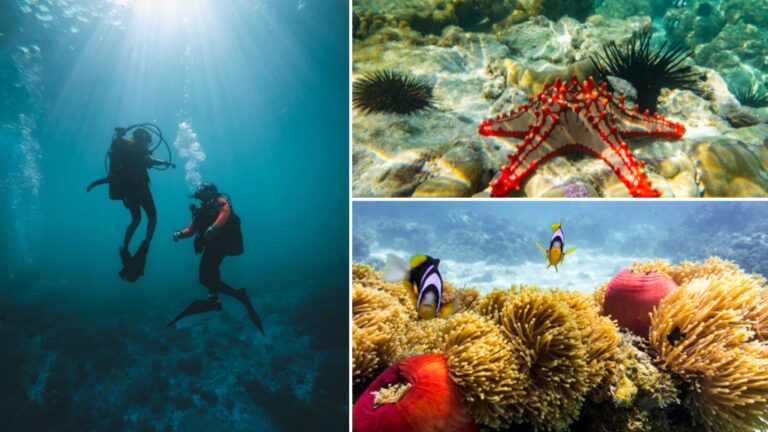
Diving in Zanzibar strikes the perfect balance between adventure and tranquility. The warm waters of the Indian Ocean, ranging from 26 °C to 30 °C year-round, offer excellent visibility and shelter a marine biodiversity that can amaze even seasoned divers. In a single day, you might encounter turtles, dolphins, eagle rays, moray eels, barracudas, and vibrant coral gardens. Zanzibar is also one of the best places in the world to spot one of the ocean’s gentle giants: the whale shark.
Today, we’re taking you on a journey to discover the best dive schools, the most spectacular dive sites, the approximate costs, and all the tips you need to enjoy an unforgettable underwater adventure in this Indian Ocean paradise.
What are the best diving schools in Zanzibar?
Scuba diving in Zanzibar is more than just an activity, it is a way to connect deeply with the ocean, which makes choosing the right dive operator essential. The island’s top dive schools are mostly found along the northern coast between Nungwi and Kendwa and to the east near Mnemba Atoll.
Most dive schools in Zanzibar are affiliated with PADI or SSI, feature multilingual instructors, and offer everything from beginner experiences to advanced certifications, catering to both first-time divers and seasoned underwater explorers.
The vibe is always easygoing, reflecting the local pole pole mindset of taking life slowly. After diving, the day usually winds down with ginger tea, laughter on the terrace, and a sunset over the Indian Ocean that lights up the sky in shades of gold.
Here is a look at some of Zanzibar’s top dive schools, chosen for their reputation, professionalism, and ability to provide authentic, safe, and unforgettable diving experiences.
Spanish Dancer Divers (Nungwi)
Located in the heart of the northern coast, within the Nungwi Beach Hotel, Spanish Dancer Divers is one of Zanzibar’s most established and highly regarded dive schools. With over 25 years of experience, it is known for its professionalism and welcoming, family-like atmosphere.
They offer PADI courses ranging from beginner experiences like Discover Scuba Diving to Divemaster, as well as specialties such as deep diving, underwater navigation, digital photography, and Nitrox. Daily trips take divers to some of the archipelago’s most stunning sites, including the reefs of Mnemba Atoll, Leven Bank, and Tumbatu Island.
What sets them apart is their focus on organization and safety: groups are kept small, equipment is meticulously maintained, and instructors from various countries teach in English, French, Spanish, and Italian. They also offer combined dive and accommodation packages, ideal for longer stays.
In short, this center is perfect for travelers looking for a comprehensive, professional center with excellent attention to detail.
Scuba Do Zanzibar (Kendwa Beach)
On the peaceful Kendwa Beach, just south of Nungwi, you’ll find Scuba Do Zanzibar, a PADI 5 Star Dive Resort known for its personalized service and dedication to marine conservation.
They provide courses for all levels, including PADI Open Water, Advanced, Rescue Diver, and Nitrox, along with programs for children and families. Daily trips take divers to Mnemba Atoll, Tumbatu Island, and some of the island’s less-visited western reefs, where the water is crystal clear and currents are gentle.
Their approach is eco-friendly and educational. They use sustainable materials, promote responsible diving, and work with local organizations on coral restoration projects. They also have a spacious two-level boat that is perfect for full-day trips on the water.
If you are looking for a relaxed and mindful experience that perfectly balances adventure and nature, this dive school in Zanzibar might be just what you are looking for.
East Africa Diving Center (Nungwi)
Founded in the 1990s, East Africa Diving is one of Zanzibar’s pioneering dive centers and a benchmark in the region. Its main base is on Nungwi Beach, with a second location in Matemwe, just a short distance from Mnemba Atoll.
They offer a full range of PADI training, from beginner to professional courses, with both local and international instructors. Their boats are specifically equipped for diving, featuring spare tanks, emergency gear, and refreshments on board.
One of their biggest advantages is the variety of dive sites. They organize trips to Tumbatu, Leven Bank, Hunga Reef, and Kichwani, selecting the location based on experience level and sea conditions. They also offer combined diving and snorkeling trips, which are especially popular with groups and couples.
One Ocean Dive Center (Stone Town, Matemwe and Nungwi)
One Ocean is the largest diving network in Zanzibar, with centers in Stone Town, Matemwe, and Nungwi. As a PADI 5 Star Instructor Development Center, they also train certified diving instructors.
In Stone Town, they provide gentle coastal dives that are great for beginners, while from Matemwe they organize daily trips to Mnemba Atoll, renowned for its crystal-clear waters and abundant marine life, from dolphins and turtles to eagle rays and colorful tropical fish.
What sets them apart is their scale and professionalism. They have their own fleet, new equipment, maintenance workshops, and multilingual service. They also offer combined diving and safari trips in Tanzania, a unique option for those looking to experience both land and sea.
This center is designed for divers who prioritize experience, options for all levels, and impeccable facilities.
Zanzibar Watersports (Nungwi)
Offering a mix of diving, snorkeling, and other water sports, Zanzibar Watersports is one of the most versatile operators in the north of the island. In addition to PADI courses, they provide packages for certified divers that include double dives, trips to Leven Bank, and full-day excursions to Mnemba.
The dive center is based at Kendwa Rocks Hotel in Nungwi, at the northern tip of the island, which makes it easy to access if you are staying in the area. With up-to-date equipment, skilled instructors, and a laid-back vibe, it’s especially suited for young travelers and groups.
Perfect for those looking to combine diving with other water activities and enjoy a fun experience without compromising on safety or quality.
Breezes Diving (Breezes Beach Club, Bwejuu)
On Zanzibar’s quieter and less developed southeast coast, you’ll find Breezes Diving at the Breezes Beach Club. Smaller than the schools in the north, it’s ideal for divers seeking colorful reefs away from the crowds.
Their PADI courses range from beginner to advanced, with trips tailored to the group’s skill level. Visibility in this area is excellent, particularly between December and April, when the waters are calm.
It is an excellent option for divers who want to combine relaxation, luxury, and nature, far from the most touristy areas.
Each dive school in Zanzibar has its own personality and rhythm. Some are known for their top-notch facilities, others for their friendly vibe or commitment to marine conservation. What unites them all is a shared goal: to showcase the Indian Ocean in all its beauty, with professionalism, care for nature, and the unmistakable tropical magic of the island.
What are the best scuba diving spots in Zanzibar?
Almost as important as choosing the right dive school is deciding where you want to dive in Zanzibar. These usually go hand in hand, but knowing the best dive sites will help you make the most of your experience. Beyond that, there’s one thing to keep in mind: beneath the island’s surface lies a vibrant world of coral, tropical fish, and underwater landscapes that rank among the most spectacular in the Indian Ocean.
Zanzibar boasts more than 30 top-notch dive sites, mainly spread along the northern coast, especially around Nungwi and Kendwa, and the reefs of Mnemba Atoll, widely regarded as the best diving spot in the archipelago. Gentle currents and protected reefs make this area perfect for both beginners and experienced divers.
With that said, let’s find out which spots in Zanzibar offer unforgettable diving experiences.
Atolón de Mnemba: the great treasure of the Indian Ocean
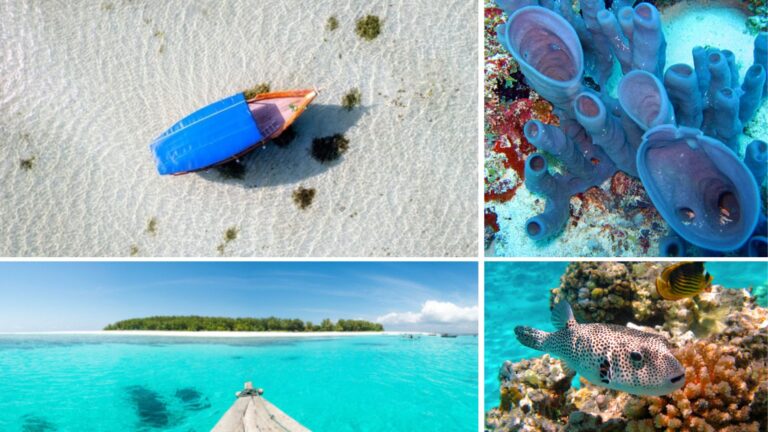
Just off the coast of Matemwe, the small Mnemba Atoll rises from the sea. This coral ring shelters one of the archipelago’s richest ecosystems. It is Zanzibar’s most famous dive spot and with good reason. Clear waters, colorful coral formations, and abundant marine life make every dive feel like a scene from a nature documentary.
Inside the atoll, dive sites like Kichwani feature walls covered in hard corals where divers can drift slowly, while Wattabomi is a coral block garden teeming with nudibranchs, shrimp, and leaf scorpionfish. Along the outer edge, Aquarium offers gentle currents and occasional encounters with turtles or eagle rays.
The atoll is perfect for both beginners and experienced divers. Dive schools usually run half-day trips with two dives, including tea and fruit on board. For underwater photographers, Mnemba is a true paradise, where the light, colors, and calm waters make every shot come out beautifully.
Leven Bank: the adventure of the open sea
Just a few miles north of Nungwi lies Leven Bank, an underwater mountain that rises sharply from the depths. This is where the ocean shows its wilder side, with stronger currents, incredible visibility, and impressively large marine life.
Diving at Leven Bank is perfect for those seeking adrenaline and encounters with pelagic species. Schools of barracuda, trevally, and tuna are common, while eagle rays and even sharks may appear in the deeper waters. Dolphins are often spotted on the way to the site, and if you visit between August and September, humpback whales can sometimes be seen from the boat.
The dives here are best suited for those with some experience and solid buoyancy control, since descents are usually done in open water. For those who are up for it, Leven Bank delivers one of the most thrilling and unforgettable diving experiences in all of Africa.
Isla de Tumbatu: the charm of small things
Off the northern coast of Zanzibar lies Tumbatu Island, surrounded by shallow reefs where the sea is usually calm. The corals here are among the most beautiful in the archipelago, making it a favorite spot for divers who love macro photography and slow, easy dives without crowds or rush.
Its reefs are home to seahorses, moray eels, octopuses, pipefish, and nudibranchs in every color imaginable. Late in the day or during night dives, it’s common to spot the striking Spanish dancer, one of the ocean’s most graceful creatures.
Tumbatu is also great for newcomers to diving, thanks to its predictable conditions, minimal current, and shallow depths that let you really take in the scenery. Most dive centers in Nungwi use this site for first-time dives or as the second dive of the day.
Menai Bay: diving among dolphins and sandbanks
On the island’s southwest end, you’ll find Menai Bay, a large marine reserve filled with lagoons, reefs, and sandbanks bordered by mangroves. Diving here has a completely different feel from the north. The currents are mild, the underwater scenery is full of light, and the whole place gives off a deep sense of calm.
Its waters are home to butterflyfish, angelfish, turtles, and blue-spotted rays, along with a resident pod of bottlenose dolphins that often follow the boats at sunrise.
The experience usually mixes diving and snorkeling, with stops at sandbanks that appear during low tide. It’s an ideal plan for couples or groups looking to spend a full day on the water, enjoying both what lies below the surface and the beauty above it.
Bawe y Pange Reefs: diving near Stone Town
For those staying in the capital, Stone Town, there’s a very convenient option that doesn’t require traveling north: the Bawe and Pange reefs. Just a 20-minute boat ride away, they offer clear water, healthy corals, and an impressive amount of marine life.
These spots are great for quick or refresher dives, with moderate depths and very gentle currents. You’ll find trumpetfish, sweetlips, anemones full of clownfish, and large brain corals scattered across the reef.
Diving here also gives you the chance to enjoy the sunset on the way back to Stone Town, as the sky and sea glow orange and traditional dhows drift slowly toward the harbor. It’s a simple experience, yet deeply beautiful.
Paje y Jambiani: the alternative south
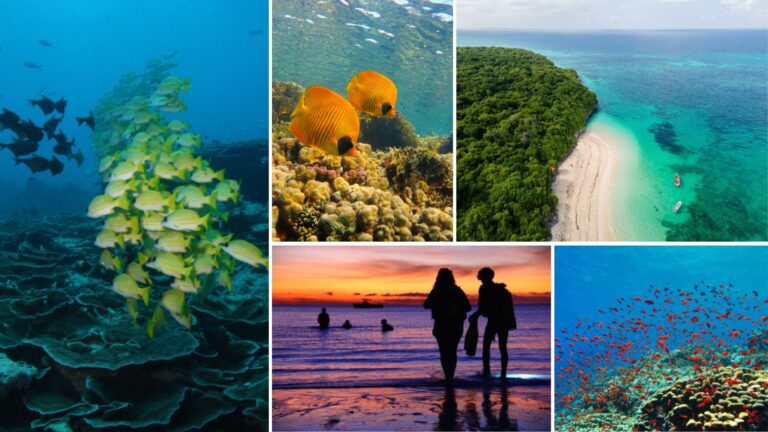
On the island’s southeast coast, the villages of Paje and Jambiani offer a distinct style of diving. Turquoise lagoons give way to an outer reef where the water feels more alive. It’s a great place for relaxed drift dives, letting the current guide you through colorful, thriving reefscapes.
You’ll often spot eagle rays, green turtles, fusiliers, and jacks here, along with soft corals that sway gently with the current. Dive schools in this area plan their outings around the tides to ensure comfortable and safe dives.
It’s a great choice for intermediate divers who want quieter spots with a hint of adventure. And once you’re back on shore, the endless beaches of Paje and Jambiani are perfect for unwinding under the palms or watching the sunset with a mango juice in hand.
Every part of Zanzibar’s underwater world has its own rhythm. The reefs change in mood and color, the dives feel different every time, and the moment you slip beneath the waves you understand that here, the ocean is not just part of the landscape. It shapes the spirit of the island itself.
How to get internet access in Zanzibar with Holafly?
Zanzibar has a magic that makes you want to switch off completely. Days unfold with sunrises over the Indian Ocean, relaxed walks through Stone Town, and long afternoons spent in a hammock watching the sea. Still, even in this slow paced paradise, staying connected for sharing photos, working remotely, or arranging a dive trip is often necessary.
In popular areas like Nungwi, Kendwa, Matemwe, and Paje, 4G coverage is generally good, and most hotels offer free WiFi, though speeds can vary. To avoid relying on these networks, the easiest option is to use a Holafly eSIM for Tanzania, which provides unlimited data in Zanzibar and on the mainland. It activates in minutes, requires no physical installation, and lets you stay connected from the moment you land.
Another option is Holafly Plans, a subscription that works well for longer trips, mixing diving with remote work, or hopping between countries to explore top dive spots in the Indian Ocean. It works like the eSIM mentioned earlier, activating via a QR code either before you leave or upon arrival, but it provides internet access in over 160 countries, including Tanzania.
Important: If you are a frequent traveler and want to stay connected without worrying about expensive roaming or looking for a new SIM at every destination, Holafly’s subscription plans are for you. With a single eSIM, enjoy internet in more than 160 countries for a fixed price and no surprises on your bill. Travel without limits and connect easily and securely! 🚀🌍

How much does it cost to dive in Zanzibar?
Despite its international reputation, diving in Zanzibar remains surprisingly accessible. The island combines professional standards with reasonable prices, making it an ideal destination for those looking to get certified or simply enjoy a day beneath the waves.
Most dive schools include full equipment rental, boat transfers, a certified instructor, and onboard refreshments in their prices, so the final cost rarely comes as a surprise. In addition, multi-dive packages and PADI courses often offer tiered discounts for those planning to spend several days diving.
Prices vary slightly by area. Nungwi and Kendwa tend to be a bit more expensive due to higher tourist demand, while the east coast, including Matemwe, Paje, and Jambiani, is generally more affordable. Even so, the average cost is lower than in other Indian Ocean destinations like the Maldives or Mauritius.
| Type of experience or course | Location / Suggested school | Approximate price (USD) | Includes | Recommended level |
| Discover Scuba Diving | Nungwi / Kendwa – Spanish Dancer Divers, Scuba Do | 90–120 | Theory class, one dive in the sea, full equipment, boat, and guide | Beginners |
| Double dive (2 tanks) | Matemwe / Nungwi / Kendwa | 120–150 | Two dives, sea transport, snacks and PADI guide | Certified divers |
| Open Water Diver Course (PADI certification) | Nungwi / Matemwe – East Africa Diving, One Ocean | 450–550 | Four dives, digital manual, theory, and official certification | Beginners |
| Advanced Open Water Diver Course | Matemwe / Kendwa | 500–600 | Five themed dives, materials, full equipment, and certification | Intermediate |
| Nitrox or Enriched Air Course | Matemwe / Nungwi | 150–200 | Theory, practice, and certification | Intermediate |
| Leven Bank or Mnemba Dive (full day) | Nungwi / Kendwa | 160–200 | Two deep dives, lunch, guide, and spare tank | Advanced |
| Night dive (Tumbatu or Nungwi Reef) | Nungwi / Kendwa | 90–120 | dive, torch, guide, and instructor | Intermediate |
| Six-dive package | Any main area | 300–350 | Full equipment, boat, and guide | Certified divers |
| Divemaster course (PADI professional) | Matemwe – One Ocean | 1,100–1,400 | Practical training, advanced theory, classroom assistance and professional certification | Advanced |
| Combined diving + snorkeling + sandbank tour | Menai Bay – Kizimkazi Dive Center | 100–130 | One dive, guided snorkeling, picnic, and transportation in a traditional dhow | All levels |
Keep in mind that many dive schools offer discounts for payments in cash or via local bank transfer. They also often have special rates for combined courses, such as Open Water plus Advanced.
On average, a traveler spending a week diving in Zanzibar can expect to spend between $400 and $900, depending on their certification level and the number of dives. It’s a fair price for an experience that blends African exoticism with some of the most colorful underwater landscapes in the Indian Ocean.
Frequently asked questions about scuba diving in Zanzibar
While diving is possible year-round, the best seasons are from November to March and June to October, when the seas are calmer, visibility often exceeds 25 to 30 meters, and water temperatures hover around 28 °C. During April and May, rains can slightly reduce visibility, though the reefs still offer excellent conditions. Overall, the Indian Ocean stays warm and inviting at any time of year, so there are always great days for diving.
Yes, although sightings are not guaranteed. The whale shark, the largest fish in the world, visits Zanzibar’s waters mainly between November and February, drawn by plankton blooms. The highest chances of encountering one are in the north, around Leven Bank and Mnemba, and in the southwest near Kizimkazi. Dive centers usually share recent sighting reports, and some even organize special trips to try to spot them. Seeing its enormous silhouette glide through the blue is a truly awe-inspiring experience.
No prior experience is needed, as there are calm, beginner-friendly sites like Tumbatu Island, Kichwani, and Bawe Reef with gentle waters and moderate depths. Certified divers can tackle more challenging spots such as Leven Bank or the outer edge of Mnemba, where stronger currents bring pelagic species and visibility is outstanding.
It’s not essential, but it is recommended. Water temperatures hover around 27–29 °C, so a 2–3 mm short wetsuit or a protective rash guard is usually enough to stay warm and avoid scrapes from the coral.
Absolutely. Most dive centers in Zanzibar are affiliated with PADI or SSI, staffed with international instructors, and use modern equipment. The boats are well equipped, and dives are organized in small groups. Before each trip, divers receive a thorough briefing covering the site, currents, and safety measures.
Plans that may interest you


Hi! I'm a Spanish-English translator working with Holafly, helping bring travel content to life for curious travelers. As a digital nomad with a passion for exploring, I'm always adding new spots to my bucket list. If you love to travel like me, stick around because you're in the right place to find inspiration for your next trip! ✈️🌍