Language


 No results found
Scuba diving in the Red Sea: Best spots and prices
Admire unique biodiversity while scuba diving in the Red Sea. We'll tell you about the best places to dive and the courses you can take.

Located in the northeast of Africa and the southwest of Asia, the Red Sea connects to the Indian Ocean through the Bab el-Mandeb Strait and the Gulf of Aden. It is a paradise for diving enthusiasts. If you’re thinking about scuba diving in the Red Sea, this guide covers everything you need to know to plan your adventure.
Find out which certified dive centers are available, the courses they offer, their prices, and the best dive sites in the area. Whether it’s your first time or you’re looking to take your skills to the next level, there’s a course for every level. Get ready to explore legendary shipwrecks like the SS Thistlegorm!
Diving centers and courses in the Red Sea
The main dive centers in the Red Sea are located along the Egyptian coast, particularly in Sharm El Sheikh, Hurghada, Marsa Alam, and Dahab. Here you’ll find schools certified by major international organizations like PADI, SSI, and CMAS, ensuring safety and quality in every course. Some of these centers include:
- Emperor Divers (Hurghada y Marsa Alam): It is one of the most established dive operators in the Red Sea, with over 25 years of experience. They offer courses ranging from Open Water Diver to Divemaster and also organize daily trips as well as liveaboard diving cruises.
- Camel Dive Club (Sharm El Sheikh): This center is well known for its prestigious PADI dive school and on-site accommodation. It’s ideal for those looking for the convenience of having everything in one place along with professional training.
- Blue Ocean Dive Centers (Marsa Alam): They are known for their sustainable approach and for being located near Abu Dabbab Reef, home to turtles and dugongs.
- Reef 2000 Dive Club (Dahab): If you’re looking for a more relaxed atmosphere and more affordable prices, this center offers well-known dive sites, including the famous Blue Hole.
At any of the dive schools we’ve highlighted, you can find a course suited to your needs, from beginner programs to professional certification courses. The most popular options include:
| Course | Level | Details |
| Discover Scuba Diving (first dive) | Beginners | Basic theory, pool practice, and one open water dive. |
| PADI Open Water Diver | Intermediate level | International certification (PADI or SSI). |
| PADI Advanced Open Water Diver | Certified divers | Deeper dives, up to 30 meters. |
| Rescue Diver | Experts | Underwater emergency rescue training. |
| Divemaster | Experts | To work as a professional diver or instructor |
The best places to dive in the Red Sea
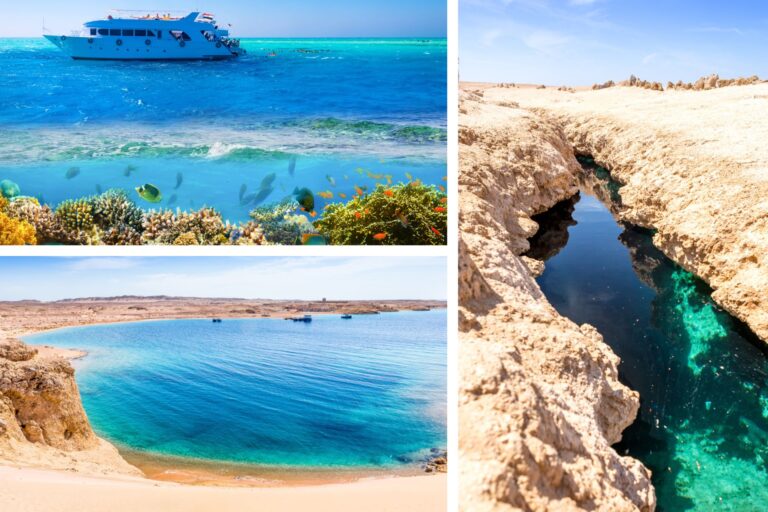
If you’re traveling in Egypt, one of the most popular adventure activities is diving in the Red Sea. This region boasts some of the most stunning underwater landscapes in the world, with warm, crystal-clear waters year-round, over 200 species of coral reefs, and more than 1,200 species of fish. Below, we’ve outlined the best dive spots in the area, along with their key features and locations.
1. Ras Mohammed –Sharm El Sheikh, Egypt
This protected marine national park is located in the southern part of the Sinai Peninsula. It’s one of the most popular dive spots in the Red Sea, as the currents from the Gulf of Suez and the Gulf of Aqaba bring a rich diversity of marine life.
The marine life here includes soft and hard corals, barracudas, hammerhead sharks, Napoleon wrasse, groupers, and green turtles. Sharm El Sheikh is suitable for both beginners and experienced divers, with calm shallow areas near the shore as well as deeper zones for more advanced diving.
2. SS Thistlegorm – Sharm El Sheikh coast, Egypt
If diving on a shipwreck in the Red Sea appeals to you, the SS Thistlegorm is a must-see. This British vessel was sunk by German bombers during World War II in 1941 and now rests about 30 meters underwater off the coast of Sharm El Sheikh, roughly 40 kilometers west of the Sinai Peninsula.
When you dive on this wreck, you’ll see motorcycles, trucks, and ammunition transformed into homes for hard corals, sponges, anemones, lionfish, moray eels, and turtles. This underwater experience blends shipwreck archaeology with vibrant marine life, but due to its depth, it’s suitable only for certified divers.
3. Abu Dabbab – Marsa Alam, Egypt
Also in Egypt, along the southern Red Sea coast in the Marsa Alam region, you’ll find this easily accessible reef just off the beach, so no boat is needed. Its sandy seabed and seagrass beds are home to a variety of marine life, including dugongs, giant turtles, rays, moray eels, and parrotfish.
Being so close to the shore, it’s ideal for beginners or for snorkeling, with water temperatures ranging from 22°C in winter to 29°C in summer and visibility exceeding 25 meters.
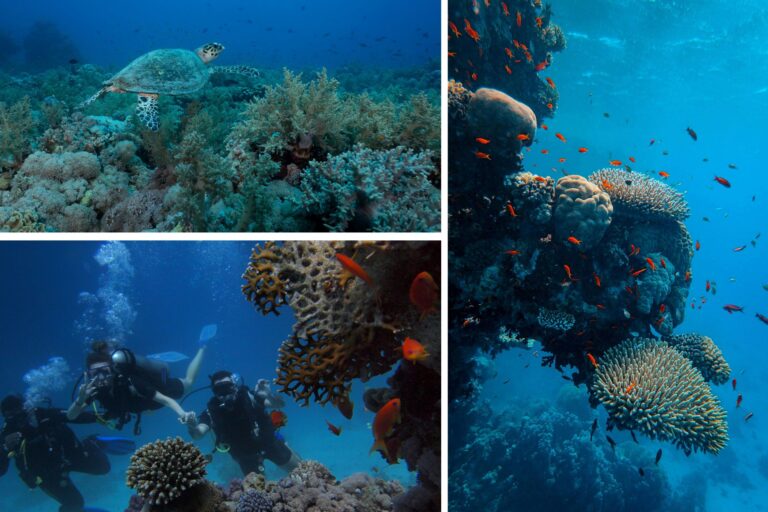
4. Elphinstone Reef – Near Marsa Alam, Egypt
Another well-known dive site in the Red Sea is Elphinstone Reef, located about 12 kilometers off the coast of Marsa Alam in southern Egypt. This narrow, elongated reef stretches roughly 300 meters and features steep walls dropping over 70 meters, making it a spot suited only for experienced divers seeking a more challenging dive.
In addition to a wide variety of soft corals, gorgonians, and tropical fish, it’s one of the few places where you can see oceanic sharks at relatively shallow depths, alongside barracudas, tuna, turtles, and dolphins.
5. Blue Hole – Dahab, Egypt
The final Red Sea dive site on our list is both the most famous and the most challenging. This underwater sinkhole drops over 100 meters with a diameter of around 80 meters and is home to gorgonians, hard corals, and a wide variety of tropical fish, including butterflyfish, surgeonfish, and emperor angelfish.
Although it’s easy to access this underwater sinkhole directly from the shore, it is recommended only for experienced divers, as it requires careful preparation and awareness of the risks of decompression and extreme depth. Beginners can safely explore the edges or outer walls instead.
Connectivity while diving in the Red Sea
Planning a scuba diving trip to the Red Sea takes careful preparation, but it’s also important to think about staying connected. Having unlimited data ready to activate through an app as soon as you land will give you peace of mind. You won’t have to stress about finding Wi-Fi at your hotel or dive center, letting you fully enjoy your time underwater.
If your trip is just for a week or two, the best option is Holafly’s eSIM for Egypt, offering unlimited data and a reliable connection for only the days you need. For longer stays, Holafly’s monthly plans give you either 25 GB or unlimited data on a month-to-month basis with no long-term commitment. Plus, the same eSIM works in over 160 destinations around the world!
Important: If you are a frequent traveler and want to stay connected without worrying about expensive roaming or looking for a new SIM at every destination, Holafly’s subscription plans are for you. With a single eSIM, enjoy internet in more than 160 countries for a fixed price and no surprises on your bill. Travel without limits and connect easily and securely! 🚀🌍

How much does it cost to dive in the Red Sea?
The cost of scuba diving in the Red Sea varies depending on the dive site and whether you want to earn a certification. You can browse the websites of the main dive centers and book from a range of courses, suitable for both beginners and experienced divers.
| Course | Details | Prices |
| Introductory diving | Includes equipment, instructor, and 1 hour of diving. | From $81 |
| Open Water Diver (PADI/SSI certification) | Includes theory, equipment, confined water sessions, and 4 dives in the sea. | From $406 |
| Deep wreck diving | Includes equipment, transportation, and 2 dives. | From $116 |
| Diving cruises | Usually 3 to 7 nights, with accommodation, meals, and dives. | From $300 to $2,800 |
| Rescue Diver | PADI certification to become a rescue diver. | From $284 |
Frequently asked questions about scuba diving in the Red Sea
The best season is from March to November, as the water temperature ranges between 24°C and 30°C and visibility can exceed 30 meters.
If you’re doing a beginner “Discover Scuba Diving” experience, no certification is needed. However, for wreck dives or deeper excursions, you’ll need a PADI or SSI certification.
Yes, it’s a safe place as long as you dive with a certified center and follow their instructions. It’s essential not to exceed the depth limits of your certification.
You can rent a mask, snorkel, and wetsuit. International diving insurance is also included.
You can encounter over 1,000 species of fish and 200 types of coral, including hammerhead sharks, turtles, moray eels, dolphins, manta rays, Napoleon wrasse, and dugongs.
Plans that may interest you


Hi! I'm a Spanish-English translator working with Holafly, helping bring travel content to life for curious travelers. As a digital nomad with a passion for exploring, I'm always adding new spots to my bucket list. If you love to travel like me, stick around because you're in the right place to find inspiration for your next trip! ✈️🌍