Language


 No results found
18 Mexican Christmas traditions you’ll want to experience this holiday season
Wondering what are some Christmas traditions in Mexico? From piñatas and tamales to parades and fireworks, here are 18 key rituals, festive foods, and holiday activities across Mexico.

In Mexico, Christmas isn’t a single day; it’s a season of celebration that stretches across several weeks. From December to mid-January, streets glow with lights, plazas hum with music, and communities come together to celebrate.
From eating Tamales and breaking Piñatas with the family to gathering in the plaza to watch candlelit processions, here are 18 Christmas traditions in Mexico that rival those of the USA and Europe.
Whether you’re looking for festive inspiration or dreaming of a Christmas getaway, these traditions might just make you pack your bags and book a flight to Mexico!
6 Key Mexican Christmas dates & rituals
A fun fact about Mexico is that the Christmas season technically lasts almost two months, from December 16th to February 2nd. Here’s a timeline of the main dates Mexicans celebrate Christmas, along with the rituals and customs behind them.
Las Posadas (December 16th to 24th)
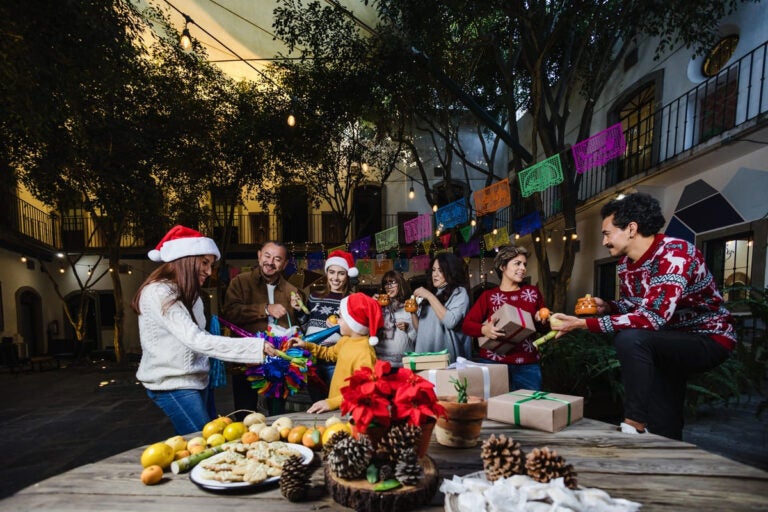
The festive season officially kicks off with Las Posadas, a nine-day reenactment of Mary and Joseph’s search for shelter in Bethlehem.
Every evening from December 16th to 24th, there are processions through the plazas and streets. The participants, who dress as characters from the nativity, carry candles, sing traditional songs (villancicos), and stop at designated “inns” for festive prayers.
Travel tip: Las Posadas takes place in many major Mexican cities, including Mexico City, Oaxaca, Guanajuato, and San Miguel de Allende. You’ll find them in the public plazas or at local churches.
Nochebuena (Christmas Eve)
Las Posadas concludes on Christmas Eve, which leads straight to the next Christmas ritual: Nochebuena. This is one of the biggest Christmas traditions in Mexico and serves as the main holiday meal.
Held on the evening of December 24th, families gather for a late-night feast featuring traditional dishes like tamales, bacalao (salted cod), and ponche (fruit punch), followed by gift exchanges.
Travel tip: If you’re visiting Mexico, head to one of the Christmas markets, such as Zócalo in Mexico City, for a taste of traditional Nochebuena dishes.
Midnight Mass (Christmas Eve)
After Nochebuena concludes, many families head to their local church for Midnight Mass (Misa de Gallo). The service reflects the deep Catholic roots of Mexican Christmas traditions, with carol singing, choirs, and traditional nativity displays.
Travel tip: If you’re on a festive trip in Mexico City, head to the Metropolitan Cathedral or the Basilica of Our Lady of Guadalupe, which both host huge, tourist-friendly masses.
New Year’s Eve (12 grapes, symbolic colors)

“Año Nuevo” marks the transition to the new year and combines family, superstition, and festive fun. Mexico has many New Year’s rituals, such as:
- Eating 12 grapes at midnight, one grape for each stroke of the clock, to symbolize wishes for each month of the upcoming year.
- Sweeping the home to remove negative energy ahead of the new year.
- Wearing coloured underwear to attract a specific desire in the upcoming year. Red attracts love and passion, yellow attracts prosperity and abundance, and green attracts health.
Aside from these customs, the main New Year’s celebrations in Mexico are fireworks, which typically go off at midnight.
Travel tip: You’ll find public fireworks displays in most cities and towns, including Mexico City, Cancun, Puerto Vallarta, and Los Cabos. Zócalo in Mexico City hosts the country’s biggest New Year’s celebrations with live music and a huge fireworks display.
Día de Reyes (January 6th)
Día de Reyes, or Three Kings’ Day, is one of the most popular festivals in Mexico, honouring the Three Wise Men who brought gifts to baby Jesus.
On January 6th, families share Rosca de Reyes, a sweet bread with a small figurine hidden inside. Whoever finds the figurine must host a tamale party on Día de la Candelaria (February 2nd).
For Mexican children, Día de Reyes is like Christmas Day, as traditionally, children receive gifts from the Three Kings rather than Santa Claus.
Travel tip: Parades and Día de Reyes celebrations are held in most cities, with particularly vibrant events in Mexico City, Guadalajara, and Monterrey.
Día de la Candelaria (February 2nd)
Día de la Candelaria (Candlemas) marks the end of the Christmas season. The celebration commemorates Mary’s presentation of Jesus at the Temple in Jerusalem, 40 days after his birth.
Mexicans celebrate with tamales and atole (a warm corn-based drink). Some families also dress up a baby Jesus figurine and take it to church to be blessed by a priest.
Travel tip: Some Mexican towns hold Candlemas parades or festivals featuring folk dances and traditional music, such as Valladolid in Yucatán.
7 Mexican Christmas foods to try
Mexican Christmas traditions are as much about food as they are about rituals. From savory mains to sweet treats and warming drinks, look out for these traditional Mexican Christmas foods:
- Tamales: Corn dough stuffed with meats, cheese, or sweet fillings, wrapped in corn husks. You can buy them from street vendors and at markets throughout the Christmas season, but they are particularly popular during Las Posadas and on Nochebuena.
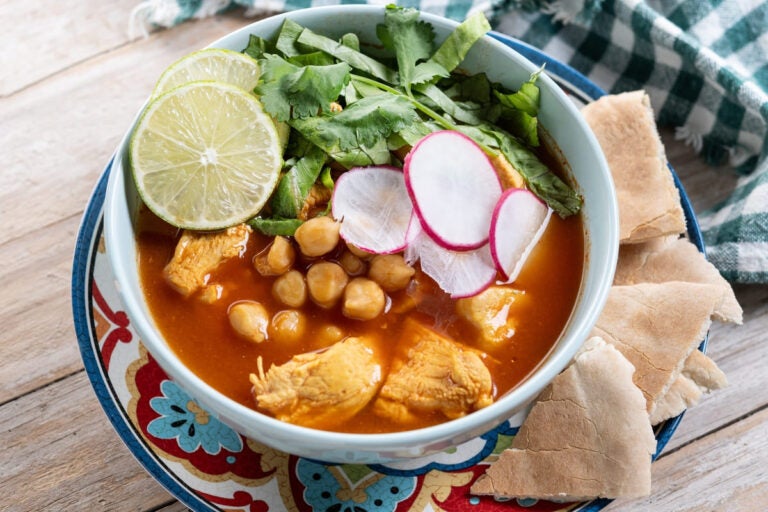
- Pozole: A hearty stew eaten during Christmas Eve and New Year’s gatherings. Pozole is made with pork or chicken, flavored with chilies, and garnished with cabbage, radish, and lime.
- Bacalao (Salted Cod): Introduced by Spanish colonizers, bacalao is often stewed with tomatoes, olives, capers, and potatoes, and served during Nochebuena feasts.
- Romeritos: A native herb similar to rosemary, cooked with mole sauce and often served with shrimp cakes on Christmas Eve. You can find them at most festive markets.
- Ponche Navideño: A warm fruit punch made with tejocotes, guavas, apples, cinnamon, and sugar cane. Sip it while enjoying Las Posadas processions.
- Buñuelos: Crispy fried dough sprinkled with sugar or drizzled with syrup. Try them hot from street vendors with a cup of ponche.
- Rosca de Reyes: A sweet, ring-shaped bread eaten on Día de Reyes (Jan 6th), containing a hidden baby Jesus figurine.
5 Festive things to do in Mexico during the holidays
Mexico at Christmas is lively, colorful, and full of energy, making it one of the best times to visit. Here are things to do in Mexico during the festive season.
- Plaza gatherings: Every December, Mexico’s town squares light up with festive decorations, Christmas carols, and stalls selling crafts and treats. Join the crowds to sip ponche and enjoy the communal holiday spirit.
- Piñata fairs: Christmas piñatas are shaped as seven-point stars, representing the struggle between good and evil. Public celebrations involve breaking piñatas to symbolise triumph over evil. It’s not only super fun, but you get to eat the candy that falls out, too!
- Christmas markets (Mexican style): Many Mexican towns and cities have festive markets selling artisan crafts, seasonal foods, and handmade decorations. Look out for traditional Mexican souvenirs, such as nativity figurines, ornamental piñatas, and local sweets.
- Pastorelas (nativity plays): During December, you’ll find many nativity performances in towns and cities, many of which are free and open to visitors. The plays recount the journey of shepherds visiting baby Jesus, often with humor and moral lessons.
- Local concerts, parades, and light installations: Throughout the festive season, Mexican cities host a variety of concerts, light displays, and parades. Check municipal websites or tourism offices for schedules.
Celebrate, share, and stay online in Mexico with Holafly
From the bustling plazas and piñata fairs to Christmas markets and festive parades, you’ll need a reliable way to stay connected during your Mexico trip.
With a Holafly eSIM, you get unlimited data and strong coverage nationwide, so you can keep up with holiday events without worrying about roaming charges.
Make your Mexican Christmas adventure stress-free and unforgettable with a Holafly eSIM for Mexico.

Peace of mind before you fly
Set up your eSIM before travel and get unlimited data on arrival.
Plans that may interest you


Hey, I’m Mika! I’m an SEO specialist with 7+ years of experience and a passion for travel info that actually helps you explore smarter. I write travel guides and tips backed by SEO insights so you can spend less time searching and more time adventuring.