







 Language


 No results found
Easter in Spain: traditions, Semana Santa parades, and essential travel tips
Easter in Spain is a major Holy Week celebration. Learn about Semana Santa processions, key traditions, and practical travel tips for visitors.
Easter in Spain, known as Semana Santa, is one of the country’s most important religious and cultural events. It’s famous for large-scale processions, solemn rituals, and city-wide celebrations that transform towns and major cities alike.
For travellers, Easter in Spain is a powerful cultural experience. It also comes with crowds, public holiday closures, and logistical considerations, so planning ahead makes a significant difference.

An eSIM you can rely on
Join over 10 million Holafly customers and get connected with our trusted, global services.
When is Easter in Spain?
Easter in Spain is set by the church calendar rather than a fixed date. It moves each year, usually landing sometime between late March and mid-April.
Semana Santa officially begins on Palm Sunday (March 29, 2026) and runs through Easter Sunday (April 5, 2026), with many events concentrated between Holy Thursday and Good Friday. If you’re researching when Easter is in Spain, it’s important to remember that it’s a full week of events, not just one day.
What is Easter in Spain?
Easter in Spain is widely known as Semana Santa, meaning “Holy Week.” It takes place at the end of Lent and focuses on the final days of Holy Week and the Easter Sunday celebration, which is why the week carries so much religious and cultural weight in Spain.
While deeply rooted in Catholic tradition, Semana Santa is also a major cultural event. Entire communities participate, and many towns prepare all year for their local observances. The combination of faith, history, and public spectacle makes it one of the most distinctive Easter traditions in Spain.
If you’ve explored Easter traditions around the world, you’ll notice that Spain’s celebrations are more public and dramatic than many other countries. The scale and solemnity set Easter in Spain apart.
How is Easter celebrated in Spain?
Easter traditions in Spain are most visible in public processions organised by religious brotherhoods, known as cofradías. These groups prepare elaborate floats, music, and ceremonial attire for Holy Week.
Although the core religious meaning is consistent nationwide, local customs vary from city to city.
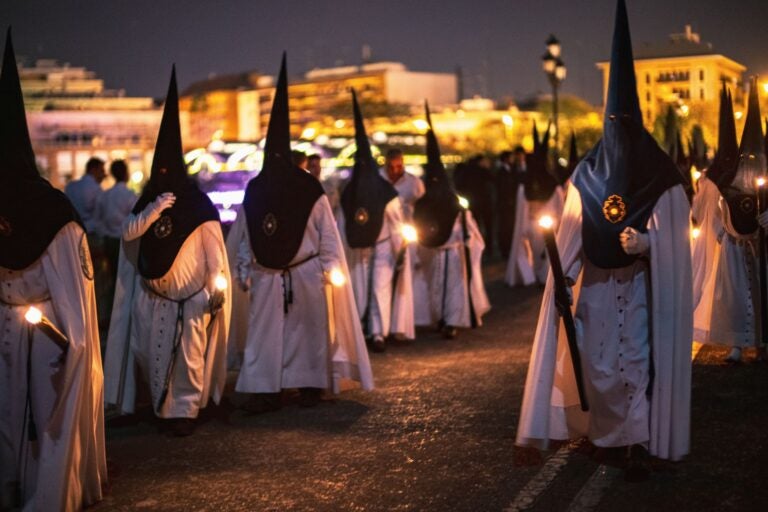
Semana Santa processions
The Semana Santa processions are the defining feature of Easter in Spain. Large religious floats, called pasos, are carried through the streets by teams of costaleros, often for several hours.
Participants wear traditional robes and pointed hoods, and brass bands or drum processions accompany the floats. In some cities, the atmosphere is solemn and silent; in others, it’s emotional and dramatic. If you’re searching for an Easter parade in Spain, these processions are what you’ll experience.
Religious traditions and local customs
Beyond the processions, Easter traditions in Spain include church services, candlelight vigils, and family gatherings. Good Friday is particularly solemn, while Easter Sunday feels more celebratory.
In certain regions, you’ll see unique customs that reflect local identity. Comparing Easter in Germany or Easter in Italy highlights how Spain’s emphasis on public ritual creates a very different atmosphere.
Best places to experience Easter in Spain
Semana Santa is observed nationwide, but some cities are especially well known for their celebrations. Choosing the right destination depends on how intense an experience you’re seeking.
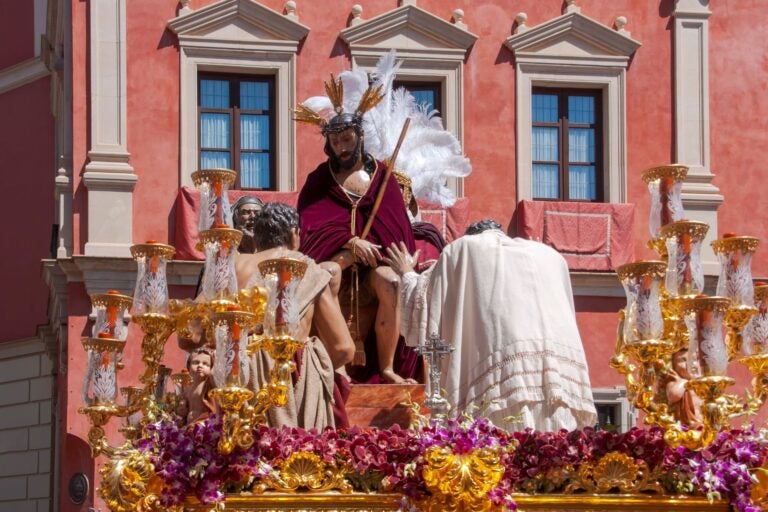
Seville
Seville is the most iconic place to experience Easter in Spain, with processions filling the historic centre for days as brotherhoods follow set routes toward the Cathedral. One of the most intense moments is La Madrugá, the overnight stretch into Good Friday morning, when crowds line the streets until sunrise.
You may also hear saetas, spontaneous flamenco-style songs sung from balconies as floats pass below, which gives Seville’s Semana Santa a uniquely local atmosphere.
Málaga
Málaga’s Semana Santa is known for its large, dramatic processions and strong band culture, with some floats carried by big teams through wide city streets. One standout tradition is the release of a prisoner linked to Holy Week ceremonies, which draws major attention when it happens.
Because Málaga is a coastal city, it also works well if you want an Easter atmosphere without giving up spring weather and a more flexible sightseeing pace.
Zamora
Zamora is known for its quieter and more austere observances. The atmosphere here is more reflective, with night-time processions that emphasise silence and tradition.
If you prefer a less crowded but deeply traditional version of Easter in Spain, Zamora is worth considering.
Madrid
Madrid’s Semana Santa feels more spread out than in southern cities, with processions and church events taking place across different neighbourhoods rather than centred in one historic core. You’ll often see Holy Week activities around major churches and central areas, but the capital’s size makes it easier to step away from the busiest routes.
Madrid suits travellers who want to experience Easter in Spain while still prioritising museums, food, and day-to-day city life that continues beyond the religious schedule.
Traditional Easter food in Spain
Food during Easter in Spain reflects regional traditions and the religious calendar. Many dishes are associated with Lent and Holy Week.
Torrijas, similar to French toast, are one of the most recognisable Easter sweets. They’re typically soaked in milk or wine, fried, and coated in sugar or honey.
Salt cod dishes are also common during Holy Week, particularly on Good Friday. In some regions, you’ll find chickpea stews or simple seafood-based meals that align with fasting traditions.
Local bakeries often prepare seasonal pastries during Semana Santa, making Easter in Spain a culinary experience as well as a religious one.

Practical travel tips for Easter in Spain
Easter in Spain is a memorable cultural experience, but it comes with crowds and holiday schedules. These tips will help you plan smoothly.
- Expect public holiday closures: Good Friday and some regional holidays mean many shops close
- Book transport early: Trains and domestic flights fill quickly during Holy Week
- Reserve restaurants in advance: Popular areas become crowded, especially in Seville and Málaga
- Be respectful during processions: Avoid crossing between floats and maintain quiet during solemn moments
- Plan for crowds: Streets near major routes or cathedrals can be extremely busy
- Stay connected while travelling: Using an international eSIM allows you to check transport updates, digital tickets, and route changes in real time during peak travel weeks
If you’re connecting Spain with other European stops, check how holiday closures and transport schedules differ before you lock in dates. A quick comparison of Easter in Greece, Easter in Germany, and Easter in Italy can help you build a smoother route and choose from the best Easter holiday destinations.
You can also browse other destinations to visit during Easter to balance cultural intensity, crowd levels, and travel logistics across your itinerary without missing the Easter traditions around the world you’re most interested in.
Stay connected during Easter in Spain with Holafly
With coverage in over 200 destinations, unlimited data, and 24/7 customer support, Holafly makes it easy to stay online while travelling across Spain and beyond.
You can purchase your data plan through Holafly eSIM shop before departure, and set up an eSIM for Spain in just a few minutes, activating it on arrival without swapping physical SIM cards.
For travellers planning Easter in Spain or comparing multiple European stops, choosing a reliable eSIM for international travel keeps maps, bookings, and schedule updates accessible throughout your trip.

Get an unlimited data eSIM
Use code MYESIMNOW5 for 5% off at checkout
Plans that may interest you


哈囉我是來自台灣的 Wen,平常最喜歡旅遊,也喜歡將旅遊的種種化成文字跟大家分享,希望大家能在我的文章中找到有用的資訊,加上 Holafly 的 eSIM,讓你的旅程更美好!✈️✈️✈️ Hi! I'm Wen, a passionate content writer and travel enthusiast from Taiwan. I transform my wanderlust adventures into engaging stories and practical guides, helping fellow travelers make the most of their journeys.Through my articles, I strive to provide travel tips while introducing how our eSIM technology can enhance your travel experience - keeping you connected wherever your adventures take you!

