Language


 No results found
Which is the Best VPN for China?
Choose the best VPN for China. We compare prices, servers, protocols, and other aspects to consider. Keep reading!

Working remotely in China comes with serious digital hurdles. The infamous Great Firewall is real, limiting access to many of the tools that digital nomads depend on. Choosing the best VPN for China is not just optional, it is crucial for staying connected and productive. Without one, essential work platforms can quickly become virtually inaccessible.
VPNs do more than help you get around these restrictions, they also safeguard your most sensitive information. Today, we are focusing on the most effective VPNs that allow you to work without barriers and ensure your experience as a digital nomad is as smooth and reliable as possible.
Why use a VPN in China?
China is an appealing destination for many digital nomads, but its online environment is among the most restricted in the world. If you choose it as your next base, you will face several challenges, especially when it comes to censorship and privacy.
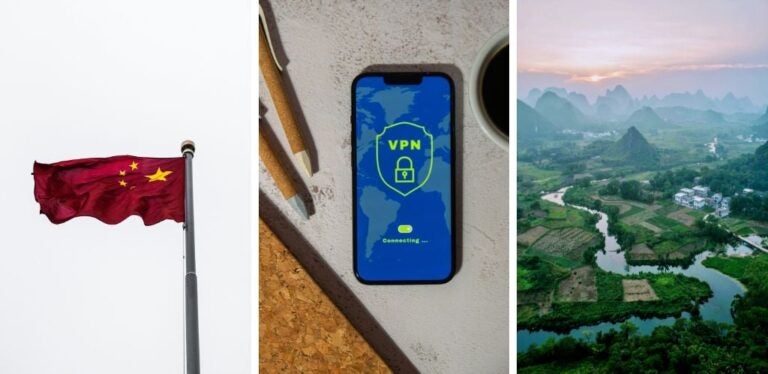
China’s “Great Firewall” (the Golden Shield Project, in effect since November 2003) blocks a wide range of platforms, including Google, Facebook, Instagram, and X (formerly Twitter). This can make life difficult for anyone who relies on these tools for work or communication. For instance, in March 2024, restrictions on certain messaging platforms were tightened, highlighting just how important it is to have a reliable VPN. For these reasons, using a VPN is not just advisable, it is essential. Some of the main reasons to use a VPN in China include:
- Avoid censorship and access restricted content: With a VPN, you can connect to a server in another country and make it appear as though you are browsing from there, giving you access to social media platforms, streaming services, and websites that are blocked in China.
- Protect your information on public networks: Wi-Fi networks in hotels, cafés, coworking spaces, and even short term rentals can be insecure. A VPN encrypts your connection and keeps your personal data, such as passwords and banking information, safe from potential cyberattacks.
- Ensure privacy and anonymity: The Chinese government operates a vast online surveillance system that monitors internet activity. By using a VPN, your real IP address is hidden, allowing you to browse more privately and without leaving a direct trace of your activity.
- Improve connection stability and speed: Even though China’s internet infrastructure is highly developed, connection speeds can still suffer due to heavy traffic or crowded public networks. A reliable VPN such as ProtonVPN can help keep your connection stable and consistent. This is especially important if your job depends on video meetings or online collaboration tools like Trello or Slack.
- Stay safe while exploring the country: China is full of incredible sights, but as you travel from city to city or town to town, you’ll notice that Wi-Fi quality can vary a lot. A VPN ensures that your connection stays secure and private no matter where you are, whether you’re in a café in Shanghai or somewhere remote in Guilin.
Comparison table of the best VPNs for China
Choosing the best VPN for China can be tricky with so many options available. To make it easier, we’ve created a comparison table highlighting the essentials for digital nomads: number of servers, speed, how many devices you can connect at once, and pricing. Everyone has different needs, so what works for one person might not suit another. Check the table carefully and pick the VPN that matches your workflow and lifestyle.
| VPN | Location change | Simultaneous connections | Speed impact | Supported protocols | Price |
| ProtonVPN | 120 countries | 10 | 7% | OpenVPN, IKEv2, WireGuard | From €2.99/month per month |
| Surfshark | 100 countries | Unlimited | 7% | OpenVPN, IKEv2 | From $2.32/month |
| CyberGhost | 100 countries | 7 | 6% | OpenVPN, IKEv2, WireGuard | From $2.36/month |
| Private Internet Access (PIA) | 91 countries | 10 | 4% | OpenVPN, IKEv2 | From $1.97/month |
| IPVanish | 75 countries | Unlimited | 8% | OpenVPN, WireGuard, IKEv2 | From $2.25/month |
| VyprVPN | 70 countries | 5 | 6% | OpenVPN, WireGuard, Chameleon | From $3.3/month |
| Hotspot Shield | 80 countries | 5 | 10% | Catapult Hydra, OpenVPN | From $8.76/month |
| MullVad VPN | 49 countries | 5 | 4% | WireGuard, OpenVPN | From $5.47/month |
| Holafly eSIM card with VPN | Yes | Various | Minimum | OpenVPN | Free with eSIM for China (from $6.24) |
Top 6 VPNs to use in China
Each VPN we’ve highlighted offers features that set it apart, but they don’t all meet the same needs. That’s why we’ve put together a detailed look at the six best VPNs for China, explaining why they might be the right fit for your daily life as a digital nomad. Picking one of these options will not only keep your data private and secure, but also ensure you have uninterrupted access to the platforms you need to work efficiently.
1. ProtonVPN
ProtonVPN is a strong option for anyone working from China, particularly if keeping your data private is important. Built by the team behind ProtonMail, it offers top-tier encryption in a simple and easy-to-use interface. With 15,000 servers in 120 countries, including nearby spots like Japan, South Korea, and Singapore, it delivers a fast and reliable connection that helps you bypass the Great Firewall smoothly.
- Most notable protocol: WireGuard, optimized for speed and stability.
- Encryption: AES-256, the leading standard for protecting your information.
- Performance: 7% impact on speed, ideal for streaming and remote work.
- Compatibility: Available for Windows, macOS, Android, iOS, Linux, and routers.
- Data usage policy: Strict no-logs policy, externally audited.
Plans and pricing:
- Free plan: Limited to three locations and one device.
- Monthly plan: $10.98 with VPN Plus or $15.11/month with Proton Unlimited.
- Annual plan: $3.48/month with VPN Plus and $7.55/month with Unlimited.
- 2-year plan: $3.48/month with VPN Plus and $9.30/month with Unlimited.
| Advantages | Disadvantages |
| Secure Core for greater privacy. | Slightly slower speeds on more distant servers. |
| Optimized servers in countries close to China. | Free plan limited in locations and devices. |
| Compatible with streaming and video calls. | High price compared to other premium VPNs. |
2. Surfshark
Surfshark is a great choice if you’re looking for strong performance without breaking the bank. It lets you connect unlimited devices, making it perfect for digital nomads juggling laptops, phones, and tablets. With servers close to China in places like Hong Kong, Japan, and Singapore, it delivers fast and stable connections to get around the country’s online restrictions.
- Most notable protocol: IKEv2, which provides a balance between speed and security.
- Encryption: AES-256, which protects your information from any leaks.
- Performance: 7% impact on speed, suitable for video calls and streaming.
- Compatibility: Available on Windows, macOS, Android, iOS, Linux, and more.
- Data usage policy: No logs stored.
Plans and prices:
- Monthly plan starting at: $10.98/month.
- 12-month plan starting at: $3.71/month.
- 24-month plan starting at: $2.32/month.
| Advantages | Disadvantages |
| Unlimited simultaneous connections. | Customer support somewhat slower. |
| Nearby servers in Hong Kong, Japan, and Singapore. | Nearby servers in Hong Kong, Japan, and Singapore Greater impact on speed than some VPNs. |
| Excellent value for money. | |
| Includes extra features such as ad blockers. |
3. CyberGhost
CyberGhost is especially user friendly, making it a solid pick if you are new to VPNs. It operates more than 7,000 servers across 100 countries, with nearby options in Hong Kong and Japan. It is well known for reliably unlocking streaming platforms, and its steady performance works well for video calls, which is essential if you plan to work remotely from China.
- Most notable protocol: WireGuard, which guarantees excellent speed and security.
- Encryption: AES-256, which ensures your connection is private even on public Wi-Fi networks.
- Performance: 6% impact on speed, ideal for streaming and video calls.
- Compatibility: Works on Windows, macOS, Android, iOS, Linux, and routers.
- Data usage policy: No logs are kept, ensuring your privacy.
Plans and prices:
- Monthly plan: $13.12/month.
- 6-month plan: $7.65/month.
- 24-month plan: $2.36/month.
| Advantages | Disadvantages |
| Servers close to Hong Kong and Japan. | Fewer simultaneous connections (seven). |
| Easy to use, ideal for beginners. | Greater impact on speed than some VPNs. |
| Excellent for unblocking streaming services. | Somewhat high price for the monthly plan. |
4. Private Internet Access (PIA)
Private Internet Access is a strong choice if you want a VPN you can tailor to your preferences. It runs more than 3,300 servers in 91 countries, with nearby locations such as Hong Kong and Singapore. It has built a solid reputation for its robust security features and its strict no-logs policy.
- Most notable protocol: OpenVPN, which offers an excellent combination of speed and security.
- Encryption: AES-256, ensuring your data is always protected.
- Performance: Minimal impact on speed, only 4%, making it an ideal choice for video calls and streaming.
- Compatibility: Available for Windows, macOS, Android, iOS, and Linux devices.
- Data usage policy: No logs are kept, and it has been independently audited.
Plans and prices:
- Monthly plan: $12.79/month.
- 12-month plan: $3.39/month.
- 36-month plan: $1.97/month.
| Advantages | Disadvantages |
| Servers close to China (Hong Kong and Singapore). | Somewhat more complex interface. |
| Strict no-logs policy. | Less intuitive for beginners. |
| Minimal impact on speed. | No support in some languages. |
| Excellent value for money. |
5. Mullvad VPN
A great choice for anyone who values simplicity and complete anonymity while working remotely from China. Mullvad VPN allows you to pay entirely anonymously, even with cash or cryptocurrency, removing any link between your identity and your online activity. Its network spans 50 countries, including nearby locations such as Japan and Singapore, helping ensure a smooth and reliable connection.
- Most notable protocol: OpenVPN, recognized for its high security.
- Encryption: AES-256, to ensure private browsing.
- Performance: 4% impact on speed, ideal for video calls and collaborative work.
- Compatibility: Works on Windows, macOS, Android, iOS, and Linux.
- Data usage policy: Does not keep logs and does not require personal data for subscription.
Plans and pricing:
- Single plan: $5.47/month, no contracts or minimum term.
| Advantages | Disadvantages |
| Anonymous registration, no personal data required. | Smaller server network than other VPNs. |
| Minimal impact on speed, ideal for restricted environments. | Less intuitive for beginners. |
| Transparent privacy policy. | No support in some languages. |
BONUS: 6. Holafly
It is not a traditional VPN, but it is definitely worth considering if you want a practical, all in one solution. The China eSIM comes with a built in VPN, so you do not have to pay for separate services. Sounds good? It also includes unlimited data! It is a great option for travelers who want to avoid technical setup and stay connected at all times. It helps you get around China’s internet restrictions, and the VPN is included at no extra cost with the eSIM, with no additional app required.
Do you travel all over the world?
Holafly’s subscription plans can be a great companion for your travels. They offer unlimited internet so you can stay connected anywhere in the world, with monthly pricing starting at €49.90.
Advantages of global internet plans:
- Global coverage: Guaranteed access in numerous countries, with a stable, high-speed connection. Always connects to the strongest network.
- Use it on all your devices: You can use a single plan across all your devices. It also allows you to share data with multiple devices at the same time.
- Single monthly payment: You pay a single monthly fee and forget about managing recurring payments. The plan renews automatically every month.
- Total flexibility: You can switch or cancel your plan at any time to suit your needs. Not traveling for a while? Just cancel whenever you like and reactivate it when you need it again. There are no long term commitments.
- 24/7 support: Personalized assistance to solve any technical issues.
- You can keep track of your data usage: If you choose the 25 GB plan, you’ll get an alert when you’re close to using up your data. And even if you run out, you can still use apps like WhatsApp or Google Maps for an extra two days, so you won’t be completely cut off.
Important: If you are a frequent traveler and want to stay connected without worrying about expensive roaming or looking for a new SIM at every destination, Holafly’s subscription plans are for you. With a single eSIM, enjoy internet in more than 160 countries for a fixed price and no surprises on your bill. Travel without limits and connect easily and securely! 🚀🌍

What is the best VPN for digital nomads and remote workers in China?
For those who choose China as their remote work base, having a reliable VPN is not just a bonus, it is essential. As you can see from our review of the most popular options, they all provide solid ways to get around restrictions while ensuring a safer and more stable connection.
That said, we highlight ProtonVPN as the most well rounded option on the market. It’s perfect if you want a balance of security and reliability, thanks to its Secure Core feature and nearby servers in Japan, South Korea, and Hong Kong, which ensure a fast and secure connection.
Looking for a simple way to stay connected and bypass restrictions at the same time? Holafly’s eSIM with an integrated VPN offers a straightforward, all in one solution. There is no need to juggle separate subscriptions, which means less admin and fewer accounts to manage. The VPN starts working as soon as you activate the eSIM, so setup is quick and seamless. It is an excellent choice for digital nomads and remote professionals who want to spend less time on technical details and more time getting work done.
Frequently asked questions about the best VPNs in China
The Great Firewall, also known as the Golden Shield, refers to the cybersecurity system put in place by the People’s Republic of China in 2003. It was created first to protect the country from potential cyber threats and second to regulate the information available online to its citizens. In short, this is why you will not be able to access many of your favorite apps and platforms while in China unless you install a VPN before you travel. An even simpler option is to choose Holafly’s eSIM, which already includes one.
A VPN, or Virtual Private Network, is a tool you can install on your smartphone or laptop to browse the internet as if you were back home, bypassing website blocks in China. The technical details can get complicated, but in simple terms, a VPN hides your device’s IP address and makes it look like you are connecting from somewhere else in the world. In other words, it tricks China’s filtering system into thinking you are outside the country, allowing you to surf the web without running into Great Firewall restrictions.
The use of VPNs in China is a complex issue. In general, using a VPN is not illegal, as long as it is not used to carry out criminal activities such as drug trafficking, arms smuggling, or any other actions that violate the country’s laws.
There are plenty of VPNs out there with free plans, but that does not automatically make them a safe choice. Some have been found to pass along user data and browsing activity to third parties, which defeats the purpose of using a VPN in the first place. That is why it is essential to look closely at a provider’s security features and privacy practices before deciding which one to use.
Holafly is one of the providers offering an unlimited data eSIM with a built in VPN for China. You can use it for up to 90 days. One of its biggest advantages is the fast and stable connection it delivers in Shanghai, Beijing, and across the country, as the eSIM connects to the China Mobile network, one of the leading mobile and internet operators in Asia.
If you’re in China and your VPN suddenly stops working, the first thing to try is switching to a different server. Most reputable providers offer multiple server options, and some even have specialized servers designed to get past the firewall. It’s also a good idea to check your VPN provider’s website for updates or specific guidance on staying connected in China, as they often share tips to keep your connection secure and up and running.
Plans that may interest you


Hi! I'm a Spanish-English translator working with Holafly, helping bring travel content to life for curious travelers. As a digital nomad with a passion for exploring, I'm always adding new spots to my bucket list. If you love to travel like me, stick around because you're in the right place to find inspiration for your next trip! ✈️🌍