Language


 No results found
Volunteering in Ecuador: Get ready to go
Volunteering in Ecuador: Learn about requirements, costs, and programs to enjoy a transformative experience.

Volunteering in Ecuador is one of those experiences that truly changes you from the inside out. It’s not just the landscapes, but the people, their stories, and the feeling of doing something that genuinely matters. Taking part in a volunteer program here means connecting with local communities, discovering new ways of life, and contributing your bit to projects that make a real difference.
This guide has everything you need to get ready for an unforgettable adventure in Ecuador. You’ll learn why volunteering here is so rewarding, what’s required to join, which programs come highly recommended, the types of projects you can be part of, and how much it all costs. If you’re looking for a way to travel differently, connect with people, and leave a meaningful mark, this article will help you take that first step with confidence and excitement.
Why volunteer in Ecuador?
Volunteering in Ecuador is more than just helping out. It is a way to fully experience the country, grow as a person, and connect with incredible people and communities in a meaningful way.
- You connect with nature: Ecuador is home to some of the most diverse wildlife on the planet. You could help protect turtles along the coast, restore cloud forests, or take part in conservation projects in the Galápagos. Along the way, you’ll gain hands-on experience in sustainability, guided by local experts at every step.
- You truly learn about other cultures: Living with Ecuadorian families or working with indigenous communities gives you a completely new perspective on life. You hear their stories, share their traditions, and experience a different way of understanding time, work, and community. It is a cultural experience that leaves a lasting impression.
- Personal and professional growth: Volunteering in Ecuador does more than make you feel useful. It also helps you grow skills that carry over into your professional life, like leadership, empathy, cross-cultural communication, and resilience. Many volunteers return home feeling they have discovered a real sense of purpose in what they do.
- It allows you to travel with purpose: In your free time, you can easily explore Ecuador, moving from the cool mountains of the Andes to the sunny Pacific coast or venturing into the Amazon in just a few hours. Every place has its own charm, and each experience leaves a lasting impression.
Requirements for volunteering in Ecuador
Here’s a clear guide to help you know what to check before applying. It covers the essentials for entering the country, what you need specifically for volunteering depending on the length and type of project, and the special requirements if your program is in the Galápagos.
1. Basic travel documents
- Valid passport (minimum 6 months) with 1 blank page. This is the standard requirement checked at the border.
- Departure ticket (or itinerary proving that you will not stay longer than the permitted time). Recommended by authorities and airlines.
2. Staying as a tourist (up to 90 days)
- For most nationalities, a tourist visa is not required for stays of up to 90 days within a 12-month period. If you need more time, you can apply for an extension in Ecuador for an additional 90 days.
- Check for any exceptions, such as countries that do require a visa or recent changes in immigration rules. For example, as of 2024, Ecuador requires visas for Chinese citizens again. Always check with the Ministry of Foreign Affairs before traveling.
3. Are you going to do formal volunteer work and stay for more than 90 days?
In that case, a tourist status is not enough. You’ll need to apply for a Temporary Resident Volunteer Visa, which applies to both NGO work and missionary volunteering.
Typical requirements requested by the Ecuadorian Foreign Ministry
- Letter from the Ecuadorian organization (NGO or recognized entity) explaining the activities and assuming the costs of your stay.
- Sworn statement that you will provide free service and have no employment relationship in Ecuador.
- Designation of the sponsoring organization’s legal representative. The exact details are set by the official process, so be sure to check the “Volunteer/Missionary” category before applying.

Important: For many temporary residence applications in Ecuador, you will often need a criminal background certificate from your home country, properly apostilled or validated and current. Check with your consulate or online consular services, as the requirement may vary depending on your visa and personal history.
4. Minimum age and profile
Most programs require participants to be at least 18, though some allow younger volunteers if they travel with a parent or guardian and have proper consent. Technical projects, like research in the Galápagos, may also ask for relevant education or experience.
5. Medical and travel insurance
- On mainland Ecuador, insurance is not always required by law, but many organizations make it mandatory, covering things like accidents, liability, and repatriation.
- In the Galápagos, insurance coverage is required and entry is more strictly regulated. Check with your program and make sure your policy meets the minimum accepted requirements.
6. Payments and usual costs of volunteering
- Program fee (depending on the organization: accommodation, meals, coordination, transfers).
- Government fees if you apply for a volunteer visa.
- Personal expenses (local transportation, weekends, etc.). Many organizations disclose these costs on their website/project description.
7. If you are volunteering in the Galápagos
In addition to the above, there are specific requirements for entering the islands:
- TCT – Transit Control Card ($20 per person). Starting in 2025, registration must be done online before your flight, and you’ll need to present the TCT, either printed or digital, at the airport.
- Round-trip airline ticket and registered accommodation details.
- Entrance fee to Galápagos National Park upon arrival: $200 for foreign adults and $100 for children under 12. Discounts are available for CAN and Mercosur members.
8. Connectivity during your volunteer work
Being connected can make a huge difference. It helps you stay in touch with your project, share your location, translate, or store important documents online. Holafly’s monthly plans give you unlimited data, quick setup, and no need to swap your SIM, making it easy to communicate with your coordinator, send updates from the field, and stay safe.
Important: If you are a frequent traveler and want to stay connected without worrying about expensive roaming or looking for a new SIM at every destination, Holafly’s subscription plans are for you. With a single eSIM, enjoy internet in more than 170 countries for a fixed price and no surprises on your bill. Travel without limits and connect easily and securely! 🚀🌍

Best volunteer programs in Ecuador
If you’re thinking about volunteering in Ecuador, there are plenty of well-run programs to match different interests, whether it’s conservation, education, social work, or helping local communities. Here’s a look at some of the most popular options and what you can expect from each.
IVHQ – Quito (social and educational programs)
This program is a popular choice for anyone new to volunteering. In Quito, IVHQ offers opportunities to teach English, assist in daycare centers, support local NGOs, or get involved in arts projects. You do not need prior experience, just a willingness to help and some basic Spanish. Programs last from 1 to 12 weeks and include housing, meals, airport pickup, and full support throughout your stay. Starting at around $370 per week, it is a great way to contribute while gaining hands-on experience.
IVHQ – Galápagos Islands (environmental conservation)
If you dream of living close to nature and helping protect unique species, this program is perfect for you. Based on Isabela Island, it involves activities like turtle monitoring, reforestation, and supporting sustainable gardens. It is designed for participants over 18 and requires good physical fitness for outdoor work. Programs run from 2 to 12 weeks and include homestay accommodation, daily meals, guidance, and 24/7 support. Prices start at around $1,430 for two weeks, a worthwhile investment for both the experience and the positive environmental impact.
Projects Abroad – Galápagos (San Cristóbal)
You will work with Galápagos National Park on the conservation of giant tortoises, sea lions, and native plants. There are also educational projects if you prefer teaching or supporting local communities. Participants can join from age 16, and stays range from one to eight weeks. The program includes accommodation, full support, and cultural activities. Prices start at around $2,610 for one week, but the experience of working in such a unique natural environment is truly unmatched.
Yanapuma Foundation – Quito, Cuenca and rural communities
If you want a truly authentic experience and a close connection to local life, Yanapuma, an Ecuadorian foundation, is an excellent choice. They run projects in education, health, and the environment across different parts of the country, including the Amazon. You can combine your volunteer work with Spanish lessons and stay with a local host family. Programs start at four weeks, with prices ranging from $695 without classes to $1,055 with accommodation, meals, and lessons included. It is a rewarding experience where the cultural exchange is just as valuable as the help you provide.
Love Volunteers – Quito (social work and health)
This program is ideal if you want to support hospitals, schools, or community development projects. Love Volunteers partners with local organizations in Quito and offers flexible programs lasting from 1 to 8 weeks. Participants must be over 18 and pay a $299 registration fee. The program includes accommodation and airport pickup, with weekly costs ranging from $300 to $600.
Types of volunteer projects in Ecuador
From social projects in urban neighborhoods to conservation work in the rainforest or the Galápagos Islands, each experience has its own unique appeal. Below, you’ll find the most common programs and a sense of what each one involves.
Environmental conservation and biodiversity protection
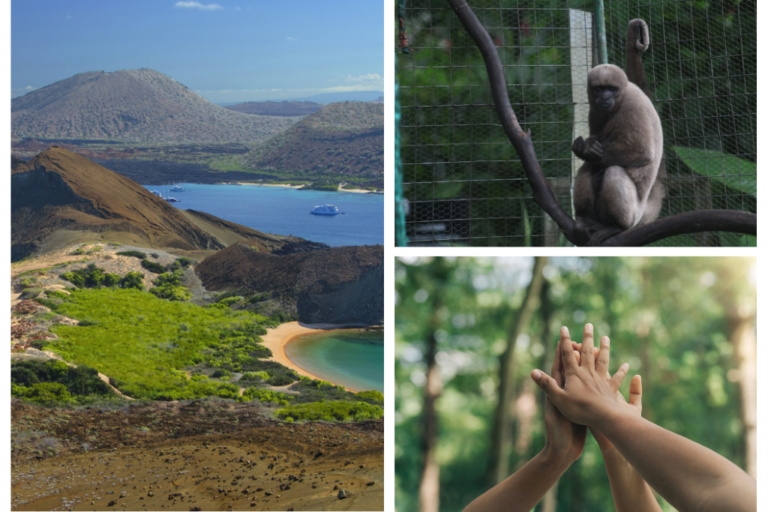
This type of volunteering is one of the most popular, and it’s easy to see why. Ecuador is one of the most biodiverse countries in the world. You can take part in reforestation projects in the Amazon, restore Andean ecosystems, or work on marine conservation in the Galápagos.
Volunteers in these programs usually help with activities like planting trees, monitoring wildlife, cleaning up beaches, or rescuing animals. In the Galápagos, this can mean working with giant tortoises, marine iguanas, and native birds, while in the Amazon you might assist centers that care for monkeys, parrots, and sloths saved from illegal trade.
School education and training
In many rural areas and neighborhoods of Quito and Cuenca, schools often need extra help. Volunteers might assist with subjects like English, math, or computer skills, and also lead arts and sports activities. The goal is not just to teach, but to spend quality time with children, inspire them, and make learning more engaging and fun. Some programs also offer training for adults, focusing on skills like digital literacy or basic entrepreneurship.
Community health and well-being
Health projects in Ecuador focus on supporting medical staff in rural areas or under-resourced public clinics. Volunteers may assist with vaccination campaigns, health education, or preventive care activities. In the Amazon and indigenous communities, these programs often combine modern medicine with traditional knowledge, making them especially rewarding for anyone studying or working in healthcare.
Community development and women’s empowerment
In many rural areas, communities depend on farming and tourism to make a living. Volunteers get involved in projects that support the local economy, like craft workshops, sustainable tourism, or programs that promote women’s leadership. In the highlands and the Amazon, some initiatives focus on helping women develop skills in small business management and financial literacy, boosting their independence and influence within the community.
Animal care and rehabilitation
Ecuador has specialized centers for rehabilitating wild animals affected by trafficking or deforestation. Volunteers help with feeding, cleaning, and monitoring species like toucans, monkeys, macaws, and sloths. On the coast, there are also marine programs focused on rescuing turtles and monitoring birds. It can be physically demanding work, but it is incredibly rewarding to see the direct impact of your efforts.
Cultural promotion and community arts
Some programs blend art with community development. In cities like Quito and Cuenca, volunteers might run workshops in painting, music, or dance for children and teens, or get involved in cultural activities that highlight local traditions. Other initiatives focus on preserving indigenous heritage or encouraging the continued use of Quechua as a living language.
How much does it cost to volunteer in Ecuador?
Volunteering in Ecuador comes with a cost, but it offers a more meaningful and accessible way to travel. Most programs ask for a contribution that covers things like housing, meals, and local support, while you handle personal expenses and transportation. Here’s an overview of typical costs to consider when planning your budget.
- Most programs require a fee to keep the projects running sustainably. In cities like Quito or Cuenca, weekly rates typically fall between $350 and $450. Conservation programs in the Galápagos cost more, usually $1,200 to $1,600 for two weeks, reflecting the additional logistics and special permits required by the National Park.
- An international flight to Ecuador typically costs between $700 and $1,000, depending on where you’re flying from. If you plan to visit the Galápagos Islands, you’ll need an additional domestic flight from Quito or Guayaquil, which usually runs between $150 and $250 each way.
- If you plan to extend your stay or do some weekend travel, budget accommodations usually run about $15–25 per night in Quito or Cuenca, and $30–50 in the Galápagos. Many volunteers take advantage of their free time to explore, so it’s wise to set aside a small budget for short trips.
- If your program only provides breakfast or a few meals, budget around $10-15 a day for food. Eating in Ecuador is quite affordable. A typical lunch with soup, a main dish, and juice costs about $3-5, and in the cities you can find healthy, local options at similar prices.
- Most volunteers can enter Ecuador as tourists for up to 90 days without a visa. If you plan to stay longer, you will need a Temporary Volunteer Visa, which typically costs between $50-100, depending on the consulate and required documents.
- While not always mandatory, it is wise to have travel or health insurance that covers emergencies and repatriation. Monthly plans generally run between $40-70. If you are visiting the Amazon, some organizations also suggest getting a yellow fever vaccine, which costs about $50.
- Keep in mind local transportation costs, around $0.35 for city buses and $5–10 for taxis or intercity trips, laundry at about $3–5 per load, and any extra activities you might want to do.
Frequently asked questions about volunteering in Ecuador
Not always. If your volunteer program is under 90 days, you can enter Ecuador as a tourist without a visa. For longer stays, you will need a Temporary Volunteer Visa, which costs between $50 and $100 and requires a letter from the organization hosting you.
Yes. Most programs welcome volunteers with no prior experience, especially in education, social work, or environmental projects. All that is required is commitment, cultural respect, and a willingness to learn.
Most organizations require participants to be at least 18 years old, although some accept 16- or 17-year-olds with permission from their parents or guardians.
If you are heading to the Amazon, it’s a good idea to get a yellow fever vaccination and have international health insurance, which typically costs $40 to $70 per month and covers emergencies, accidents, and repatriation.
The most practical option is to use a Holafly eSIM for Ecuador, which offers unlimited data without changing your physical SIM card.
Plans that may interest you


Hi! I'm a Spanish-English translator working with Holafly, helping bring travel content to life for curious travelers. As a digital nomad with a passion for exploring, I'm always adding new spots to my bucket list. If you love to travel like me, stick around because you're in the right place to find inspiration for your next trip! ✈️🌍