Language
How to volunteer in South America: Requirements and best programs
Being a volunteer in South America means immersing yourself in a world of possibilities. Discover the best options!

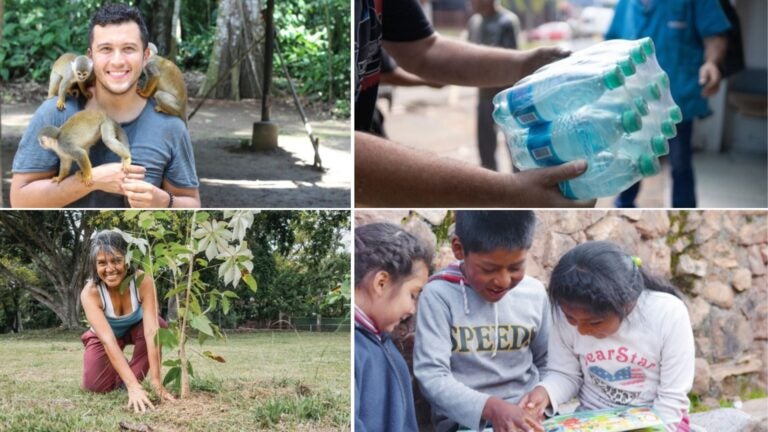
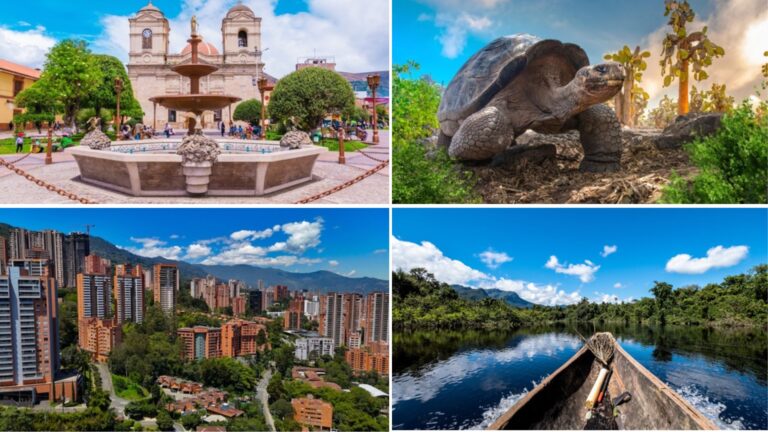
Volunteering in South America combines meaningful work with some of the most diverse landscapes and cultures in the world. People welcome you warmly, and you can join projects like protecting wildlife in the Galápagos Islands or teaching in remote mountain communities in the Andes.
Preparing for this kind of trip means understanding just how vast and diverse South America is. Volunteering in a reforestation project in the Amazon is very different from working in a community center in Buenos Aires or Medellín. Each country has its own pace, climate, and safety considerations, so good planning is essential to make sure your help is effective and your stay is both safe and rewarding.
South America is dealing with serious environmental and social challenges, so volunteering there is also about contributing to long-term change. You’ll not only give your time and help, but also learn from the strength and knowledge of local communities.
In this article, we’ll help you get the most out of your volunteering experience. We’ll look at why South America is such a great place to volunteer, the legal requirements you’ll need to meet in each country, and some of the most trusted programs making a real impact today.
If you’re ready to make a positive impact in South America, this guide is a great place to start. You’ll learn how to engage respectfully with local traditions and choose a project that fits your skills best.
Benefits of volunteering in South America
South America is a lively and diverse continent. Volunteering there in 2026 is not just about helping, but also sharing experiences with people from welcoming and resilient communities. It can also help you develop practical and professional skills.
Here are the main benefits of choosing South America for your volunteer experience:
- Language and cultural immersion: South America is a great place to learn or improve your Spanish or Portuguese. By living alongside local communities, you get to understand their traditions, music, and the way people see the world in cultures with long and deeply rooted traditions.
- Impact on critical ecosystems: You can take part in projects like reforesting the Amazon, protecting sea turtles along Brazil’s coast, or conservation work in the Andes. Your effort helps protect some of the world’s most important ecosystems, which play a key role in fighting climate change.
- Affordable cost of living: Compared to Europe or North America, South America is generally much more affordable. As a volunteer, your budget stretches further, making it easier to stay longer, travel around the region, and directly contribute to local communities.
- Development of adaptability skills: South America teaches you how to adapt and solve problems. You’ll learn to work with limited resources, communicate better with people, and find creative ways to handle challenges. These skills are very useful in today’s job market.
- Community and social networking: You’ll meet other volunteers from around the world and local community leaders.
- Personal transformation and well-being: Working on social projects in cities like Medellín, Cusco, or Buenos Aires often gives volunteers a very different perspective on daily life and priorities. Many volunteers find that it boosts their emotional well-being, as they feel their skills are contributing to something meaningful.
Choosing South America means a meaningful volunteering experience. You’ll not only see beautiful places but also join daily life in local communities. Spending time in local communities also reminds you how much everyday life can differ from country to country.
By 2026, volunteering is much more organized and professional. Many organizations now offer certificates and round-the-clock support, so your experience is safe and rewarding.
Requirements for volunteering in South America
Volunteering in South America requires some planning, especially around legal and health rules. By 2026, most countries make it fairly easy for short stays, but if you want to stay longer than 90 days, you’ll need to check the right visa options.
Here are the essential requirements for your adventure in South America:
Documents and visas
Flexibility is the general rule in South America, but each country has its own nuances:
- Entry as a tourist: Most volunteers who stay for less than 90 days enter on a tourist visa. Countries like Colombia, Peru, Ecuador, and Argentina allow unpaid volunteer work under this type of entry.
- Volunteer Visas (VITEM VIII in Brazil): Some countries, like Brazil, offer specific visas for volunteers working with registered NGOs. By 2026, this usually requires an official invitation letter and can be applied for at the consulate in your home country.
- Passport: It must be valid for at least six months when you enter the country. If you’re a citizen of a Mercosur member country, you can travel between most countries in the region using just your national ID card.
Profile and personal skills
South American organizations value proactivity. Basic requirements typically include:
- Minimum age: Usually 18, although some specific summer programs accept students as young as 16 with parental consent.
- Criminal record: Almost all organizations that work with children or vulnerable groups require a clean criminal background check from your home country.
- Language proficiency: It’s not always required, but having at least a basic level of Spanish or Portuguese will make it much easier to settle in and be effective in your work.
Health and vaccinations for volunteering in South America
South America has tropical regions where preventive measures are mandatory.
- Yellow fever: It’s the most important vaccine. Countries like Brazil, Colombia, Ecuador, and Peru require it if you plan to visit jungle areas. By 2026, your international vaccination certificate must be issued at least 10 days before entering these regions.
- Malaria and dengue fever: There are no universal mandatory vaccines, but in Amazon regions it’s recommended to use strong insect repellent and, in some cases, preventive medication.
- International health insurance: This is essential. Make sure your insurance covers emergency evacuation, especially if you’ll be volunteering in remote areas like the Andes or deep in the jungle.
Sufficient funds and leaving the country
At some borders, such as Chile or Colombia, you might need to show proof that you have enough money for your stay and a return or onward ticket. Keep a digital copy of your bank statement and flight details with you, just in case.
How to connect to the internet while volunteering in South America
Staying connected in South America is key to getting around such a diverse and sometimes challenging region. Whether you’re volunteering in the mountains around Cusco, the favelas of Rio de Janeiro, or rural areas in Antioquia, having internet access becomes really important.
Being online helps you arrange safe transport, use real-time map apps, and, for digital nomads, keep up with work and responsibilities without interruption.
Unlike Europe, where roaming between countries is often free, in South America crossing borders usually means changing providers and mobile rules. Relying on hostel or community Wi-Fi can also be frustrating, since the connection is often unreliable outside major cities.
Data options in South America
There are several ways to manage your connection as you travel across the continent:
- Local SIM cards: This is the traditional option. You buy a SIM card in each country (like Claro, Movistar, Tigo, etc.) and register it with your passport. The downside is that you waste time at every border and end up with a bunch of useless SIM cards.
- Roaming with your local carrier: It’s extremely expensive. Roaming fees for foreign SIM cards across South American countries are usually very high.
- Holafly eSIMs for each country: This is the best option for 2026. You can activate an unlimited data plan just by scanning a QR code, and keep your usual WhatsApp number. You simply choose the country and how long you’ll be volunteering. There are also eSIMs for Latin America that cover the whole region.
The best solution: Holafly’s plans
For volunteers planning to travel across several countries, Holafly’s monthly plans are a great solution. One eSIM lets you move from Colombia to Ecuador or from Peru to Bolivia without needing to buy new SIM cards.
Holafly’s Unlimited plan gives you unlimited data, while the Light plan offers 25 GB, so you can make video calls with family, share updates from your volunteer work, or handle remote tasks from anywhere with coverage. For volunteers, it also means you can share your live location during long trips, which adds an extra layer of personal safety.

Top volunteer programs in South America
Picking the right organization in South America is key to having a safe and rewarding experience. By 2026, there are solid programs that let you volunteer from the Amazon rainforest to remote Andean communities.
Here are the 5 top programs for volunteering in the region:
1. Ecuador: Galápagos National Park Volunteer Program
It’s one of the most prestigious conservation projects in the world. The Galápagos are a living laboratory of evolution and need ongoing support to help preserve them.
- What the program is about: Help with monitoring petrel nests, protecting giant tortoises, restoring island ecosystems, and recording scientific data.
- Specific requirements: You must be over 18, have international health insurance, and ideally be a student or professional in fields like biology or environmental science.
- Duration: Two weeks to three months.
- What’s included: Technical training, supervision by park rangers, and access to restricted areas of the park for conservation purposes.
- Price: It’s a government-run program with low administrative fees, but volunteers need to cover their own accommodation and meals on the islands (around $800–1,200 per month).
2. Colombia: Sueños y Huellas (Medellín)
This organization works in the most vulnerable areas of Medellín, using education and art as tools for social change.
- What the program is about: After-school support workshops, art activities, English teaching, and recreational programs for children and young people in underserved neighborhoods.
- Specific requirements: People who are empathetic, have teaching or artistic skills, and at least an intermediate level of Spanish to communicate better with the community.
- Duration: At least four weeks to have a real impact on educational processes.
- What’s included: Cultural orientation in the city, workshop materials, and ongoing support from the local team.
- Price: A donation of approximately $450 for the first month (includes coordination).
3. Brazil: SOS Amazônia (Acre / Amazon Region)
A key player in the fight for reforestation and the protection of biodiversity in the world’s largest rainforest.
- What the program is about: Planting native trees, helping with sustainable supply chains (like rubber or cacao), and doing environmental education with local communities.
- Specific requirements: Good physical fitness for working in a hot, humid tropical climate, a yellow fever vaccination certificate, and respect for Indigenous cultures.
- Duration: Recommended stays of one to three months.
- What’s included: River transportation within the project area, basic lodging at field stations, and technical forestry training.
- Price: Varies by project, with monthly maintenance fees of approximately $600.
4. Peru: Peru Volunteering (Huancayo / Andes)
A program focused on the holistic development of Andean communities, ideal for those seeking a deep and authentic cultural immersion.
- What the program is about: Language teaching, basic medical support in rural clinics, building community infrastructure, and child nutrition programs.
- Specific requirements: Emotional maturity to work in impoverished areas, the ability to acclimate to high altitudes (over 3,000 meters above sea level), and a proactive attitude.
- Duration: 2 to 12 weeks.
- What’s included: Homestay accommodation with local families, Spanish classes, and guided cultural tours.
- Price: Approximately $550 for two weeks (includes accommodation and meals).
5. Bolivia: CECASEM (La Paz and San Borja)
Specializing in the empowerment of indigenous women and climate resilience in rural and Amazonian communities in Bolivia.
- What the program is about: Strengthening women’s leadership, supporting sustainable agriculture projects, and holding workshops on rights for rural communities.
- Specific requirements: Interest in sociology, agronomy, or human rights; advanced Spanish language skills and a high degree of cultural sensitivity.
- Duration: At least two months, due to the complexity of governance projects.
- What’s included: Placement in local technical teams and transportation to project sites.
- Price: Based on modest administrative fees to cover logistics (check availability based on the project).
Types of volunteer projects in South America
South America has many needs and opportunities. Volunteers can choose what they care about most, like protecting nature or helping communities in cities and rural areas.
These are the main types of projects you will find operating in 2026:
Conservation and reforestation (Amazon and Andes)
South America is home to the planet’s lungs and fragile ecosystems that require urgent protection.
- Native reforestation: You’ll work in forest nurseries in countries like Brazil, Ecuador, or Colombia, helping restore land damaged by mining or large-scale farming.
- Wildlife monitoring: Projects that help protect animals like jaguars, spectacled bears, and sea turtles. This can include population surveys and caring for animals rescued from illegal wildlife trafficking.
- Organic farming and permaculture: You’ll learn both traditional and modern ways of growing food without pesticides on community farms in the Andes or the Southern Cone.
Education and community development
In many areas, access to quality education is limited, and volunteering helps bridge that gap.
- Language education: English and French are valuable tools for young people who want to work in the tourism sector in their regions.
- Digital literacy: If you’re a digital nomad, you can teach basic coding, design, or digital marketing in youth centers, helping young people build skills for global job opportunities.
- Women’s empowerment: Projects that support entrepreneurship among indigenous and rural women to ensure their economic independence.
Child health and nutrition
This type of volunteer work is vital in remote areas where access to medical services is limited.
- Rural medical brigades: If you have a healthcare background, you can join mobile teams that travel to remote villages to provide vaccinations, dental care, and basic health check-ups.
- Food security: Collaboration in community kitchens and projects that teach basic nutrition to vulnerable families.
Construction and reconstruction
South America is prone to natural disasters (earthquakes, floods), which creates a constant need for workers to maintain basic infrastructure.
- Affordable housing: You’ll help build prefabricated homes or houses using local materials like adobe or bamboo for displaced families or those with limited resources.
- Sanitation and drinking water: Installation of rainwater harvesting systems and filters in communities lacking basic services.
These projects show you a side of South America most tourists don’t see. It’s not just about helping, but also learning from people who are improving their lives with very little.
Costs of volunteering in South America
South America is an ideal destination for those who want to make a real impact without spending too much. By 2026, while living costs have risen slightly in major cities, they’re still much lower than in Europe or North America.
As a volunteer, accommodation and food are usually covered, making it a very affordable way to travel and gain experience.
Here is a breakdown of the estimated monthly expenses for your adventure in the south:
Strategic savings for volunteers
When you join a project, you avoid many costs that would be high for regular tourists. Volunteers often have accommodation included, whether in volunteer houses, partner hostels, or with local families.
In addition, many programs include breakfast and lunch, saving you approximately $15 to $20 per day.
Cost breakdown by country (Monthly average in USD)
By 2026, here are the expense ranges you should consider to cover transportation, leisure, insurance, and small extras:
| Country | Cost of Living (Monthly) | Program Tuition (Average) | Estimated Total (USD) |
| Bolivia | $250–350 | $200–400 | $450–750 |
| Peru | $350–500 | $250–500 | $600–1,000 |
| Colombia | $400–550 | $300–550 | $700–1,100 |
| Ecuador | $450–600 | $350–600 | $800–1,200 |
| Brazil / Argentina | $500–700 | $400–700 | $900–1,400 |
Mandatory additional expenses
- Flights: Low-cost flights within South America have become more common, but international flights from other continents can still cost between $700 and $1,200.
- Health insurance: Essential. Budget between $30 and $60 per month for coverage that includes volunteer activities and tropical medicine.
- Visas and fees: Most are free for short stays, but some specific volunteer visas (such as in Brazil) can cost around $100.
- Connectivity: Don’t underestimate this expense. Holafly’s South America plans let you travel across borders without paying roaming fees, for around $40–60 per month.
The “Emergency Fund” Rule
In South America, unexpected weather or transport issues are common. It’s a good idea to travel with an emergency fund of at least $500. This gives you peace of mind if you decide to take a last-minute trip to Iguazú Falls or need to change a flight because of road closures.
Overall, with a budget of around $600–1,100 per month, you can live comfortably, volunteer effectively, and explore the continent without major financial stress.
Frequently asked questions about volunteering in South America
Safety in South America depends on the area, but volunteer projects are usually in communities that support international volunteers. Basic precautions are key: avoid remote travel at night, stay in touch with coordinators, and use official transport apps. Having mobile data is also important for staying safe.
For projects in the Brazilian Amazon, having some basic Portuguese is highly recommended. In most of the rest of South America, Spanish is the main language. While many international organizations use English, speaking at least basic or intermediate Spanish will make it much easier to work with local communities and truly connect with people.
South America has every type of climate imaginable. If you’re heading to the Andes (Peru, Bolivia, or Ecuador), you’ll need warm and thermal clothing, even in summer. In the Amazon or along Colombia’s coast, expect constant heat and humidity. It’s best to pack layers and bring waterproof shoes, since heavy rain can happen unexpectedly.
Many volunteers are also digital nomads. Most projects require around 20 to 30 hours a week, leaving you enough time for your remote work. However, Wi-Fi in rural areas can be unreliable, so having a Holafly eSIM is definitely a good idea.
It depends on the country. In the Andean region, the dry season (May to September) is usually the best time to go. In Brazil and the Southern Cone, summer (December to March) is lively but very hot. It’s important to check the rainy season in your specific destination, especially in jungle areas where heavy rain can affect river transport and outdoor work.
Plans that may interest you

Hi! I'm a Spanish-English copywriter working with Holafly, helping bring travel content to life for curious travelers. As a digital nomad with a passion for exploring, I'm always adding new spots to my bucket list. If you love to travel like me, stick around because you're in the right place to find inspiration for your next trip! ✈️🌍