







 Language
How to volunteer in Honduras: Requirements and best programs
Volunteering in Honduras is a unique opportunity to explore this beautiful Central American country and do your part.

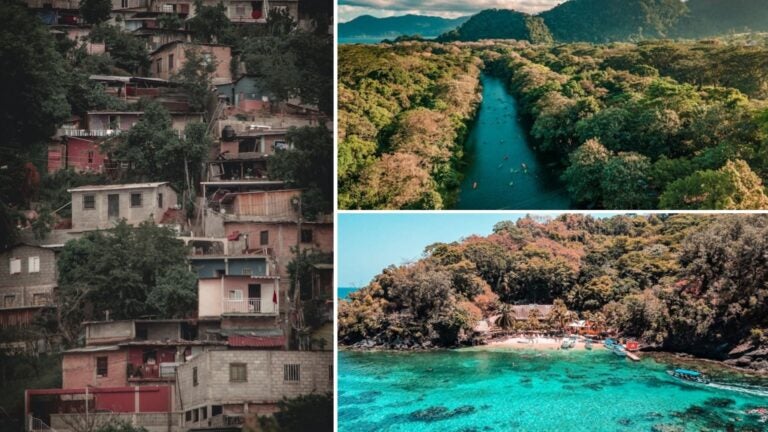
Doing volunteer work in Honduras means immersing yourself in the heart of Central America. It’s a chance to connect with local communities while helping protect unique ecosystems, from coral reefs to tropical rainforests.
It’s more than traveling. You get involved in real conservation, education, or community projects in places that need support. Being well prepared helps you make a real difference and stay safe during your time there.
In this article, we’ll look at why choosing this destination is a great option and go over the legal requirements you’ll need to meet in 2026. We’ll also cover the best programs available, plus how to handle your budget and stay connected so you can focus on making a positive impact.
What are the benefits of volunteering in Honduras?
Honduras is a country where people are incredibly warm and welcoming, and international volunteers are truly embraced. Here are some of the key benefits of choosing Honduras for your next volunteer experience:
- Authentic cultural immersion: Working closely with locals, you’ll really get to know Honduran life. You’ll learn about their culture, food, and how welcoming people are.
- Direct environmental impact: Honduras has the world’s second-largest coral reef, and marine projects in the Bay Islands let you see the difference you’re making almost right away. Your work also helps protect species that are in serious danger.
- Personal and professional growth: Facing challenges in unfamiliar environments will give you new skills. You’ll become better at solving problems and adapting to change.
- Improved Spanish language skills: If you don’t speak Spanish, Honduras is a really good place to improve it. In many regions, people speak in a clear, relaxed way, so it’s easier to pick up while you’re working on projects.
- Connection with unspoiled nature: On your days off, you can explore national parks, Mayan ruins, and stunning beaches. Volunteering lets you actually live in places most people only visit for a short time. Waking up in the jungle or right by the sea is an experience like no other.
- Global network of contacts: You’ll be working alongside volunteers from many different countries. It’s a great way to meet other nomads and travelers and build your network. A lot of friendships and work opportunities come out of experiences like this.
Choosing Honduras means going somewhere your help really counts. It’s not overcrowded, so you can see the difference you make. It’s meaningful travel that can change how you see things.
Plus, the cost of living is quite affordable compared to other Caribbean destinations. That makes it easier to stay longer and really get involved in your work.
What are the requirements for volunteering in Honduras?
Getting your paperwork ready is the most important step before you fly. While Honduras is a welcoming country, immigration authorities and local organizations have clear rules in place for 2026.
Here is a breakdown of everything you need to have ready.
Legal documentation and visas
Most travelers from Spain, the EU, the United States, and many Latin American countries don’t need a visa in advance for short stays, whether for tourism or volunteering. When you arrive, you’ll usually be granted permission to stay for up to 90 days.
However, if you plan to stay longer or participate in a formal long-term project, you should consider the following:
- Valid passport: Your passport must be valid for at least six months from the date of your entry into the country.
- Special Residence Permit: If your stay exceeds 90 days, the host organization will help you obtain this permit through the National Migration Institute. The cost in 2026 is approximately $100 per year.
- Immigration pre-screening: You must complete the online pre-screening form on the official Honduran immigration website before your trip.
Profile and skills
Organizations in Honduras look for committed people with a proactive attitude. You don’t always need to be an expert, but you do need to meet some basic requirements:
- Minimum age: You usually need to be at least 18 years old. Some programs do accept 16- or 17-year-olds, as long as they’re traveling with a guardian or have written parental consent.
- Criminal record: To work with children or in vulnerable communities, you’ll need to provide a criminal background check from your home country, properly apostilled.
- International health insurance: Honduras requires all volunteers to have travel insurance with full medical coverage, including emergency evacuation and repatriation.
Health and vaccines
Although you won’t always be asked to show proof of vaccination at the airport, the following vaccines are recommended for 2026 for your own safety:
- Yellow Fever: This is required if you are coming from a country where there is a risk of transmission (such as some neighboring countries in South America).
- Hepatitis A and B and Tetanus: These are standard recommendations for any volunteer working in rural areas or in contact with nature.
- Physical health: You should be in good overall health, especially if the volunteer work involves physical activity under the tropical sun.
Other important requirements for volunteering in Honduras
Finally, many NGOs will ask for a motivation letter and your CV. They want to understand why you chose Honduras and what skills you can bring to the project.
Some organizations may also charge a registration fee to cover your initial training and work materials.
How can I connect to the internet while volunteering in Honduras?
Staying connected is important. If you’re a digital nomad or volunteering, you’ll need internet to check in, coordinate with your team, and keep up with remote work.
Honduras has made big improvements in its digital infrastructure, but connection quality still varies by area. In cities like Tegucigalpa or San Pedro Sula, the signal is very good. However, in conservation projects in the jungle or in some beach areas of the Bay Islands, getting reliable Wi-Fi can still be a real challenge.
Options for mobile data in Honduras
There are several options to ensure you don’t lose connection while volunteering:
- Local Wi-Fi networks: Volunteer accommodations usually provide this, but the connection tends to be slow if many people are connected at the same time.
- Prepaid SIM cards: You can buy one when you arrive at the airport, although this involves waiting in line and sometimes going through time-consuming registration procedures.
- Holafly eSIM for Honduras: It’s the easiest and most up-to-date option if you want everything to work right away. You’ll have unlimited data as soon as you arrive in Honduras and the best available network connection.
Now, if you’re planning to volunteer for several weeks or months, Holafly’s monthly plans are one of the best options. They give you peace of mind since you won’t have to waste time looking for local SIM cards or worry about the daily data limits that regular prepaid plans usually have.
You can choose between 25 GB plans or unlimited data, so you’ll have internet access as soon as your plane lands and can easily get to your project location. Holafly’s monthly plans also include global coverage, which means if you continue traveling to Nicaragua, Guatemala, El Salvador, or anywhere else in the Americas, you won’t need to change a thing.
Volunteering can be demanding, so staying connected makes a big difference. With reliable internet, you can stop worrying about your connection and focus fully on helping local communities or protecting Honduras’s natural environment.

What are the best volunteer programs in Honduras?
Choosing the right program is key to having a good experience. Luckily, Honduras has organizations with well-structured volunteer programs that make it easier for digital nomads and international travelers to get involved and settle in.
Here are the five most notable and reliable programs for volunteering in the country:
1. Roatan Marine Park (RMP) – Marine conservation
It’s one of the most respected organizations in the region, focused on protecting the Mesoamerican Reef System. It’s a great fit for anyone interested in diving and marine biology who wants to work in a professional environment.
- What the program is about: You’ll take part in monitoring patrols, help care for coral nurseries, join beach cleanups, and support environmental education activities with local communities.
- Specific requirements: You must be at least 18 years old, have a diving certification (Advanced Open Water minimum for reef work), and carry international health insurance.
- Duration: The recommended minimum commitment is six weeks to ensure a smooth transition into operational roles.
- What’s included: Specialized training in coral biology, course materials, a volunteer kit, and access to the park’s network of experts.
- Price: The initial training course (Coral Ambassador) costs approximately $150; other roles may require only a registration donation.
2. Utila Iguana Station (Biological Station)
Located on the small, lively island of Utila, this project focuses on conserving the Utila spiny-tailed iguana (Ctenosaura bakeri), an endemic species found only in the island’s mangroves.
- What the program is about: Feeding and caring for iguanas in captivity, maintaining the biological station, guiding visitors, and monitoring nests in the mangrove.
- Specific requirements: No prior scientific training is required, but you do need to be in good physical shape to walk through mud and work under the sun, as well as have a proactive attitude.
- Duration: A minimum stay of four weeks is recommended.
- What’s included: Basic accommodations within the biological station itself, in shared rooms with other volunteers.
- Price: Approximately $95 per week to cover accommodation and resort maintenance costs.
3. Adventure Volunteer – Child development in La Ceiba
This program is for people who want to make a real social impact in what’s known as Honduras’s “ecotourism capital.” It works with after-school support centers and children’s feeding programs in under-resourced neighborhoods.
- What the program is about: Helping with schoolwork, running recreational workshops (like art, music, and sports), assisting in the community kitchen, and helping maintain the facilities.
- Specific requirements: Current criminal background check, intermediate level of Spanish, and must be at least 18 years old.
- Duration: A minimum of two weeks.
- What’s included: Accommodation in volunteer housing or with local families, some meals, and 24-hour local support.
- Price: Rates start at $400 for the first two weeks and decrease proportionally if you stay longer.
4. Honduras Child Alliance (HCA) – El Porvenir
This project is in El Porvenir, a coastal town near La Ceiba. It’s a popular organization that helps children and teens who don’t have extra support outside of school, offering education and health programs.
- What the program is about: Teaching basic literacy, beginner English, and computer skills, as well as running leadership workshops. They also support nutrition programs and school gardens.
- Specific requirements: Basic to intermediate level of English or Spanish, at least 18 years old (16-year-olds accepted with supervision), and a background check.
- Duration: The ideal minimum is four to six weeks to build a rapport with the students.
- What’s included: Prior training and access to the organization’s volunteer housing.
- Price: There is an initial donation of approximately $195. Accommodations at their housing facilities cost approximately $7.50 per day (about $225 per month).
5. Bay Islands Conservation Association (BICA) – Utila and Roatán
BICA is the oldest local NGO in the Bay Islands. It combines science and community work and helps manage protected areas.
- What the program is about: Monitoring sea turtles (especially during nesting season), testing water quality, restoring mangroves, and running waste management programs.
- Specific requirements: An interest in environmental science and flexible availability (turtle patrols are usually at night). Some knowledge of English and Spanish is also a big plus.
- Duration: Flexible commitments ranging from two weeks to internships lasting several months.
- What’s included: Technical training in species monitoring and the use of research equipment.
- Price: Varies depending on the specific project, but a volunteer fee of between $100 and $200 is typically requested to cover materials and logistical support.
What kinds of volunteer projects are available in Honduras?
Honduras is a country rich in both nature and culture, offering many different ways to get involved and help. More than just choosing a destination, it’s about finding a cause that matches your skills and interests.
By 2026, projects have become more focused and professional, allowing volunteers to contribute based on their own expertise. These are some of the main options you’ll find in Honduras:
Conservation of marine ecosystems
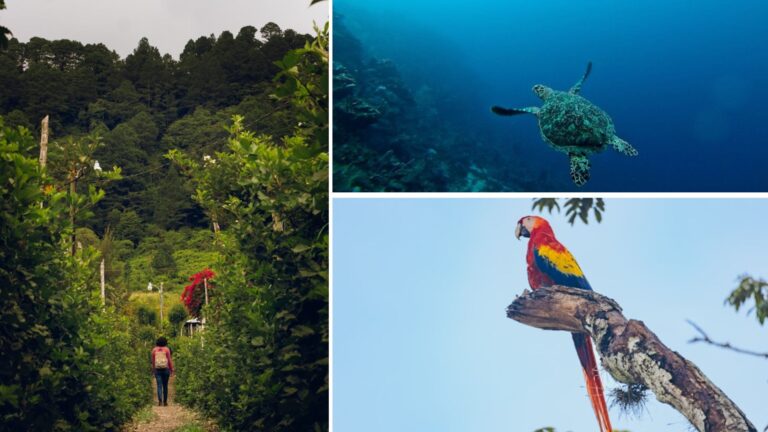
Honduras is known for its islands Roatán, Utila, and Guanaja, part of the world’s second-largest coral reef. Marine projects here are very hands-on, not just for observing.
- Coral restoration: You’ll work in underwater “nurseries” where coral fragments are grown and then transplanted to the damaged reef.
- Invasive species control: A common task is to assist in managing lionfish, a species that threatens the balance of the local ecosystem.
- Ocean cleanup: Removing plastic debris and “ghost” nets that become entangled in coral structures.
Education and academic support
In many parts of the northern coast and inland areas, getting a good education is still difficult. Education projects try to close the digital and language gaps that limit opportunities for young people in Honduras.
- Language education: English is a vital tool for tourism, which is the main source of income on the islands and along the coast.
- Digital literacy: Teaching children and adults basic computer and internet skills, which is especially useful for digital nomads who want to share their technical knowledge.
- Creative workshops: Art, music, and sports programs that provide safe recreational spaces for children in vulnerable communities.
Protection of terrestrial wildlife
Honduras has lush tropical rainforest home to species found nowhere else in the world. Wildlife volunteering here is quite technical and requires a lot of patience.
- Sea turtle conservation: During nesting season, volunteers patrol the beaches at night to protect nests from poachers and help hatchlings make it safely to the sea.
- Care of native reptiles: As we mentioned regarding the Utila iguana, the work involves feeding, cleaning enclosures, and monitoring their health.
- Environmental education: Talks with the local community to explain why these protected species should not be hunted or traded.
Community health and well-being
This type of volunteering often attracts medical professionals or people interested in social development. In Honduras, some clinics rely heavily on international volunteer support to keep running.
- Rural medical teams: Travel to remote communities to provide basic health care, dental care, and vaccinations.
- Nutrition programs: Monitoring children’s weight and diet at community meal centers to combat child malnutrition.
- Preventive health support: Talks on hygiene, sexual health, and the prevention of mosquito-borne diseases such as dengue.
By joining one of these projects, you’ll be helping support the Sustainable Development Goals in a country that really appreciates every person who comes to help.
How much does it cost to volunteer in Honduras?
Volunteering is a smart way to travel with purpose and save money. You usually don’t pay for tourist accommodation, which is one of the biggest travel costs. Still, you’ll need to budget for some personal and program-related expenses.
Honduras is one of the most affordable countries in Central America, but prices can vary between the mainland and the islands. Here’s a breakdown of average costs to help you plan your budget.
Expenses you save by volunteering in Honduras
Most programs in Honduras include accommodation, which saves you around $25 to $60 per night compared to a typical hotel or hostel. Some projects also provide one or two meals a day, cutting your food costs by about half.
Major expenses
To make your budget realistic, break down your expenses into these categories:
- Program registration fee: Many NGOs charge a fee to cover materials, training, and local coordination. The average cost is between $150 and $400, either as a one-time payment or every two weeks.
- Meals: If meals aren’t included, eating at local markets is very cheap. A “baleada” or a typical local dish costs very little. Expect to spend around $10 to $15 per day.
- On-site transportation: Getting around is usually done by minibuses or ferries between the islands. The ferry to Roatán or Utila is an important cost to factor in, usually around $35 to $70 per trip. Local buses are much cheaper, typically $5 to $15 per ride.
- Travel insurance: It is mandatory for your safety and required by the organizations. It costs approximately $60 to $100 per month.
- Leisure and extras: Recreational diving, visits to ruins, or nights out. This involves spending about $100 to $200 per month.
Estimated monthly budget
Overall, a volunteer living in Honduras can spend around $500 to $800 per month, including program fees and personal costs. It’s a fairly affordable way to live in the Caribbean while doing meaningful work.
Always keep an emergency fund of about $300. In remote areas, you might need private transport or quick medical care, so it’s better to be prepared.
Frequently asked questions about volunteering in Honduras
Yes, it’s safe if you go with trusted organizations and follow local rules. Like anywhere, some areas are better avoided. Most volunteer projects are in safe communities that take care of volunteers. Just follow your coordinators’ guidance.
For social or education projects, an intermediate level is usually best so you can communicate with people. In marine conservation projects in Roatán or Utila, English is commonly used. Still, learning some basic Spanish will help you connect more with locals.
Yes. In 2026, many volunteers combine volunteering with remote work. You just need to stay organized and have good internet. Holafly’s monthly plans are useful when project Wi-Fi isn’t reliable.
The dry season, from November to May, is the best time if you want to avoid heavy rain, especially for outdoor work. If you’re heading to the islands to see whale sharks or work with turtles, check the specific migration and nesting seasons, which usually run from March to September.
If you stay longer, you’ll need to extend your visa or get a temporary permit. The organizations in this guide usually help with this.
Plans that may interest you


Hi! I'm a Spanish-English copywriter working with Holafly, helping bring travel content to life for curious travelers. As a digital nomad with a passion for exploring, I'm always adding new spots to my bucket list. If you love to travel like me, stick around because you're in the right place to find inspiration for your next trip! ✈️🌍
