Language
How to volunteer in Gaza: What you need to know
If you want to volunteer in Gaza, here you’ll find the requirements you need to meet to help the Palestinian people.

Spending time as a volunteer in Gaza is key to helping communities get back on their feet, rebuilding social ties and restoring basic services like healthcare, schooling, electricity, and clean water.
Right now, a range of local and international programs are active in the area, bringing in volunteers from around the world to support the city’s most urgent needs.
If you’re interested in getting involved there, this guide walks you through the key requirements, the personal and professional benefits, and some of the main projects where you can support Palestinian communities.
Benefits of volunteering in Gaza
Choosing to volunteer in Gaza, given the current humanitarian crisis there, is an act that will undoubtedly have a real impact on the local population.
At the same time, contributing to better living conditions in Gaza can be deeply rewarding, helping you grow both personally and professionally while equipping you with skills and experience you can later use to support other communities.
Below, we’ll tell you about the benefits of volunteering in the city of Palestine, at a time when society is facing one of its greatest challenges.
- You’ll learn to work under pressure: If you go as a doctor, nurse, or medical assistant, you’ll be pushed to work quickly and effectively to save lives, treating children and other patients who arrive at hospitals with severe injuries, illness, or extreme malnutrition and dehydration.
- You’ll become resourceful: Being resourceful in humanitarian crises helps you handle medicines and basic supplies more effectively when caring for patients. It also helps you make aid go further so more people in Gaza who are struggling can receive support.
- Direct cultural exchange: Volunteering in Gaza means immersing yourself in Palestinian culture and society, not only to understand people’s needs but also to learn about their traditions and worldview, while also sharing your own perspectives.
- You’ll develop technical expertise: As a professional in healthcare, education, or other fields, you’ll have the chance to apply your skills in real-world settings, supporting vulnerable communities. This will strengthen your practical abilities and help you grow professionally.
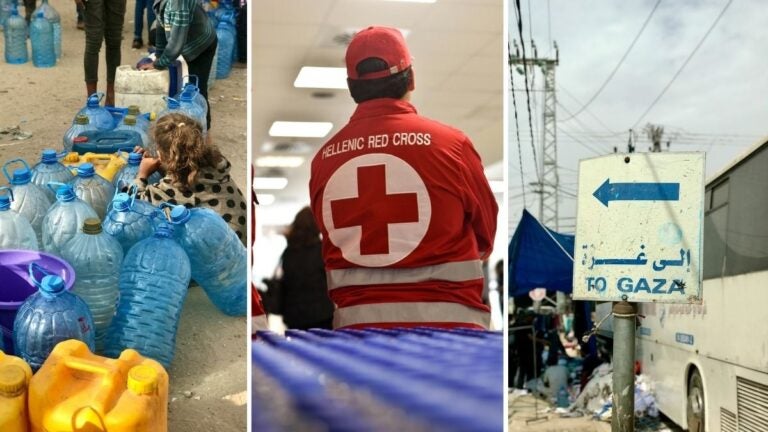
Requirements for volunteering in Gaza
To volunteer in Gaza, it’s essential to fully understand the process and the requirements set by both local authorities and the authorized volunteer programs currently operating in Palestine.
Below are the essential requirements you must meet as a first step toward beginning your volunteer work in this city.
- Signing up as a volunteer for a program: You need to be backed by an official volunteer program in order to enter the country for humanitarian purposes.
- Vocational training with hands-on experience: Gaza requires foreign volunteers to have experience and academic training in fields such as healthcare, education, engineering, and others so they can effectively contribute to restoring essential services that have been affected.
- Language: An intermediate or advanced level of English or Arabic is an important requirement and is highly valued by volunteer programs.
- Personal travel documents: You must have a valid passport, an apostilled criminal record check, your academic qualifications translated into English and properly certified, and a professional CV outlining your work experience.
- Complete safety training for hostile environments: Training like the BSAFE course (Basic Security Awareness for Field Employees) is mandatory for all UN staff and volunteers. It prepares you to handle risks and helps ensure safe conduct in the field.
- Codes of conduct: It’s essential to show respect for Gazan culture and for the vulnerability of the local population. For this reason, you’ll be required to sign a written commitment to maintain neutrality and keep any information you access confidential.
How to connect to the internet while volunteering in Gaza
As a volunteer in Gaza, having a reliable internet connection is essential given the humanitarian and security situation. You shouldn’t rely on third-party or public connections, as they can be unstable or unsafe and may prevent you from staying in touch with your team or receiving real-time safety alerts.
It also allows you to share your location, send updates about your volunteer work, and use email or entertainment apps during your free time.
Holafly offers monthly subscription plans with either 25 GB or unlimited data to keep you connected throughout your volunteer work. Both options work in over 160 countries and let you connect additional devices like your laptop or other phones, which can also help teammates who don’t have internet access.
Another great option for staying connected, if your volunteer work lasts up to 15 days, is an unlimited-data eSIM for Palestine.
If you’re staying longer in the country, you can choose plans for 20, 30, or 60 days of internet access, though in that case a monthly plan would likely be more convenient.

Top volunteer programs in Gaza
Volunteer programs in Gaza are mainly aimed at professionals in various fields, as the current conditions in the country require skilled workers capable of responding to large-scale humanitarian crises.
Here’s a look at the most important programs and NGOs where you can volunteer in this Palestinian coastal city.
UNRWA – UN agency for Palestinian refugees
It is the main humanitarian agency in Palestine and one of the channels through which you can volunteer in Gaza. However, they generally do not accept volunteers without relevant experience or specific training, given the complexity of the situation in Gaza.
UNRWA operates across several Palestinian cities, including Gaza, where it runs schools, health centers, and food distribution programs. At the moment, the most in-demand volunteers for social and medical support in Gaza are healthcare professionals in general, such as doctors, nurses, and psychologists.
However, other fields such as engineering are also important to help keep water systems and electrical services running in hospitals and parts of the city.
| Requirements | -Be 27 years of age or older -Hold a college degree -If you are a healthcare professional, a master’s degree is required -Have at least 3 years of professional experience -Have an advanced level of English (C1) -Demonstrate psychological resilience to live in a conflict zone |
| What’s Included | -Round-trip airfare from your home country -Living allowance for personal expenses (food, lodging) -Comprehensive health insurance, life insurance, and emergency evacuation insurance -Paid vacation days for each month worked -Starter allowance to help you get settled during your first few days |
| Duration | Between 6 and 12 months |
| Cost | Free |
World Central Kitchen
This is a rapid response unit that provides hot meals in southern and central Gaza. It was one of the first groups to address food needs in Palestine by setting up community kitchens and reaching different areas of Gaza through trucks, boats, and a wide network of volunteers who help distribute food every day.
If you want to help, you can contribute your skills as a chef, kitchen assistant, logistics or warehouse specialist, or heavy machinery operator. During your volunteer work, you’ll be supported by Palestinian staff who will help ensure that food handling and preparation are done in a way that respects local cultural practices.
| Requirements | -Educational and work experience certificates -Valid passport -Good health and the physical ability to work long hours on your feet -Ability to follow safety protocols -English language proficiency -Must be at least 25 years old |
| What’s Included | -Round-trip flights -Accommodations in volunteer homes or basic camps -Full board -Safe local transportation -Technical training on large-scale food hygiene and safety in conflict zones |
| Duration | Between 2 and 4 weeks, although it can take longer if you prefer |
| Cost | Free |
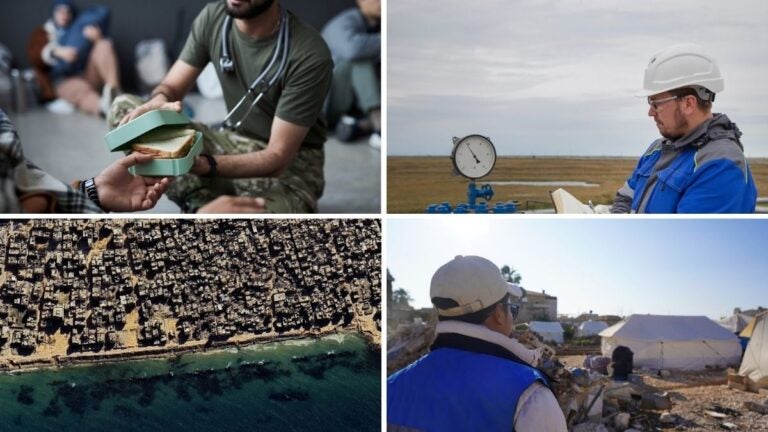
International Committee of the Red Cross and Red Crescent in Palestine
Both organizations work closely together, even though they focus on different areas. The Palestine Red Crescent Society is responsible for running ambulances, hospitals, and shelters, providing direct assistance to the wounded and sick in Gaza.
Meanwhile, the International Committee of the Red Cross acts as a neutral mediator in the conflict, helping trace missing persons, visiting detainees, playing a key role in hostage releases, and supporting local medical organizations by providing medicines, water, and other essential supplies for vulnerable populations.
Volunteers are mainly needed in medical fields such as orthopedic surgery (especially for blast-related injuries), physical rehabilitation, and intensive care nursing. They also accept specialists in human rights, forensics, and engineering.
| Requirements | -Minimum age: 25 -College degree -2 to 3 years of professional work experience -C1 level in English -Criminal background check -Psychological assessment for conflict situations |
| What’s Included | -Round-trip flights -Accommodation at International Red Cross facilities -Monthly salary -Comprehensive health insurance, life insurance, and emergency evacuation coverage -Days off |
| Duration | A standard mission lasts 12 months, although there are emergency missions that can last between 3 and 6 months |
| Cost | Free |
Types of volunteer projects in Gaza
Volunteer work in Gaza covers several essential areas for the city’s recovery. In this section, you’ll find four types of projects that can guide you if you’re looking to get involved in supporting Palestine.
Health and Rehabilitation
Gaza’s healthcare system is under constant strain, which has increased the need for volunteers in community clinics and field hospitals. Work can range from general medical consultations to physical rehabilitation and physiotherapy for people with reduced mobility due to serious injuries.
These projects also look for specialists in areas such as nutrition and public health. Volunteers support programs that monitor children’s growth at food distribution centers and help train families on the use of vitamin supplements and emergency water purification methods.
Training with a psychosocial focus
Many children in Gaza have had to leave school in order to stay safe and seek shelter, as well as to gain access to basic services and even food.
As a result, education is now often delivered by volunteers from around the world. It also helps children cope with trauma through psychosocial support, easing stress caused by their experiences.
Education in schools run by UNRWA focuses on language learning, such as English and French, as well as digital skills training. It also includes arts-based subjects aimed at creating safe and supportive emotional environments for children.
Empowerment projects for women
Projects focused on women are usually led, organized, and carried out by women from different countries, who take on a variety of roles within the volunteer activities.
Some of the main goals of the project are to provide training in traditional Palestinian crafts and offer digital marketing classes to help support small businesses.
It also helps women in Gaza grow their own food through small gardens on rooftops or in yards, making up for the lack of farmland and helping ensure their families have enough to eat.
Animal care and protection
These projects tend to receive less attention today, so they often need more volunteers and organizations to help protect not only native species but also the wider ecosystem they depend on.
Likewise, working animals traditionally used in Palestine, such as donkeys and horses, require veterinary care. That’s why skilled veterinary volunteers are especially important, as they help improve these animals’ well-being through wound treatment, deworming, and other care programs.
These animals play an important role during the humanitarian crisis, as they are used to transport water, food, and other supplies both in Gaza and across the rest of the country.
How much does it cost to volunteer in Gaza?
If you’re planning to volunteer in Gaza, your main expenses will usually be related to paperwork, such as your passport and any academic or work certifications. This is because most official programs authorized to operate in Palestine cover nearly all other costs.
In most cases, you won’t need to cover food or accommodation costs, since there aren’t tourist services or hotels available in Gaza. However, it’s still important to have some financial backup in case of emergencies.
Frequently asked questions about volunteering in Gaza
In conflict zones, the minimum age for volunteers is usually 25, as applicants are generally expected to have a professional degree and at least three years of work experience.
No, one of the main requirements for volunteering in Gaza is to be registered with an official program authorized to operate in Palestine.
Yes, it is possible to volunteer in Gaza without a college degree, but you will generally be assigned roles such as assistant or logistics support staff.
The length of your stay in Gaza as a volunteer depends on what you agree with the program beforehand. In most cases, placements last anywhere from three to twelve months.
Volunteer safety largely depends on the organizations involved and the security protocols they have in place. While no situation is completely risk-free, it’s important to be aware of the measures taken on the ground to help protect your safety.
Plans that may interest you


Hi! I'm a Spanish-English copywriter working with Holafly, helping bring travel content to life for curious travelers. As a digital nomad with a passion for exploring, I'm always adding new spots to my bucket list. If you love to travel like me, stick around because you're in the right place to find inspiration for your next trip! ✈️🌍