Language


 No results found
Surf in Punta Cana: Best beaches and prices
No matter your surfing level, in Punta Cana you can learn, improve your skills, or enjoy the waves of the Caribbean and Atlantic Sea. But, before you pack, we want you to know all the information we’ve gathered for your trip to the Dominican Republic. You’ll discover the best beaches to surf in Punta Cana, so you […]

No matter your surfing level, in Punta Cana you can learn, improve your skills, or enjoy the waves of the Caribbean and Atlantic Sea. But, before you pack, we want you to know all the information we’ve gathered for your trip to the Dominican Republic.
You’ll discover the best beaches to surf in Punta Cana, so you can identify which coast to approach for surfing according to your abilities and experience.
We’ll also make a price list for surfing at this destination and a guide on how to start surfing in a place like Punta Cana.
Best Places to Surf in Punta Cana
The best beaches in Punta Cana offer space for surfers of all levels. You’ll also find spots specifically for advanced surfers, as the waves are stronger and the environment requires more care.
We’ll show you which beaches suit beginners, intermediate, and advanced surfers, the types of waves you’ll encounter, and their location within Punta Cana.
1. Macao Beach
This beach is located in Altagracia province in Punta Cana, spans several kilometres of coastline, and its waves are famous among advanced surfers. The spots here produce waves between 2 and 4 metres high.
There are also areas where beginner and intermediate surfers can enjoy gentler waves, low in power and height, with a sandy bottom, reducing risk.
These conditions are ideal for learning or improving technique, but hiring a course or instructor is recommended for safety reasons, as the area lacks nearby hotels or shops.
Keep in mind that, as a public area, lifeguards are not available. During holidays, the beach becomes crowded, especially near the water.
Macao Beach hosts local surfing competitions, gathering specialists from across the country to showcase their skills.
2. Uvero Alto
Uvero Alto Beach is located a few kilometres north of Macao, sharing certain characteristics for surfers. However, this area has a luxury hotel complex, so you can stay close to the beach.
If you stay elsewhere, note that shops and services are scarce, which may reduce surf time if you don’t bring snacks, water, and other necessities.
For surf levels, conditions are ideal for intermediate surfers. The seabed is sandy, and the waves are medium, consistent, and frequent, earning Uvero Alto a reputation as one of Punta Cana’s best surfing spots due to cleanliness and fewer crowds.
Although no surf events are held here, you can share the space with kayakers and other water sport enthusiasts.
3. Bávaro Beach
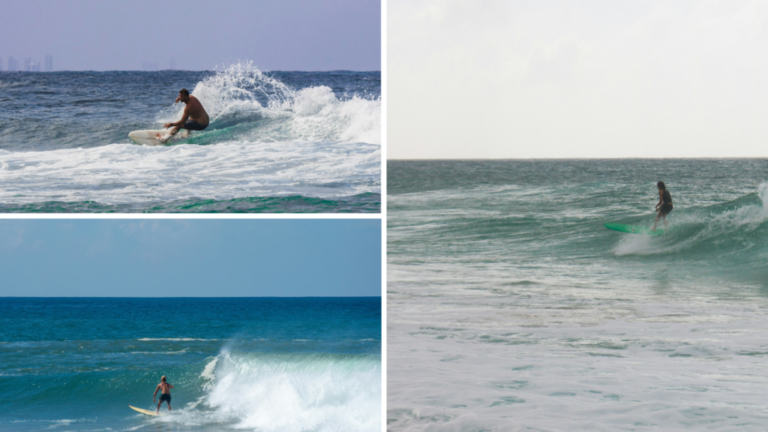
At this beach, you’ll find waves for all surfing levels, although beginners have more opportunities. Its environment is known for nature, tranquility, and being uncrowded during low season. This makes it ideal for various water sports, including surfing.
Bávaro Beach offers large stretches of coastline, but part of it is controlled by a 5-star hotel complex, so some activity restrictions may apply. Still, there are shops and services available without staying at the hotels.
To reach this beach, drive about 20 minutes, around 16 km south of Punta Cana, where the sand is white, and the water is crystal clear.
4. Juanillo Beach
This beach is public, despite being surrounded by hotels and private businesses. Access is controlled and costs between $20 and $30 (approx. €18.50–27.70), spendable within the hotel area, so it’s usually not crowded.
The waves are moderate but consistent enough for surfing, mostly suitable for beginners. This beach is perfect for learning wave timing, board techniques, and balance without major risks, thanks to its sandy seabed and clear water.
Since it’s almost private, no surf events take place here, but you can practice other sports nearby, such as diving, kayaking, or kitesurfing.
Connectivity While Surfing in Punta Cana
To stay connected in Punta Cana, we recommend offering from 25 GB up to unlimited data, shareable across devices, valid in over 160 destinations without changing your eSIM, as they are global. Holafly’s monthly subscription plans
You can also install the Punta Cana eSIM or Dominican Republic eSIM, which provides unlimited data for as long as you need, without roaming fees or SIM swaps.
Important: If you are a frequent traveler and want to stay connected without worrying about expensive roaming or looking for a new SIM at every destination, Holafly’s subscription plans are for you. With a single eSIM, enjoy internet in more than 160 countries for a fixed price and no surprises on your bill. Travel without limits and connect easily and securely! 🚀🌍

Best Seasons for Surfing in Punta Cana
The best time to surf in Punta Cana is during winter and spring, which run from October to March. During this period, strong winds and intense swells occur, ideal for experienced surfers.
Winter and spring are considered low season in the Dominican Republic, so the beaches tend to be quieter. This allows surfers to enjoy more space while having fun with Punta Cana’s warm sea and weather.
Nevertheless, Punta Cana is a destination where you can surf any time of the year, thanks to its consistent weather and readiness to host surfers year-round.
Surfing Costs in Punta Cana
Estimating the costs to surf in Punta Cana depends on your experience, preferences, and lifestyle. Expenses such as accommodation, food, equipment rental, or lessons will affect your budget.
Here’s a list of approximate prices related to surfing in Punta Cana:
- Accommodation: Staying in Punta Cana can cost $50 (€46.30) at a surfer-friendly hotel or $70 (€64.80) per night in a mid-range hotel.
- Food:Mid-range restaurants offer dishes between $12-20 (€11.10-18.50), although take-away options may be cheaper.
- Board rental: A full day costs between $30-45 (€27.70-41.50), half a day around $35 (€32.40), or one hour $15-20 (€13.80-18.50).
- Surf lessons: A private class is around $90 (€83.30), while group lessons drop to $50-70 (€46.30-64.80). Prices depend on the number of lesson days.
How to Start Surfing in Punta Cana
Several aspects are important when starting to surf in Punta Cana. One of them is safety, which is the focus of our beginner recommendations. Additionally, it’s essential to be patient and follow step by step to maximise your learning success.
Punta Cana is ideal for beginner surfers because some beaches have consistent waves that are not too big or dangerous for practice. Here’s how to start surfing, especially in Punta Cana:
- Research surfing in Punta Cana: This guide helps you understand the best beaches to start and what Punta Cana offers while learning.
- Find a surf school or hire an instructor: Even with calm seas suitable for beginners, learning alone or from inexperienced people is risky. A school or instructor ensures safety and real progress.
- Choose the right equipment: Not all surfboards suit all levels, so pick one adapted to your skill. Also, select appropriate clothing to avoid discomfort that hinders progress.
- Take care of yourself while learning: Don’t overexert. Surfing is physically demanding, so rest, hydrate, and eat well before and after classes.
Frequently Asked Questions
The most suitable board for beginners is a foam board, which has more volume and is usually longer and wider.
Due to the warm sea conditions, you don’t need a special surf suit; a regular swimsuit works perfectly for this sport.
No, you don’t need to bring your own board. Shops in Punta Cana rent all the necessary equipment according to your experience level.
No, surf schools in Punta Cana will teach you everything about surfing, regardless of your current experience level.
No, the sea remains warm throughout the year, even in winter, making Punta Cana even more attractive for surfing.