Language


 No results found
Scuba diving in Vietnam: Best spots and prices
Discover the best places and centres for diving in Vietnam, get organised and enjoy a great dive in the sea.

Vietnam is one of the most accessible places to experience diving and discover marine life. Its paradisiacal beaches, coral reefs, and sporty atmosphere place it among the top destinations for scuba diving. This guide provides valuable information about centres and courses, making it easy to see what each offers and which one suits your skill level.
We recommend choosing the centre that best matches your preferences and familiarising yourself with the necessary information to enjoy your underwater experience fully. Diving in Vietnam is one of the most adventurous and dynamic activities in the country, while also allowing you to connect with its culture and enjoy everything the destination offers as you learn and explore the sea.
Diving Centres and Courses in Vietnam
Throughout the country, there are ideal areas for recreational diving. Centres are usually located in popular coastal destinations, making it easy to combine diving with beach days, local cuisine, and excursions. Here are some of the most recommended diving centres in Vietnam:
Rainbow Divers Vietnam (Nha Trang, Phu Quoc and other locations)
One of the pioneering centres in the country, present in several key destinations. It is affiliated with PADI and offers courses from introductory dives to advanced certifications. Their team stands out for experience and international instructors, which makes communication easy. They also organise boat trips to the best spots in each area.
Sailing Club Divers (Nha Trang)
Located in front of Nha Trang’s main beach, it is a favourite among those seeking a young and relaxed environment. Programs include Discover Scuba Diving, Open Water Diver, and specialty courses such as underwater photography. They also offer packages combining diving and city leisure activities.
Flipper Diving Club (Phu Quoc)
Phu Quoc is a diving paradise, and this centre is one of the most comprehensive. Their team organises trips to the north and south of the island to explore colourful reefs, starfish, and tropical fish. They offer classes in English and options for certified divers who want to explore deeper waters.
Cham Island Diving (Hoi An)
Perfect for visitors in Hoi An who want a diving experience without detouring from the city. They offer courses, introductory dives, and daily tours to Cham Island Marine Reserve, one of the country’s most interesting conservation areas.
Available Courses: From First Dive to Advanced Level
In Vietnam, you can take different types of diving courses:
- Try Dive or introductory dive: Designed for those who have never dived and want to try, always accompanied by instructors.
- PADI Open Water Diver: The most recognised certification worldwide, with theory and practical sea sessions. Ideal for those starting to dive independently.
- Advanced Open Water Diver: To improve skills and access deeper dives.
- Specialty courses: Underwater photography, navigation, night diving, or buoyancy.
- Rescue Diver and Divemaster: Aimed at those seeking a professional path.
Vietnam stands out for offering competitive prices for almost all courses, along with a warm climate most of the year, allowing diving in any season depending on the region.
Best Places to Dive in Vietnam
Vietnam has various coastal areas offering ideal conditions for recreational diving: warm waters, good visibility, and a rich marine biodiversity. Here are some of the best diving spots in the country:
Nha Trang
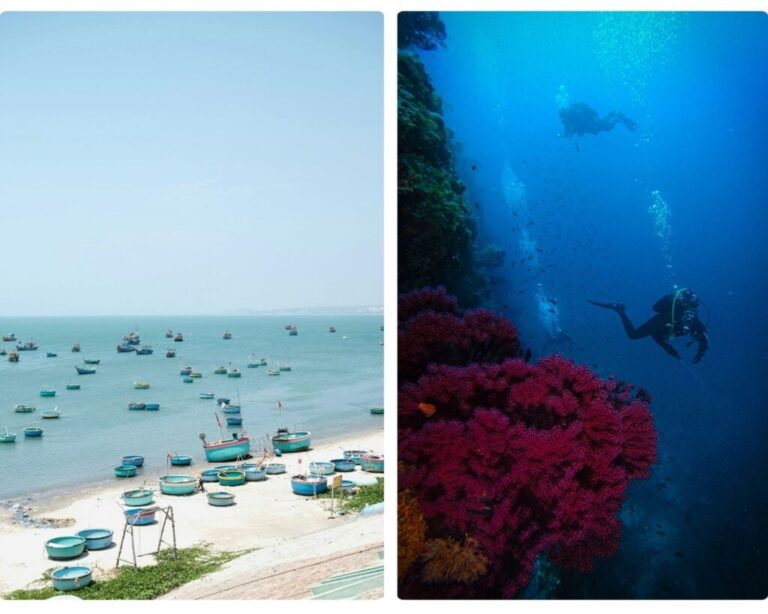
Located on Vietnam’s southern coast, Nha Trang is a popular diving destination due to its tourist infrastructure, specialised schools, and proximity to protected areas such as Hon Mun Island. Underwater, you can see hard and soft corals, nudibranchs, parrotfish, moray eels, and other tropical species. Besides diving, the city offers lively atmospheres, wide beaches, and facilities for solo travellers or groups.
Phu Quoc
In the south, near the Cambodian border, this island is famous for its green jungles and quiet beaches. Phu Quoc’s reefs host butterflyfish, groupers, seahorses, and giant starfish. The area is perfect for beginners and those seeking relaxed dives with good visibility and colourful marine life. It’s also ideal for combining diving with beach days, food tours, and motorbike trips around the island.
Cham Island (Hoi An)
A few kilometres from Hoi An, Cham Island is part of a marine reserve with over 200 coral species. The site is known for its rich marine ecosystem: turtles, pufferfish, and tropical fish schools accompany divers. It’s an excellent choice for those seeking a protected natural environment while enjoying Hoi An’s cultural charm on land.
Con Dao
This archipelago, located off the southern coast, is known for more remote and less crowded dives. The clear waters allow sightings of manta rays, bamboo sharks, and turtles that come to the area to nest. Con Dao is perfect for those seeking tranquil dives, away from general tourism, in one of the country’s best-preserved ecosystems.
Whale Island
Located north of Nha Trang, Whale Island is a small island surrounded by well-preserved reefs. Its name refers to the seasonal presence of whales and whale sharks in the area. While sightings are not guaranteed, the local biodiversity includes tropical fish, healthy corals, and some exciting encounters with pelagic species. It’s an ideal destination for divers wanting to disconnect and enjoy a more exclusive underwater environment.
Da Nang and Son Tra Peninsula
In central Vietnam, Da Nang is known for urban beaches, modern resorts, and one of the country’s best tourist infrastructures. Just minutes from the city lies the Son Tra Peninsula, a protected area with diving trips easily accessible from the coast.
Here, you can see soft corals, parrotfish, snappers, seahorses, and small species hiding among the rocks. Visibility is usually good during the dry season, and being close to the city makes it ideal for travellers with limited time or those wanting to combine urban tourism and nature.
Connectivity While Diving in Vietnam
Having a stable connection during your trip is essential for organising excursions, checking sea conditions, and contacting diving centres. You can stay online in Vietnam using a Holafly eSIM from the moment you land.
With Holafly’s eSIM for Vietnam, you get unlimited data without worrying about roaming. It installs in seconds via a QR code, and you don’t need to swap your physical SIM. This allows you to communicate with your diving centre, navigate maps, and upload photos and videos after each dive. For longer trips or multiple destinations, Holafly’s monthly plans are the best option.
Important: If you are a frequent traveler and want to stay connected without worrying about expensive roaming or looking for a new SIM at every destination, Holafly’s subscription plans are for you. With a single eSIM, enjoy internet in more than 160 countries for a fixed price and no surprises on your bill. Travel without limits and connect easily and securely! 🚀🌍

How Much Does Diving in Vietnam Cost?
One major advantage of diving in Vietnam is that prices are generally more affordable than in other Southeast Asian countries like Thailand or Indonesia. This makes it an excellent option for learning to dive or enjoying quality dives without spending excessively.
Costs vary depending on the season, destination, and type of boat used to reach diving spots. They also depend on whether the trip is group or private and if transfers, lunch, or equipment are included. Typical ranges are:
- Try Dive or introductory dive: From €70 ($77) per person, including full equipment and instructor. Ideal for first-time divers.
- Dives for certified divers: Between €60-90 ($66-99) for two dives. Centres usually include boat transfer, tanks, and professional guide.
- PADI Open Water Diver Course: From €350 ($385), including theory and practical sessions. This popular certification allows diving up to 18 metres anywhere in the world.
- Advanced Open Water Diver Course: From €280 ($308) to improve skills and reach depths up to 30 metres.
- Specialty and professional training: Prices vary by school and format. Recommended specialties in Vietnam include buoyancy, night diving, and underwater navigation.
Safety and Sea Conditions in Vietnam
Diving zones in Vietnam are almost always in warm waters year-round, allowing diving without thick wetsuits. Visibility varies by season and location but is generally good during recommended months.
Each centre performs weather checks before trips and can reschedule or postpone a dive if conditions are unsuitable. If you are certified, always bring your logbook and follow your instructor’s guidance at all times.
How to Choose a Good Diving Centre in Vietnam
For a safe, quality experience, consider these aspects:
- Ensure it is an authorised centre affiliated with PADI or another recognised organisation.
- Check they have professional instructors experienced in the area.
- Verify the equipment is in good condition and properly fitted.
- Confirm a controlled ratio of divers per guide.
- They should clearly explain the itinerary, difficulty level of each site, and safety rules.
Reviews on Google Maps and diving forums also help you make an informed decision. Enjoy your dive!
Frequently Asked Questions About Diving in Vietnam
If it’s your first time, you can do an introductory dive accompanied by instructors at all times. You can also take your Open Water Diver certification.
It depends on the region. Generally, April to October is recommended in Nha Trang and Whale Island, while Phu Quoc has better conditions from November to April.
Colourful corals, tropical fish, starfish, turtles, and in certain areas pelagic species like manta rays and bamboo sharks.
In destinations such as Nha Trang, Phu Quoc, and Hoi An, certified centres offer internationally recognised courses.
Not mandatory in all centres, but highly recommended to ensure protection against any eventuality.
Before and after your dive, it allows you to stay connected to coordinate schedules with your diving centre, check maps, or communicate with your accommodation without relying on public networks.