Language


 No results found
Scuba diving in the Philippines: Best spots and prices
Ready for scuba diving in the Philippines? We've put together a guide with 4 top dive centres and 4 must-visit spots,

Ready for your scuba diving in the Philippines? The Philippines has several diving spots and world-renowned dive centres. We’ve gathered 4 dive centres and 4 must-visit spots for you to explore incredible underwater landscapes among tiny and giant fish, and colourful reefs.
In this diving guide we’ll show you the best centres to start or improve your diving skills, the courses you can takein the Philippines and the top spots to enjoy this recreational underwater sport. By the end, you’ll know the approximate cost of diving in a country like the Philippines.
Dive Centres and Courses in the Philippines
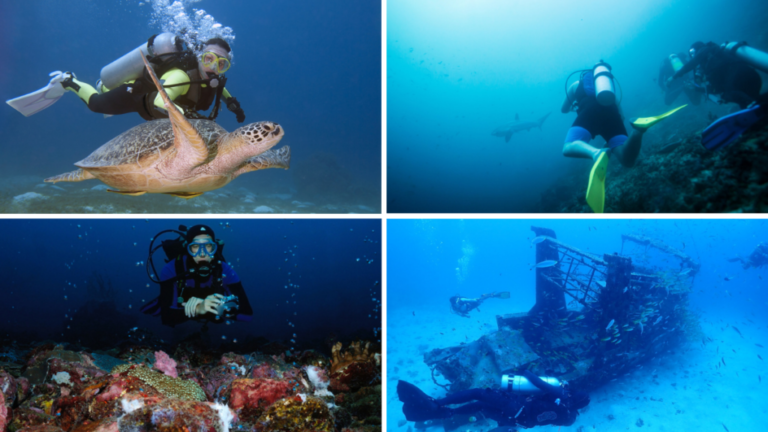
We’ve selected 4 dive centres in the Philippines, which have enough experience to teach you everything about diving from scratch. Moreover, they provide all the necessary tools to progress in this sport at the country’s best locations.
1. Savedra Dive Center
Located at Panagsama Beach, Moalboal, this luxury dive centre will take you to various dive spots. They offer accommodation for divers, and their main attraction is diving alongside sardine schools.
Swimming with sardines is one of the most sought-after experiences in the Philippines. Besides swimming with massive fish schools, you’ll see predators like sharks and whales hunting, creating a documentary-like scene just meters from the shore.
Additionally, they offer cave diving experiences with side-mount tanks, marine photography, and wreck dives around the area. You can take courses from beginner to any diving specialty. They offer these levels:
- For beginners:
- Non-certifiable diving course
- PADI diver course
- PADI open water diver course
- For advanced divers:
- Advanced open water course
- Rescue with CPR
- Specialties:
- Enriched Air (Nitrox)
- Deep diver
- Cave diver
- Night diver
- Peak performance buoyancy
- Underwater photographer
- Technical gas mixer
- Search and recovery
- PADI Sidemount diver
2. Submariner Diving Center
This centre is located in El Nido, Palawan and is one of the highest-rated by divers visiting the Philippines. It’s a resort that has offered various diving experiences in the country for over 20 years.
They have large boats adapted for long-distance travel to reach the best dive spots. Their experience and professionalism give confidence in every dive, as instructors know the area well.
The packages range from introductory and refresher dives for those who haven’t dived in a while or are beginners, to adventure and night dives. Courses offered include:
- Beginners and advanced:
- Basic and advanced PADI open water course
- Reference diving course
- Advanced diving course
- Specialty:
- Enriched Air
- Buoyancy
- Depth
- Fish identification
3. Piratas Dive Center
Located at Alona Beach, Panglao, Bohol, this dive centre also offers dives across the Philippines, including Balicasag, Pamilacan, and Panglao islands. It’s highly rated by Spanish-speaking divers because instructors speak fluent Spanish.
This centre takes divers to ecologically important spots where dives are carefully managed, as these are protected areas. They transport divers in their own boats, which adds value to their dive plans.
Courses cover all levels, with extensive specialties, all PADI-certified:
- Introductory diving courses
- Reference diving courses
- Open water diving course
- Rescue diving course
4. Bohol Divers Club
This is another PADI dive centre at Alona Beach. They are recognised for their long experience teaching diving and for their facilities, which include a pool and a private beach for beginner diver training.
Their most popular trips are to Balicasag and Pamilacan islands, usually using any of their 5 boats dedicated to diving. Instructors speak multiple languages, allowing them to assist divers from different countries.
They offer non-certification dives for children and adults, but you can also take the following courses:
- For beginners and advanced:
- Introductory diver
- Basic or advanced open water diver
- Rescue diving
- Specialties:
- PADI Sidemount diver
- PADI Deep diver
- PADI Self-sufficient diver
- PADI Search and recovery diver
- PADI Wreck diver
- PADI Digital underwater photographer
- PADI Enriched Air Nitrox
- PADI Emergency Oxygen Provider
- PADI Peak Performance Buoyancy
- PADI Night diver
Best Places to Dive in the Philippines
There are many ideal spots for diving in the Philippines, surrounded by unique landscapes full of life. However, we have selected 4 locations that offer amazing marine shows with fish and protected ecosystems where you can observe various marine animals and plants.
1. Tubbataha Reefs
It’s a Natural Park of the Reefs and a UNESCO World Heritage Site, so access is only allowed between March and June each season. Its protection has allowed it to host diverse animal species.
Here, you can spot white-tip and black-tip reef sharks, hammerhead sharks, manta rays, green and hawksbill turtles, schools of tuna, barracudas and, with luck, whale sharks. Coral reef species exceed 360, making it an exclusive location.
This site suits intermediate or advanced divers, as many attractions are far from shore and over 12 metres deep. Currents can be strong, so caution is necessary.
2. Malapascua
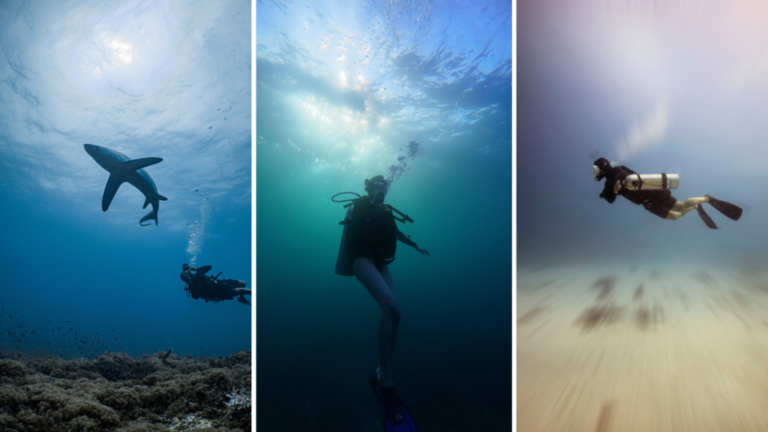
This small island is accessible by boat from the northern tip of Cebu. The waters are calmer here, but no less impressive, as marine life changes throughout the day. You will see different species depending on the time of your dive.
For instance, if you want to see the thresher shark, identified by its long tail, morning dives are ideal. This is when it comes up for a cleaning session with cleaner fish.
You may also see manta rays, sea snakes, and other fish such as seahorses and mandarinfish. This site is perfect for beginner and advanced divers, with enough space for all levels to enjoy.
3. Anilao
Located in Batangas province, just a few hours’ drive from Manila, the capital of the Philippines. Located in Batangas province, a few hours’ drive from Manila, it is known as one of the oldest diving spots in the country, thanks to its abundance of small creatures in many shapes and colours.
This is not a site for large fish. Instead, you need sharp eyes to see all the marine life inhabiting this area. Expect to see pygmy seahorses, ghost pipefish, blue-ringed octopus, frogfish, scorpionfish and a wide variety of invertebrates.
This spot allows dives for beginners and advanced divers, as underwater activities suit different experience levels due to varying depths and currents.
4. Apo Reef
This coral reef is the largest in the Philippines and one of the largest worldwide, making it a truly unique location. It lies in the Mindoro Strait and is protected by Apo Reef Natural Park.
To reach this site, you must hire a boat and be accompanied by guides and instructors who train you in both location and ecosystem to avoid unintentional human impact.
Marine life here is diverse. Besides the reefs, you can find sea turtles, Napoleon wrasse, snappers, and occasionally manta rays and hammerhead sharks. This world-class diving destination is well-maintained for intermediate and advanced divers to explore safely.
Connectivity While Diving in the Philippines
Your connectivity shouldn’t drift while planning your dives in the Philippines. We recommend Holafly’s monthly subscription plans. These plans use a virtual SIM offering from 25 GB up to unlimited data.
With any of these eSIMs, you can share your data with other devices and travel to over 170 countries worldwide, as they are global. If you only stay for one or two weeks, we suggest the Philippines eSIM for unlimited data just for the days you need.
Important: If you are a frequent traveler and want to stay connected without worrying about expensive roaming or looking for a new SIM at every destination, Holafly’s subscription plans are for you. With a single eSIM, enjoy internet in more than 160 countries for a fixed price and no surprises on your bill. Travel without limits and connect easily and securely! 🚀🌍

How Much Does Diving in the Philippines Cost?
Diving costs in a country like the Philippines depend on how you want to experience it, as a single dive costs less than certification courses for beginners or improving your skills if you already have experience.
Other factors like accommodation and meals will affect your budget. Still, here are approximate prices for each experience and course in the Philippines:
- Individual recreational dive: Between $30 and $45 (€28 – 42) per dive.
- Dive package: There are plans for up to 10 dives, which can cost between $25 and $35 (€23 – 32).
- PADI open water course: Depending on the level, whether basic or advanced, this course could cost between $300 and $400 (€280 – 420).
- Accommodation: A mid-range hotel can cost between $40 and $80 (€37 – 75) per night. If you prefer a 5-star resort, the price exceeds $150 (€140).
- Meals: in mid-range restaurants, a dish at any time of day can cost between $8 and $15 (€7 – 14).
Frequently Asked Questions
No, in the Philippines you’ll have access to all the necessary diving equipment if you dive with any of the local dive centres.
Yes, underwater photography is allowed during dives in the Reef Natural Parks in the Philippines.
Between November and April you’ll find all the ideal conditions for diving in the Philippines, with gentle currents and minimal rainfall, ensuring good underwater visibility.
Diving isn’t a highly dangerous sport, but it’s essential to follow the guides’ and instructors’ instructions to reduce risks. Always ask questions before starting a dive.
Tubbataha Reefs Natural Park is the best spot for advanced divers to enjoy deep dives surrounded by diverse marine life and coral reefs.