







 Language


 No results found
Scuba diving in Cuba: Best spots and prices
Discover how much it costs to dive in Cuba, the best centres, courses and boats for a unique underwater experience in the Caribbean.

If the idea of exploring colourful seafloors, historic shipwrecks, and nearly untouched reefs appeals to you, diving in Cuba will amaze you. In this article, you’ll find all the information you need to plan your underwater adventure: Updated prices, the best dive centres in the country, options for diving from boats or cruises, and the most recommended destinations based on your skill level. We’ll also give practical tips to enjoy a safe and authentic experience in this Caribbean paradise. Get ready to discover why Cuba is one of the best-kept diving secrets.
What are the main dive centres and courses in Cuba?
Diving in Cuba is not just about immersing yourself in crystal-clear waters: It’s about discovering a completely new world. On the island, you’ll find experienced dive centres in locations as varied as Havana, Varadero, or the Isle of Youth, each with its own charm and style.
Moreover, Cuban instructors are known for their patience and passion for the sea, which makes both beginners and advanced divers feel comfortable and safe. From basic courses for first-time divers to advanced and technical programmes for the more adventurous, Cuba has options for everyone.
Below, we detail the main dive centres in the country and the courses offered at each, so you can choose the one that best suits your level and your desire to explore.
1. El Colony International Diving Centre (Isle of Youth)
This is probably the most famous dive centre in the country. It is located within the El Colony Hotel on the Isle of Youth, ideal if you want a full experience with accommodation and diving in the same location. It has over 50 dive sites, including coral reefs, underwater walls, and wrecks. Visibility is excellent almost year-round. Courses range from Discover Scuba Diving for beginners, to Open Water, Advanced, and specialties such as deep or night diving. They also offer CMAS courses for more experienced divers.
2. Barracuda Diving Centre (Varadero)
Located in the heart of Varadero, this centre is highly accessible for tourists and beginners. It combines the comfort of being in a tourist area with excellent learning conditions. Daily trips are organised to nearby reefs, and instructors are known for their patience with first-time divers. Courses offered include the classic Discover Scuba Diving (a quick introduction), Open Water Diver (basic certification), and some specialty courses such as wreck or underwater navigation diving.
3. Cuba Blue Diving (Havana)
This centre mainly operates in the Playa area, in Havana. It is ideal for people staying in the capital who don’t want to travel too far.
They organise trips to nearby spots like Guanabo or Jibacoa, where there are colourful reefs and good visibility. They also offer snorkeling for those preferring a gentler experience. Courses range from introductory dives to PADI or SSI certifications at Open Water and Advanced levels.
4. Tech Diving Cuba (Miramar, Havana)
This centre focuses on technical and advanced diving. They work with divers who already have experience and want to explore greater depths, shipwrecks, or caves.
They have a great reputation among more experienced divers and offer a more personalised approach. Courses include Advanced Open Water, Rescue Diver, Dive Master, and various technical courses with mixed gases or decompression. If you are already certified and want to improve your skills or try technical diving, this centre is perfect.
5. Shark’s Friends Diving Centre (Cayo Guillermo)
Located on one of Cuba’s most beautiful cays, this centre specialises in tourist dives, ideal for enjoying the underwater scenery without complications. Trips go to areas with reefs teeming with marine life and occasionally even encounters with friendly sharks. Courses are offered from beginner to intermediate levels (Open Water and Advanced), as well as underwater photography and perfect buoyancy courses.
6. Marina Gaviota Diving Centre (Cayo Largo del Sur)
This centre in Cayo Largo is ideal if you want to dive in crystal-clear waters with pristine conditions. Dives are calm, and marine life is varied. Courses offered include Open Water Diver, Advanced, and some specialty courses. They also offer packages for certified divers who want multiple dives during their stay. Popular among cruise travellers or those seeking a classic Caribbean experience.
Available Courses in Cuba
- Experience Scuba / Introductory Dive: At Tech Diving Cuba (Havana), they offer this beginner’s course for individuals with no prior experience. It includes a theory session in confined waters and a shallow dive up to around 8m deep. It’s ideal if you just want to try diving without committing to lengthy certifications.
- Open Water Diver (Basic Certified Level: Very popular, for example at Tech Diving Cuba: course to dive independently with a buddy, maximum depth of 18m at this centre. At another centre in Cayo Largo, the fees for this level are: $450 (€420) to complete the course. This course allows you to “truly enter the world of diving.
- Advanced Open Water Diver (Intermediate–combined specialties): E.g., in Varadero, allows diving up to 30 m with multiple dives focusing on navigation, night dives, drift dives, etc. Perfect for those seeking more adventure after the basic course.
- Rescue Diver (Rescue level): Serious course learning to recognise stress, emergencies, and perform rescues. In Varadero, listed: $240 (€224). Great for divers aiming beyond basic dives.
- Deep Diver (Deep diving specialty): Listed in Varadero’s specialty courses, includes deep dives, planning, and special equipment. Prices from ~$290 (€272).
- Technical and specialty courses: Tech Diving Cuba offers courses like “Sidemount Diver”, “Recreational Deco Diver”, “Nitrox Diver”. These require prior certification, experience, and advanced equipment.
The 7 Best Places to Dive in Cuba
Whether you are a beginner or an experienced diver, the island offers unique spots for every level: from calm bays ideal for first dives to marine reserves where you can swim with sharks or explore pristine coral gardens. Here are the best places to dive in Cuba, what you can see at each, and why they are must-visit locations for discovering the Caribbean underwater.
1. María la Gorda (Pinar del Río)
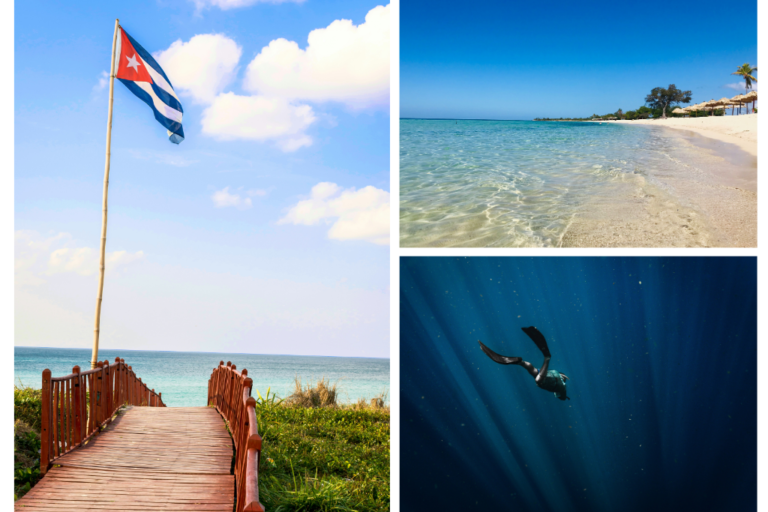
Located in western Cuba within Guanahacabibes National Park, María la Gorda is famous among experienced divers. Its remoteness is part of its charm: a quiet corner surrounded by untouched nature and crystal-clear waters. It has over 50 dive sites, some of the best in the Caribbean. You’ll see black corals, giant gorgonians, barracudas, groupers, snappers, moray eels, and even sea turtles. In certain seasons, dolphins and eagle rays can also be spotted. The special appeal of María la Gorda is not only its biodiversity but also its natural and peaceful environment, perfect for disconnecting and enjoying the sea in its purest form.
2. Jardines de la Reina (Southern Cuba)
This protected archipelago, off the coasts of Ciego de Ávila and Camagüey, is Cuba’s most important marine sanctuary and one of the best-preserved in the Caribbean. Visits are only allowed with permits and in limited groups, ensuring a nearly untouched environment. Diving here is an impressive experience: The reef is teeming with reef sharks, silky sharks, turtles, moray eels, colourful sponges, and schools of tropical fish. Visibility is excellent almost year-round. The sense of exclusivity is unique: Divers stay on floating hotel boats, making every dive feel like a private journey through an underwater paradise.
3. Playa Santa Lucía (Camagüey)
On the northern coast of Camagüey, Santa Lucía boasts one of the largest coral barriers in the Caribbean, stretching over 20 km. Here, you’ll dive among parrotfish, lobsters, sponges, barracudas, and turtles. The highlight is diving with bull sharks, a guided and safe experience that leaves a lasting impression. Santa Lucía also offers relaxation: Long beaches, Caribbean sunsets, and a laid-back atmosphere make it perfect for a complete holiday.
4. Cayo Largo del Sur (Canarreos Archipelago)
This small cay south of Cuba is pure Caribbean postcard material. The waters are translucent blue, with visibility often exceeding 30 metres. The seabed is covered with hard and soft corals, gorgonians, and sponges, and it’s common to see angelfish, green morays, rays, and barracudas. Best of all, Cayo Largo combines diving with paradisiacal beaches, like Playa Sirena and Playa Paraíso, considered some of Cuba’s most beautiful. Perfect for morning dives and afternoons on white sand beaches.
5. Bay of Pigs (Playa Girón and Playa Larga, Matanzas)
Just a few hours from Havana, the Bay of Pigs is perfect for beginners and underwater photographers. You can dive directly from the shore without a boat. The waters host butterflyfish, sergeant majors, gobies, shrimps, sponges, and colourful corals, all in calm waters with excellent visibility. In addition, it has a historical and cultural touch: It is an area full of Cuban history, with lush nature surrounding it. It is the ideal spot for those who want to start diving without straying too far from the tourist centres.
6. Isle of Youth (Canarreos Archipelago)
Known as the “Treasure Island” for its mysterious atmosphere, it’s another must-visit destination. Its seafloor is among the most diverse in Cuba, with caves, tunnels, vertical walls, and shipwrecks. Here, you’ll find rays, giant groupers, reef sharks, turtles, and barracudas, with visibility up to 30 metres. The tranquillity, quality dive centres, and local hospitality make it perfect for divers seeking something authentic and less crowded.
7. Varadero (Matanzas)
Although better known for its beaches and resorts, Varadero also offers good diving, especially for beginners. Nearby, there are well-preserved reefs, underwater caves, and shallow wrecks, They are home to tropical fish, moray eels, hard and soft corals, and lobsters. Varadero’s advantage is its convenience: multiple well-equipped dive centres, good infrastructure, and plenty of leisure options after your underwater adventures.
Connectivity While Diving in Cuba
Internet connectivity in Cuba is limited, and no mobile operators offer eSIM. The best option is to get a Cubacel tourist SIM card, the only local mobile network. Its basic package includes unlimited minutes, SMS, and 10 GB of data for 30 days, available at ETECSA offices or airport sales points.
Important: If you are a frequent traveler and want to stay connected without worrying about expensive roaming or looking for a new SIM at every destination, Holafly’s subscription plans are for you. With a single eSIM, enjoy internet in more than 160 countries for a fixed price and no surprises on your bill. Travel without limits and connect easily and securely! 🚀🌍

How Much Does Diving in Cuba Cost?
Before diving in, it’s useful to know the cost of this adventure. Prices vary depending on the type of experience, from a single dive for beginners to certification courses or diving safaris. Here’s what you can expect to pay and what each option includes.
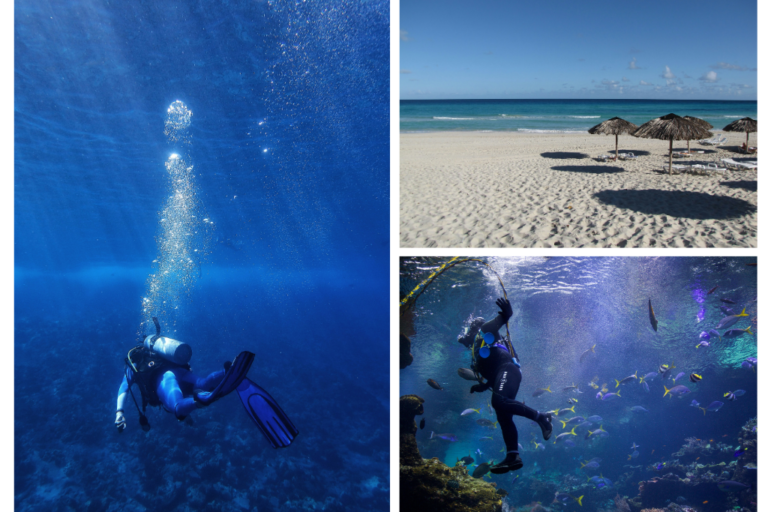
- Single dive for certified divers: Usually between $40-50 (€37-46), including basic equipment and transport from a resort or beach area.
- Multiple-dive packages: For example, 2 or 3 days with two dives per day, the price drops significantly, e.g., 2 dives for $60-70 (€56-65).
- Introductory courses or full certifications: Prices rise significantly, e.g., an Open Water Diver course costs around $300-400 (€280-370) in some areas.
- Premium options: Diving safaris (multiple days, many dives, special accommodation) can reach several thousand dollars.
- Guided dives: For certified divers, many centres offer guided dives, giving peace of mind with a local guide who knows the sites. For instance, in Cayo Largo, a dive costs $40 (€37) per dive, including guide, tank, and transport.
- In Bay of Pigs, prices are lower: One dive costs around $25 (€23), two dives for $25 (€23), including basic equipment and transport. So, depending on the area and the provider, you could expect between $25-50 (€23-46) per dive, if everything is included.
- Equipment rental: If you don’t have your own gear or prefer not to bring it, rental costs apply. In Cayo Largo, complete equipment rental is around $10 (€9) per dive. In safari or liveaboard contexts, the full rental can increase significantly, as the operations are more ‘premium’ and more expensive. Therefore, estimate that on top of the guided dive rate ($25-50 / €23-46), you might add an extra $10-20 (€9-18) for rental equipment, depending on the centre.
Diving in Cuba: Frequently Asked Questions
Sometimes yes, but not always. Some centres include it in the fee, while others charge an extra $10-20 (€9-18) per day for full equipment rental. Always ask before booking.
If you plan to do deep dives or guided excursions, yes. But many centres offer introductory or ‘discover dives’ for beginners without certification, with instructors accompanying you at all times.
Although not as modern as other Caribbean destinations, Cuba has well-equipped centres, certified instructors, and safe boats. It’s wise to book in advance and confirm availability.
Yes. Diving safaris or liveaboards exist in Cuba, especially in remote areas like Jardines de la Reina. They usually cost several hundred to thousands of dollars depending on the duration and type of boat.
The best season is from November to May, when the sea is calmer and visibility is excellent. In summer, there is more heat and humidity, but also more marine life.


