Language


 No results found
Driving in Malaysia: Tips and requirements
Complete guide to driving in Malaysia as a foreigner: Licences, required documents, traffic rules, road signs, and more.

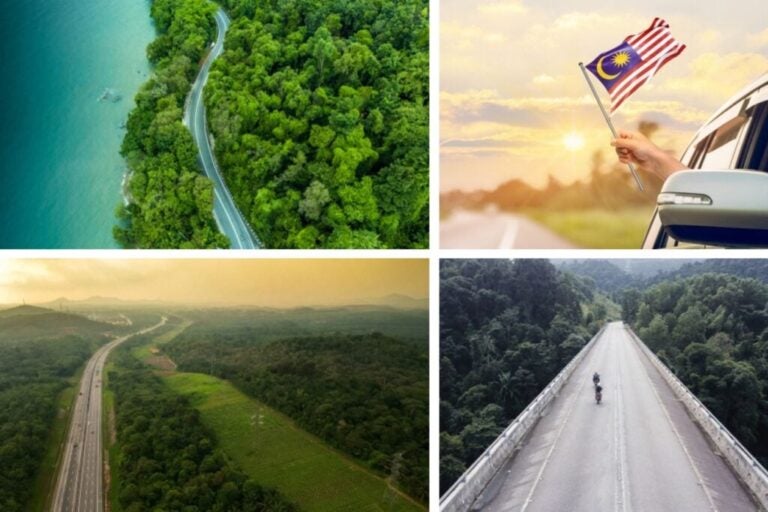
Any trip through Southeast Asia should include a visit to Malaysia. Not just to stand in front of the impressive Petronas Towers in Kuala Lumpur, but to discover all that the country has to offer. Over 98,000 km of roads, of which about 1,800 km are highways, cross the country from north to south, and east to west. It is one of the best road networks in the Asian continent, making driving in Malaysia an adventure worth experiencing.
In other words, driving through Malaysia will take you from its major cities to the coastal routes of Langkawi, the hills of Cameron Highlands, or the hidden temples in Penang, all at your own pace with the freedom to stop and take photos as many times as you want.
What will we cover today? Everything you need to know about driving in Malaysia as a foreigner: which licenses are valid, whether you need an international permit, how insurance and tolls work, which traffic rules to respect, what to do if you get a fine, and much more. Fasten your seatbelt and get ready to explore this beautiful country on four wheels.
Licenses Valid for Driving in Malaysia
Before renting a car or driving on Malaysian roads, you need to check if your license is valid. The good news is that the country has fairly clear and visitor-friendly rules, but there are some conditions to meet in order to avoid issues with local authorities.
Below, we will answer some questions you may have regarding your license when driving in Malaysia.
What type of license is valid to drive in Malaysia?
Any tourist or temporary traveller (such as a digital nomad or student, for example) who wants to drive legally in Malaysia must have:
- A valid driving license, written in the Latin alphabet and with a photograph.
- A International Driving Permit (IDP) issued in your home country or an official English translation of your national license.
Additionally, you will need to have your passport or ID document with you. Be aware that if you are stopped by the traffic authorities, they will request it.
Is an International Driving Permit (IDP) Required?
Yes, Malaysia requires an International Driving Permit (IDP) for all foreigners driving on its roads, whether in their own or rental vehicles. This document does not replace your national license (both must be carried together), and its importance lies in the fact that it is a valid form of identification in over 150 countries, with your name, photo, and information translated into the 12 most widely spoken languages (including English). Therefore, it helps local authorities understand the document, reducing delays or misunderstandings at traffic checks.
Furthermore, without an IDP, you are likely to be unable to rent a car, as most rental agencies require it, along with your national license.
Is an IDP Required for All Countries?
No, if you come from a country that is a member of the Association of Southeast Asian Nations (ASEAN), you can drive with your national license without needing an international permit. These countries include (in addition to Malaysia): Thailand, Myanmar, Laos, Cambodia, Brunei, Vietnam, Indonesia, Singapore, and the Philippines.
What Happens if I Decide to Stay More than Three Months in Malaysia?
If you plan to stay in Malaysia for more than three months for any reason, you will need to apply for a temporary conversion of your foreign license to a local one, provided your country has a reciprocal agreement with Malaysia. For example, the UK, Japan, and Singapore have agreements, but most Latin American countries do not. In any case, you can check with the Malaysian embassy in your country.
If you cannot exchange your national license for a Malaysian one, you will need to apply for a new license in the country, which involves passing theoretical and practical exams.
Requirements and Documentation to Drive in Malaysia
As you can imagine, having a valid license is not enough to drive in Malaysia. There are several requirements you must meet as a driver. Knowing them before hitting the road can help you avoid fines or awkward situations.
- Minimum Age for Driving and Renting a Car: The minimum age to drive a private vehicle in Malaysia is 18. However, to rent a car, you must be at least 23 years old (which may vary depending on the vehicle category), with a maximum age of 70 years, and at least one year of driving experience.
- Some companies allow rentals from 21, but they charge a young driver fee, which usually ranges between $6.50-11.00 per day (€6,00-10,00).
- Mandatory Vehicle Insurance: All vehicles in Malaysia must have third-party liability insurance, which covers damage to others and is legally required. If you rent a car, basic insurance is included in the price, but you can purchase additional coverage (for theft or damage, for example), at an extra daily cost. A useful tip is to carefully check the contract before signing, as some coverages have high deductibles unless you add extended insurance.
- Documents You Can’t Forget to Drive in Malaysia: your valid national license, your IDP (if applicable), your passport, a rental agreement (if relevant), and proof of insurance.
- Vehicle Inspection: All private cars must undergo periodic inspection, especially if they are more than 5 years old. If you rent a car, you shouldn’t worry too much about this, as the agency handles it. Nevertheless, it’s always worth checking. Also, before signing the contract, ensure the car is in good condition, and if something is wrong, ask the agency to fix it.
Connect to the internet on Malaysia’s Roads
Having good internet access isn’t a requirement to drive in Malaysia, but it will greatly improve your experience for route navigation, translating signs, paying for parking, or calling for assistance if needed. If you’re staying for a short time, the eSIM for Malaysia from Holafly offers unlimited data and a stable connection, only for the days you need it.
For longer trips, Holafly’s monthly plans are the best option for unlimited data, connecting multiple devices at once, and enjoying secure 5G connectivity in over 170 destinations, without having to change your eSIM.
Important: If you are a frequent traveler and want to stay connected without worrying about expensive roaming or looking for a new SIM at every destination, Holafly’s subscription plans are for you. With a single eSIM, enjoy internet in more than 170 countries for a fixed price and no surprises on your bill. Travel without limits and connect easily and securely! 🚀🌍

Traffic Rules and Road Signs in Malaysia
In general, driving in Malaysia is a satisfying experience. However, to truly enjoy this, it’s important to know the traffic signs and general rules of the country. It’s also key to be prepared for the chaotic traffic, especially during peak hours. Pay particular attention to motorcycles, as there are many, and they often weave in and out of lanes without following a clear rule. Don’t worry, we’ll cover all of this next.
Driving Direction
One of the first challenges you’ll face when driving in Malaysia (especially if you’re from Latin America) is that the country drives on the left, British style. This means the steering wheel is on the right side of the vehicle, and overtaking is done on the right. If you’re a beginner, a good tip is to rent an automatic car. You’ll find this helpful, especially in urban areas where traffic is intense, and you need to be extra cautious.
Speed Limits
The speed limit depends on the different roads and locations. Generally speaking, it’s 50-60 km/h in urban areas, 80 km/h on roads, and 110 km/h on highways. On highways, if they have three lanes, the leftmost lane is the slow lane, while the rightmost lane is the fast lane. When driving on this type of highway, try to stay in the middle lane if you’re maintaining a constant speed and not overtaking other vehicles.
Other Basic Rules: Mobile Phones, Seatbelts, Alcohol Tolerance, and Lights
As in practically every country, seatbelt use is mandatory for all drivers and passengers in the vehicle. It’s also recommended that children under eight years old travel in a special seat for them. If you’re renting a car, check in advance if it comes with a child seat if you need one.
Another basic rule when driving in Malaysia is no using mobile phones while driving. It’s prohibited, and failure to comply results in a fine of $226.00 (€207.92), unless you use a hands-free system.
Can I drive in Malaysia if I’ve had alcohol? You shouldn’t, as while the permitted blood alcohol level is 0.08%, it’s recommended not to drive at all. Police commonly conduct alcohol tests, and fines start at $453.00 (€416.76), with prison sentences of up to 15 years in severe cases. So, if you’re going out for drinks, leave the car at your accommodation and use public transport.
It’s also illegal to smoke while driving if there are minors in the vehicle. Be alert to this rule! Lastly, headlights must be on between 7:00 PM and 7:00 AM.
Traffic Signs in Malaysia
Now, let’s move on to an essential point: reading and interpreting traffic signs. The first thing you need to know is that they’re written in Malay, and in some cases, also in English, especially when indicating tourist spots, airports, train stations, and such. Many international symbols are also used, which helps a lot in understanding the signs. However, we recommend familiarising yourself with some common expressions, such as:
- Berhenti: Stop
- Had Laju: Speed Limit
- Awas: Attention/Caution
- Dilarang Masuk: No Entry
- Laluan Kanan: Right Lane
- Sekolah: School (slow zone)
What if I don’t understand a sign? A good practice is to use camera translation apps on your phone to interpret it instantly.
Tolls and Fuel Refill in Malaysia
If you’re going to drive in Malaysia, you’ll likely encounter toll highways. The country has a modern expressway network connecting major cities with fast, safe, and well-maintained roads. You’ll also need to know how to refuel and what type of fuel is used. Let’s see:
How Do Tolls Work in Malaysia?
Toll highways in Malaysia use a mixed system: on some stretches, you pay when entering and exiting, while others have fixed toll booths with flat rates.
Toll charges vary depending on the type of vehicle and the distance covered on the road. However, since 2021, the prices range between $0.57–0.91 (€0.52–0.84). For example:
- Kuala Lumpur – Melaka: between $1.59–2.27 (€1.46–2.09)
- Kuala Lumpur – Penang: around $6.80 (€6.26)
- Kuala Lumpur – Johor Bahru: about $7.93 (€7.30)
The accepted payment methods are the Touch n’ Go card (most common, it can be recharged and passed through the booth reader), SmartTAG (a device placed in the car and faster than the card), or RFID (a contactless payment system that scans an RFID sticker attached to the windshield). If you’re renting a car, check in advance which system is included and make sure it has sufficient balance.
How Do You Refuel in Malaysia?
Gas stations are available throughout Malaysia’s routes, as well as in major cities and towns. Typically, you won’t have trouble refuelling, although it’s advisable to fill your tank before heading into more remote or rural areas. There are signs along the roads indicating how many kilometers until the nearest service station.
Most stations offer:
- RON95: regular unleaded gasoline (cheapest and most common). It’s subsidised by the government with a fixed price, but only for Malaysian citizens. Tourists typically pay market prices, although the difference is minimal. Estimated price is $0.46 (€0.42) per litre.
- RON97: premium gasoline, higher priced with a higher octane. The price is around $0.79 (€0.73) per litre.
- Diesel Euro 5: used by larger vehicles or SUVs ($0.49 (€0.45) per litre).
Parking in Malaysia
Parking in Malaysia may seem simple at first, but it has its peculiarities. The rules change depending on the city, the day of the week, and the area. If you’re not familiar with the system, you might make mistakes and get a fine, even if your car is parked correctly.
Where Can I Park?
The first thing you need to know about parking in Malaysia is how to identify areas where parking is allowed and those with restrictions. The country implements a colour-coded line system and vertical signage to indicate specific conditions, such as time, type of vehicle, or days allowed. Keep in mind that in tourist or commercial areas, there may be restrictions during peak hours or weekdays (so make sure to read the signs!).
What does each colour indicate?
- White lines: Designated parking areas (may be free or paid).
- Single yellow lines: Parking is prohibited during certain hours.
- Double yellow lines: No parking at any time.
- Blue lines: Paid parking via ticket or app.
Be cautious before parking your vehicle, as fines for improper parking range from $6.80 – 33.98 (€6.26 – 31.26), depending on the city.
How Do You Pay for Parking?
In the main cities, there are two common methods to pay for public parking: parking meters and mobile apps.
The first type uses coins (although they’re becoming less common) or local cards and issues a ticket that you must place on the windshield of the car. Mobile apps vary between cities, but they’re generally the most used method. For example, in Kuala Lumpur, Selangor, and Putrajaya, the Flexi Parking app is used.
How much does parking cost?
Parking prices aren’t the same throughout the country, as they vary depending on the area and the time. However, you can use the following values as a reference:
- Large cities: Between $0.14 – 0.45 (€0.13 – 0.41) per hour.
- Underground or private parking: Between $0.68 – 1.36 (€0.63 – 1.25) per hour.
- Daily rates in hotels, shopping malls, or airports: From $2.27 – 6.80 (€2.09 – 6.26).
Tip: some shopping centres offer free parking for the first few hours, especially if you validate your ticket at the counter or with a purchase.
Car Rental Options in Malaysia
Now you know that renting a car in Malaysia is a convenient and affordable way to explore the country at your own pace. The good news is that there are plenty of options available, with reasonable prices and modern fleets. To wrap up this guide on driving in Malaysia, here’s some valuable information you should know before renting a car.
- You can rent vehicles at Kuala Lumpur’s international airports (KLIA and KLIA2), Penang, Langkawi, Johor Bahru; at train stations, bus terminals, and in the central areas of cities like Kuala Lumpur, Georgetown, or Kota Kinabalu.
- The main online platforms to rent vehicles in Malaysia are Rentalcars, DiscoverCars, and Kayak, or directly on the websites of agencies like Avis, Hertz, Europcar, Hawk, or Green Matrix.
- The requirements to rent a car are being at least 23 years old (some agencies allow 21-year-olds with a surcharge), having a valid driving licence with at least one year of experience, an IDP (if applicable), a valid passport, and a credit card for the security deposit.
- As for the types of vehicles available, there’s a wide variety for different types of trips: compact cars (Perodua Axia, Proton Saga), ideal for city or short trips; mid-size sedans (Toyota Vios, Honda City); SUVs or 4x4s (Honda HR-V, Mitsubishi Outlander), recommended for long trips or travel with luggage; and minivans (Toyota Innova), which are the best option for group trips. Electric or hybrid models are still limited but are slowly gaining presence in large cities.
- Prices vary depending on the season you visit Malaysia and the type of vehicle. For example, the daily rental of a compact car is around $18.00 (€16.56), while renting an automatic SUV can cost around $36.25 (€33.35) per day. This price includes the mandatory insurance, limited mileage, and roadside assistance. Additional coverage is charged separately.
- The insurance includes basic third-party liability, 24-hour roadside assistance, and standard taxes and fees. It does not include damage insurance (CDW), theft insurance, or the electronic toll system (Touch ’n Go).
Final Tips for Driving in Malaysia

You’re almost ready to hit the Malaysian roads. If you’ve made it this far, many of your questions about how to drive in Malaysia should now be answered. However, before we finish, we’d like to leave you with a couple of additional tips to make your driving experience even better. Take note:
- Be mindful of the local driving style: Generally, drivers in Malaysia follow the rules, but in big cities like Kuala Lumpur or Johor Bahru, traffic can be quite disorganised. It’s common to see motorcyclists zigzagging between lanes, turning without signalling, and overtaking suddenly. Always keep calm, respect the safe distance, and don’t assume other drivers will act predictably.
- Take advantage of rest stops: There are many rest areas along Malaysian highways where you can take a break, especially after driving for a while. These areas often have food stalls, restaurants, restrooms, prayer rooms, and other amenities.
- Gradually adapt to driving on the left: this will be one of your biggest challenges if you’re not used to it. Remember, roundabouts go counterclockwise, overtaking is on the right, and exits from highways are on the left. If it’s your first time, consider renting an automatic car. Additionally, avoid urban areas during peak hours, and practice in rural or less congested areas before entering cities.
- Use air conditioning wisely: The climate in Malaysia is hot and humid for most of the year. Driving with air conditioning improves comfort, but don’t set it to the maximum, as it can affect the engine’s performance, especially if you’re driving a small car.
- Refuel before heading to remote areas: In regions like Cameron Highlands or the East Coast, gas stations may be scarce. If you’re going on a long journey, fill up the tank before you leave and check the hours of the nearest stations.
Frequently Asked Questions
Malaysia has an extensive road network, most of it in good condition. The North-South Expressway is the most important and spans 800 km across the country, connecting with Thailand and Singapore. Roads leading to cities like Kuala Lumpur and Penang are also well-maintained with modern infrastructure. However, in rural or remote areas like Taman Negara or the Cameron Highlands, roads may be narrow, winding, and less developed.
You can top it up at petrol stations, minimarkets such as 7-Eleven or MyNews, local bank ATMs, or highway top-up points. It’s recommended to keep a minimum balance of $4.53 (€4.17) so you won’t get stuck at a toll gate.
Yes, you can drive as long as your licence is valid, appears in Latin script, and you carry your International Driving Permit. Some agencies let you rent a car with only your national licence if it’s in English, but bringing the IDP speeds up checks and paperwork.
If you have an accident, call the police at 999 and contact the rental company if the vehicle isn’t yours. Don’t move the car unless it blocks traffic or sits in a dangerous spot. Take photos, note everyone’s details, and follow the insurer’s instructions.
Not always. Some agencies allow trips to Singapore but require prior approval, extra documents, and sometimes additional insurance. Most agencies won’t allow crossings into Thailand, except for a few specific local companies. Always check with the agency before renting if you plan an international trip.
Yes, driving is generally safe. The road network is in good condition, signage is clear, and authorities enforce rules regularly. However, traffic in big cities can be chaotic during rush hour. Rural areas may have unpaved roads or poor lighting, and heavy rain can cause quick water build-up.
Malaysia offers many scenic routes thanks to its cultural and natural diversity:
– Highlands Route (Kuala Lumpur – Fraser’s Hill – Cameron Highlands – Ipoh). Duration: 4–5 days
– East Coast Route (Kuantan – Kuala Terengganu – Kota Bharu – Perhentian Islands). Duration: 6–8 days
– Malaysian Borneo Route (Kota Kinabalu – Kinabalu National Park – Sandakan – Sepilok – Lahad Datu). Duration: 7–10 days
– Northern Peninsula Route: From Kuala Lumpur to Langkawi (Kuala Lumpur – Ipoh – Penang – Langkawi). Duration: 7–10 days