Language


 No results found
Driving in Germany: Tips and requirements
What should you know about driving in Germany? We explain the key regulations so you can explore the country’s best road routes.

Driving in Germany helps you explore the country in a freer way and without the time limitations that public transport has. Additionally, German roads are known for being in good condition with excellent signage, ensuring a safe driving experience. But what licences do you need to drive in this country?
In this article, we’ll explain which permits are valid in Germany based on your country of origin, the main requirements, traffic rules, and some other tips to help you explore Germany’s major cities with ease.
Ready to drive through the Black Forest route or take a road trip from Berlin to Munich? Let’s go!
Valid Driving Licences in Germany
German road traffic is governed by the Geneva Convention of 1949, an international agreement that sets common rules to facilitate driving for citizens of countries belonging to this convention.
Next, we’ll look at when you can drive in Germany with your country’s permit and when you’ll need to exchange it for an international permit or a German licence.
Licence for European Union Citizens
All EU citizens can drive in Germany with their home country licence without needing an international permit. You can also rent a vehicle from major rental agencies in the country with this permit.
Licence for Countries with an Agreement
There are some countries with an agreement with the German government, where you can drive with your national licence for the first six months of your stay in Germany. Some of these countries are:
- America: Argentina, Brazil, Canada, Chile, Colombia, the United States, Mexico, Peru, Uruguay, Venezuela.
- Europe: Germany, Austria, Belgium, Spain, France, Italy, the Netherlands, the United Kingdom, Switzerland.
- Asia and Oceania: Australia, India, Japan, New Zealand, Thailand.
- Africa: Egypt, Morocco, South Africa.
After six months, it will be necessary to exchange your permit for a German licence. This procedure must be done at the local driving licence office (Führerscheinstelle) and you won’t need to re-test.
International Permit
You must apply for the international permit before your trip, as it is required for driving in Germany for countries that are not part of the European Union and also don’t have an agreement, such as China, North Korea, Bangladesh, Nigeria, or Angola.
Usually, the official traffic or automotive organisation in your country is responsible for issuing it, but it is not valid by itself. It must be accompanied by your valid national licence and is valid for one year.
German Local Licence
If you reside in this country for more than six months, you can no longer use your foreign licence to drive in Germany and must apply for the local German permit.
This procedure is recommended fordigital nomads planning to settle in the country for an extended period or students starting a programme at a German institution. These are the steps you need to follow:
- Make an appointment at your local Führerscheinstelle.
- Present your current licence, passport, and proof of residence.
- Complete a first aid course and, if required, a theoretical and practical test.
- The process can take several weeks, so make sure to complete it before the six months.
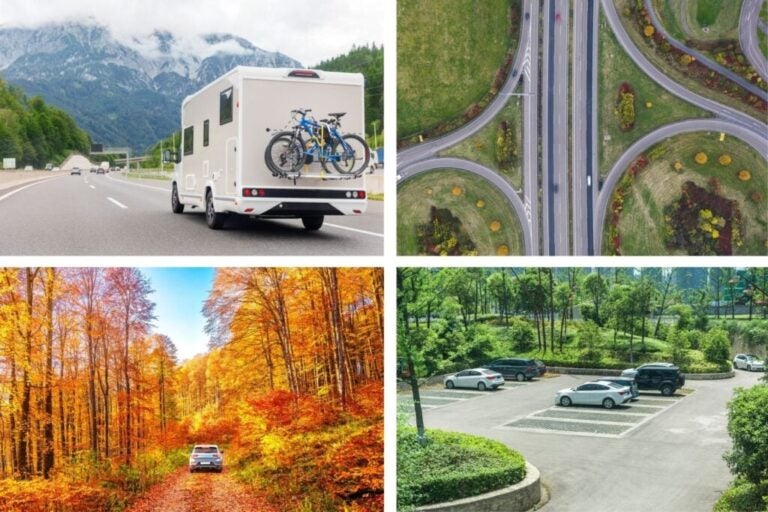
Requirements and Documentation for Driving in Germany
This country offers many experiences you can enjoy behind the wheel, such as visiting every German village where public transport doesn’t reach, exploring remote nature spots, or attending parties and festivals in different cities.
To drive safely and legally in Germany, there are a series of mandatory requirements you must meet, both for the driver and the vehicle.
Mandatory documentation
Let’s start with the mandatory documentation you must have in the car and be ready to present it to the authorities in case of a check or accident:
- Valid driving licence: as mentioned before, EU and EEA citizens only need their national licence. For other countries, an international driving permit is required along with the original licence.
- Identity document: this can be your national ID if from the EU or your valid passport.
- Vehicle registration (Zulassungsbescheinigung Teil I): an official document proving that the vehicle is authorised to be driven on public roads.
- Vehicle insurance: the minimum mandatory insurance is third-party liability.
Driver Requirements
The driver must meet certain requirements to drive in Germany, starting with age. The minimum age for private cars is 18 years and 21 for some rental companies.
There is no maximum age limit, as long as the person is in good physical and mental condition.
People with disabilities can drive with a special licence that authorises them to drive an adapted vehicle.
Vehicle Requirements
In addition to the driver, the vehicle must also meet certain regulations to be able to circulate in Germany. Here are the most important ones:
- Technical inspection (TÜV): this annual inspection ensures the vehicle’s safety and emission standards.
- Environmental sticker (Umweltplakette): required for driving in several German cities within low emission zones (Umweltzonen). This is obtained according to the vehicle’s emission level.
- Emergency kit: includes a reflective vest, emergency triangle, and a first aid kit.
Allowed Alcohol Limit
The German authorities have set a general alcohol limit of 0.5% g/l and 0.0% g/l for drivers with less than two years’ experience and for those under 21 years old.
Fines are high if you break this rule, and it can even result in licence suspension. These measures aim to raise awareness among younger drivers about the dangers of driving in Germany after drinking.
Stay Connected on the Road
It’s also crucial to have a stable and reliable connection when travelling on the road, both for the driver and passengers.
Common actions when driving in Germany or any foreign country include consulting the GPS to choose the best route, finding nearby fuel stations, tolls or making an emergency call in case of an accident. If you’re travelling for a few days, the eSIM for Germany is a great option for unlimited data and stable connection, just for the days you need.
For longer trips, Holafly’s monthly plans guarantee 5G coverage across the country, with unlimited data and the ability to share it with multiple devices starting at $50.50 (€45.90) per month, with no commitment. Plus, you can travel to over 170 destinations with the same eSIM!
Important: If you are a frequent traveler and want to stay connected without worrying about expensive roaming or looking for a new SIM at every destination, Holafly’s subscription plans are for you. With a single eSIM, enjoy internet in more than 170 countries for a fixed price and no surprises on your bill. Travel without limits and connect easily and securely! 🚀🌍

Traffic Rules in Germany and Signage
After going through the mandatory documentation for driving in Germany, let’s dive into the traffic rules and signage. Knowing them will help you avoid fines and penalties, so pay attention, as some may differ from your home country.
Direction of Travel
In Germany, you drive on the right, just like most European countries, except for the United Kingdom, Ireland, and other destinations like Australia, Japan, or Thailand.
The rules are similar to the rest of Europe. For example, when driving in a roundabout, vehicles coming from the right have priority unless stated otherwise.
Speed Limits
In many parts of German highways (autobahnen), there is no speed limit, as long as the driving is safe. This is the main rule that differs from other countries. The speed limits are as follows:
- National Roads (landstraßen): outside urban areas, the limit is 100 km/h.
- Urban Areas: within cities and towns, the speed limit is generally 50 km/h.
- Schools and Residential Areas: in these areas, the speed limit is 30 km/h.
- Highways (autobahnen): when approaching large cities or areas with heavy traffic, the limit is 130 km/h.
Mobile Phone Use
Using a mobile phone is prohibited while driving in Germany unless using a hands-free device. So, if you need to check the GPS, make sure to do it before starting your journey and choose a mount for your smartphone that allows you to control the map without using your hands.
Lights
Daytime running lights are recommended when visibility is low or in rural areas. As for dipped headlights, they are mandatory on poorly lit roads and when driving at night or in rain or fog conditions.
Traffic Signs
Traffic signs for driving in Germany are similar to those in most European countries. Examples:
- Yield signs: they have an inverted triangle with a red border.
- Stop signs: they are red and have an octagonal shape with the word STOP.
- Speed limit signs: they are indicated by a white circle with a red border and the speed number in the centre.
Penalties and Rules
It is important that you follow the rules we’ve covered in previous sections if you want to drive in Germany and avoid financial penalties. Some fines you may face include:
| Violation | Details | Penalty |
|---|---|---|
| Speeding | Exceeding the limit by 40 km/h | $158 (€145) and 2 points |
| Mobile Phone Use | Not using hands-free | $98 (€90) and 1 point |
| Missing documentation | Lack of licence, vehicle registration, insurance, or technical inspection | Up to $147 (€135) |
| Alcohol limit | If over 0.5 g/l | from $548 (€500) to licence suspension |
| Not using seatbelt | For any occupants | $30 (€27) |
Penalties for traffic violations in Germany.
Tolls and Fuel Charging
Did you know that highways in Germany are free for private vehicles? Therefore, you won’t have to pay tolls, except for some tunnels or bridges like the Warnow Tunnel and the Herrentunnel, with fees ranging from $2.20 to $6.60 (€2-6) depending on the type of vehicle.
You can pay this via cash, credit card, or the Toll Collect system, for heavy vehicles, which do have to pay tolls.
As for fuel, like most countries, you can find gasoline, diesel, or electric charging stations. The approximate prices are as follows:
- Gasoline 95: $1.95 (€1.78)
- Diesel: $1.81 (€1.65)
- Electric charging: between $0.42 to $0.74 /kWh (€0.38 – €0.68)
Parking in Germany
Parking varies depending on each German city and its regulations. However, in general, urban areas have public and private parking spaces. These are the approximate prices and parking areas:
- Blue zone: requires a free parking card, but with limited time.
- Parking meters: paid per hour from $1.10 to $4.40 (€1-4). You can pay with coins, credit cards, or through apps like ParkNow, EasyPark, or PayByPhone.
- Underground parking (Parkhäuser): from $11 to $33 (€10-30) per day.

Car Rental Options in Germany
If you feel like renting a car to drive in Germany, you can do so directly from the airport or major train and bus stations, or you can book online. The main companies operating in the country are Europcar, Sixt, Hertz, or Avis, where you can rent the following vehicles:
- Compact or city cars: recommended for city driving.
- Sedan or family cars: for long trips and family use.
- SUV or electric cars: for more comfort and sustainability.
- Prices: from $38 to $76 (€35-70) per day, $230 (€210) per week, or $767 (€700) per month.
Tips for Driving in Germany as a Foreigner
After reviewing the main traffic regulations for driving in Germany, we’d like to offer you a list of tips summarising the most important obligations to follow for a smooth road trip without any issues:
- Drive with a valid and recognised licence in Germany.
- Avoid the left lane on highways, unless you’re overtaking.
- Follow speed limits, especially in cities and school zones.
- Check your route first and set it in the GPS before starting the vehicle.
- Always have the mandatory emergency kit with you.
- Don’t use your mobile phone while driving without hands-free.
- Respect environmental signage in cities (zones Umwelt).
- Don’t risk alcohol, it’s best not to drink at all if you’re driving.
Frequently Asked Questions
Yes, but all rental cars include basic mandatory insurance.
Yes, the country has one of the best charging networks in Europe. You can locate them using apps like PlugShare or EnBW mobility+.
These are urban areas that require a distinctive sticker on the windshield, which can be requested online or at authorised workshops.
Yes, the minimum age is 18, but most rental companies require a minimum age of 21 and one year of driving experience.