Language
Cities with the best public transport in the US
Check out the best public transport in the US across 8 cities with efficient, and affordable systems.

If you’ve ever wished for fewer traffic jams, faster commutes, and not constantly calling for a ride, you’re going to like this list! Whether you’re planning a move, a trip, or just curious, in this guide, we’re breaking down the best public transport in the US, focusing on cities where buses, trains, and subways make life easier.
Because when public transport works, everything else does too. It makes cities feel more connected. And it also cuts down congestion, reduces emissions, and creates a smoother, more reliable way to get around.
1. New York
If there’s one city that sets the standard in excellent public transport, it’s New York City. What makes it stand out? Coverage. You can get almost anywhere without needing a car. The subway runs 24/7. Add to that an extensive bus network and regional trains, and you’ve got one of the most connected cities in the country. Plus the fares are straightforward, there’s contactless payment options, and unlimited weekly or monthly passes make it even better for frequent users. Discounts are available for seniors and students.
And no doubt the hero is the subway, but buses fill in the gaps nicely as well. And it’s all surprisingly efficient, once you get the hang of it that is.
NYC subway and local bus fares are $3. Express buses cost $7.25. And a 7-day unlimited pass (via OMNY fare capping) costs $35.
2. Chicago
Chicago delivers a reliable transport system with its famous ‘L’ trains. The elevated train network loops through downtown and stretches into neighborhoods and suburbs. And it makes commuting within the city very easy. The best part? The layout is easy to understand, even if it’s your first time. Plus the fares are affordable, and you can use reloadable transit cards for convenience. There are discounted fares for seniors, students, and people with disabilities. The city also has buses that are well-integrated and help cover areas the train doesn’t reach.
‘L’ train fare is $2.50, bus fare is $2.25. A 7-Day CTA/Pace Pass will cost you $20.
3. San Francisco
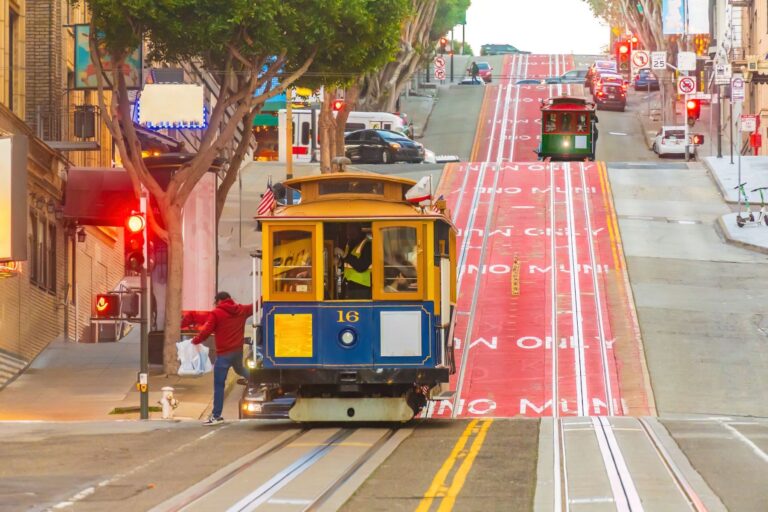
San Francisco offers multiple transit options that, honestly speaking, make getting around enjoyable. You’ve got BART (Bay Area Rapid Transit) for regional travel, Muni buses and light rail for city routes, and even the historic cable cars (yes, they’re a functional mode of transport, not just touristy). The city’s transport system even links it to surrounding areas like Oakland and Berkeley seamlessly. Pricing can be slightly higher compared to other cities, but day passes and discounts help reduce the cost.
Muni bus, rail or cable car tickets cost $3 for a single ride (cash) or $2.85 via Clipper card.
4. Washington, D.C.
The public transport in Washington, D.C. is famous for being clean, and efficient. And we love how it has been designed with commuters in mind. The city’s Metro system is hi-tech, easy to navigate, and connects major parts of the city and surrounding suburbs. Trains are frequent, and stations are well-organized, thanks to clear directions, intuitive layouts, and easy connections between lines. The fares vary depending on distance and time of day, but smart cards make commuting easy. Plus discounts are available for seniors and students. And while the Metro is the star, it’s supported extensively by buses that run between shorter routes.
Metrorail tickets cost $2.25 – $6.75 on weekdays (5 a.m. – 9:30 p.m.). And $2.25 – $2.50 on weekdays (after 9:30 p.m.) and weekends.
Metrobus tickets cost between $2.25 and $4.80 depending on your route.
And a 7-Day Unlimited Pass will cost you $60.75.
5. Boston
Boston’s subway transport system, run by the Massachusetts Bay Transportation Authority (MBTA), is locally known as “the T”. It is one of the most reliable ways to get around the city without a car. It has color-coded lines like Red, Green, Blue, and Orange that connect major neighborhoods, universities, and downtown areas. And buses reach places the subway doesn’t. There are also commuter rail lines extending service into the suburbs.
Another way to get around the city are the ferries. They connect downtown hubs like Long Wharf and Rowes Wharf to Charlestown, Logan Airport, and the South Boston Waterfront. And it’s amazing to experience how well everything works together—you can switch between trains, buses, and ferries fairly easily.
The fares are reasonable, with options like CharlieCards, daily or monthly passes, and discounts for students, seniors, and eligible riders. And while the system does face occasional delays and limited late-night service, it still offers strong coverage and accessibility. Overall, Boston’s a solid contender for the best public transport in the US.
One-way fares for the subway are $2.40, local buses are $1.70, commuter rail are $2.40 – $13.25, and $2.40 – $9.75 for ferries.
6. Seattle
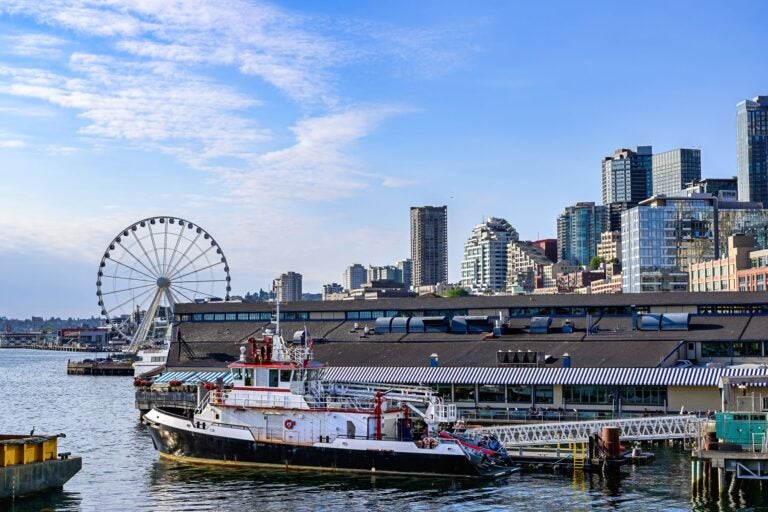
Seattle’s public transport system is one of the most well-integrated in the US. It’s made up of buses, light rail, commuter trains, and ferries. The Link light rail is the backbone, running from the airport through downtown with expansions happening constantly. For longer distances, the Sounder commuter rail connects Seattle to surrounding regions. And ferries, operated by Washington State Ferries, offer practical and scenic routes across the water. Overall, the transfers are easy, routes are well-planned, and real-time tracking helps you stay on schedule. Plus the fares are distance-based and reasonable, with ORCA cards making your travel easier.
Seattle public transport (Metro bus, Light Rail, Streetcar) costs $3 for adults per single ride.
7. Portland
Portland’s MAX Light Rail is the city’s backbone, with multiple lines connecting downtown to the airport, suburbs, and important neighborhoods. And buses cover areas the rail system doesn’t reach. The Portland Streetcar is another option, especially within central areas. It makes short trips quick and convenient. You can pay with the contactless Hop Fastpass system that automatically caps your daily spending. And there are discounts for youth and seniors. The city also tries to be sustainable and environmentally conscious. So it offers strong support for cycling and walking.
MAX light rail, bus, and Streetcar costs $2.80 for a 2.5-hour adult ticket using Hop Fastpass.
8. Philadelphia
Philadelphia’s public transport system is run by SEPTA and is one of the most practical and widely used networks in the US. It’s a combination of subways, buses, trolleys, and regional rail. As with other US cities, the backbone in Philadelphia is the subway system, especially the Market-Frankford Line and Broad Street Line, which run through key parts of the city. Trolleys are a unique feature here, operating both underground and on the streets. And an extensive bus network reaches neighborhoods that are not directly served by rail. Fares are also reasonable, with SEPTA Key cards offering easy tap-and-go access. Having said all of this, the stations may not feel modern and well-equipped. And commuters do face issues with delays and aging infrastructure. But, the system’s reach, variety of transport options, and overall convenience make Philadelphia a city with one of the best public transport systems in the US.
Philadelphia fares for buses, subways, and trolleys are $2.90 per ride.
What the best public transport in the US gets right
So, what do all these cities have in common? They make life easier with their public transport. They offer reliable schedules, and good coverage. And they also provide flexible pricing options, which makes daily commuting more affordable.
But these cities have another thing in common—they understand that one size doesn’t fit all. That’s why they combine multiple modes, from subways and buses to commuter rails, ferries and streetcars. This results in a transport network that adapts efficiently to how people move.

Plans that may interest you


With an MBA degree I used to put to good use in another life, I now write for both passion and profession! When not writing, I'm exploring the world, collecting stories and souvenirs along the way.