Language


 No results found
Transport in Thailand: How to get around in 2026
An actionable guide to transportation in Thailand, covering the easiest ways to get around cities, islands, and major routes.

Transportation in Thailand can be overwhelming for first-time visitors, from tuk-tuks and city trains to overnight trains. Knowing how to get around in Thailand saves time, money, and stress.
In this guide, I’ll break down every major transportation option, providing valuable insights from our Holafly colleague, who was born and raised in Thailand.
Getting around Bangkok: Navigating Thailand’s capital
Bangkok has multiple transport options, each suited to different distances and traffic conditions.
BTS Skytrain and MRT (Metro)
The BTS Skytrain runs above ground, and the MRT Metro runs underground, offering the quickest way around Bangkok without traffic. Trains run daily from 6:00 AM to midnight with arrivals every few minutes. They cover major areas such as Sukhumvit, Silom, Chatuchak, and parts of the Old Town and are ideal for reaching malls, markets, parks, and business districts.
Insider tip: It’s also a good idea to travel outside peak hours for more space and plan transfers carefully, as tickets aren’t shared between systems, according to our Holafly employee.
Taxis and ride-hailing apps (Grab, Bolt)
Bangkok taxis are relatively inexpensive if you insist on using the meter. The starting fare is 40 THB, but some drivers near tourist areas often quote fixed prices. Always ask “Meter?” before getting in, and walk away if they refuse.
Grab is the most reliable but costs more during peak hours. Bolt is cheaper but less consistent. According to our Holafly colleague, locals also use Lineman and Maxim, mainly for short city trips and price checks.
Tuk-tuks

Tuk-tuks are three-wheeled, open-air vehicles used for short trips.
They are most effective for short distances and areas with heavy traffic. Tuk-tuks have no meters, so always agree on the price before the ride. Typical fares range from 50–150 THB for one to two kilometers, 100–200 THB for three to five kilometers, and up to 400 THB for longer trips. You may also avoid “cheap tour” offers, which often lead to shopping stops.
Buses and boats
Public buses are the most affordable way to get around Bangkok, but they can be challenging for visitors due to the complex routes, limited signs, and unclear stops. Our Holafly colleague notes, “assuming buses are simple and reliable is the biggest transportation mistake in Thailand.”
Boats, on the other hand, are easier. The Chao Phraya Express Boat is the main water bus in Bangkok and links many riverside sights for a flat fare of about 16 THB per ride.
Pro tip: Thailand’s public transportation etiquette matters. Keep the noise level low, dress modestly, and avoid wearing revealing clothing. Basic hygiene is also expected, especially on crowded trains and buses.
Intercity travel: Moving between Thai cities
There are several reliable options for traveling between cities in Thailand, each suited to different budgets, distances, and time constraints.
Domestic flights
Domestic flights are the fastest way to travel between Thai cities and islands.
Major carriers include Thai Airways and Bangkok Airways for full service, and AirAsia and Nok Air for lower fares. Flights from Bangkok to Chiang Mai, Phuket, and Krabi take about one hour and run frequently.
Don’t want to overspend? Our Holafly colleague recommends booking one to three months in advance for better prices and earlier in the peak season (see Best time to visit Thailand). It’s also a good idea to check baggage fees on low-cost airlines.
Trains

Thailand’s rail network, operated by the State Railway of Thailand, connects Bangkok with most regions.
Trains range from basic third-class seats to air-conditioned sleeper cabins. Popular routes include Bangkok to Chiang Mai in the north and Bangkok to Surat Thani for connections to the islands. Overnight trains are also standard on both routes.
According to our Holafly colleague, “sleepers are a practical choice because they save a hotel night and arrive early. Second-class sleepers offer privacy curtains and bedding, while first-class provides private cabins.”
Once again, we highly recommend booking sleeper tickets in advance, especially in peak season.
Long-distance buses
Long-distance buses cover all regions of Thailand and are often cheaper than trains or flights.
Government buses run by The Transport Company are the most reliable. Private operators like Nakhonchai Air, Sombat Tour, and Green Bus offer similar routes with better comfort.
For overnight routes, VIP buses offer more comfort, including wide seats, onboard toilets, and limited stops. According to our Holafly colleague, “it’s important to book with trusted companies, as VIP standards vary.”
Island transport: Getting to and around Thai islands
Ferries, boats, and local vehicles are the primary modes of transportation for island travel.
Ferries and boats
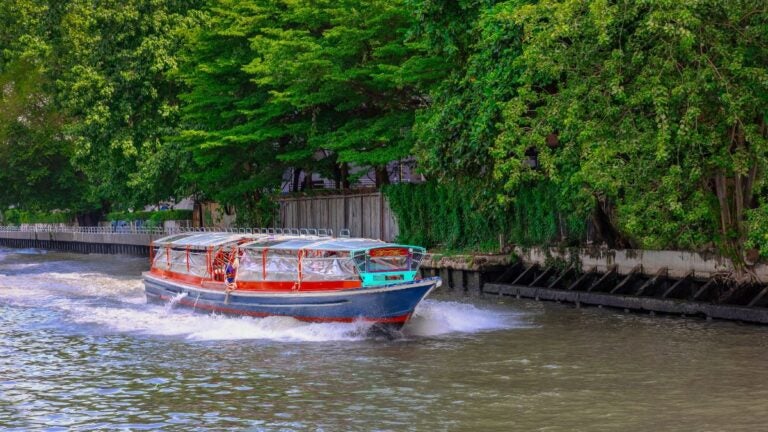
Ferries and boats connect mainland piers to islands like Phuket, Koh Samui, Koh Phi Phi, and Koh Tao. This makes ferries and boats your best bet for island hopping. These routes connect key piers on the mainland and link the islands, offering everything from standard ferries to fast catamarans. Popular crossings include the ride from Phuket to Koh Phi Phi and from mainland piers like Donsak or Chumphon to the stunning Gulf islands.
Our Holafly employee notes that the “Andaman side is calm and reliable from November to April, while the Gulf islands are more accessible from December to August.”
Getting around the islands
Motorbikes and songthaews are the primary means of transportation on Thai islands.

Renting a motorbike is convenient, but you must have a valid motorcycle license, an International Driving Permit (IDP), and wear a helmet at all times. Please note that police checks are common, and insurance may not be applicable without proper documentation.
Another option is the songthaew, a shared pickup truck that operates on fixed or flexible routes and is generally cheaper than taxis.
Renting vehicles in Thailand
Renting a vehicle in Thailand requires having realistic expectations about local driving conditions (traffic drives on the left) and the proper documents. Foreign drivers must carry an International Driving Permit (IDP) in addition to their national license.
For motorbike rentals, you must hold a valid motorcycle license and an IDP with a motorcycle endorsement. Many shops ignore this, but riding without proper documents is illegal and usually voids insurance. Motorbike accidents are common, and helmets are mandatory for both riders and passengers (fines can reach 2,000 THB).
Car rentals also require an IDP, enforce minimum age limits, and expect drivers to demonstrate defensive driving skills.
Pro tip: “It’s always a good idea to inspect the rental vehicle, keep your documents with you, and avoid driving at night or during major festivals.”
Stay connected while exploring Thailand
Getting around Thailand efficiently requires reliable mobile data. Transport apps, Google Maps, and online schedules are invaluable when navigating BTS and MRT lines, booking ferries, or dealing with tuk-tuk drivers. A stable connection helps you check real-time train arrivals, compare routes, find Chao Phraya Express Boat piers, and translate signs or destinations when English isn’t available.
Holafly’s eSIM store offers unlimited data plans with flexible validity periods from 1 to 90 days, 24/7 live chat customer support, and reliable 4G/5G coverage across Thailand. You can install the eSIM for Thailand in minutes and stay connected from the moment you land, no Thai airport SIM cards or roaming fees in Thailand to worry about, so you can navigate transport apps, check schedules, or translate signs on the go.

Peace of mind before you fly
Set up your eSIM before travel and get unlimited data on arrival.
Frequent travelers exploring Southeast Asia or planning an extended stay can also try Holafly Plans, a pay-monthly global eSIM plan that offers unlimited data, unlimited hotspot, and a local number to receive SMS, plus other travel perks. Price starts at $49.90 USD per month.
Plans that may interest you


I am a Liverpool-based SEO content specialist with years of experience crafting content that connects. I combine my love for clear communication with a passion for travel and languages (currently diving into Japanese!). At Holafly, I'm here to help you understand everything about staying connected abroad, turning technical jargon into straightforward advice you can actually use.