Language


 No results found
10 Unforgettable things to do in Bali in 2026
From a sunrise at Mount Batur to walking around Tegallalang Rice Terraces and exploring Balinese culture, find out the top 10 things to do in Bali

Beaches, jungle cliffs, and rice terraces are Bali’s evergreen beauty, but there’s more to explore in a place that blends vibrant Hindu culture with a volcanic landscape, delicious food, and over 10,000 temples woven into daily life.
That said, you can add the breathtaking and spiritual activities to a list of the 10 unforgettable things to do in Bali, so you don’t miss a thing on the island. Plus, we have some additional experiences you won’t want to miss on your trip and some insider tips from our local Holaflyer, Saffron Wu.
We also tell you how to stay connected in Bali with the eSIM for Bali from Holafly, so you don’t miss a chance to upload pictures, find addresses, or call back home.

Peace of mind before you fly
Set up your eSIM before travel and get unlimited data on arrival.
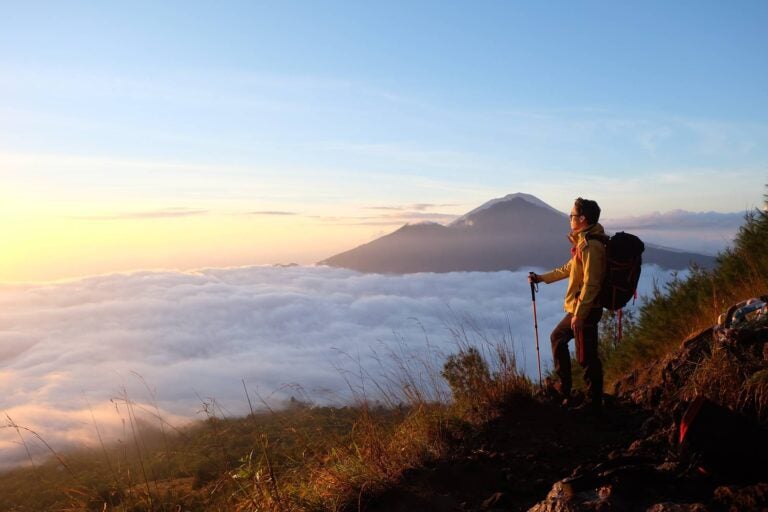
1. Watch sunrise at Mount Batur
Hiking an active volcano might sound like a crazy thing to do, but in Bali, Mount Batur is one of the top Bali attractions, especially for those who want to experience a once-in-a-lifetime sunrise.
Trekking starts at 2 AM, and it takes about 2 hours to reach the summit, so build some hiking stamina before your trip. Once on the top, wait for the sunrise and enjoy a breakfast cooked by volcanic steam vents.
- How to get there: 1:30-hour drive from Ubud (guided tours include pickup)
- Tour cost: $25-45 USD includes guide, breakfast, headlamp
- Time needed: Around 8 hours – From 2 AM to 10 AM
- Best time: April-October (dry season, clearer views)
- What to bring: Warm jacket, closed shoes, camera, headlamp
| Extra idea for the tireless: Got some energy left? You can visit a coffee plantation or visit the nearby hot springs to reduce the soreness after the 4-hour hike that you’ll never forget. |
2. Explore the Tegallalang Rice Terraces
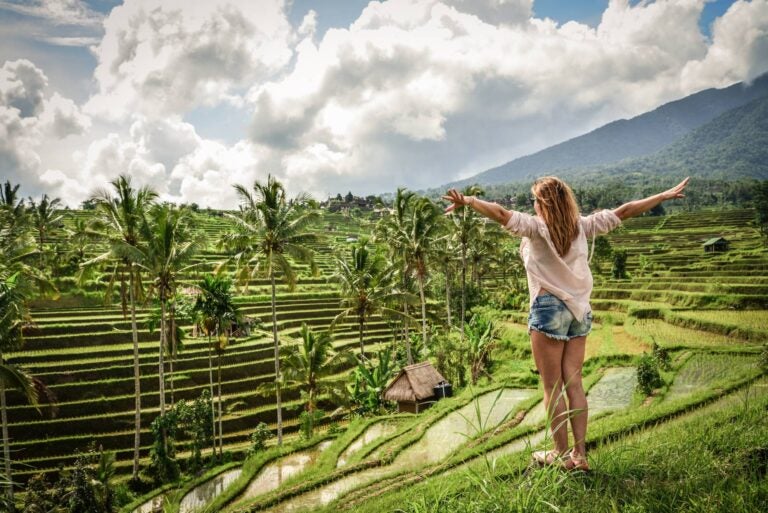
Tegallalang Rice Terraces are one of the most iconic places to visit in Bali, including the subak water management, which is a UNESCO World Heritage Site you can’t miss visiting.
The iconic emerald rice paddies cascade down hillsides, creating geometric patterns and unique views, with the ancient subak irrigation system a key part of this. When preparing your Bali packing list, add comfy shoes; you’ll need them for walking through the terraced rice fields.
- How to get there: 20-minute drive north of Ubud
- Entry fee: IDR 20,000-50,000 (~$1-3 USD) depending on path chosen
- Swing/Activities: IDR 100,000-200,000 (~$6-13 USD) per activity
- Time needed: 3 to 4 hours
- Best time: Early morning (7 to 9 AM) for photos, fewer crowds, late afternoon for sunset pictures
| Extra idea for the playful: If you have some spare time, you can pay an extra fee to visit the jungle swings and bird nests, and end your visit at a local café, where terraces offer a unique view of the rice terraces. |
3. Visit Uluwatu Temple and watch Kecak dance
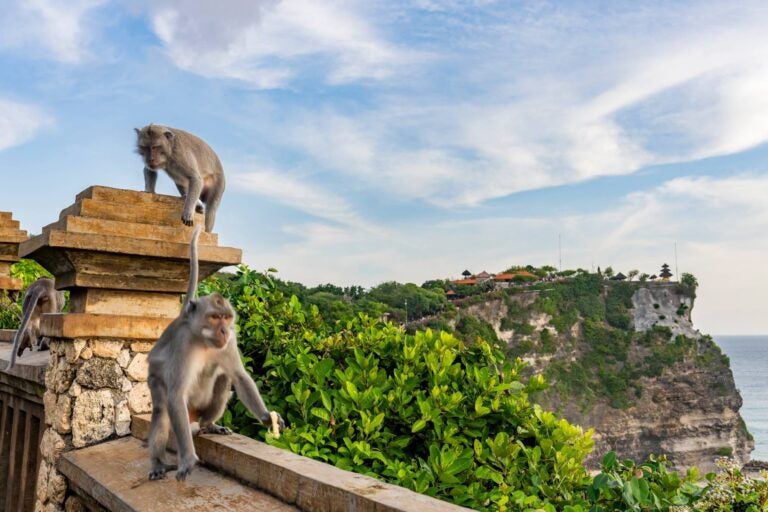
Perched at 70 meters above the crashing Indian Ocean waves, this 11th-century temple built on limestone cliff edge is perfect for connecting with Balinese culture or enjoying the sunset, and as our local Holaflyer, Saffron Wu, said, it’s among the top 5 things to see on the island.
The Kecak fire dance at sunset, a traditional Balinese performance, is also worth seeing if you’ve got some spare time. But keep an eye on your belongings, resident monkeys can take them away.
- How to get there: 45 minutes south of Seminyak, 1 hour from Ubud
- Temple entry: IDR 50,000 (~$3 USD)
- Kecak dance: IDR 150,000 (~$9 to 10 USD), 6 PM daily
- Time needed: 3-4 hours (temple + performance)
- Dress code: Sarong required (rentals available at entrance)
| Extra idea for the explorers: If you go early in the morning, you can visit the Sulubban and Padang Padang beaches, two of the most beautiful beaches in Bali. |
4. Get a traditional Balinese massage and spa treatment
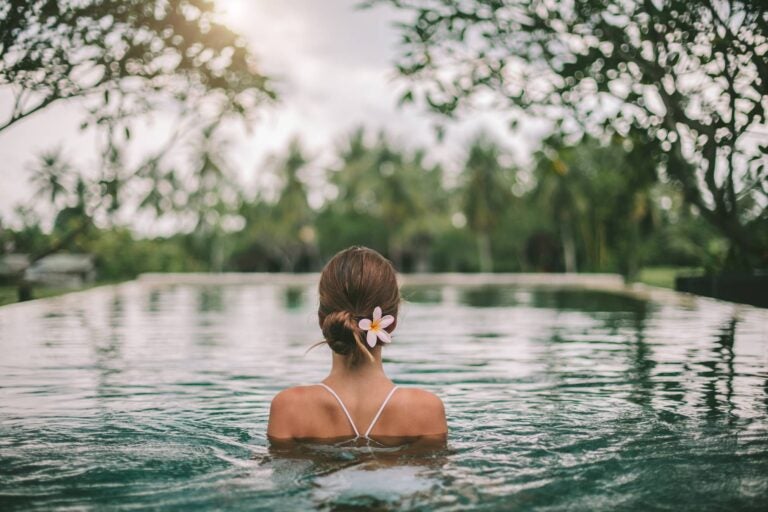
Aside from early morning trekking, visiting temples, and trying delicious food, Bali’s the perfect place to relax, with world-renowned spas offering $10 USD hour-long massages.
You can get a traditional Balinese massage, which includes aromatherapy oils, gentle pressure, or opt for a spa package with a flower bath, body scrub, and some hot stones, or try a Thai massage; you choose
- Cost range: IDR 150,000-600,000 (~$10 to 40 USD) for 1-2 hours
- Best areas: Ubud (most spas, best value), Seminyak (upscale options)
- Top choices: Karsa Spa (Ubud), local massage parlors (everywhere)
- Time needed: 1 to 3 hours, depending on treatment
- Tip: Book ahead for popular spas; walk-ins only at smaller places
| Extra idea for the indulgent: For a splurge, choose a resort spa perched above rice fields or the ocean, where the setting transforms a simple massage into a full-body reset. |

5. Discover Ubud’s cultural heart
Ubud serves as Bali’s artistic and spiritual center. Among other things, it is the home to the Sacred Monkey Forest Sanctuary, where over 700 monkeys live, and where you can visit different ancient temples.
Additionally, you can take the scenic Campuhan Ridge Walk for hiking, enjoy a yoga retreat, or take Saffron’s recommendation and visit the Ubud Palace.
However, visiting Ubud takes longer than a day, so make room in your schedule to spend a night or two there. That way, you can enjoy the traditional dance performances at night.
- How to get there: 1 hour from Ngurah Rai Airport
- Monkey Forest entry: IDR 80,000 (~$5 USD)
- Time needed: 2-3 days to fully explore
- Best for: Art lovers, yoga retreats, vegetarian/vegan food
- Safety tip: Secure bags/sunglasses around monkeys
| Extra idea for the souvenir hunters: Holaflyer Saffron Yi recommends browsing the Ubud Art Market for handmade textiles, woven bags, and locally carved crafts — just go early to avoid the crowds. |
6. Surf or beach hop in Canggu
Canggu is by far one of the best surfing spots in Bali. Once a sleepy surf village, it rapidly turned into Bali’s hippest beach town, with world-class waves that attract surfers from all over the world.
Canggu is perfect for all-level surfers, with spots such as Batu Bolong, Echo Beach, and Old Man’s being the best options. Feel like staying in Canggu working because of the vibes? Coworking spaces and café culture will welcome you with open arms.
- How to get there: 30 minutes north of Seminyak
- Surf lessons: $25 to 40 USD for 2 hours (board rental included)
- Beach club entry: Free to $15 USD (minimum spend on food/drinks)
- Time needed: 2 to 4 days
- Best for: Surfers, nightlife, healthy food scene, younger travelers, digital nomads
| Extra idea for the social crowd: When the surf session ends, head to a beachfront club like FINNS, La Brisa, or The Lawn for cocktails and sunset views over the black sand coast. |
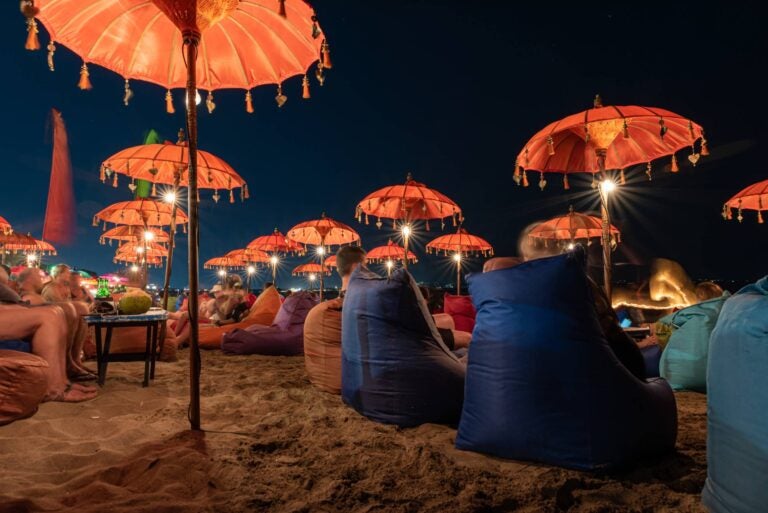
7. Take a Balinese cooking class
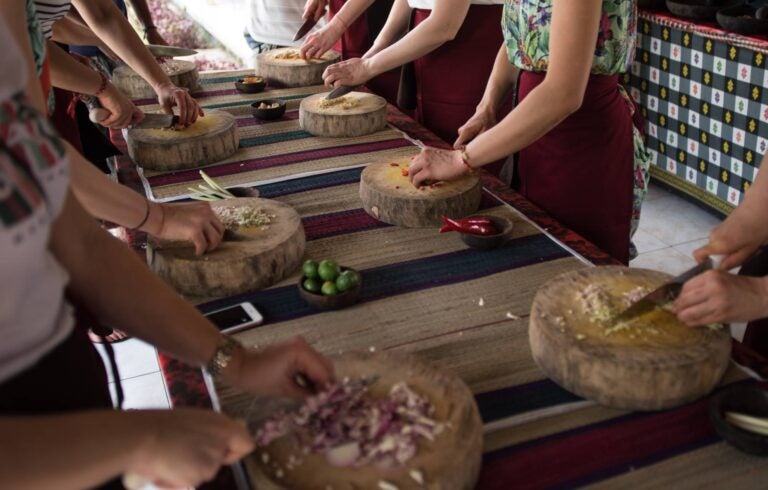
Bali food is rich, flavorful, and for many, is one of the best cuisines in the world, so you can’t miss the chance to learn how to cook like a local Balinese.
These cooking classes include everything you need: a morning market tour to buy fresh ingredients and Indonesian spices like turmeric, galangal, and lemongrass; cooking nasi goreng, sambal, satay, or Bali curry; and a family-style dining experience.
Plus, most cooking classes include recipe cards, so you can recreate authentic Balinese food at home; so don’t forget to take some spices with you.
- Cost: $25-60 USD (includes market tour, cooking, meal)
- Best locations: Ubud (most options), Seminyak, Canggu
- Time needed: 3-5 hours (morning or afternoon)
- What you’ll make: 4-6 traditional dishes
- Bonus: Recipe cards to recreate at home
| Extra idea for the curious cooks: Choose a class hosted in a traditional family compound to learn not just the recipes, but the cultural meaning behind ceremonial dishes and spice blends. |
8. Dive or snorkel around Nusa Penida
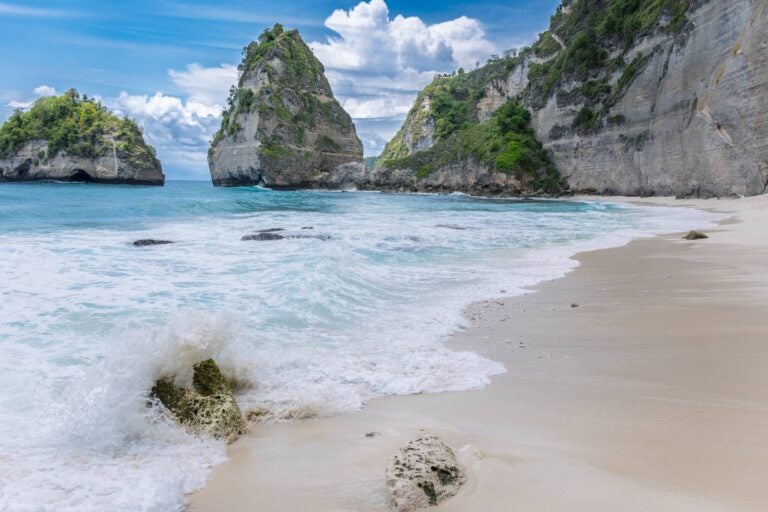
Located on Bali’s southeast coast, Nusa Penida offers some of the most underwater experiences near Bali. Snorkelers often visit Manta Bay or Manta Point, where calm days allow clear views of the vibrant coral reefs and tropical fish, with manta rays gliding through the shallow waters.
Are you an experienced diver? Sites like Crystal Bay, SD Point, and Blue Corner are your go-to, as these offer dives along coral slopes and steep drop-offs. Also, from July to October, cold upwellings attract mola-mola (sunfish), which is a plus for your diving experience.
But beware of currents, as they are strong and unpredictable, so experience and comfort with water activities are basically a must.
That said, most excursions run as full-day boat trips from Bali, but staying overnight allows for earlier departures and better conditions before winds pick up.
- How to get there: Fast boat from Sanur (45 minutes, IDR 200,000 to 300,000, ~$11 to $18)
- Dive cost: $50-90 USD for 2 dives
- Snorkel trip: $30-50 USD full day with lunch
- Time needed: Full-day trip or 2-3-day stay
- Best time: April-November (manta season), July-October (mola-mola)
| Extra idea for the photographers: After your time in the water, head to Kelingking Beach, Angel’s Billabong, or Broken Beach for dramatic limestone cliffs, striking coastal views, and some of Bali’s must-see Instagram spots. |
9. Eat at a traditional warung
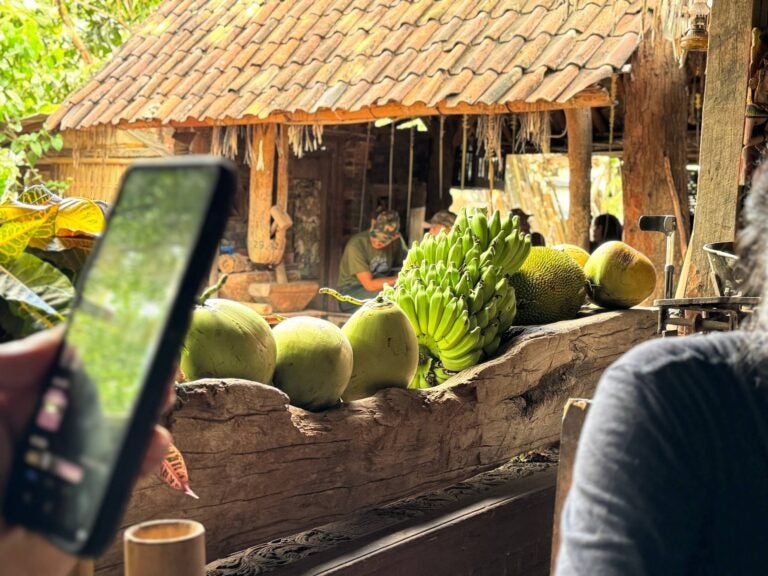
A warung is a family-run restaurant that serves authentic Indonesian cuisine at very affordable prices, such as nasi campur, mie goreng, and babi guling.
Feel like eating out without spending a fortune, yet still getting delicious food? Warungs are your go-to. Point out what you want, they serve, and in the blink of an eye, you’ll be enjoying traditional, fresh Balinese food.
Also, warungs have some sort of etiquette. Use only your right hand for eating or passing items, pay with cash after eating, and respect the “save face” Balinese culture.
- Cost: IDR 20,000-50,000 ($1 to 3 USD) per meal
- Must-try dishes: Nasi campur, satay ayam, mie goreng, babi guling (roast pork)
- Recommended: Warung Sopa (Ubud), Warung Bu Mi (Canggu)
- Vegetarian options: Ubud has an extensive vegan/vegetarian warung scene
- Tip: Point to dishes if unsure
| Extra idea for the adventurous eater: Ask what’s cooked “today.” Many warungs prepare a rotating selection based on seasonal ingredients and family recipes. |
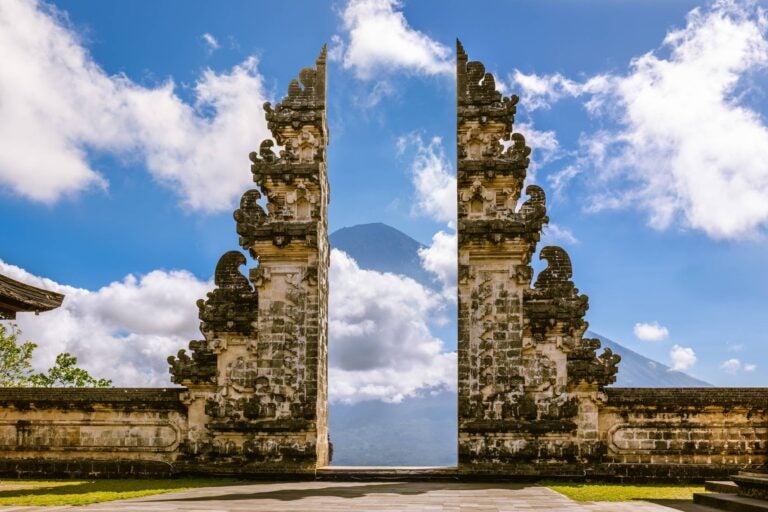
10. Visit the Gates of Heaven at Lempuyang Temple
Lempuyang Temple is one of Bali’s oldest and most sacred temples, located on the slopes of Mount Lempuyang in eastern Bali, and famous for the Gates of Heaven, which lead to a much larger spiritual site.
To visit the Lempuyang Temple, dress properly, be respectful, and keep in mind you’ll take over 1,700 steps to the upper temple. Maybe less if you decide to take the Gates’ shorter path.
Once you reach the top, the ornate split gates that seem to float in the clouds await visitors. Take your time to enjoy the temple, its surroundings, and wait for the perfect moment to take a picture with Mount Agung in the background.
- How to get there: 2:30 hours east of Ubud
- Entry fee: Donation-based (IDR 10,000-50,000, ~$1 to $4 USD)
- Time needed: Half day, including travel
- Best time: Early morning (7 to 9 AM) for the shortest photo queue, late afternoon for sunsets
- What to know: The Gates are part of a larger temple complex — remain respectful throughout your visit
| Extra idea for the Instagrammers: The famous “water reflection” effect isn’t natural. The staff holds a mirror beneath your phone to create the illusion. It’s clever, but expect a queue, especially during peak hours. |
Enjoy most of your trip to Bali with additional top-tier experiences
If you feel like there are more things to do in Bali, you’re totally right.
Here are some top-tier experiences you can add to your to-do list when visiting Bali:
- Explore Seminyak’s beach clubs and luxurious dining scene
- Visit the Tirta Empul holy water temple for a Balinese purification ritual
- Chase waterfalls in North Bali at Sekumpul, Gitgit, and Banyumala Twin Falls
- Wreck diving in the USAT Liberty shipwreck in Tulamben
- Experience the floating temple at Pura Ulun Danu Bratan
- Party at beach clubs in Seminyak, like Potato Head and Ku De Ta
Stay connected in Bali with Holafly
Staying connected in Bali is a must. You’ll need mobile internet for using Google Maps when walking around or using a scooter, using local transportation apps, booking outdoor activities, or simply translating Indonesian menus to English.
That said, the Holafly eSIM for Bali is your best option. You get unlimited data, 24/7 customer support, high-speed internet, 5G coverage when available, and up to 1 GB of hotspot data if you’re working remotely.
But, if you’re staying longer, maybe as a digital nomad, Holafly Plans is a life-saving idea. The $64.90 monthly plan includes all the previous benefits, but offers unlimited hotspot data instead, and a local phone number, which is really useful when downloading local apps. You get to take your unlimited internet connection with you, even if you decide to switch accommodations in Bali or work from a beach for a day.
Peace of mind before you fly
Set up your eSIM before travel and get unlimited data on arrival.
Frequently asked questions
Exploring Bali highlights, like Ubud, Uluwatu, and maybe one beach town, requires 5 to 7 days. For relaxing, exploring culture, diving, and other beaches, 10 to 14 days will do. And if you feel like taking your time, over 3 weeks is your best option, especially for exploring hidden gems and nearby islands.
Bali’s actually one of Southeast Asia’s most affordable destinations. Budget travelers spend $25 to 40 per day, staying at hostels and eating at warungs. Mid-range travelers spend $60 to $100, staying at nice hotels and eating at restaurants. Luxury travelers spend over $150 per day, staying at resorts and having daily fine dining.
It depends on your priorities. Ubud is great for culture, rice terraces, and yoga retreats. Seminyak offers upscale beach clubs and fine dining. Canggu is perfect for surfers and digital nomads. Uluwatu is ideal for hiking and quieter beaches. Nusa Dua is ideal for resorts and calm beaches. Sanur is the go-to spot for family traveling.
The best time to visit Bali is from April to October, but avoid July to August as Bali is more crowded and expensive. November to March is the wet season, with afternoon storms, greener landscapes, fewer tourists, lower prices, but less outdoor time.
Most nationalities need to pay $35 for a 30-day visa on arrival, which is extendable for 30 additional days. You can either apply before arrival or pay at the airport. An IDR 150,000 (~$9) tourist levy is also applied.
Scooters are one of the best ways to get around Bali, but beware of roads as heavy traffic, potholes, and aggressive drivers are somewhat common. If you plan to rent a vehicle, you need a valid driving permit and license. If you’re a luxury traveler, you can rent a private driver for $40 to $60 a day for more safety.
Lightweight clothing is your best ally in Bali. Swimwear, reef-safe sunscreen, mosquito repellent, closed, comfy shoes for hiking, rain jacket, and proper temple clothing should be part of your packing list. Also, bring a power adapter (Bali uses type C/F plugs) and a small day pack for your belongings.
Plans that may interest you


I first started my content creation journey as a freelancer in 2019, before connecting with Holafly in 2021. At Holafly, my travel and tech interests come together in one place as I craft high-quality articles about the eSIM and related markets. My content aims to help travelers stay connected, wherever they are.