Language


 No results found
Surf in Portugal: Best beaches and prices
Experience surf in Portugal! Find the best spots, top centres, ideal seasons, and costs to make the most of your surfing adventure.

A trip to Portugal can be more than visiting Lisbon’s streets, tasting Porto wine, or exploring the Pena Palace in Sintra. You can also enjoy adventure activities like surfing in Portugal. With over 800 kilometres of Atlantic coastline, you can find the best beaches and waves for both beginners and experienced surfers.
That’s why we want to show you the five best spots to surf on the Portuguese coast and inform you about the best season, available surf schools at each beach, and indicative prices for lessons and equipment rental. We also advise on the best internet connection to share your experience and stay connected.
The 5 Best Places to Surf in Portugal
You might be planning a trip to Portugal for tourism and want to include a water adventure, studying as a student, or working remotely as a digital nomad, and want to know how to surf in Portugal. Whatever your case or experience level, this destination has beaches suited to your needs, so let’s explore them!
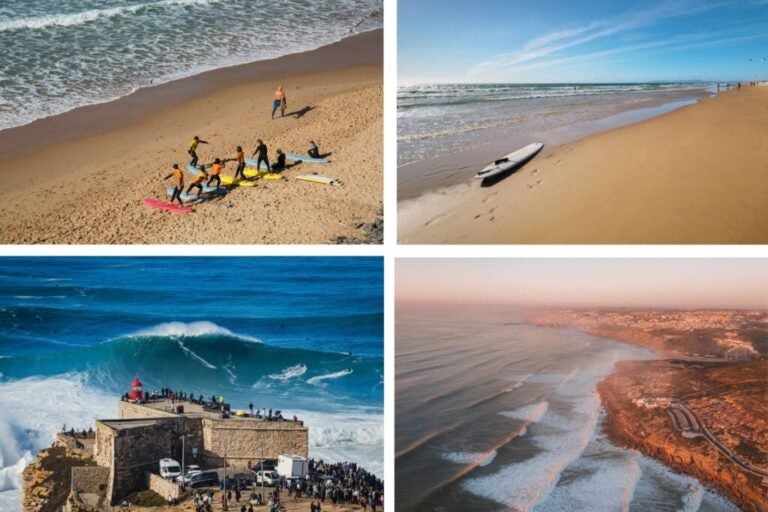
1. Nazaré – Central Region
About 120 kilometres north of Lisbon, Nazaré is famous for its giant waves that can exceed 30 metres high, making it a top spot for experienced surfers. Here lies the Nazaré Canyon, a submarine fault that creates these huge waves. If you’re a beginner, you can head to nearby Praia do Norte and Praia da Vila, which have gentler waves, and take classes at Nazare Surf School, Surf4You, or Xavelha Surf School.
The most internationally known competitions at this beach include the Nazaré Tow Surfing Challenge and the World Surf League (WSL) Big Wave Awards, featuring surfers like Garrett McNamara.
2. Ericeira – Lisbon Region
Another popular surf spot in Portugal is Ericeira, 35 kilometres northwest of Lisbon. This 7-kilometre stretch has been named a World Surfing Reserve by Save The Waves, thanks to its mix of beaches for all levels and surf-friendly environment with schools, shops, and accommodations. You can surf at internationally renowned spots like Ribeira d’Ilhas, Coxos, and Pedra Branca.
Ericeira hosts the WSL Pro Junior, along with several surf and live music festivals. Lessons are available at Surf Riders & Co, Blue Ocean Ericeira, and Na Onda Surf School.
3. Peniche – Central Region
Located in Leiria district, about 100 kilometres from Lisbon, Peniche is considered Lisbon’s surf capital for its consistent waves and the famous Supertubos spot, offering some of the best tube waves worldwide. This area is ideal for improving technique, so a certain level of experience is required.
Major competitions include the Rip Curl Pro Portugal, part of the World Surf League Championship Tour. Surf schools like Baleal Surf Camp and Peniche Surf School offer calmer zones for beginners, such as Baleal Beach.
4. Algarve – Southern Portugal
The Algarve, in southern Portugal within the Southwest Alentejo and Costa Vicentina Natural Park, offers a mild climate year-round, golden beaches, cliffs, and waves for all levels. It features two coasts, west and south. For example, Amado Beach is perfect for beginners, while Arrifana suits advanced surfers.
Surf schools include Freeride Surf School (Carrapateira), Algarve Surf School (Sagres), The Surf Experience (Lagos), and Future Surf School (Arrifana). The Algarve Surf Fest, featuring competitions, music, and gastronomy, is the main event.
5. Costa da Caparica – Lisbon
Just 20 minutes from central Lisbon, Costa da Caparica offers a long stretch of beaches with gentle and consistent waves. You just need to cross the 25 de Abril Bridge, making it convenient if you’re visiting the capital.
Surfers of all levels gather here, and you can take lessons or stay at a surf camp like Caparica Surf Academy, Lisbon Surf Connection, or Gota d’Água Surf Camp. Music and surf festivals, such as Caparica Primavera Surf Fest, are common.
Connectivity While Surfing in Portugal
To explore the coast from Viana do Castelo to the Algarve and enjoy surfing in Portugal without worrying about internet, it’s best to get a stable, secure service with coverage along the entire Atlantic coast.
With Holafly, you can rely on GPS access even in remote areas. If you plan to stay only one or two weeks, you can get unlimited data through a Portugal eSIM, choosing only the days you need. For longer trips needing a monthly connection to stay online anywhere in the country, we recommend the new Holafly plans with stable, secure 5G coverage and no contract. Coverage spans over 160 destinations without changing your SIM.
Important: If you are a frequent traveler and want to stay connected without worrying about expensive roaming or looking for a new SIM at every destination, Holafly’s subscription plans are for you. With a single eSIM, enjoy internet in more than 160 countries for a fixed price and no surprises on your bill. Travel without limits and connect easily and securely! 🚀🌍

Recommended Seasons for Surfing in Portugal
If you want to surf in Portugal, the good news is that you can do it year-round, but each season has specific conditions suitable for beginner, intermediate, or advanced levels. Here’s what each season offers so you can choose the best one for you:
- Spring: March to May is one of the best periods, with pleasant temperatures, fewer tourists, and good waves, ideal for intermediate and beginner surfers. Recommended areas include Ericeira, Peniche, and Sagres and Amado in the Algarve.
- Summer: June to September brings warmer weather, mild water, and gentle waves. Good for beginners in Costa da Caparica, Algarve, and Baleal in Peniche.
- Autumn: Best for intermediate and advanced surfers, October to November, as Atlantic swells grow stronger and beaches are less crowded. Recommended areas: Peniche (Supertubos), Ericeira, Nazaré, and Arrifana.
- Winter: December to February is for professionals only, with very cold water and the year’s biggest waves, especially at Nazaré, Peniche, and Ericeira.
Surfing Costs in Portugal
Portugal has a moderate cost of living compared to other European countries, making surfing affordable. Prices vary by season, usually higher in summer than in autumn or in winter. Lesson prices typically include board and wetsuit, plus special insurance. The following table shows common costs:
| Service | Rates |
|---|---|
| Equipment rental (board and wetsuit) | from $35 (€30) per day |
| Beginner group class | from $37 (€32) for 2 hours |
| Weekly beginner course pack | from $267 (€229) |
| Private lesson | from $53 (€46) for 2 hours |
| Surf camp with accommodation, equipment and classes | from $426 (€366) for 5 days |
Approximate costs for surfing in the Philippines.
How to Start Surfing in Portugal
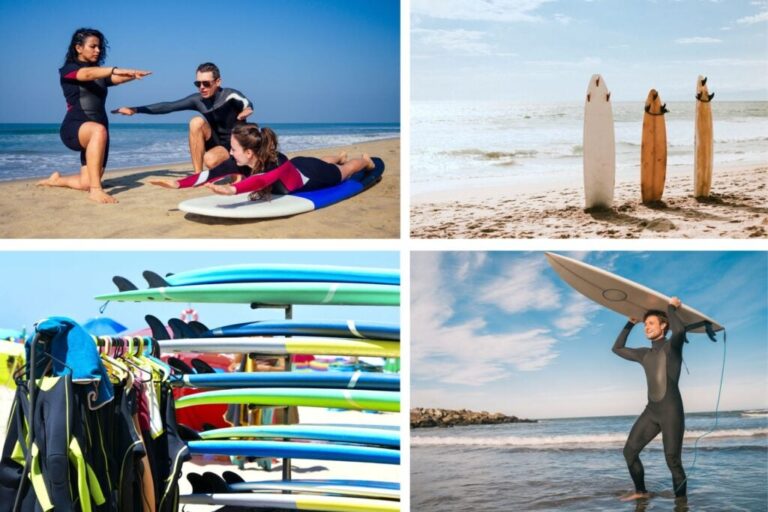
Now that you know where to surf, the approximate costs, and the best season, all that’s left is to follow some basic guidelines every beginner should know. Take note to start your first surfing experience on the right foot:
- Choose the best area for your level: Beginners should go to Costa da Caparica, Praia do Amado (Algarve), or Baleal (Peniche). Intermediate surfers: Ericeira or Arrifana. Experts: Supertubos or Nazaré.
- Book a lesson: Choose a certified school with good reviews near your chosen beach. Group lessons are great for starters; private lessons accelerate progress.
- Learn safety: Always wear the leash and understand currents and how to exit them safely.
- Respect surf etiquette: The surfer closest to the wave’s peak has priority. Avoid zones with advanced surfers if you lack the level.
- Check sea conditions: Use apps like Windy or Surfline to track waves, wind, and ocean status.
- Travel insurance: Consider a travel insurance covering surfing to protect against accidents.
- Respect the environment: Keep beaches clean, follow fishing schedules, and respect protected areas.
Frequently Asked Questions About Surfing in Portugal
No, you don’t need experience. There are beginner lessons designed for people who have never surfed.
Usually, after two or three sessions, you can stand up if you stay consistent and follow the instructor’s guidance.
No licence or permit is required for recreational surfing. Just follow local beach rules and respect protected areas.
Not recommended for beginners. Surf with a class or other surfers to reduce risk and get assistance if needed.
You can use apps like Windy, Magicseaweed, or Surfline, along with local maritime authority advice.