Language


 No results found
Surf in Morocco: Best beaches and prices
Identify the best beaches for surfing in Morocco, regardless of your skill level, so you can enjoy the experience.

Surfing in Morocco means finding ideal spots for the best waves while you enjoy unique North African landscapes. The country offers pleasant weather all year, so conditions suit both beginners and experienced surfers. You’ll discover more about famous spots such as Taghazout, Imsouane and Tamraght in this guide.
Golden sands, Atlantic coastlines and a laid-back vibe define Morocco. In this article you’ll discover the best places to surf there, how much this sport usually costs in the African country, when each season works best for your level and how you can stay connected to the internet during your next water adventure.
Best places to surf in Morocco
As you can imagine, the Moroccan coast offers a paradise for surfing: More than 1,800 kilometres face the Atlantic Ocean, with conditions that range from beginner-friendly waves to challenging point breaks for advanced riders. Below you’ll find the most recommended spots.
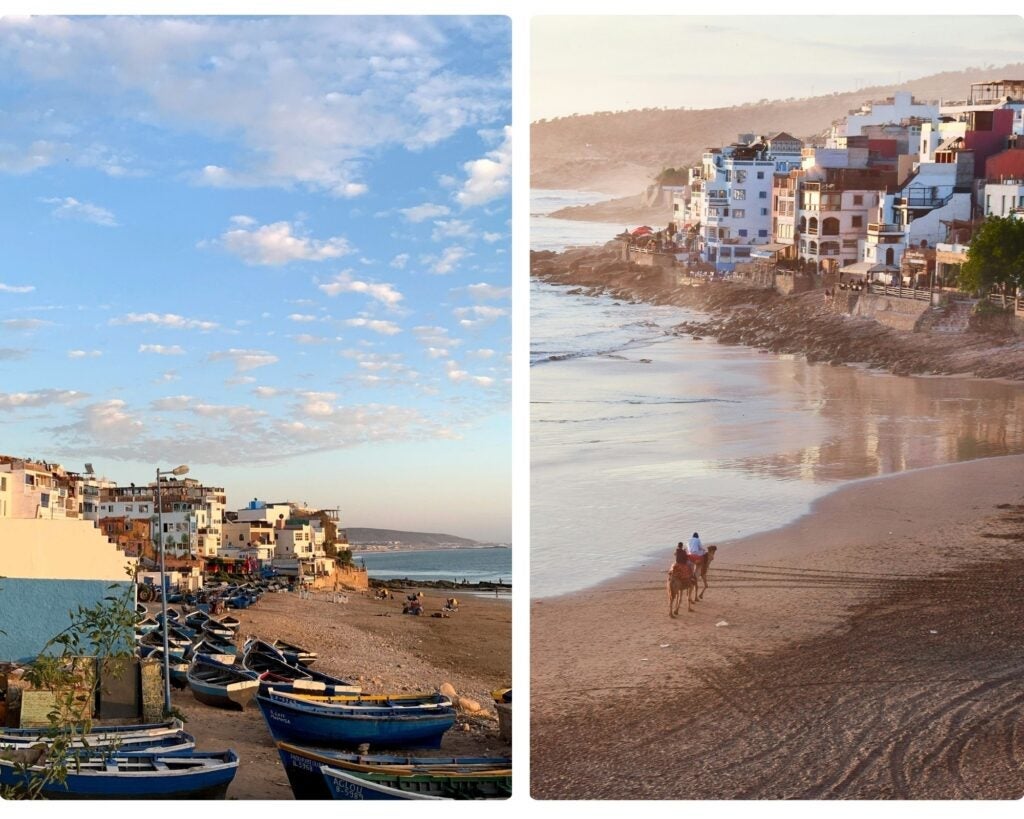
Taghazout
Taghazout is the surfing epicentre in Morocco. This small fishing village, around 20 kilometres from Agadir, has turned into a global reference for travellers who want a bohemian atmosphere and consistent waves all year.
Its most famous beaches include Anchor Point, Panorama Beach and Killer Point. Each one offers different features: Anchor suits intermediate and advanced surfers thanks to its long, powerful waves, while Panorama works perfectly for learners. In addition, Taghazout has numerous surf schools and camps that offer packages with accommodation, lessons and equipment rental.
The international surf crowd, yoga options, seafront cafés and the village’s slow rhythm make Taghazout the top choice for travellers who want to mix sport and rest.
Imsouane
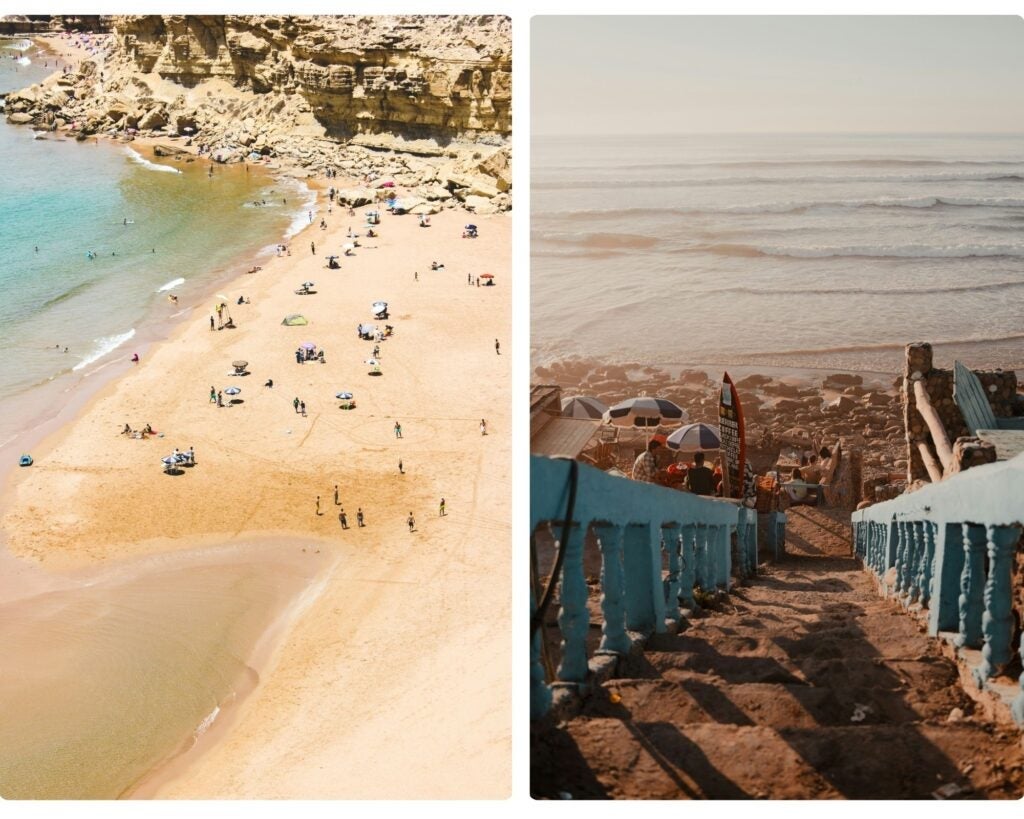
Located around two hours north of Agadir, Imsouane offers one of the longest waves in Africa. The famous “The Bay” lets you surf for more than a full minute, which stays rare even in well-known Pacific destinations.
This spot suits beginners and intermediates who want to improve their technique and enjoy relaxed sessions in a natural setting. The second bay, known as Cathedral, delivers stronger, faster waves that suit more experienced surfers.
Imsouane keeps an authentic, chilled atmosphere, with small guesthouses and local restaurants that serve fresh fish. It suits travellers who prefer a more intimate and less touristy experience than Taghazout.
Essaouira
Essaouira, the windy city, blends history, surf and culture. Its walled medina and fishing port contrast with the open beach that stretches several kilometres south. Thanks to the constant wind, it also works very well for kitesurfing and windsurfing.
The waves in Essaouira usually stay moderate, so the spot suits beginners and intermediate surfers. At the same time, the city offers a wide cultural scene with live music, craft markets and festivals such as the Gnaoua World Music Festival. The destination attracts visitors both in and out of the water.
Sidi Kaouki
Only 25 kilometres south of Essaouira you find Sidi Kaouki, a quiet village that keeps its traditional essence. Surfers know this spot for consistent waves and a wilder atmosphere.
The main point offers both right- and left-hand waves that suit intermediate and advanced surfers. Softer sections also appear and work well for people who are still learning. The beach is wide, with dunes and few visitors, so it’s perfect if you want to surf without crowds.
Sidi Kaouki has become popular with travellers in campers and visitors who prefer eco-friendly riads. It works very well as a stop-off for people who drive along the Moroccan coast in search of varied surf experiences.
Safi
Safi, north of Essaouira, also stands out as a legendary Moroccan surf destination. Local surfers consider its main wave, Garden, one of the best right-handers in the world when conditions turn perfect. However, its power and size mean only experienced surfers should ride here.
Access to the wave can feel a bit tricky, yet surfers who reach it describe an unforgettable experience. Safi keeps a very local atmosphere, with few tourists and a strong community of Moroccan surfers.
In short, Morocco offers many spots for every level, from long, gentle waves in Imsouane to demanding barrels in Safi. Local hospitality, affordable prices and warm weather turn the country into an ideal destination for surfing in any season.
Connectivity while you surf in Morocco
Staying connected during your trip to Morocco matters a lot. You’ll check surf forecasts, find new spots, share your experiences and stay in touch with friends, family or your online community. The most practical option for travellers from abroad is the Holafly eSIM for Morocco. It lets you activate mobile data as soon as you land, without changing your physical SIM. You avoid surprise charges and you get 24/7 customer support in several languages.
And the monthly plans work great for longer stays, surf camps and international trips, since they offer coverage in more than 170 countries and also unlimited data.
Important: If you are a frequent traveler and want to stay connected without worrying about expensive roaming or looking for a new SIM at every destination, Holafly’s subscription plans are for you. With a single eSIM, enjoy internet in more than 170 countries for a fixed price and no surprises on your bill. Travel without limits and connect easily and securely! 🚀🌍

Recommended seasons for surfing in Morocco
Morocco is a year-round surf destination, although some seasons work better depending on your experience and the type of wave you want.
The best period usually runs from October to April, when stronger Atlantic swells arrive. During these months you find more powerful, longer waves, especially along the southern coast and the point breaks in Taghazout and Safi.
For beginners, the calmest months run from May to September, when the swell tends to soften and days feel warmer. These conditions help a lot during your first hours on the board.
Here’s a quick guide to help you choose the ideal time:
| Season | Months | Ideal for | What to expect |
| High surf season | October to April | Intermediate / advanced | Longer, more consistent waves, pleasant weather |
| Learning season | May to September | Beginners | Softer waves, warmer water, less wind |
| Best surf + culture combo | June, July, August | All users | More tourist activities and festivals |
Guide to the best surf seasons
If you want to combine surfing with food and local life, August and September work very well for markets, events and long days by the sea.
Surfers who seek the most demanding conditions usually arrive in the Moroccan winter, especially between December and February. Atlantic swells reach their peak then and advanced surfers gather at legendary spots such as Anchor Point or Garden in Safi.
Costs of surfing in Morocco
Prices in Morocco usually stay lower than in European or Atlantic island surf destinations. Whether you travel with your own board or need to rent equipment or book lessons, you’ll find options for different budgets.
These are the approximate costs you’ll find at the main surf spots:
| Service or product | Estimated price: | Details |
| Surfboard rental | Between €11 and €20 per day ($12 – 23) | Soft and hard boards available |
| Wetsuit rental | Between €7 and 15 per day ($8 – 17) | More necessary in the colder months |
| Group beginner lesson | Between €20 and 40 per session ($23 – 46) | Includes instructor, board, and wetsuit |
| Private lesson | Between €40 and 70 per session ($46 – 81) | Personalised attention and technical analysis |
| Surf camp with accommodation | Between €250 and €500 per week ($290 – 580) | Includes meals, coaching, yoga, and activities |
| Transportation to surf spots | Between €3 and €12 per trip ($3 – 14) | Depends on distance and type of vehicle |
Approximate surf prices in Morocco
In places like Taghazout or Imsouane you’ll find full packages that simplify logistics: You only need to focus on surfing and enjoying yourself.
Experienced surfers who want to explore different spots can rent a scooter or car to move easily along the coast. Prices vary according to the season and the type of vehicle.
If you travel with your own board, remember the extra checked luggage fee on flights. Some airlines charge between €50 and €150 ($58-174), depending on board size and route.
How to start surfing in Morocco
If you’ll surf in Morocco for the first time, you can plan your sessions step by step to make the most of your trip. Here’s a simple guide:
1. Choose the right destination for your level
- Beginner: Essaouira, Panorama Beach and Imsouane
- Intermediate: Taghazout and Sidi Kaouki
- Advanced: Anchor Point and Safi
2. Book a lesson with local instructors
Surf schools work with certified coaches who teach technique, ocean safety and wave reading from day one.
3. Rent the right equipment
If you’re still learning, soft boards offer more stability. During colder months you should use a three- to four-millimetre wetsuit.
4. Check the ocean conditions
Use apps such as Surfline or Magicseaweed to see wave size, swell direction and wind strength before you paddle out.
5. Stay hydrated and protect yourself from the sun
The breeze can trick you: The Atlantic sun feels strong even in winter. Take sunscreen with you and rest between sessions.
6. Respect the environment and the local community
Share waves respectfully, don’t leave rubbish on the beach and support businesses run by local residents.
By following these steps you’ll enjoy a safe, memorable experience, whether you stay in a surf camp or drive along the Moroccan coast on your own.
Frequently asked questions about surfing in Morocco
There are surf spots for every level. Beginners can head to Essaouira or Imsouane. The most demanding waves break in Taghazout and Safi.
Yes. The big-wave season runs from October to April and the learning season goes from May to September.
In winter it’s best to use a three- to four-millimetre wetsuit. Surfers without a board can rent one at most beaches.
Surf schools and accommodation often include transfers. You can also hire a car if you want to explore on your own.
It’s a great idea for checking surf forecasts, planning surf trips and sharing your location. An eSIM with unlimited data helps you stay connected at all times.