Language


 No results found
Surf in Fuerteventura: Best beaches and prices
Surf in Fuerteventura: the best spots, prices, seasons, and everything you need to bring to enjoy every wave.

If powerful waves in a natural setting attract you, with good weather all year, Fuerteventura offers a safe bet. With its wide beaches, relaxed atmosphere, and an active surfing community, this Canary Island is one of the best places to enjoy surfing in Fuerteventura, whether you’re learning or already experienced. Here you find schools for every level, beaches famous for their quality and a lifestyle that revolves around the sea.
In this guide, we’ll tell you everything you need to know to surf in Fuerteventura: The best beaches for your level, surf costs, when to visit, and what to prepare before heading into the water. If you plan a surf trip in the Canary Islands, this island gives you everything for an unforgettable experience.
Best places to surf in Fuerteventura
Fuerteventura feels like a true paradise for surf lovers. With over 150 kilometres of coastline, this Canary Island offers many beaches and breaks that can hook both beginners and experienced surfers. Its warm climate all year, consistent swell and crystal-clear water make every session feel special.
Here you discover the best places to surf in Fuerteventura, what you can expect at each spot and why this island deserves a place on your next Atlantic surf escape.
El Hierro (Majanicho)
In the north of the island, very close to the small fishing village of Majanicho, you find El Hierro, one of the most legendary surf spots in Fuerteventura. The place commands respect: A volcanic reef where the waves break with power, fast and hollow, perfect for surfers with experience who want a real challenge.
Between September and May, the sea aligns with northern and southwestern winds, offering unforgettable sessions. However, it’s not a spot for beginners: The rocky seabed requires attention, and if possible, wear surf boots to avoid cuts. The best part comes from the feeling of surfing in a near lunar landscape, sharing waves with surfers who live the ocean with real passion.
El Cotillo
El Cotillo, located in the northwest of Fuerteventura, wins many visitors at first sight. Its advantages include long golden sand beaches with varied peaks, perfect if it’s your first time on a board or if you’re an intermediate surfer looking to improve your technique.
Additionally, the surroundings are spectacular: A small coastal village with a relaxed vibe, beachfront cafes, and surf schools everywhere. Most beginner lessons are taught here, and it’s no wonder—the sandy seabed makes it safer, and although the waves are consistent, they tend to be friendly. Depending on the tide, you can find either soft or more powerful conditions, ideal for progressing.
Playa Blanca
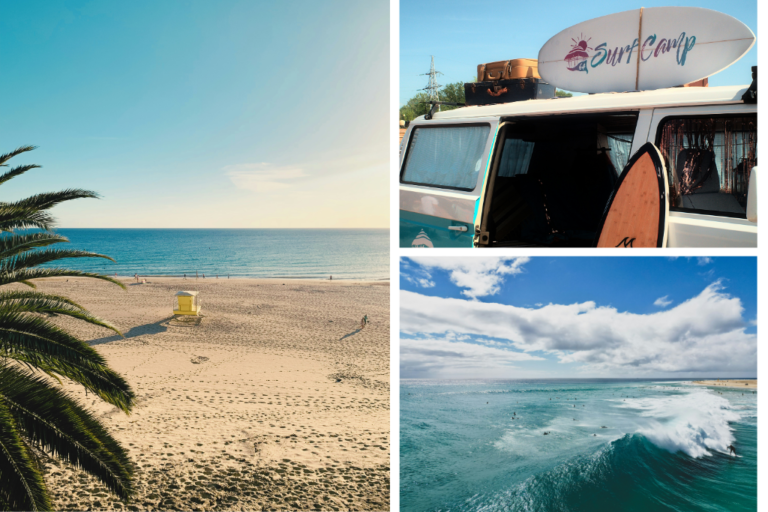
Just a few minutes from Puerto del Rosario, Playa Blanca offers an accessible and comfortable gem for visitors who reach the island and do not want to waste time searching for waves. This wide beach gives you plenty of space and waves that suit beginners or intermediate surfers who prefer to avoid heavy crowds. Moreover, being so close to the airport and capital, it’s perfect if you only have a couple of days to surf. The waves here do not reach the biggest or most technical levels, yet they feel ideal for enjoying the sea with zero stress.
La Pared
In the southwest of Fuerteventura, La Pared means wild nature at its finest. Its landscapes are breathtaking: Cliffs, wind, and a powerful sea that reminds you why this island is so special. The waves here can be intense and fast, especially with strong swell, making this spot more suitable for intermediate or advanced surfers.
On calm days, however, it can also work as an excellent place to practise and connect with the elements. It’s a less touristy, more “authentic” spot, where you can feel the free spirit of surfing.
Majanicho
Majanicho is a small fishing village in the north of the island and one of the most charming spots if you’re looking for peace and quiet. Its sheltered bay and softer waves make a good option for beginners or surfers who want a relaxed session. Its local atmosphere is unique: Low houses, boats on the sand, and the constant sound of the sea. The spot does not offer the most technical waves, yet it ranks among the most authentic places to feel the true rhythm of Fuerteventura.
Derecha de los Alemanes
Near Corralejo, Derecha de los Alemanes offers a reef break with fast, clean waves that many intermediate and advanced surfers love. When the swell arrives from the right direction, long and powerful waves form and allow technical lines and strong manoeuvres.
Beginners should avoid this spot, yet it becomes a must-visit if you already nail your take-off and want to face higher-level waves. Additionally, Corralejo offers vibrant surf life: Schools, bars, shops, and an international vibe that combines sport, relaxation, and fun.
Surf events and local atmosphere
Throughout the year, Fuerteventura hosts several surf and watersport events, such as the World Windsurfing and Wingfoil Championship, typically held at Playa de la Barca. In the north, especially around Corralejo, many local competitions and surf festivals also run and bring together island residents and surfers from every corner of the world. Beyond the waves, these gatherings offer a great chance to meet people, learn new tricks and soak up the surf spirit that defines the island.
Connectivity while you surf in Fuerteventura
When you travel, especially on a surf trip, internet access means far more than checking maps: It helps you coordinate transport, review surf forecasts, share your sessions on social media or let your family know that everything goes fine.
In Fuerteventura, mobile coverage works fairly well across most of the island, especially near towns and tourist areas, yet some remote surf spots still suffer from “dead zones” or weak signal, depending on the local operator.
One of the most popular options for travellers is the eSIM for the Canary Islands with unlimited data (in 4G/5G, depending on availability) that can be activated before your arrival. While you stay in Fuerteventura, your phone uses that eSIM for data and you still keep your physical SIM. The advantage is that you avoid roaming charges (or high fees for using your regular SIM) and can switch between networks based on coverage. Holafly promises instant delivery, quick activation and 24/7 support.
Important: If you are a frequent traveler and want to stay connected without worrying about expensive roaming or looking for a new SIM at every destination, Holafly’s subscription plans are for you. With a single eSIM, enjoy internet in more than 160 countries for a fixed price and no surprises on your bill. Travel without limits and connect easily and securely! 🚀🌍

Recommended seasons for surfing in Fuerteventura
One of the great advantages of Fuerteventura is that you can surf all year round. However, depending on your level and the type of waves you want, some months offer especially favourable conditions. Here you find how the ocean behaves across the seasons and which extra advantages each period brings for your trip.
High surf season (from October to April)
This is the best time of year to surf in Fuerteventura, especially if you already have some experience. During these months, the North Atlantic sends consistent, powerful swells, resulting in large, clean, well‑formed waves, ideal for the reefs on the north and west of the island (El Hierro, Derecha de los Alemanes, La Pared).
Mid or shoulder season (from April to June)
Spring is perfect if you’re learning to surf or improving your skills. The waves still arrive regularly, but they no longer reach the same size or demand as much effort as in winter. In addition, the wind usually blows less than in summer and the water slowly warms up.
- Best months: April, May, and June
- Sea conditions: Medium-sized, softer waves, fewer currents, and more stable days.
- Recommended level: Beginners and intermediates.
- Additional advantages: Warmer weather, moderate prices, quieter beaches, and greener landscapes after the winter rains. Many surf camps offer discounts or special beginner programmes during this season.
Summer season (from July to September)
Summer is ideal for enjoying the beach atmosphere and practising without pressure. Swell drops, the sea feels calmer and the beaches fill with life. The trade winds blow strongly during these months, which can affect wave quality, although some spots in the south and east (such as Playa Blanca or La Pared) still offer good early-morning sessions.
- Best months: July, August, and early September.
- Sea conditions: Smaller, more regular waves, stronger winds.
- Recommended level: Beginners and surfers looking for a relaxed experience.
- Additional advantages: Dry, sunny weather, lively atmosphere, local festivals, and an excellent time to combine surfing with other water sports (windsurfing, kitesurfing, snorkelling).
Costs of surfing in Fuerteventura
Surfing in Fuerteventura feels easy to enjoy: Good waves, ideal weather all year and accessible prices compared with other European destinations. Whether you’re here for a few days or planning to stay longer, there are options for every taste: from renting your equipment to joining an all‑inclusive surf camp.
Here’s a quick guide to help you understand how much surfing in Fuerteventura costs and choose what best suits your trip:
- Board and wetsuit rental: Between €15 and €25 per day for the complete equipment → ($17 – 29) Some schools let you rent only the board or only the wetsuit, depending on what you need.
- Group or private surf lessons: A 3 to 4‑hour group lesson costs between €50 and €65 → ($58 – 75), while a private lesson ranges from €125 to €180 → ($145 – $209) Packages almost always include equipment, insurance and sometimes photos or video.
- Surf camps or packages with accommodation: A week with 5 or 6 lessons costs between €255 and €500 → ($296 – 580), depending on the type of accommodation. The most comprehensive packages can exceed €750 → ($870), with extras such as video analysis or surf‑skate.
- Basic packages for beginners: From €360 to €410 per week → ($418 – 475), with shared accommodation and group lessons — an ideal option if you want to learn without spending too much.
In summary, surfing in Fuerteventura can be as simple or as complete as you decide, and you’ll always find an option that suits your pace and budget.
How to start surfing in Fuerteventura
Learning to surf in Fuerteventura feels easier than you might imagine. The island combines good weather all year, safe beaches and schools with experienced instructors who guide you step by step. You only need motivation, some balance and a few basic tips to enjoy your first waves from day one.
Before travelling: Do your research and choose when to visit
Decide the wave level you’re looking for: If you want large, consistent waves, travel between October and April; if you prefer softer conditions for learning, spring (April to June) is usually ideal. Book accommodation in surf areas like Corralejo, El Cotillo, or Lajares for quick access to several spots.
Book a reliable surf school or camp
To start safely, book a beginner lesson or a full surf camp package in advance. Look for schools with qualified instructors, low student ratio (for example, a maximum of six students per instructor) and beginner-friendly boards (softboards). Local brands and schools offer tailored courses with great reviews.
Prepare a practical packing list
Before you start surfing in Fuerteventura, prepare an essentials packing list so you enjoy every session with comfort and safety. Although many schools provide basic equipment, some personal items should always travel with you if you want to make the most of the experience.
- 3/2 wetsuit (in winter, choose a 4/3 if you feel the cold easily) — many schools include it.
- Lycra or rashguard to protect you from the sun and rashes.
- Water-resistant sunscreen, reusable bottle and a cap for your journey.
- Bring a waterproof phone case if you plan to take your phone (and activate an eSIM for data if needed).
Schools usually include the board, wetsuit, leash, and basic insurance. Confirm details before booking.
Arrive with some basic knowledge
Before your first lesson, watch videos or read about: parts of the board, position on the board, the pop-up technique (getting up on the board), and safety signalling in the water. This preparation helps you progress faster once you start practising. Many schools include a short theory talk at the beginning.
Warm up and practise on the sand and in the water
A typical lesson starts with joint mobility and stretching. Then, practice the pop-up on the sand until you repeat the movement several times. This step helps your body build muscle memory before you enter the water. The instructor explains the safe areas, how to lie down and paddle on the board, how to turn your head to look at the wave and when to stand up. Your first waves will be in the white water (the foam), which is gentler and safer for learning to catch waves without having to swim too much.
Etiquette, safety and progression
Learn the basic rules: Surfers closest to the peak have priority; do not drop in; control your board and avoid letting it shoot around; respect local surfers; ask your instructor about currents and tides. These habits protect your safety and keep a good atmosphere in the line-up.
Work on standing up in a stable way and keep your eyes looking forward. Learn to choose “green” waves, still unbroken, when you feel ready. Practise basic turns, such as the bottom turn, on smaller waves. Move from a softboard to more technical boards only when you control your take-off and direction. Level 2 and 3 courses help you progress from beginner to independent.
Take care of your body and the island
Stay hydrated, sleep well between sessions and stretch daily. Respect the environment: Don’t leave any rubbish, avoid stepping on fragile coastal areas and follow local conservation advice. When you act as a responsible visitor, you add value to the surf community.
Frequently asked questions about surfing in Fuerteventura
The surf high season runs from October to April, when Atlantic waves are larger and more consistent. However, from April to June, there are still great conditions for learning, with less wind and softer waves.
No. The island has many schools specialised in beginners, certified instructors, and safe beaches where you can learn from scratch, even if you’ve never touched a board.
Prices vary depending on the type of class: a group lesson costs between €50 and 65 ($58 – 75), while surf camps with accommodation range from €250 to 500 → ($290 – 580) per week, depending on the type of accommodation and services included.
Most schools include the complete equipment (board, wetsuit, and leash), but we recommend bringing waterproof sunscreen, a towel, a water bottle, swimwear, and plenty of positive energy.
With 3 or 4 days of lessons, you’ll be able to stand up and ride small waves, but to gain confidence and improve your technique, it’s ideal to practice for at least a full week.