


 Language


 No results found
Surf in Bali: Best beaches and prices
Complete guide to surfing in Bali: best beaches, prices, seasons and practical tips for enjoying the waves like a local.

Some destinations earn their reputation the hard way, and surfing in Bali counts among them. It’s not only because of its consistent waves or the warm weather that lasts all year, but also thanks to the ease with which you can learn, progress and feel part of something bigger: A culture that revolves around the sea. Bali offers spots for every level, surf schools with experienced instructors and affordable prices if you plan your trip carefully. In this guide, we’ll show you where to find the best surf beaches, how much it costs, when to go and how to start safely. Because if there’s one place where surfing truly comes alive, it’s here.
Best places to surf in Bali
If something makes surfing in Bali special, it’s the variety of its waves. The island offers a spot for every kind of surfer: From beginners who want to learn on gentle beaches to experienced riders chasing perfect barrels and reef challenges. Here, we’ll show you the most popular places to surf in Bali, their particular features, suitable levels and why you should include them in your itinerary.
Uluwatu
Located at the southern tip of the Bukit Peninsula, below the cliffs of the famous Pura Luhur temple, Uluwatu stands as the true mecca of surfing in Bali. Its different peaks (such as Racetracks, Temples or The Peak) offer consistent, fast waves that can easily exceed two metres. This spot doesn’t suit beginners, but it does offer one of the most spectacular stages to watch advanced surfers in action. In addition, the sunsets over the cliffs almost match the sessions in the water in terms of pure spectacle.
Padang Padang
Between Uluwatu and Bingin you’ll find Padang Padang, known as the “Balinese Pipeline”, which forms perfect barrels when conditions line up. This demanding spot only suits surfers with solid experience, but right next to it you’ll find Baby Padang, a friendlier version where many people catch their very first waves. Every year, this beach hosts the Rip Curl Cup Padang Padang, one of the most anticipated events on the local surf calendar.
Canggu
On the west coast, Canggu brings together surfing and Bali’s modern lifestyle. Its beaches (Batu Bolong, Echo Beach and Pererenan) offer waves for all levels: From the soft, long waves at Batu Bolong, ideal for longboarders and beginners, to the faster, more technical lines at Echo Beach. The atmosphere here feels relaxed yet vibrant: Seafront cafés with Wi-Fi, surf schools everywhere and festivals such as the Deus 9’ & Single, which celebrates longboarding and surf culture with music and art.
Keramas
In Gianyar Regency, in front of the Komune Resort, you’ll find Keramas, a powerful, fast right-hander that earns everyone’s respect. It’s one of the few spots where you can enjoy night surf, thanks to the artificial lights that shine over the lineup. International events such as the WSL Corona Bali Protected have taken place here, and although this spot feels more technical, it offers a unique experience if you want pure, high-energy action.
Medewi
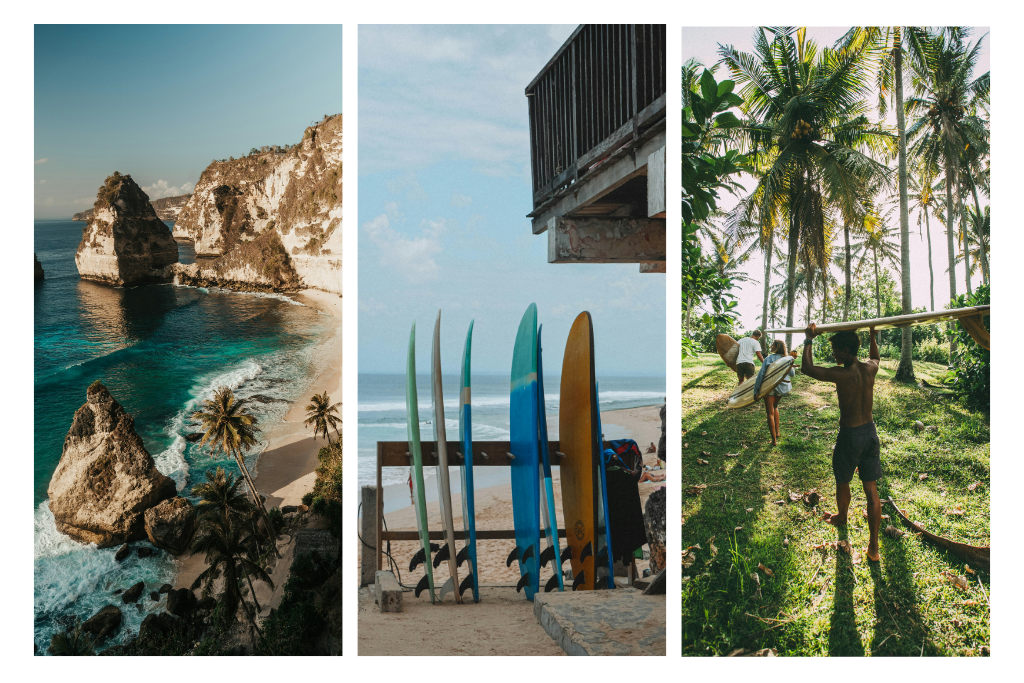
Far from the busy south, on the west coast of Jembrana, you’ll reach Medewi, a quiet village where the waves feel more personal. Its left-hander can peel for hundreds of metres, perfect for practising manoeuvres and enjoying a long, unhurried ride. This spot suits beginner and intermediate surfers who want more time on the wave.
Kuta, Legian and Seminyak
These sandy beaches in the south of Bali mark the starting point for thousands of surfers. Kuta Beach stands out as the best place to learn: You’ll find surf schools everywhere, gentle waves and sandy bottoms that make practice safer. As you gain confidence, you can move on to Legian or Seminyak, where the waves break a little faster and feel more playful.
Staying connected while you surf in Bali
When you travel to Bali to surf, staying connected doesn’t feel like a luxury: It becomes part of the trip. Checking the surf forecast before dawn, arranging transport to Uluwatu or Canggu, posting your sessions on social media or simply letting everyone know you’re fine, all this requires a stable, hassle-free connection.
Although Bali has good coverage in most tourist areas, more remote spots may offer patchy signal, depending on the local operator. Therefore, many travellers choose the Holafly eSIM for Indonesia, which offers unlimited data and activates within minutes, without a physical SIM card or complicated paperwork.
With Holafly’s monthly plans, you can keep your original number, avoid roaming charges and enjoy 24-hour Spanish-speaking support. This option works perfectly if you plan to move around the island, since the plan lets you change area without losing connection. In a destination where the ocean sets the schedule, a stable internet connection helps you catch the right wave at the right moment.
Important: If you are a frequent traveler and want to stay connected without worrying about expensive roaming or looking for a new SIM at every destination, Holafly’s subscription plans are for you. With a single eSIM, enjoy internet in more than 170 countries for a fixed price and no surprises on your bill. Travel without limits and connect easily and securely! 🚀🌍

Best seasons to surf in Bali
Bali has waves all year, but understanding how conditions change across the seasons is key if you want to enjoy every session. In general, the year splits into two main seasons: The dry season, from April to October, and the rainy season, from November to March. Each period has its own charm and star beaches, so everything depends on what you prefer: More powerful waves or a quieter overall experience.
- During the dry season, south-easterly winds blow offshore along the west coast, which leaves clean, consistent waves in places such as Uluwatu, Padang Padang and Canggu.
- This period works best for intermediate and advanced surfers, with May to September as the strongest part of the season. It also usually coincides with the Rip Curl Cup Padang Padang, one of the most prestigious competitions in Southeast Asia.
- If you prefer fewer crowds and slightly lower prices, May–June and September–October feel ideal, since conditions remain excellent but the lineup doesn’t feel so crowded.
- Between November and March, the winds shift and the best waves move to the east coast, especially around Keramas and Nusa Dua. Here, the ocean usually stays organised, with powerful yet more manageable waves, perfect for surfers with an intermediate level.
If you want barrels and adrenaline, choose the west coast during the dry season. If you prefer calmer sessions and fewer tourists, the east coast in the wet season will probably become your best ally.
Costs of surfing in Bali
Surfing in Bali feels much more accessible than many people think. Whether you want to catch your first waves or refine your technique, prices stay reasonable and you’ll find options for every budget. Here you have a clear guide, with average prices in United States dollars and their approximate equivalent in euros:
- Board rental: On beaches such as Kuta, Seminyak or Canggu, you can rent a board from around €2.58 ($3) per hour or €8.59 ($10) per full day, depending on the type of board (softboard or shortboard) and its condition. This option works well if you already have some experience and want to move freely between spots.
- Surf lessons for beginners: A private two-hour class usually costs between €30.05–34.35 ($35–40), with everything included (board, instructor, rash vest and insurance). Group lessons normally cost around €17.17 ($20) and offer a great way to start without spending too much.
- Guide or personalised surf trip: If you already have an intermediate or advanced level and want to surf Uluwatu, Padang Padang or Keramas, you can hire a local guide for about €51.52–60.11 ($60–70) per session. This usually includes transport, conditions analysis and, in some cases, board rental.
- Boat to the reefs: Some spots require a short boat transfer. This service costs roughly €34.35 ($40) per person and includes the round trip from the beach. It’s perfect if you want to avoid long paddles and reach the peak directly.
- Surf camps: Basic camps cost between €429–687 ($500–800) per week, with shared accommodation and daily lessons. Mid-range options cost between €858.66–1,717 ($1,000–2,000), with a private room, yoga sessions, video coaching and personalised advice.
- Scooter with board rack: Moving around by scooter feels both practical and affordable. Rental prices usually range between €4.29–8.59 ($5–10) per day, with discounts if you keep it for a full week. Always check the brakes and wear a helmet: Bali’s traffic can feel chaotic at times.
How to start surfing in Bali
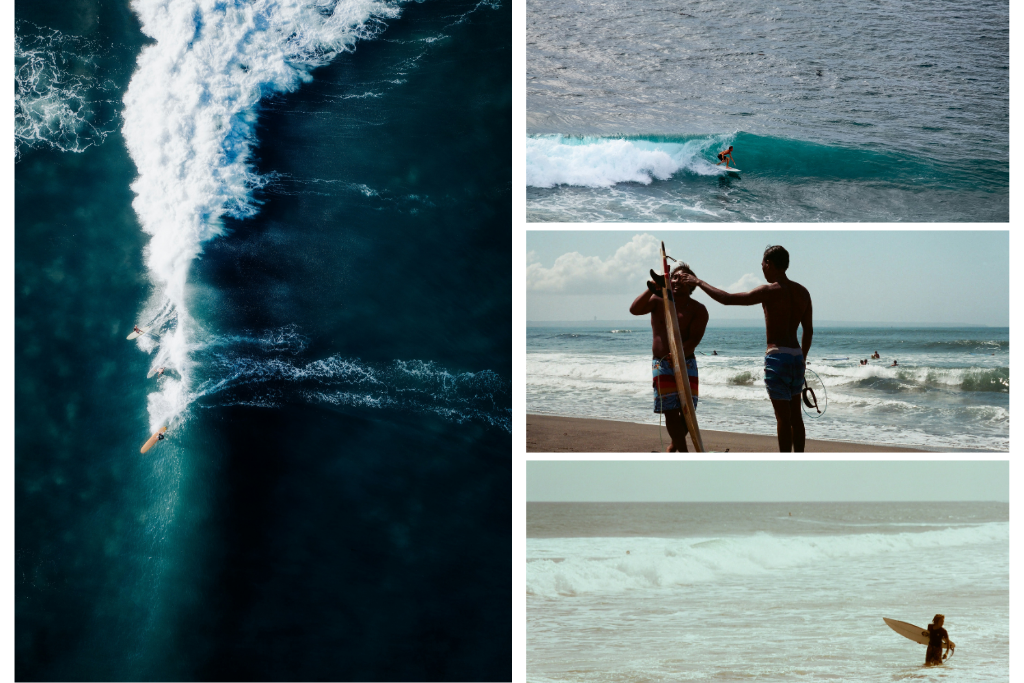
Starting to surf in Bali is one of those experiences you enjoy from day one, even if you’ve never stood on a board before. The island offers everything you need: Safe beaches, experienced local instructors and waves for every level. However, as with everything in surfing, the secret lies in taking things step by step.
1. Find the ideal beginner-friendly spot
The first step is to choose beaches with sandy bottoms and soft, rolling waves. Kuta Beach still offers the best starting point: You’ll meet local instructors all along the shore, the atmosphere feels relaxed and the waves help you learn without fear. You can also try Legian or Batu Bolong (Canggu), where conditions stay consistent and the surroundings feel calmer.
2. Start with a guided lesson
Learning on your own might sound tempting, but a lesson with a local instructor really makes a difference. In two hours (for about €30.05–34.35 ($35–40)), you’ll learn the real basics: How to position yourself, read the wave and stand up without relying on someone pushing the board. In Bali, instructors understand the tides and currents well, so they’ll also show you how to choose the right moment to enter and leave the water.
3. Practise with the right board
Once you understand the basics, rent a big, stable board, such as an 8 or 9-foot softboard. It usually costs between €4.29–8.59 ($5–10) per day and helps you gain balance without unnecessary frustration. Don’t rush into shorter boards: The key lies in mastering your paddle and control before you search for extra speed.
4. Learn to watch the ocean before paddling out
Before you get in, spend a few minutes simply watching the sea: Where the waves break, how the currents move and what other surfers do. This simple habit prevents many scares. Also, respect the basic rules in the water: Don’t drop in on another surfer’s wave and wait your turn at the peak.
5. Look after your safety and your energy
Surfing demands a good level of stamina, so don’t try to stay in the water for hours during your first days. Keep your sessions short, stay hydrated and protect yourself from the sun with a long-sleeved rash vest and water-resistant sunscreen. If you visit reef breaks such as Uluwatu or Keramas, wear booties. These small details make the difference between a great day and a bad memory.
6. Ask for local help when you want to level up
Once you feel confident in the ocean, you can hire a surf guide (for around €51.52–60.11 ($60–70) per session) who’ll take you to more technical beaches, such as Keramas or Nusa Dua, where the waves break faster and more precisely. Going with someone experienced saves you from avoidable mistakes and lets you enjoy the best moments of the day.
Frequently asked questions about surfing in Bali
Yes. Bali has waves all twelve months of the year, but conditions change with the season. From April to October, the best conditions appear on the west coast (Uluwatu, Canggu, Padang Padang). From November to March, the east coast (Keramas, Nusa Dua) usually offers better winds and more organised swells.
The most recommended beach is Kuta Beach, thanks to its sandy bottom and soft, forgiving waves. Legian and Batu Bolong (Canggu) also work well if you already have some experience and want safe progression.
You don’t need experience. Board rental is very common and costs between €4.29–8.59 ($5–10) per day. If you’re a beginner, you’ll find good softboards at almost every popular beach in Bali.
Yes. The most famous event is the Rip Curl Cup Padang Padang, usually held between July and August, depending on ocean conditions. You’ll also find local contests in Canggu and Keramas during different months.
Yes, as long as you choose beaches that match your level. Beginner areas such as Kuta or Batu Bolong usually have lifeguards on duty. Avoid reef breaks or big-wave spots until you gain more experience and always follow local advice.