Language


 No results found
St. Patrick’s Day in Ireland: Traditions, celebrations, what to expect
Planning to celebrate St. Patrick’s Day in Ireland? Learn about traditions, parades, food, and how the celebration compares to the US.

St. Patrick’s Day in Ireland is a cultural and religious public holiday, celebrated widely across the country, mainly on the islands and in Gaeltacht Irish-speaking areas.
In this guide, you’ll learn how St. Patrick’s Day is celebrated in Ireland, from long-standing traditions to parades, food, and famous Dublin celebrations.
You’ll also find practical tips on when to visit, where parades happen, and how to stay connected with an eSIM for Ireland.

Get connected quicker
Buy, set up, and activate a Holafly eSIM for Ireland in no more than a few of minutes.
Is St. Patrick’s Day celebrated in Ireland?
Yes, St. Patrick’s Day is widely celebrated across Ireland, where the holiday has deep cultural and historical roots. While many countries celebrate St. Patrick’s Day in a partial scope or symbolic way, Ireland marks it more fully, with events and traditions taking place in cities, towns, and rural communities across the country.
Is St. Patrick’s Day a public holiday in Ireland?
Yes, St. Patrick’s Day is a public holiday in Ireland. Schools, banks, and many offices close, but public transportation continues to run. You can still go to most shops, pubs, and restaurants, particularly in urban areas.
When is St. Patrick’s Day in Ireland?
St. Patrick’s Day in Ireland is celebrated every year on March 17. While the date remains the same, celebrations in many cities like Dublin often begin several days earlier and include multi-day festivals and events.
The history of St. Patrick’s Day in Ireland
Before parades and festivals, St. Patrick’s Day in Ireland was a religious day of reflection. To understand why March 17 matters in Irish culture, here are some facts about St. Patrick and his lasting role in Ireland’s history.
Who was St. Patrick?
St. Patrick was a fifth-century Christian missionary and bishop who became Ireland’s patron saint for bringing Christianity to the country.
Patrick was kidnapped at age 16 from Britain and taken to Ireland as a slave, where he spent several years working and learning the local language and customs. After escaping and returning to Britain, he trained as a priest and felt called to go back to Ireland as a missionary.
His decision to return and preach Christianity across the island earned him recognition as the “Apostle of Ireland” and shaped the country’s religious history.
How St. Patrick’s Day became a national celebration
St. Patrick’s Day in Ireland began as a religious feast day, but it became a national celebration after being officially recognized as a public holiday.
Over time, the day expanded beyond church observance to include public events that expressed Irish identity, culture, and community. Parades and festivals developed later, turning March 17 into a nationwide celebration in Ireland alongside its religious roots.
St. Patrick’s Day traditions in Ireland
St. Patrick’s Day traditions in Ireland blend religious events with a lively, social atmosphere and Irish craic with friends and family.
Here, you’ll find more about these traditions and learn how to celebrate St. Patrick’s Day in Ireland like a local.
Wearing green and shamrocks
Wearing green and displaying shamrocks are key St. Patrick’s Day traditions in Ireland, symbolizing Irish identity and Saint Patrick’s use of the shamrock to explain the Holy Trinity. Today, these symbols appear everywhere on March 17, from clothing and decorations to public events and gatherings.
Here are a few fun facts behind the wearing green on St. Patrick’s Day tradition:
- Irish folklore links leprechauns with the color green, which led to the playful idea that wearing green on March 17 keeps you out of their sight.
- The tradition of “pinching” those not wearing green became popular outside Ireland and is largely associated with American St. Patrick’s Day celebrations.
- Green only became strongly associated with St. Patrick’s Day in the 18th century; earlier historical depictions of St. Patrick often used blue instead.
Religious and cultural observances
For many people, St. Patrick’s Day in Ireland begins with church services, hymns, and personal reflection, marking the religious meaning of the day before any public celebration.
As the day moves on, the focus often shifts to cultural pride, with communities coming together through local events, traditional music, and shared meals.
This balance between faith and culture reflects how St. Patrick’s Day is observed across Ireland, especially outside major festival centers like Dublin.
Music, dance, and community events
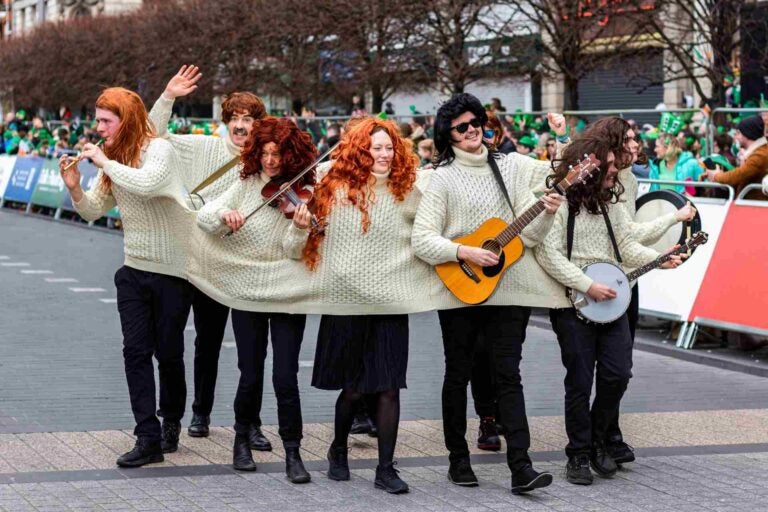
Music and dance sit at the heart of St. Patrick’s Day celebrations in Ireland, especially at the local level. Traditional Irish music sessions feature fiddles, tin whistles, bodhráns, and uilleann pipes, alongside jigs, reels, and céilí dancing in pubs, community halls, and public spaces.
You’ll often hear a mix of traditional folk, rebel songs, and modern Irish hits, with familiar staples like The Wild Rover and Whiskey in the Jar sung well into the evening. In many towns, the focus is less on formal performances and more on participation, with locals joining in to sing, dance, and celebrate together.
What do people eat in Ireland on St. Patrick’s Day?
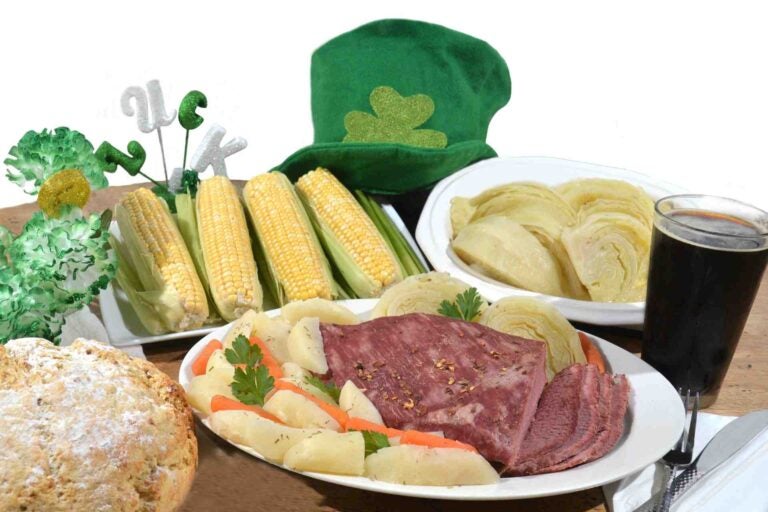
On St. Patrick’s Day, most people in Ireland eat simple, hearty dishes such as Irish stew, bacon and cabbage, soda bread, colcannon, and boxty. These foods reflect everyday Irish cooking and long-standing traditions rather than special holiday recipes.
Many families cook at home earlier in the day, especially for lunch, treating the holiday as a time to eat together. As celebrations move into the afternoon and evening, people often head out to pubs and casual restaurants, where these classic dishes appear alongside regular menus.
St. Patrick’s Day Parade in Ireland
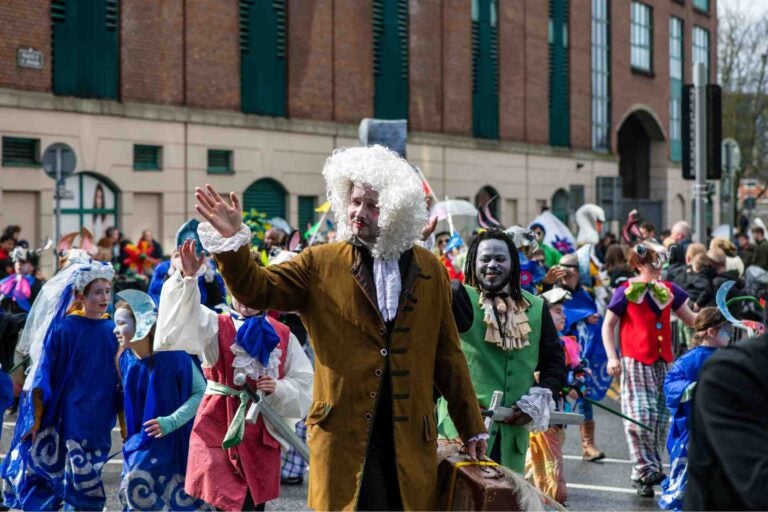
Ireland has one of the biggest St. Patrick’s Day celebrations in the world, with parades across the country, each with its own local character.
St. Patrick’s Day in Dublin
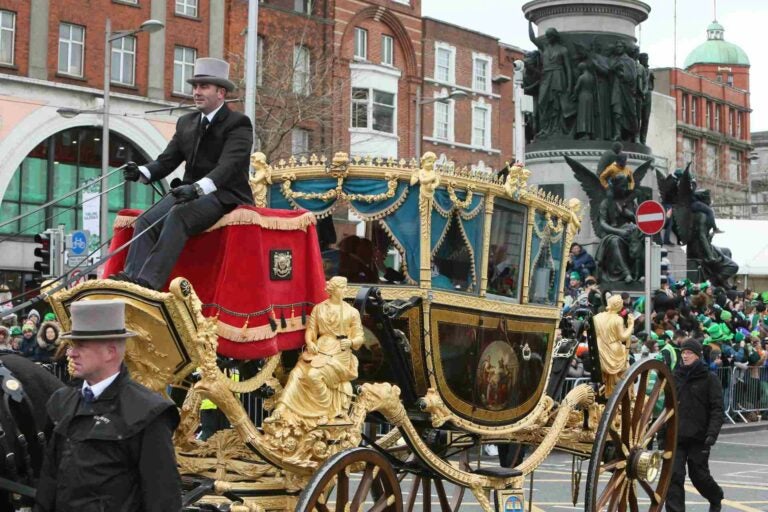
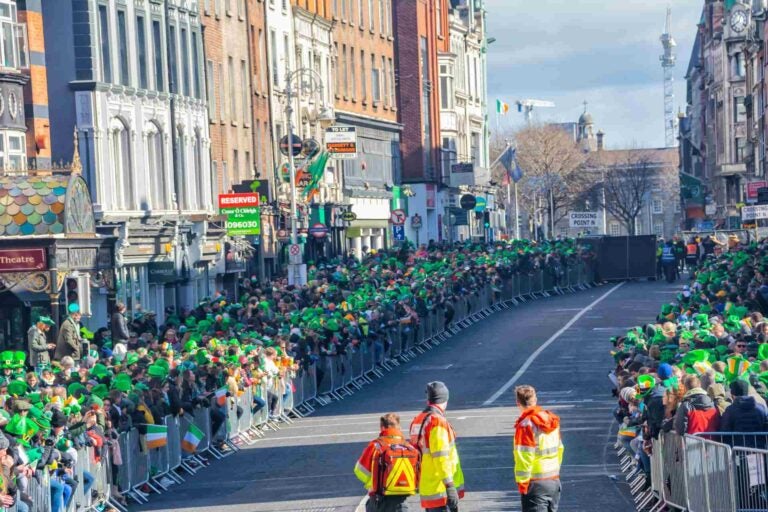
The Dublin St. Patrick’s Day parade takes place on March 17, usually starting around midday (12 pm), and it’s the peak moment of the celebrations. This is when the city is at its busiest, with large crowds lining the route to watch the parade and soak up the atmosphere.
If you’re planning to join the celebration, note that the St. Patrick’s Day Festival in Dublin begins days before, around March 14 or 15. The best place to stay in Dublin at this time is near the parade route, where events, transport, and viewing spots are all within walking distance.
Mid-March is also a popular time to travel, so costs can be higher than usual. So plan ahead, research how much a trip to Ireland costs, and book at better rates.
Other cities and towns in Ireland
Mid-March is one of the best times to visit Ireland, as St. Patrick’s Festival events take place across the country.
Here are some of the best cities and towns, besides Dublin, to celebrate St. Patrick’s Day like a local:
- Cork hosts one of Ireland’s longest-running St. Patrick’s Day parades, known for its strong community focus and family-friendly atmosphere.
- Galway celebrates with a lively parade and street performances, reflecting the city’s strong arts and traditional music scene.
- Limerick combines its parade with local festivals and riverside events, offering a more relaxed way to celebrate with locals.
- Belfast marks St. Patrick’s Day with cultural festivals and community events, adding a different regional perspective within Northern Ireland.
Where is the best place to celebrate St. Patrick’s Day in Ireland?
Dublin is one of the best places to celebrate St. Patrick’s Day in Ireland, thanks to its large parade, multi-day festival, and citywide events.
But if you prefer a more local and relaxed experience, the best places to celebrate would be smaller towns and regional cities like Cork, Galway, Limerick, Kilkenny, and Waterford.
Key facts about St. Patrick’s Day in Ireland
Here are the key things you should know about St. Patrick’s Day in Ireland to enjoy it to the fullest:
- Date: Celebrated every year on March 17
- Public life: St. Patrick’s Day in Ireland is a national holiday, and schools and offices close.
- Parades: Take place everywhere in Ireland, with the largest parade and festival held in Dublin
- Cultural focus: Blends religious tradition with Irish music, food, and community pride
- Global Greening: On March 17, famous landmarks in Ireland light up green, including Bunratty Castle, the General Post Office, and Kilkenny Castle.
Stay connected when celebrating St. Patrick’s Day in Ireland
While enjoying the celebrations, Holafly’s international eSIM makes your Ireland trip hassle-free with a high-speed connection at a transparent price.
Depending on how many days you plan to stay in Ireland, you can get a daily eSIM plan or opt for a monthly eSIM plan.
Best of all, setup is quick and fully digital using a QR code, which means you’re online as soon as you arrive.

Count memories, not data
Never lose connection with unlimited data eSIMs from Holafly.
Plans that may interest you


Formerly a travel journalist turned marketing copywriter, I found my way back to the travel world with Holafly—my dream company that made remote work possible. My motto? “Dream big and make it happen.” I’m passionate about writing, exploring the world, and staying active through walking, running, swimming, and hiking. I also love learning, reflecting, and connecting with inspiring minds.