Language


 No results found
Scuba diving in Cape Verde: Best spots and prices
Scuba diving in Cape Verde offers a unique experience, thanks to the country's geographic location and the lack of mass tourism.

Halfway between Africa and America, Cape Verde emerges in the Atlantic as a hidden gem for sea lovers. This volcanic archipelago, made up of ten main islands, keeps a balance that many destinations lost: endless beaches, a relaxed pace, and an ocean that still feels wild. That’s why scuba diving in Cape Verde offers the perfect mix of excitement and serenity.
Cape Verde’s geographic location makes it a meeting point between tropical waters and nutrient-rich Atlantic currents, attracting manta rays, turtles, sharks, and fish of all shapes and colours in surprising numbers. Its seabeds are a mosaic of life: volcanic caves, coral-covered walls, and shipwrecks that now shelter hundreds of species.
Unlike crowded destinations, every dive here is calm. Local instructors speak of the “no stress” philosophy, and a stroll through Santa Maria harbour (Sal) or Mindelo (São Vicente) shows exactly what it means. In Cape Verde, time flows differently, the sea sets the pace, and everything seems naturally harmonious.
Whether you want to start diving, explore large pelagics in open waters, or lose yourself among colourful volcanic reefs, Cape Verde has it all. Ready for your next dive?
What are the best diving schools in Cape Verde?
Talking about diving in Cape Verde is talking about an ocean that still retains its untamed character. Not all islands are ready for underwater exploration, but those that are, do it seriously. The main diving centres are in Sal, Boavista, São Vicente, and Santo Antão, four islands combining increasingly strong tourist infrastructure with marine environments that feel freshly discovered.
In Sal, the epicentre of Cape Verdean diving, you’ll find the oldest, most organised centres, with international instructors and daily trips to the archipelago’s famous reefs and wrecks. Boavista, wilder and quieter, is perfect for those seeking encounters with large species (manta rays, lemon sharks, and sea turtles) in a nearly untouched environment.
In the north, São Vicente and Santo Antão offer a more authentic experience, with fewer tourists and volcanic landscapes that create otherworldly underwater scenes: tunnels, vertical walls, and coral-covered rock formations.
Each island has its personality, but all share one thing: the sea remains the absolute protagonist. Below, we present the best diving schools in Cape Verde, combining professionalism, warmth, and respect for an environment meant to be explored slowly.
Sal Island: the heart of Cape Verdean diving
Sal Island is the most famous diving spot in Cape Verde. Tourism is more developed here, waters are calm, and daily trips depart from Santa Maria harbour, a town that breathes the sea from dawn.
CaboVerde Diving
Located in Ponta Preta, just minutes from central Santa Maria, CaboVerde Diving is one of the most complete schools in the archipelago. They offer PADI courses for all levels, from beginner dives to specialities like Nitrox or Deep Diver, plus guided trips to the island’s best spots.
Their advantage lies in the facilities: A climate-controlled classroom, modern equipment, and the option to dive with underwater scooters (DPV), rare in the region. Perfect for those seeking professionalism without losing local warmth.
Eco Dive School Cape Verde
Right on Praia Antonio Sousa, this school combines local passion with European professionalism. Their team (Cape Verdean and German instructors) offers a personal approach: Small groups, close attention, and a relaxed atmosphere.
Ideal for first-time divers or those seeking certification at a gentler pace. Its location on one of Santa Maria’s quietest zones makes it a perfect starting point.
Scubateam Cape Verde
Based inside Hotel Morabeza, Scubateam is the most convenient option for tourists staying in the resort area. They offer daily trips and PADI Open Water courses, along with snorkelling programmes for companions.
What sets them apart is the family-friendly environment: Instructors guide you from your first contact with water to course completion, prioritising safety and confidence.
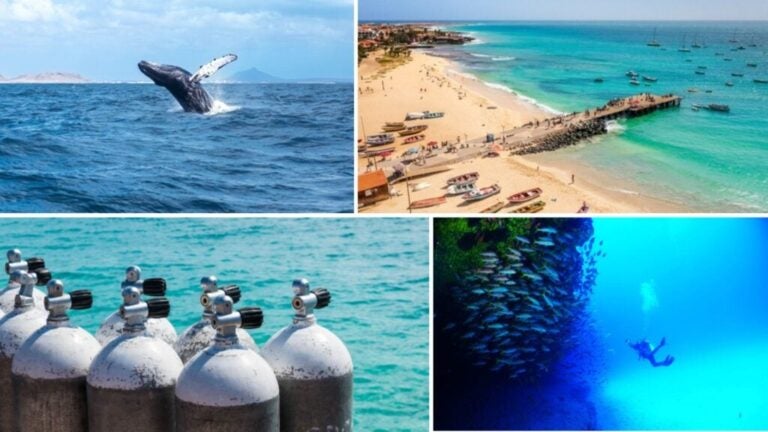
Boavista Island: The wild Atlantic gem
Boavista is perfect for adventurous diving. Its long beaches, open waters, and Atlantic currents create ideal conditions for encounters with large species, especially manta rays and lemon sharks.
Riamar Diving Center
Located in Sal Rei, the main town, Riamar Diving Center is a PADI 5 Star IDC Resort, ensuring high quality standards. They offer courses from beginner dives to Divemaster level, and boat trips to the most remote northern reefs.
The team speaks multiple languages and works with small groups, making each trip personalised and safe. Ideal for certified divers seeking adventure and professionalism.
ScubaCaribe Boa Vista Island
Based within the island’s main resorts, ScubaCaribe combines comfort and excellent service. They offer courses for all levels, guided dives, snorkelling trips, and underwater photography. They visit the best dive spots in Cape Verde, like Shark Point, Bodega de Mark, and Shark Bow, home to moray eels, lobsters, and nurse sharks.
Perfect for families or couples wanting international certification without worrying about logistics.
São Vicente Island: volcanic diving and local culture
São Vicente, with Mindelo as its capital, mixes vibrant port-city charm with spectacular, unexplored seabeds. Diving here is calmer and more authentic, with volcanic landscapes creating striking contrasts between deep blue waters and black rocks.
Haliotis Dive Center
Located within Hotel Oasis Porto Grande in Mindelo, Haliotis is a PADI centre recognised for excellent facilities and highly qualified staff. Courses range from beginner to advanced, including Nitrox, night dives, and drift dives.
Instructors have extensive experience in technical diving and underwater photography, ideal for divers seeking advanced experiences without compromising safety.
Dive Tribe São Vicente
In front of Mindelo’s Yacht Club, Dive Tribe is an SSI school with a local soul. Multilingual instructors conduct daily trips, adjusting each dive to the group’s level.
They prioritise small groups, relaxed sessions, and a friendly atmosphere. Perfect for divers preferring a calm, social environment over a formal academy.
Santo Antão Island: diving among cliffs and volcanoes
More mountainous and wild, Santo Antão is the least developed touristically, but also spectacular. Diving here has an exploratory feel: submerged volcanic landscapes, excellent visibility, and discreet yet diverse marine life.
Aqualis Diving Cape Verde
With a flexible base between Porto Novo and coastal points, Aqualis Diving offers PADI and SSI courses for various levels.
They organise trips to volcanic formations, cracks, and underwater canyons. Their team combines local and European instructors passionate about marine conservation.
Ideal for intermediate or advanced divers seeking remote, natural dives without crowds.
As you can see, each Cape Verde island offers a different diving experience, yet they all share the same essence. In this remote African archipelago, there are no rushes or mass tourism, just the sound of the sea, the slow rhythm of island life, and an ocean that still feels like it’s being discovered for the first time.
Best dive sites in Cape Verde
Cape Verde enjoys stable weather year-round, water temperatures between 22 °C and 27 °C, perfect for beginners and experienced divers alike. Here, the Atlantic Ocean is calm, clear, and full of life—a rare balance in this part of the world.
Diving in Cape Verde means discovering an underwater landscape as diverse as its islands. Volcanic seabeds form caves, canyons, and coral-covered walls, while ocean currents bring a surprising variety of species: Turtles, manta rays, barracudas, dolphins, and even whale sharks and humpback whales in season.
Unlike Caribbean or Indian Ocean hotspots, Cape Verde remains authentic and tranquil. No crowds underwater and undisturbed biodiversity make it a unique destination. Each island offers different experiences: colourful reefs and wrecks in Sal and Boavista, volcanic relief in São Vicente, and otherworldly dives in Santo Antão.
Whether you seek technical dives, warm-water baptisms, or encounters with large pelagics, scuba diving in Cape Verde always offers something new. Let’s explore the most spectacular dive sites in the archipelago and what to expect from each.
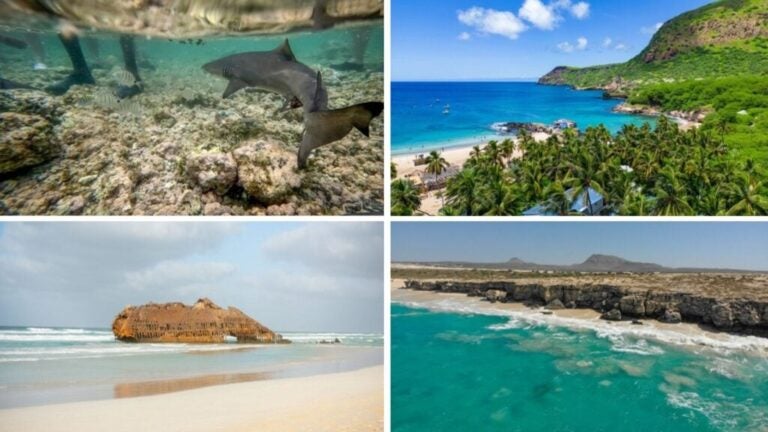
Kwarcit Reef (Sal Island)
Depth: 10–18 m – Level: All levels
This shallow reef is ideal for beginners or relaxed dives. Sandy bottoms with rocky structures host parrotfish, damselfish, moray eels, and green turtles. Clear water creates a golden effect on soft corals, perfect for photography.
Three Caves (Sal Island)
Depth: 18–30 m – Level: Intermediate / advanced
One of Sal Island’s most iconic dives. Three interconnected caves form a natural labyrinth, covered with orange sponges and corals.
Inside, eagle rays, lobsters, groupers, and sometimes nurse sharks are seen. Moderate currents require good buoyancy control.
Santo Antão Wreck (Kwarcit Shipwreck – Sal Island)
Depth: 26 m – Level: Intermediate
Sunk in 1966, this cargo ship became an artificial reef. The best wreck dive on the island, hosting jacks, snappers, and trumpetfish. Visibility up to 30 m allows viewing the ship from bow to stern.
Cabo Santa Maria Wreck (Boavista Island)
Depth: 8–15 m – Level: All levels
Boavista offers wilder dives with stronger currents and thrilling pelagic encounters. Here, dives are a bit deeper, and currents can surprise, but it’s also where the most thrilling encounters with pelagic fauna occur.
The Cabo Santa Maria wreck is the island’s most famous, partially emerging from sand on the northern coast. Stranded in 1968, its remains partially emerge from the sand on the northern coast of the island. Fish, rays, and sea urchins inhabit the wreck, creating a historical underwater scene.
João Valente Bank (Boavista Island)
Depth: 15–35 m – Level: Advanced
Between Sal and Boavista, this bank is famous for strong currents and abundant marine life. Expect lemon sharks, devil rays, large barracudas, and seasonal whale sharks. Boat trips are only suitable for experienced open-water divers.
Praia de Estoril (Boavista Island)
Depth: 6–12 m – Level: Beginners
Classic site for baptisms and beginner courses. Sandy bottom with small rocky formations hosts pufferfish, octopus, and seahorses. Calm waters near the shore make it ideal for first-time divers.
Ponta João Ribeiro (São Vicente Island)
Depth: 12–25 m – Level: All levels
Located east of Mindelo, this dive combines white sand with black volcanic rock, creating a striking visual contrast. Expect angelfish, moray eels, and hawksbill turtles. Calm days allow extending the route to a small cave with resting rays.
Cave of Saint Vincent (São Vicente Island)
Depth: 20–30 m – Level: Intermediate / advanced
A natural tunnel carved by marine erosion leads to a vault illuminated from above. Exceptional visibility with lobsters, nudibranchs, and giant groupers. Perfect for cave diving enthusiasts.
Sandy Beach Drift (São Vicente Island)
Depth: 15–25 m – Level: Intermediate
A gentle drift dive along white sands and lava blocks covered with coral. Currents carry jacks and barracudas; mantas or grey reef sharks may appear in the distance.
Tarrafal Bay (Santo Antão Island)
Depth: 8–20 m – Level: All levels
This protected bay features clear water and fine sand, ideal for calm dives. Parrotfish, cuttlefish, and green turtles hide among rocks; eagle rays patrol sandy bottoms.
Ponta do Sol Wall (Santo Antão Island)
Depth: 18–35 m – Level: Advanced
Ponta do Sol Wall is one of the island’s most spectacular dives. It’s a vertical wall covered in sponges and corals, dropping to 35 metres, offering a unique diving experience. The currents bring pelagic fish, tuna, and barracudas, with occasional devil rays gliding among the divers.
Monte Trigo Reef (Santo Antão Island)
Depth: 12–22 m – Level: Intermediate
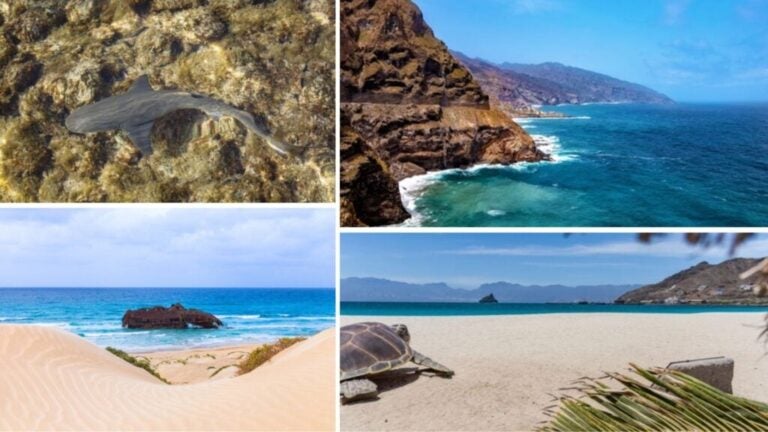
Located on the island’s western tip, this reef features volcanic formations and narrow, life-filled passages. Pulpos, butterflyfish, soft corals, and small gorgonians are common. Its isolation makes it one of Cape Verde’s purest dives.
Diving in Cape Verde means exploring a warm, wild, and surprisingly diverse Atlantic. Each island is an underwater world of its own, with stories, colours, and rhythms changing with each dive. But one thing always remains: the sense of peace only destinations with low tourist traffic can provide.
Connectivity in Cape Verde: Between “No Stress” and the Atlantic Signal
Internet in Cape Verde changes as fast as the Atlantic wind. On main islands (Sal, Boavista, São Vicente), 4G works reasonably well in towns and hotel areas. However, as you move to remote beaches or dive spots, coverage becomes patchy or disappears completely.
Locals call this “no stress”, a philosophy that also applies to digital life. Although disconnection is part of the charm, good internet is crucial for checking sea conditions, sharing coordinates with dive centres, or posting dive photos.
The best solution to avoid relying on WiFi is the Holafly eSIM for Africa, providing unlimited data across the continent, not only in Cape Verde. It activates within minutes, even before landing, keeping you connected without swapping physical SIM cards.
You can also get Holafly Plans, offering a global eSIM covering 160+ countries. Cape Verde isn’t included, but many African countries are. Perfect if you plan further travel without changing eSIMs repeatedly.
While the archipelago invites you to slow down and enjoy the sea, Holafly ensures you stay connected when it really matters.
Important: If you are a frequent traveler and want to stay connected without worrying about expensive roaming or looking for a new SIM at every destination, Holafly’s subscription plans are for you. With a single eSIM, enjoy internet in more than 160 countries for a fixed price and no surprises on your bill. Travel without limits and connect easily and securely! 🚀🌍

How Expensive is Diving in Cape Verde?
Another advantage of diving in Cape Verde is affordability, with excellent value for money. Despite being in the middle of the Atlantic, costs remain moderate compared to other exotic destinations. Schools usually include boat transfers, full equipment, certified instructors, and environmental fees. All you need is time and a desire to dive.
Prices vary slightly between islands. Sal and Boavista are slightly higher due to more developed tourism, while São Vicente and Santo Antão generally offer lower rates. Typically, a single dive costs €60–100 ($65–110), and full certification courses range from €450–600 ($490–655).
Below is an updated table for 2025, showing average prices for major schools and experiences:
| Type of Experience or Course | Island / Highlighted Centre | Approx. price (EUR/USD) | Includes | Recommended Level |
|---|---|---|---|---|
| Discover Scuba Diving | Sal – Eco Dive School / CaboVerde Diving | €70–90 ($75–100) | Theory class, 1 guided dive, full equipment, and boat | Beginners |
| Double Dive (2 tanks) | Boavista – Riamar Diving / ScubaCaribe | €110–130 ($120–140) | 2 dives, PADI guide, boat, and snack | Certified divers |
| Open Water Diver Course (PADI Certification) | Sal – CaboVerde Diving / Scubateam | €480–550 ($520–600) | 4 dives, materials, theory, and certification | Beginners |
| Advanced Open Water Diver course | São Vicente – Haliotis Dive Center | €520–580 ($565–630) | 5 themed dives, theory, and certification | Intermediate |
| Nitrox Course | São Vicente / Sal | €150–180 ($165–195) | Theory, practical sessions, and PADI Nitrox certification | Intermediate |
| Wreck Dive (Cabo Santa Maria) | Boavista – Riamar Diving | €85–100 ($90–110) | 1 guided dive, boat, and full equipment | Certified divers |
| Night or Cave Dive | São Vicente – Dive Tribe / Haliotis | €90–110 ($100–120) | 1 dive, torch, guide, and instructor | Intermediate |
| Full Day Dive (3 dives + lunch) | Santo Antão – Aqualis Diving | €150–180 ($165–195) | 3 dives, transport, lunch, and guide | All levels |
| 10-Dive Pack | Sal / Boavista | €450–500 ($490–540) | Full equipment and certified guide | Frequent certified divers |
Approximate diving costs in Cape Verde
Note: Many dive centres in Cape Verde offer cash discounts and reduced rates for long stays or temporary residents. Take advantage of this benefit if you plan to spend time on the islands. Book early because boat spaces are limited, and sea conditions dictate daily schedules.
Beyond price, diving in Cape Verde delivers an intangible value: the sense of exclusivity. Diving at sites with few other divers makes every dive intimate, authentic, and deeply natural.
Frequently Asked Questions about Diving in Cape Verde
Cape Verde’s waters are part of protected marine zones. Operators must follow strict conservation rules. Don’t touch coral, feed fish, or collect shells. Diving here allows responsible tourism, preserving one of the Atlantic’s purest ecosystems.
Yes, dive insurance is recommended. Although dive centres are professional and sea conditions are usually safe, insurance covers medical emergencies, transfers, and hyperbaric chamber assistance. Some islands have limited medical infrastructure.
Top sites include Kwarcit Reef and Three Caves on Sal, Cabo Santa Maria Wreck on Boavista, and volcanic caves on São Vicente and Santo Antão. Each island offers colourful reefs, wrecks, or dramatic vertical walls.
One of the great advantages of the archipelago is that diving is possible year-round, thanks to its stable climate and temperate waters. However, from April to November, visibility and calmer conditions are usually at their best. For whale sharks or humpback whales, choose February to May.
Yes, water temperatures range from 22 °C to 27 °C. A 3–5 mm wetsuit keeps you warm and protects from coral contact or small jellyfish stings.