Language


 No results found
Flying east or west? Here’s how to avoid jet lag like a pro
Wondering how to avoid jet lag on your next trip? From sleep schedules to meal timing, discover our insider tips on adjusting your body clock when flying east or west.

You arrive at an exciting new destination, eager to explore, but the moment you step into your hotel room, jet lag hits.
You tell yourself you’ll have a quick rest, but next thing you know, you’re waking up at 2 AM, wide awake and staring at the ceiling.
If you’ve ever crossed multiple time zones, you’ve probably had a similar experience. Jet lag is a common companion of long-haul travel, but how it hits and how long it lasts often depends on the direction you’re flying.
If you’re fed up with jet lag making you feel exhausted for half your vacation, this guide is for you. I’m revealing how to avoid jet lag on long flights with specific tips for flying east and west.
How to avoid jet lag: An overview
Flying east and west affects your body differently, which is why you might feel fine when traveling in one direction and exhausted when traveling the other.
| Flying east | Flying west | |
|---|---|---|
| Effect on the body clock | Day gets shorter (harder to adjust) | Day gets longer (easier to adjust) |
| Jet lag intensity | Usually stronger | Usually milder |
| Main goal | Fall asleep earlier | Stay awake longer |
| Night before the trip | Shift bedtime earlier | Shift bedtime later |
| How much time to sleep on the plane | Sleep more if possible | Stay awake longer if possible |
| If the flight lands at night (destination time) | Skip heavy meals, sleep on the plane | A light meal is okay, sleep later |
| If the flight lands during the day (destination time) | Short nap only, stay active | Stay awake, move, and eat normally |
| First night after arrival | Go to bed early (but not too early) | Go to bed later than usual |
| Recovery speed | Slower (1–2 days per time zone) | Faster (often 1 day per time zone) |
Why jet lag feels different when flying east vs west
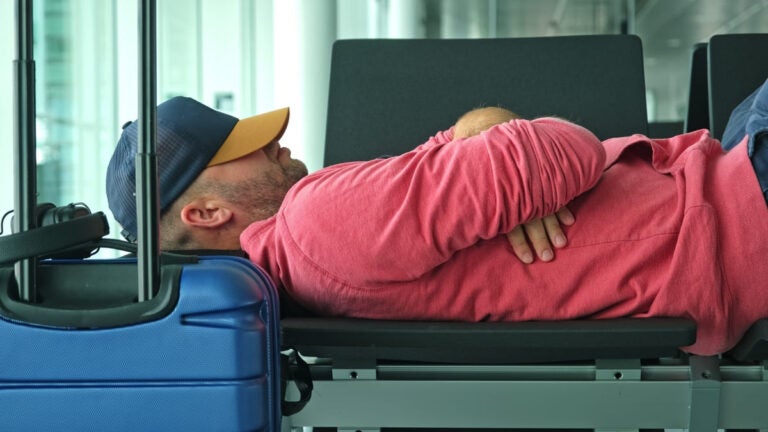
Flying east shortens our day, while flying west extends our day.
Biologically, it’s much easier for our body clock to adjust to a longer day than a shorter day. That’s why many people experience more significant jet lag symptoms when flying east.
It’s also why there is no universal way to beat jet lag. Both flight directions require different methods, so it’s crucial to know the direction you’re flying and prepare accordingly.
How to avoid jet lag when flying east

The best strategy to avoid jetlag while flying east is to shift your body clock forward before you leave.
For at least 3 days before your departure, go to bed and wake up 30 to 60 minutes earlier than usual.
Each morning, get plenty of morning sunlight as this helps advance your body clock. Then, in the evenings, dim the lights and reduce screen time to help your body clock adjust to the earlier bedtime.
On your flight, how much and when you sleep should depend on your arrival time, not your departure time.
If you’re arriving in the morning, sleep as much as you can on board and treat the flight as your bedtime. To help with this, I recommend reserving a window seat; these are the best airline seats for sleeping because they have the fewest distractions.
Once you arrive at your destination, get plenty of daylight exposure to signal to your body clock what time of day it is.
If you’re arriving in the evening, try to sleep as early as possible on the flight (when it’s nighttime at your destination) but stay awake for the second half (when it’s daytime at your destination). This way, you’re more likely to arrive sleepy and ready for bed.
How to avoid jet lag when flying west

How to avoid jet lag when flying west? Reverse the strategy.
Instead of going to bed earlier, go to bed later and wake up later for 2-4 days before your departure. This will help to delay your body clock.
If your flight arrives in the morning, sleep on the plane as much as possible during nighttime at your destination. If your flight arrives in the evening, avoid sleeping too much on the plane.
When you arrive at your destination, avoid long daytime naps and get evening light by going outdoors before sunset, then using bright lights indoors in the evening. Try not to go to bed too early on the first night, even if you feel exhausted, as it can make you wake up too early.
Should you eat on the plane or skip meals?
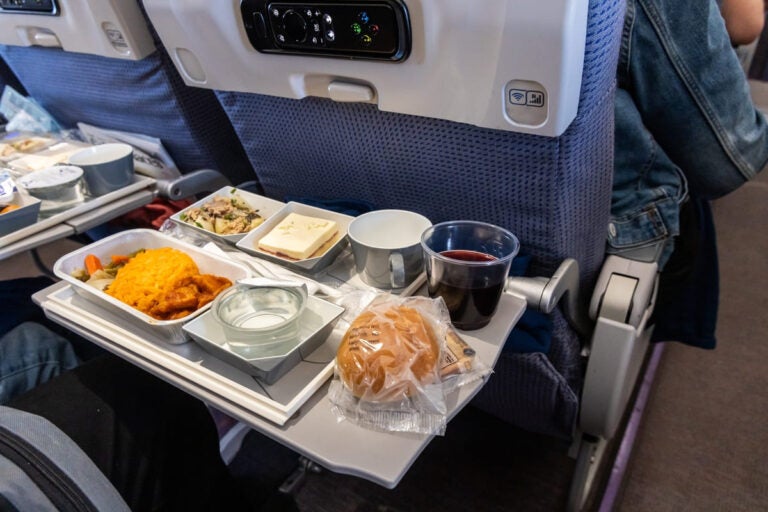
Strategic sleeping isn’t the only way to adjust your body clock. Meal timing also affects circadian rhythm.
During the flight, try to eat at meal times at your destination, not in your departure city, to help sync your body clock to your destination’s time zone.
Digestion generally slows down when flying, so if you’re arriving in the evening or at night, skip heavy meals, especially just before landing. Instead, snack during the first half of the flight. If you plan to bring your own food, research what food you can bring on a plane, as certain items are restricted.
What to do on the flight (sleep, light, movement)
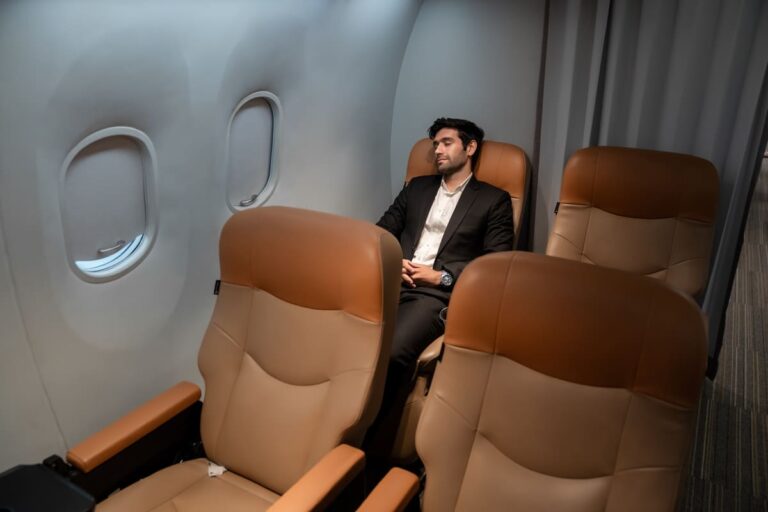
- Sleep when it’s nighttime in your destination: Sync your in-flight sleep to your destination’s time zone, not your departure city.
- Using eye masks and light exposure strategically: When it’s nighttime at your destination, use an eye mask or keep window shades down. In contrast, expose yourself to light during the daytime hours at your destination.
- Stretch regularly to promote digestion: Stretch in your seat and take short walks up and down the aisle when possible.
- Stay Hydrated: The dry cabin air can cause you to dehydrate quickly on a long-haul flight. Dehydration can amplify jet lag symptoms, like fatigue, headaches, and grogginess. That’s why sipping water regularly is one of the most important tips for long-haul flights.
- Avoid alcohol: Drinking alcohol on the flight is one of the most common travel mistakes people make. You might think it will help you sleep, but in reality, it dehydrates you and increases headaches and tiredness once you land.
What to do immediately after landing
Regardless of which direction you traveled in, avoid taking long naps during the first day. If you’re extremely tired, a short 20-30 minute power nap is fine, but anything over 45 minutes can hinder your internal clock’s adjustment to the new timezone.
On your first night, try to stay up until local bedtime. To help you sleep well that first night, do the following:
- If traveling eastbound, dim the lights and avoid screens in the evening to help your body adjust to the shorter day.
- If traveling westbound, get bright light in the late afternoon/early evening to help delay your clock.
How long does jet lag usually last

As a rule of thumb, jet lag takes about one day to adjust to each time zone crossed when traveling east. So if you crossed 3 time zones, it’s totally normal to feel a bit “off” for 3 days.
Moreover, scientific research shows that jet lag can persist for up to 1 week when crossing 8 or more time zones.
Recovery time is halved when traveling west, taking about half a day per time zone to adjust.
However, it’s important to note that these recovery times are general estimates. Some people struggle with jet lag more than others. For example, younger people tend to adjust faster than older adults.
Arrive connected, even when you’re exhausted
No one likes arriving at their destination feeling like a zombie, but a Holafly eSIM helps make those first groggy hours easier.
With instant activation, you’ll have fast and reliable data the moment you step off the plane, so you can focus on getting settled, not searching for Wi-Fi.
Order a ride to your hotel, grab a meal, or catch a short nap, all without stress. Explore the eSIM store here.

Unlimited data. Peace of mind.
Make sure you have travel data that's there when you need it most.
Plans that may interest you


Hey, I’m Mika! I’m an SEO specialist with 7+ years of experience and a passion for travel info that actually helps you explore smarter. I write travel guides and tips backed by SEO insights so you can spend less time searching and more time adventuring.