







 Language


 No results found
10 authentic Greek dishes: A local’s guide to Greek cuisine
A local-led guide to Greek food, highlighting the iconic dishes you should try while in Greece.

Greece is more than ancient ruins and whitewashed islands.
What some travelers might overlook is food. Skip it, and you’ll miss the heart of the experience.
Now, to separate authentic Greek cuisine from tourist staples, I spoke with Katarina Mirkovic Arsic. She lived in Greece for several years and is now a writer at Holafly, offering grounded, local insight.
1. Moussaka
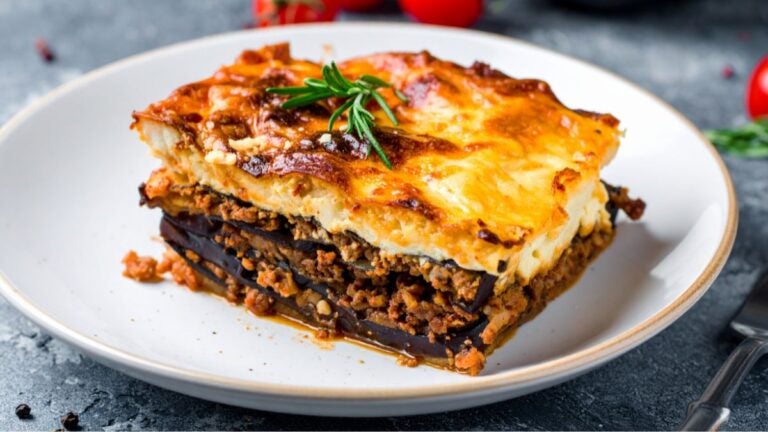
Moussaka is one of the most renowned dishes in Greece.
The version most of us recognize today took shape in the early twentieth century, when a Greek chef added a thick béchamel topping to older, vegetable-based dishes. In Greece, moussaka is still regarded as a comfort food, often prepared for family lunches rather than rushed dinners. According to Katarina, locals expect intense flavors, not subtle ones. Fried eggplant, spiced meat sauce with hints of cinnamon, and a creamy topping are the key components.
“She tells me good moussaka should rest before serving, so each slice holds its shape.”
2. Souvlaki
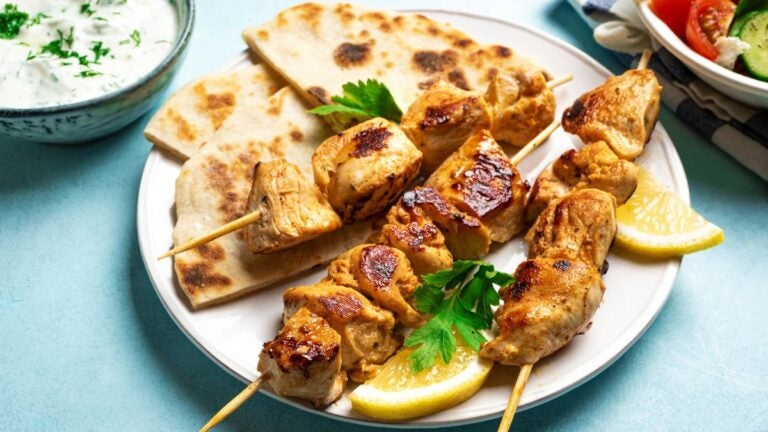
Souvlaki is authentic Greek food eaten regularly.
It is quick, affordable, and deeply tied to how locals eat. Small pieces of marinated meat are grilled on skewers, typically over charcoal, and served directly off the grill or wrapped in pita bread. According to Katarina, good souvlaki is about restraint, meaning the meat should lead, not the sauces.
Flavor notes to expect:
- Pork is the go-to option, with chicken coming in a close second.
- Marinades usually feature a blend of olive oil, lemon, garlic, and oregano.
- Char from the grill adds smoke without drying the meat.
- Pita wraps often include tomatoes, onion, tzatziki, and fries.
Locals judge souvlaki by texture first. It should be juicy, never chewy.
Katarina’s dietary note: Greece can be challenging for vegans, as many traditional dishes include meat or dairy.
3. Spanakopita
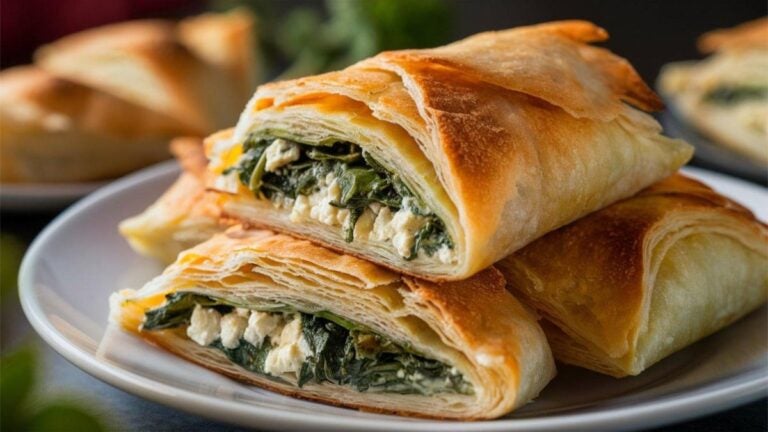
Spanakopita is one of the most common, traditional Greek dishes you’ll see in local bakeries.
This savory pie combines layers of crisp phyllo pastry with a filling of spinach, feta, and fresh herbs.
In Greece, it’s eaten throughout the day, often as a quick breakfast or a leisurely lunch. The flavor is balanced rather than heavy. Earthy greens meet the saltiness of feta, while dill and parsley add freshness. Good spanakopita should be light and crisp on the outside, never greasy.
In rural areas, you may find thicker, rustic versions that use a mix of wild greens instead of spinach.
4. Greek Salad (Horiatiki)
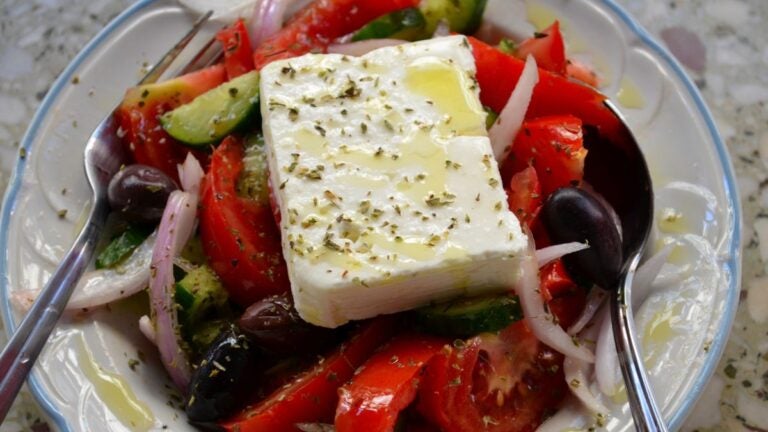
Horiatiki is one of the clearest expressions of traditional Greek foods: it’s simple, seasonal, and never includes lettuce.
According to Katarina, that detail matters because this is a summer dish built around ripe tomatoes. Chunky tomatoes, cucumbers, green peppers, red onion, olives, and a thick slab of feta are dressed only with olive oil, vinegar, and oregano.
She tells me locals expect to break the feta themselves and finish the bowl with bread, soaking up the tomato juices and oil. Be sure to take a bottle of olive oil home to recreate this, one of the best Greek souvenirs.
5. Tzatziki
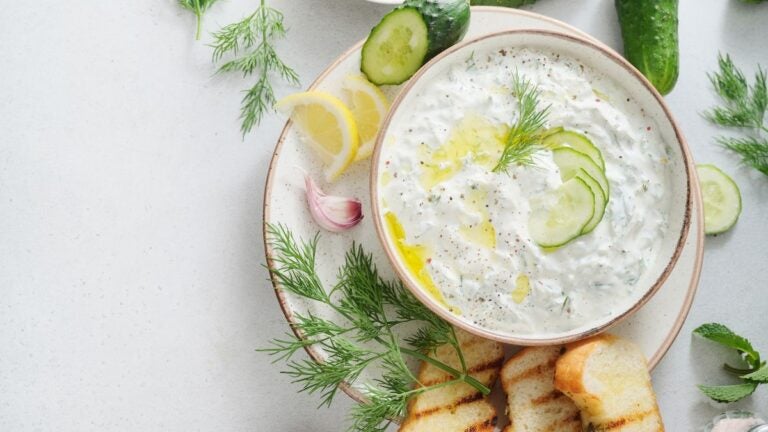
Tzatziki is a famous Greek food and a core part of meze culture.
It’s meant to cool rich foods and bring balance to the table. Katarina says good tzatziki should taste fresh, not heavy.
Flavor notes to expect:
- Creamy, tangy yogurt made from sheep’s or goat’s milk.
- Crisp cucumber that’s squeezed dry to retain its thick texture.
- Garlic that adds punch without overpowering the dip.
- Fresh dill or mint for a clean, herbal finish.
Tzatziki works best when shared, eaten slowly, and paired with grilled meat or vegetables.
6. Dolmades
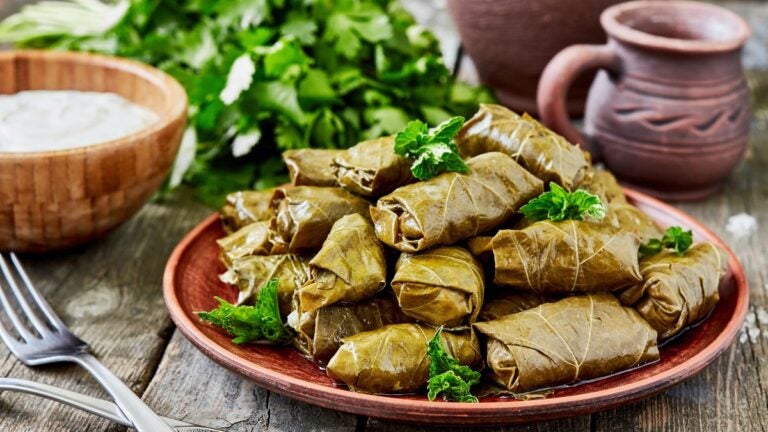
Dolmades are a classic example of popular food in Greece built around sharing.
Grape leaves are packed with a tasty combination of rice, herbs, and olive oil, then cooked slowly until they’re perfectly tender. It’s common for families to prepare them in big batches for special occasions, making the right texture and balance essential. The flavor is bright rather than heavy, led by dill, mint, and lemon. Vegetarian versions are standard and usually served at room temperature, while meat-filled dolmades are warmer and richer.
Katarina tells me good dolmades should taste fresh and citrusy, with the vine leaf adding structure, not bitterness.
Tipping in Greece: There are no fixed percentages. Locals usually round up the bill. It’s not required, but it’s appreciated.
7. Baklava
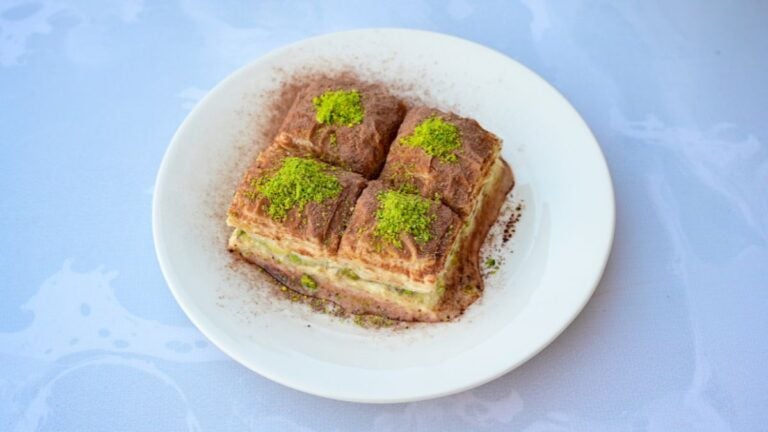
Baklava is one of the most recognizable Greek desserts, but in Greece, it’s tied to celebration rather than everyday eating.
It’s most often served at holidays, weddings, or large family gatherings. Greek baklava stands out for its use of honey instead of plain sugar syrup, which gives it a deeper, warmer sweetness. Layers of crisp phyllo surround a filling of walnuts or almonds, scented with cinnamon and cloves. Katarina says good baklava should be flaky, not soggy, and sweet without feeling heavy.
8. Gyros

Gyros is the most popular form of Greek street food and a daily habit for many locals. Thin slices of meat are cooked on a vertical spit, then shaved to order and wrapped in pita.
Katarina says the key difference in Greece is the meat itself.
Pork is the standard, not lamb, which gives gyros a richer flavor. The wrap is balanced rather than overloaded, with tzatziki, tomatoes, onions, and often fries.
The meat should be juicy, the pita warm, and the flavors clear, not drowned in sauce.
9. Saganaki
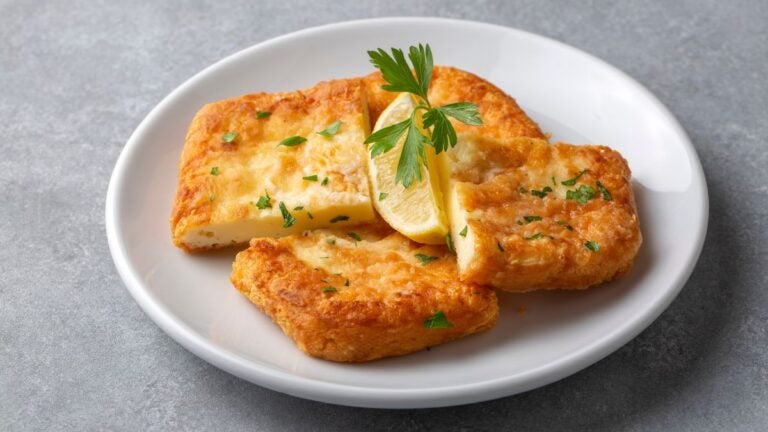
Saganaki is another classic meze dish, built for sharing, and is among the best Greek dishes.
Thick slices of cheese are pan-fried until crisp on the outside and soft inside, then finished with a squeeze of lemon.
According to Katarina, the lemon isn’t optional.
It cuts through the salt and richness, keeping the dish balanced. In Greece, saganaki is ordered as part of a table, not eaten alone.
Furthermore, the cheese matters more than the show.
She tells me that graviera or kefalotyri are common choices, each offering a distinct level of saltiness and bite. When done right, saganaki is rich, sharp, and surprisingly light.
10. Loukoumades

Loukoumades are one of the oldest desserts in Greek cuisine and remain a popular choice at festivals and street stalls. These small dough balls are fried until they reach a lovely crispness and then bathed in warm honey syrup. In Greece, they’re usually enjoyed hot and shared with others, often with a cup of coffee on the side. The sweetness comes from the honey topping, not the dough itself.
Flavor notes to expect:
- Crisp outside with a light, airy center.
- Honey that adds sweetness without heaviness.
- Cinnamon and walnuts for warmth and texture.
- Optional citrus or sesame for extra aroma.
Traditional versions stay simple, while modern shops experiment with chocolate or cream fillings.
Find Greece’s best tavernas on the move with Holafly
Finding popular foods in Greece often means venturing off the main streets, checking reviews, or following local tips. That’s where a Greece travel eSIM can come in handy.
Holafly’s eSIM store offers unlimited data plans with flexible validity periods from 1 to 90 days, 24/7 live chat customer support, and reliable 4G/5G coverage across Greece.
You can install the eSIM in minutes and stay connected without needing to swap SIM cards or worry about international roaming charges, so you can navigate hidden tavernas, check opening hours, or share your Greek food finds on the go.
Frequent travelers moving between islands or planning an extended stay can also try Holafly Plans, a pay-monthly global eSIM plan that offers unlimited data, unlimited hotspot, and a local number to receive SMS, plus other travel perks.

Peace of mind before you fly
Set up your eSIM before travel and get unlimited data on arrival.
Plans that may interest you


I am a Liverpool-based SEO content specialist with years of experience crafting content that connects. I combine my love for clear communication with a passion for travel and languages (currently diving into Japanese!). At Holafly, I'm here to help you understand everything about staying connected abroad, turning technical jargon into straightforward advice you can actually use.

