







 Language


 No results found
Easter in Greece: Traditions, celebrations, and travel tips
Easter in Greece falls on April 12, 2026, the country’s most important religious holiday, with Holy Week candlelit services, red eggs, and deep traditions.
Easter in Greece takes place on April 12 in 2026 and is one of the country’s most important religious celebrations. Rooted in Greek Orthodox tradition, it features Holy Week rituals, candlelit midnight services, community gatherings, red eggs, and local customs.
This guide explores important Holy Week dates, traditions and customs, local Easter food, and what makes Greece one of the best Easter holiday destinations.
When is Easter celebrated in Greece?
Easter in Greece is celebrated on April 12 in 2026, often one to several weeks later than in countries such as the United States and much of Europe. It follows the Greek Orthodox tradition, which uses a different calendar from the Western Christian tradition, where Easter falls on April 5 instead.
The celebration unfolds throughout Holy Week, with religious services, traditions, and community events building toward Easter weekend. For travelers, keep in mind that transport in Greece, business hours, and crowd levels can change during this holiday period.
How is Easter celebrated in Greece?
Easter in Greece spans a full week of church services, candlelit processions, traditional food, and large family gatherings that culminate in the midnight Resurrection and Easter Sunday feast.
It honors the Resurrection of Jesus Christ and moves from quiet mourning early in Holy Week to joyful celebration by Sunday.
Holy Week traditions
Holy Week leads up to Easter Sunday and continues the 40-day Greek Orthodox fast (Sarakosti) — a strict vegan-style diet that excludes meat, dairy, eggs, and fish with backbones, and begins on Clean Monday.
Churches hold evening services with candlelight and hymns, and many locals attend the main ones on Holy Thursday and Good Friday.
At home, families dye eggs red, bake sweet Easter bread such as tsoureki, and continue fasting until the midnight Resurrection. Streets grow noticeably quieter as the week moves toward Good Friday, before celebrations begin on Saturday night.

Good Friday processions
Good Friday is the most solemn day of Holy Week and commemorates the crucifixion of Jesus Christ. Church bells ring slowly, and many shops close or keep limited hours.
In the evening, each parish carries the Epitaphios, a flower-covered bier that represents Christ’s tomb, through the streets. Worshippers follow on foot, holding lit candles, often in silence. This procession is one of the most emotional and meaningful moments of Easter in Greece.

Holy Saturday and the midnight Resurrection service
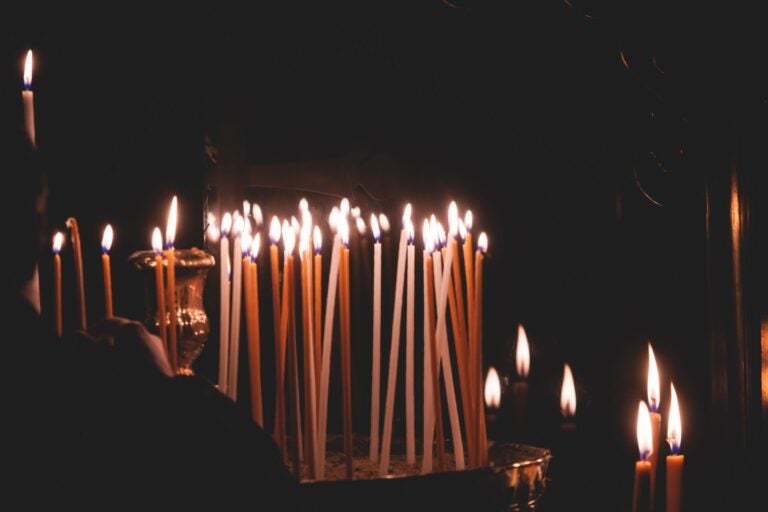
Holy Saturday builds toward the midnight announcement of the Resurrection. People gather in churches late at night, holding unlit candles. Just before midnight, the Holy Light is shared from person to person until the church fills with flame.
When midnight arrives, bells ring, fireworks often begin, and people greet one another with “Christ has risen” and the reply “Truly, he has risen.” Families then share a late meal that usually includes mageiritsa soup and red eggs used in the traditional egg-cracking game. Taverns and homes stay lively well into the night.
Easter Sunday celebrations
Easter Sunday shifts fully into celebration. Families gather outdoors to roast lamb on a spit, share wine, and eat together after the long Lenten fast. Tables fill with bread, salads, and local dishes, and the atmosphere is social and festive.
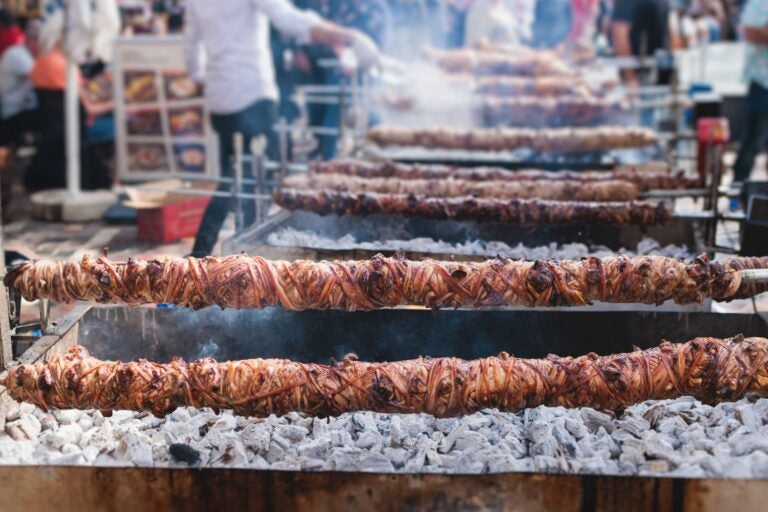
Many tavernas host large communal Easter meals that visitors can join, making the day especially welcoming for those traveling to Greece. Across the country, Easter Sunday marks the joyful close of Holy Week.
Traditional Greek Easter food and customs
During Lent, many Greeks avoid meat, dairy, and eggs, so meals center on simple seafood and plant-based dishes such as:
- Taramosalata – A creamy spread of fish roe, olive oil, and lemon, eaten with bread.
- Octopus – Grilled or stewed and dressed with olive oil and vinegar.
- Calamari – Fried or braised squid served as a shared small plate.
- Spinach pie without cheese – A fasting version of spanakopita made with herbs and greens only.
- Lagana – Sesame-topped flatbread baked especially for the Lenten period.
- Toursi – Pickled vegetables that add a sharp, salty contrast to meals.
- Semolina halva – A sweet dessert made with oil, nuts, and honey instead of butter.
After the midnight Resurrection, fasting ends and traditional Easter food appears:
- Mageiritsa – A rich soup eaten after the late-night church service to break the fast.
- Red-dyed eggs – Cracked together in a game that symbolizes new life and Christ’s Resurrection.
- Tsoureki – Sweet braided Easter bread, often flavored with orange or spices.
- Roast lamb – The centerpiece of Easter Sunday meals, cooked on a spit and shared outdoors.
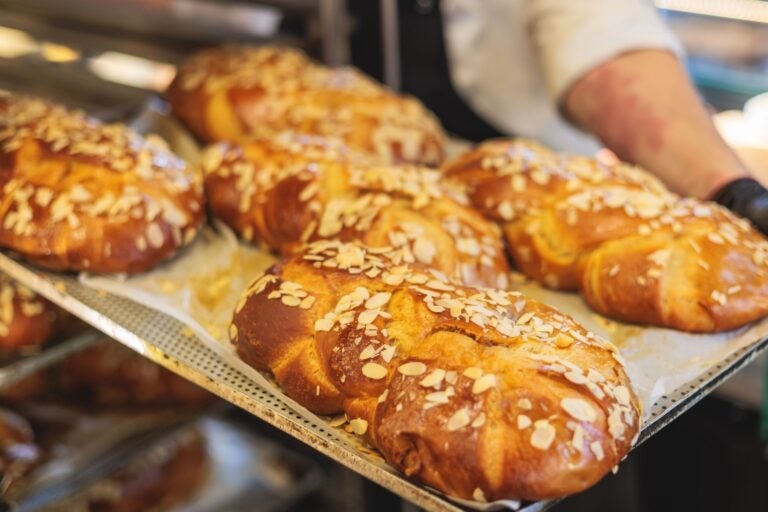
Food is closely tied to custom. Families cook together, exchange greetings, and share long meals with relatives, neighbors, and visitors. These traditions highlight the strong sense of community and hospitality that defines Easter in Greece.
Tip! Check out our article on the cost of living in Greece to see typical prices for food, transport, and everyday expenses.
Where to experience Easter in Greece
Easter traditions vary across Greece, and the atmosphere changes from historic city churches to close-knit island and village celebrations. Here are some of the top destinations in Greece for Easter.
Easter in Athens
Athens offers a quieter but still meaningful Easter experience. Many residents leave the capital to celebrate with family in their hometowns, so the city often feels calm and less crowded during the main holiday period.
Visitors can attend Holy Week services in historic churches across the city and experience the midnight Resurrection in central squares filled with candlelight. Easter Sunday meals are available in traditional tavernas that remain open.
Easter on the Greek islands
Greek islands host some of the country’s most distinctive Easter customs. Corfu is famous for the Botides tradition on Holy Saturday, when locals throw large clay pots from balconies to mark the Resurrection.
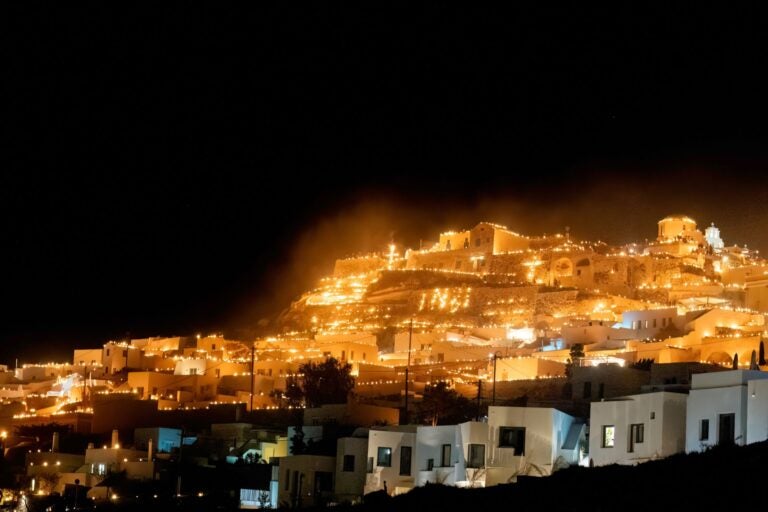
On Chios, rival churches stage the dramatic “rocket war,” filling the night sky with fireworks. Patmos offers deeply spiritual ceremonies linked to its historic monasteries, while Santorini combines candlelit processions with striking volcanic scenery.
These island celebrations blend religion, spectacle, and strong community participation, making them some of the most memorable places to experience Easter in Greece.
Easter in villages and small towns
Small towns and villages often preserve the most traditional form of Greek Easter. Celebrations center on the local church, where the entire community joins the Good Friday procession, the midnight Resurrection, and the shared Easter Sunday feast.
Places such as Leonidio release glowing hot-air balloons into the night sky, while historic towns like Monemvasia or villages in Pelion host intimate candlelit ceremonies followed by communal meals. These quieter settings highlight family, hospitality, and long-standing customs that visitors rarely see in larger cities.
Practical travel tips for Easter in Greece
Here are some things to keep in mind when celebrating Easter in Greece:
- Book flights, ferries, and hotels early, as they fill quickly during the holiday period.
- Include a candle on your packing list for Greece if you plan to attend the Holy Saturday midnight Resurrection service.
- Make restaurant reservations early for Easter Sunday meals.
- Expect many businesses to close during Holy Week and almost everything to shut on Easter Monday.
- Dress modestly and behave respectfully during religious events and processions.
- Allow flexibility in your plans as schedules and celebrations may change.
- Use a Greece SIM card or travel eSIM to stay connected wherever you are in the country.
Stay connected during Easter in Greece with Holafly
Don’t lose connection during Easter in Greece with Holafly’s eSIM for Greece, and get unlimited data, fast and reliable internet up to 5G coverage, flexible validity periods from 1 to 90 days, daily hotspot sharing, and 24/7 chat support.

Get an unlimited data eSIM
Use code MYESIMNOW5 for 5% off at checkout
Plans that may interest you


哈囉我是來自台灣的 Wen,平常最喜歡旅遊,也喜歡將旅遊的種種化成文字跟大家分享,希望大家能在我的文章中找到有用的資訊,加上 Holafly 的 eSIM,讓你的旅程更美好!✈️✈️✈️ Hi! I'm Wen, a passionate content writer and travel enthusiast from Taiwan. I transform my wanderlust adventures into engaging stories and practical guides, helping fellow travelers make the most of their journeys.Through my articles, I strive to provide travel tips while introducing how our eSIM technology can enhance your travel experience - keeping you connected wherever your adventures take you!

