




 Language


 No results found
Best time to travel to Singapore from Australia
Best time to travel to Singapore from Australia is late Feb–early Apr. Discover weather, prices, and travel tips for your Singapore trip.
Singapore is a year-round destination, but the best time to travel to Singapore from Australia is generally late February to early April, when rainfall is lower, humidity is more manageable, and peak holiday crowds have eased.
Because Singapore sits just north of the equator, it doesn’t have four distinct seasons like Australia. Temperatures stay fairly consistent year-round (usually around 27–32°C), so the main differences month to month come down to rainfall patterns, humidity, and seasonal demand.
Check out this guide that breaks down the best months to go based on weather, crowds, prices, and key events, so you can choose the timing that fits your travel style.

An eSIM you can rely on
Join over 10 million Holafly customers and get connected with our trusted, global services.
When is the best time to travel to Singapore from Australia?
For many Australian travellers, late February to early April is considered the most comfortable overall time to visit Singapore.
During these months, rainfall is generally lower than at the end of the year, humidity is manageable, and major holiday crowds have eased. It’s a good balance of pleasant weather, availability, and value.
Besides the best overall balance time to visit, Singapore is a true year-round destination. Instead of a perfect time period to visit, every season has its charm. Some travellers prefer quieter months with fewer tourists, while others plan around festivals or shopping events. Understanding how the weather changes by month makes it easier to choose the best time to visit Singapore based on your priorities.
Singapore weather overview by months
Singapore has two broad climate patterns rather than traditional seasons:
- Drier period: March to August
- Wetter period: September to February
Rain can occur at any time of year, though it’s heavy showers in the late afternoon or evening, it’s often quick and short. Full-day rainouts are uncommon, even during wetter months.
Below is a month-by-month overview to help you plan your trip to Singapore with confidence.
| Month | Weather | Notes |
|---|---|---|
| January | Hot, humid, and frequent rain | Peak monsoon showers, high humidity, and Lunar New Year preparations |
| Feburary | Hot and less rain | Drier than January, festive atmosphere, Lunar New Year events |
| March | Warm and dry | Hotter days begin, lower rainfall, great for outdoor sightseeing |
| April | Hot and dry | One of the driest months, high heat, ideal for city walks and gardens |
| May | Hot and dry | Very warm, minimal rain, shoulder season before peak summer crowds |
| June | Hot and dry | Stable weather, moderate humidity, good balance of crowds and prices |
| July | Hot and dry | Hot and dry, Great Singapore Sale |
| August | Hot and occasional rain | National Day celebrations, warm evenings, outdoor events and fireworks |
| September | Warm and wetter | Start of wetter period, fewer tourists, better hotel availability |
| October | Warm and wetter | Intermittent rain, quieter travel month, good for museums and dining |
| November | Humid and rainy | Higher rainfall, lush greenery, fewer crowds, cultural activities |
| December | Hot and rainy | Festive season, Christmas events, short heavy showers, peak travel |
Best time to travel to Singapore based on seasons & activities
While Singapore doesn’t have traditional seasons, different times of year are better suited to certain activities and travel styles. From outdoor sightseeing and island hopping to cultural festivals and indoor attractions, the best time to travel to Singapore from Australia often depends on what you want to experience most during your trip.
March to August: best time for outdoor sightseeing and attractions
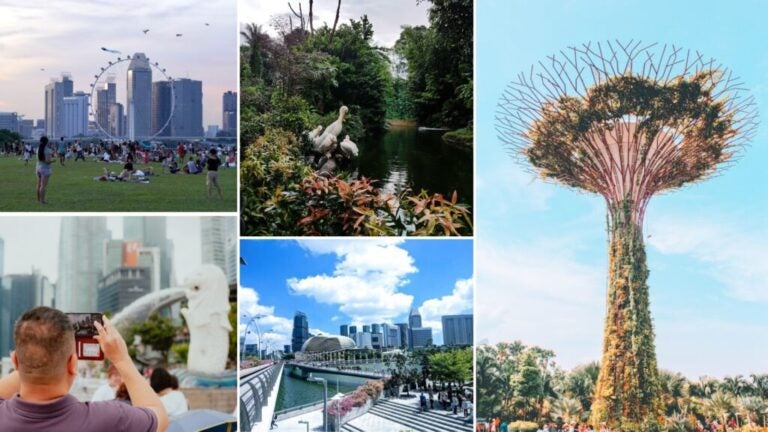
This period is ideal for travellers who want to spend more time outdoors. Rainfall is lower, and sunny days make it easier to explore neighbourhoods, parks, and attractions like the Singapore Zoo or Gardens by the Bay.
It’s also a popular time to explore nearby escapes, such as the islands near Singapore, or to pack in top attractions from a complete things to do in Singapore guide. The downside is that June and July coincide with worldwide school holidays, which can increase flight and hotel rates.
September to November: best time for quieter experiences
If you don’t mind brief tropical showers, September to November can be a great value window. Tourist numbers drop, flights are often cheaper, and popular attractions are less crowded.
Rain usually comes in short bursts rather than lasting all day, making it easy to plan activities around it. This period suits travellers who prefer a slower pace, indoor attractions, or flexible itineraries.
December to February: best time for festivals and cultural experiences
This period is Singapore’s most festive time of year. Events like Christmas celebrations, Lunar New Year, and year-end sales bring energy to the city.
However, it’s also the wettest and busiest period. Hotel prices rise, and popular areas can feel crowded. Travellers planning a trip during this time should book early and prepare for humidity.
Practical travel tips for Australians visiting Singapore
- Flights: Direct flights operate from Sydney, Melbourne, Brisbane, Perth, and Adelaide, with flight times around 7–8 hours.
- Booking timing: Lock in accommodation early if travelling during December, January, or Australian school holidays to avoid higher accommodation price.
- Costs: Singapore can be expensive, so budgeting ahead helps balance dining, attractions, and transport.
- Visas: Australians don’t need a visa for short stays, but it’s still strongly recommended to review the visa-free countries Australia guidance before departure.
- Packing: Lightweight clothing is essential year-round. Reviewing an international travel packing list helps cover essentials for humid weather.
- Power adapters: Singapore plug type uses Type G plugs, so make sure you bring a correct adapter to avoid last-minute hassles.
- Connectivity: Traditional roaming can be costly. If you’re unfamiliar with data roaming, comparing the best international roaming plans Australia can help estimate usage and costs.
- Local SIMs: Physical SIMs are available for short-term tourists, but many travellers now prefer a digital option over a traditional Singapore SIM card for convenience.
Enjoy unlimited data in Singapore with Holafly
Holafly offers a travel eSIM designed for international trips, including Singapore. With the Holafly eSIM for Singapore, you get unlimited data, quick and simple setup, and no need to swap physical SIM cards. You can check supported destinations through Holafly coverage and choose a plan before you fly.
Holafly provides single-destination eSIMs for over 200 locations, along with subscription option, Holafly Plans, that allow you to access data worldwide. For travellers visiting multiple countries, this flexibility makes staying connected simple and consistent.
Get an unlimited data eSIM
Use code MYESIMNOW5 for 5% off at checkout
Plans that may interest you


哈囉我是來自台灣的 Wen,平常最喜歡旅遊,也喜歡將旅遊的種種化成文字跟大家分享,希望大家能在我的文章中找到有用的資訊,加上 Holafly 的 eSIM,讓你的旅程更美好!✈️✈️✈️ Hi! I'm Wen, a passionate content writer and travel enthusiast from Taiwan. I transform my wanderlust adventures into engaging stories and practical guides, helping fellow travelers make the most of their journeys.Through my articles, I strive to provide travel tips while introducing how our eSIM technology can enhance your travel experience - keeping you connected wherever your adventures take you!