Language


 No results found
Always On: How much is 1 GB?
Your extra 1 GB from Always On can go a long way. Here’s exactly what you can do with it while traveling.

Running out of data while traveling is super frustrating. It might sound silly now. But when it does happen, even the smallest task suddenly feels difficult. That’s where having an extra 1 GB makes a real difference.
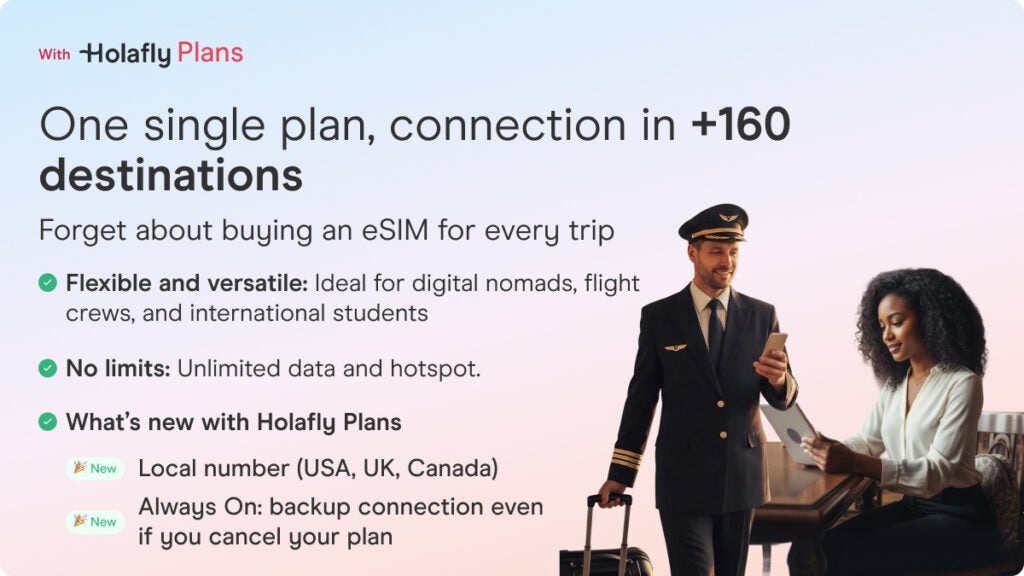
If you’re using Holafly, Always On activates when you pause or cancel your plan, as long as the eSIM stays installed on your phone. It gives you 1 GB of free data each month. That’s just enough to handle essentials like getting directions, booking a cab, or reactivating your plan when you need it.
So, how much is 1 GB really?
Simply put, 1 GB = 1,024 MB, or roughly a billion bytes of data. But what matters is how long does 1 GB data last, and what can you actually do with it.
And that’s what we’re breaking down in this guide.
How much is 1 GB of data?
If you’re used to unlimited plans, 1 GB might not sound like much. But when you look at how different apps consume data, you’ll see it can stretch surprisingly far.
Ok, to simplify this, let’s think in actions instead of numbers. And then let’s break it down app by app.
WhatsApp: How much data do I need?
For me personally, when I’m traveling, WhatsApp becomes my main line of communication. And for many travelers, it’s how they confirm bookings, check in with family, coordinate plans with travel buddies, or message local hosts and guides.
- Text messages: Almost negligible. 1-2 KB per message. So you can send thousands using less than 10 MB.
- Voice notes: Around 300-500 KB per minute.
- Sending a photo: Roughly 100-300 KB per image, depending on the quality. HD photos might use up to 2 MB per image.
- Video calls: Around 3-5 MB per minute.
So if you’re wondering how many photos is 1 GB, it’s roughly 3,500 to 10,500 non-HD photos, and roughly 512 HD images.
Email: How much data do I need?
From work updates and flight confirmations to bookings and last-minute itineraries, your inbox is where all the important details usually live.
- Simple email (text only): About 3-20 KB. An 80-word text email is about 10 KB.
- Email with attachments: Anywhere from 500 KB to 10+ MB. Note that a 1 MB file roughly consumes 1.33 MB to 1.5 MB of data.
Also note that most emails have a limit. For example, the default email size limit is 10 MB for Outlook. And, for Gmail, it’s 25 MB.

Google Maps: How much data do I need?
One of the most important tools while traveling, Google Maps is surprisingly light on data.
- Single route lookup: Around 500 KB to 1 MB.
- 1 hour of navigation: Around 5-10 MB.
So if you’re wondering how long does 1 GB data last, it can give you around 100 to 200 hours of navigation.
Pro tip: Download offline maps whenever possible to save even more data.
Social media: How much data do I need?
If you’re a content creator/influencer, this one is probably piquing your curiosity. But even if you’re not living that lifestyle, social media tends to sneak into your travel routine. It’s when you look up places to visit, save recommendations, or share moments from your trip. Even if you’re not actively posting, just browsing can still use up data.
- Instagram scrolling: Around 1-3 MB per minute.
- Posting a photo: Around 2-4 MB.
- Posting a video: 20-70+ MB. The longer your video, the more data it’ll use.
- TikTok scrolling: About 4 MB for a 15-second video.
- Facebook browsing: Around 1-3 MB per minute.
Spotify: How much data do I need?
Streaming music on Spotify falls somewhere in the middle when it comes to data usage. It’s not as light as messaging or maps, but it’s also not as heavy as video. On average, it uses between 10-150 MB of data per hour for streaming, depending on the audio quality settings.
- Low quality: Around 10-20 MB per hour.
- Normal quality: Around 40 MB per hour.
- High quality: Around 70-85 MB per hour.
- Very high quality: Around 150 MB per hour.

YouTube: How much data do I need?
Video is the biggest data consumer. And YouTube while traveling usually happens when you have some downtime. Or for watching travel guides, or restaurant reviews. Here’s how much data YouTube uses based on the quality of streaming:
- 144p: 80-90 MB per hour.
- 240p: 100-250 MB per hour.
- 360p: 300-450 MB per hour.
- 480p: 500-600 MB per hour.
- 720p: 1.2-1.9 GB per hour.
- 1080p: 2-3 GB per hour.
- 2K and 4K: 4-16 GB per hour.
Apps: How much data do I need?
Most apps that we use everyday are relatively light unless they involve video or large file transfers.
- Audio recording: A 1-hour audio recording can consume 30-150 MB per hour.
- Video Recording: A 1-hour video recording can use roughly 1-3 GB per hour.
- Note-taking apps: 10-20 MB per hour is used for typing, editing, and syncing text notes.
- ChatGPT or AI tools: Short prompts use around 5-10 MB per hour, and longer discussions with frequent prompts and replies use 50-100 MB per hour.
- General browsing: A single search query uses around 1-2 KB.
What can you do with 1 GB while traveling?
Quick summary table
| Action | Data per action | Actions in 1 GB |
| WhatsApp text | 1-2 KB | Thousands |
| WhatsApp video calls | 3-5 MB/min | ~300 minutes |
| Email (no attachment) | 3-20 KB | 30,000+ emails |
| Google Maps navigation | 5-10 MB/hour | 100-200 hours |
| Instagram scrolling | 1-3 MB/min | 6-15 hours |
| Spotify (normal quality) | 40 MB/hour | ~25 hours |
| YouTube (480p) | 500-600 MB/hour | ~2 hours |
By now, you’ve seen the numbers. So that extra 1 GB from Always On is not for doing everything. It’s for browsing things that matter. It gives you enough to message loved ones, check directions in a new city, confirm bookings or tickets, send important emails, book a ride, or even open the Holafly app and get more data instantly. It’s enough to stay connected.