Language


 No results found
Cost of living in New York City: Food, transport, and more
Curious about the cost of living in New York City? Get a clear picture of the main expenses so you can plan your budget.

Living in the Big Apple is a dream for many digital nomads looking to work remotely for a while, students who’ve earned a spot at one of its prestigious universities, entrepreneurs, freelancers, or anyone wanting to explore the city at their own pace. The cost of living in New York City is among the highest in the world, so understanding all the factors that affect your budget will help you get a realistic estimate.
We’ve put together a 2026 guide to give you a clear picture of the cost of living in New York City. From hotels, apartments, and co-living spaces to groceries, restaurants, transportation, gas, healthcare, and internet, we cover all the essentials. We also highlight the top tourist activities so you can plan your trip and your budget accordingly.
Average cost of accommodation in New York
The biggest factor driving New York City’s high cost of living is housing. The city is made up of five boroughs: Manhattan, Brooklyn, Queens, the Bronx, and Staten Island. Prices vary depending on where you choose to stay, as each borough has its own lifestyle and range of services that influence the rates. Here are a few examples:
- Hotel: You can find hotels starting at $93 in the Lower East Side, such as the CityNest Hotel, or starting at $122 at the Eurostars Wall Street in Manhattan, per night.
- Apartment: From $3,757 on the Upper West Side for a one-bedroom apartment or $4,218 in Midtown West for a two-bedroom apartment.
- Coliving: Located in Manhattan and Brooklyn, Cohabs is a coliving accommodation starting at $2,185 per month with a private room and services included.
- Hostel: In Chinatown, you can stay at the U.S. Pacific Hotel from $2,818 per month in a single room, or from $2,359 at Kama Central Park in the Upper West Side area in a bunk bed in a shared room.

Cost of food in New York
Food is a major part of the cost of living in New York City, and expenses can vary widely depending on whether you shop at supermarkets or eat out at local restaurants. Below is a sample shopping list with approximate prices from popular stores in the city, such as Trader Joe’s and Key Food.
- Milk (1 L): $1.36
- White bread (1 loaf, 500 g): $4.88
- White rice (1 kg): $8.37
- Eggs (12): $7.20
- Chicken (breast, 1 kg): $15.27
- Beef (1 kg): $19.85
- Apples (1 kg): $6.88
- Bananas (1 kg): $2.44
- Oranges (1 kg): $5.76
If you choose to eat out, you can often find more affordable options in neighborhoods outside the main tourist areas, where locals usually dine. For example, spots like Ess-a-Bagel, The Halal Guys in Manhattan, or Joe’s Pizza let you try some of the city’s classic dishes:
| Type of food | Dish | Price |
| Breakfast | Bagel with cream cheese and coffee. | $12 |
| Lunch | Chicken with rice and salad. | $14 |
| Dinner | Pizza slice with drink and salad. | $20 |
Transportation prices in New York City
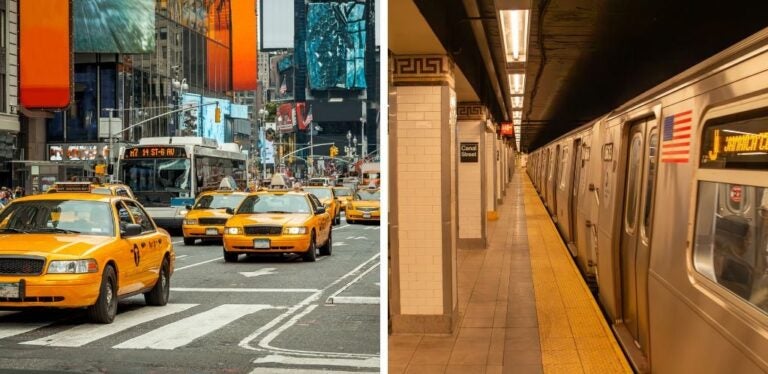
If you are living in New York City, the easiest way to get around is by public transport, whether by taxi, bus, subway, or rental bike. Transportation costs are generally higher here than in other major cities like London or Madrid. Here is a look at what you can expect to pay for each option.
How public transportation works
New York City has one of the largest and busiest public transportation networks in the world, designed to connect a wide range of neighborhoods and daily commutes within the city and between its boroughs. The subway is the most popular option for both tourists and locals, running 24 hours a day and serving more than 470 stations.
- Subway or local bus: Around $3.00 per trip or $3.50 using OMNY (contactless payment).
- Express bus: $7.25 per trip.
- NYC Ferry: $4.50.
- AirTrain (JFK): $8.50 per trip.
Taxi and Uber or Lyft
A more convenient and often faster option is ride-hailing services like Uber and Lyft. For example, a short five-kilometer trip in Manhattan might cost around $20 by taxi and about $18 with UberX. The difference becomes more noticeable on longer trips, such as rides to the airport, where taxi fares tend to be higher.
Shared bicycles
Riding a bike is a common way for New Yorkers to get around, often using the Citi Bike system. The city has expanded its bike lanes and made most of them safer by separating them from traffic with barriers or curbs. Some lanes still share the road with cars, so you need to stay careful. Here is an overview of the usual rates.
- Annual membership: $239
- Per-minute usage: $0.27–0.41/min
Private vehicle
Finally, if you need to commute regularly to other areas for work and think you need your own car, you can find models like the Honda Civic, Mazda 3, or Hyundai Elantra starting around $25,000. When considering the cost of owning a car in New York City, you also need to factor in insurance and fuel.
- Comprehensive insurance: From $120 per month.
- Gasoline: $0.96 per liter.
- Electricity: Around $0.27 per kWh.
Healthcare costs
As we continue looking at the cost of living in New York City, healthcare is a major consideration, especially if you don’t have insurance. A medical plan is essential in a city and country without free universal healthcare. For instance, coverage with providers like IMG Global Medical Insurance can start at around $150 a month. Here’s a guide to what some common medical services typically cost.
| Service | Approximate cost (USD) |
| Hospitalization | $2,000–5,000 |
| General medical consultation | $150–300 |
| Consultation with a specialist | $200–500 |
| X-ray | $100–1,000 |
| Emergency room (general visit) | $100–300 |
| Complete blood test | $100–500 |
| Major surgery | $11,000 |
| Prescription drugs | $50–500 |

Internet and calling plan prices
If you plan to live in New York City while working remotely as a digital nomad or studying, having a reliable internet connection is essential, so this is another expense to factor into the cost of living. The city has advanced technology and a competitive market with plenty of options. Some of the most popular providers include:
- Verizon Fios: Fiber, up to 1 Gbps starting at around $45 with unlimited data.
- T-Mobile Home Internet: Residential 5G internet up to 72–245 Mbps for around $50 per month.
- Spectrum: Up to 500 Mbps starting at $50/month with unlimited data.
- Mint Mobile: Starting at around $30/month per line with 35 GB of data, unlimited calls, and unlimited texts.
- T-Mobile Go5G Next: Typically $50 per line with unlimited data.
On the other hand, if you don’t want a local plan because you plan to travel frequently, you can opt for Holafly’s monthly plans. They offer 25 GB or unlimited data and allow you to connect multiple devices at the same time, starting at $49.90 a month with no long-term commitment. Plus, you can use the same eSIM and plan in over 160 destinations!
Important: If you are a frequent traveler and want to stay connected without worrying about expensive roaming or looking for a new SIM at every destination, Holafly’s subscription plans are for you. With a single eSIM, enjoy internet in more than 160 countries for a fixed price and no surprises on your bill. Travel without limits and connect easily and securely! 🚀🌍

Cost of leisure activities in New York
Can you imagine all the things you can do in New York City? Living here also means setting aside part of your budget to enjoy the city’s cultural, social, and adventurous offerings. When it comes to the cost of living in New York, entertainment is another area you’ll want to factor in.
- Going to the movies: Around $15–20 per person, depending on the theater and showtime.
- Museum admission: For museums such as MoMA and the American Museum of Natural History, admission starts at $23.
- Broadway show: Usually costs between $50–200.
- Sports event: Such as an NBA or NHL game, from $30–190.
- Social event at a club: Many tickets at bars or clubs range from $20–50.
- Streaming platforms: From $7.99 with Netflix, $10.99 with Disney Plus, or $8.99 with Prime Video.
- Statue of Liberty + Ellis Island (ferry + admission): Approx. $25.50.
- 9/11 Memorial & Museum: Around $33.
- Empire State Building (observatory): From $44.

How much does it cost to live in New York?
Figuring out a final budget for living in New York City will largely depend on where you live, your spending habits, and your lifestyle. For example, prices in Manhattan are generally higher than in other boroughs like Brooklyn, the Bronx, or Queens.
If you are traveling alone and staying in a small studio or single room, you can expect to spend around $4,300 to $6,800 on rent, transportation, food, and entertainment. For a couple, the total budget is usually between $7,000 and $9,000 with shared expenses, and for a family of four, it starts at about $12,000.
In short, New York City is probably one of the most expensive cities in the world to live in, especially when it comes to housing and entertainment. At the same time, it offers a wealth of cultural and leisure activities, along with top-notch technology for remote work that is hard to match anywhere else.
Frequently asked questions about the cost of living in New York
You can live on an average salary if you live in more affordable areas such as Queens or the Bronx, share accommodation, and use public transportation.
Yes, the city has a network of subways, buses, and trains that connect the city to any district, town, and state.
Eating out is more expensive than in other cities in the country, but if you shop at supermarkets and cook at home, you can significantly reduce your expenses.
Housing is the factor that most increases the cost of living in New York, especially in Manhattan.
Plans that may interest you


Hi! I'm a Spanish-English translator working with Holafly, helping bring travel content to life for curious travelers. As a digital nomad with a passion for exploring, I'm always adding new spots to my bucket list. If you love to travel like me, stick around because you're in the right place to find inspiration for your next trip! ✈️🌍