Language


 No results found
Cost of living in Munich: Food, transport, and more
Would you like to know about the cost of living in Munich? Here are the services and prices in one of Germany's most expensive cities.

This German city is known for offering one of the best qualities of life in the country, but Munich also has one of the highest costs of living in Germany. If you’re thinking about living in Bavaria’s capital, you can benefit from competitive salaries, excellent tech infrastructure for remote work as a digital nomad, and efficient public services. All of this, however, is reflected in higher prices for rent, groceries, transport, and healthcare.
In this article, you’ll find out what it costs to live in Munich in 2026, with up to date prices to help you see if the city fits your budget. We’ll cover the main expenses mentioned earlier, as well as leisure activities the city offers and the best ways to get reliable internet.
Average cost of staying in Munich
The biggest monthly expense in Munich, and one that has a major impact on the city’s cost of living, is housing. High demand and limited supply have pushed prices up, making them much higher than in other German cities like Berlin or Hamburg. Here’s a look at some mid range options and different types of accommodation:
- Hotels: On Booking.com, you can stay in a double room at the B&B Hotel München Olympiapark starting at $82 per night, or in a single room at the Hotel Am Markt in the city center from $164 per night.
- Hostels: About a kilometer from the city center is Hotel Pension am Hauptbahnhof, offering single rooms from $73per night. A bit farther out, Hotel Giesing has rooms with shared bathrooms starting at $52.
- Apartments: On platforms like Wunderflats, Homelike, or Mr. Lodge, you can find studios in the city center starting at $1,422 per month, or one bedroom apartments for around $2,133 monthly.
- Coliving: You can share a living space and split costs with other residents at The Base Coliving, with private apartments starting at $1,516 per month, or at Life X, where a private room costs around $1,309 monthly.
- Airbnb: You can find rooms in the city center from $69 per night or entire accommodations in Bogenhausen from $62.
Food costs
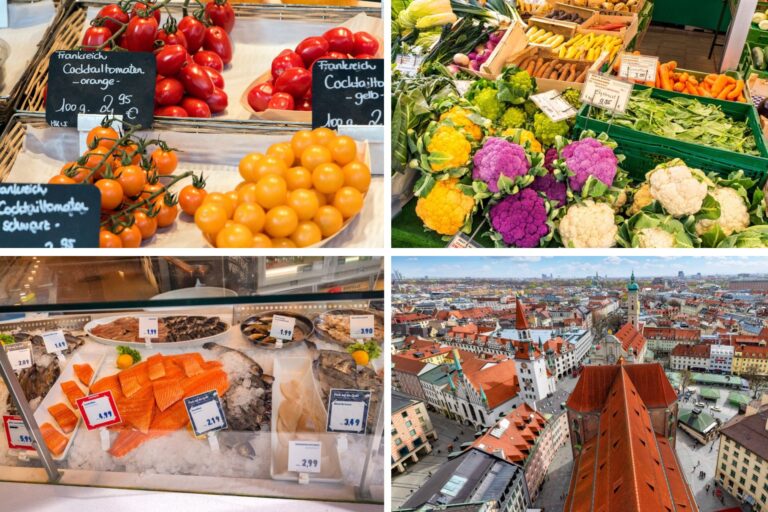
Food in Munich tends to be more expensive than in other cities, but the quality is top notch. Common supermarket chains include Edeka, Rewe, Lidl, and Aldi, and for fresh fruits and vegetables you can also visit the traditional Viktualienmarkt. Here’s a rough idea of what typical groceries cost:
- Pasta (500 g): $1.72
- Eggs (dozen): $4.09
- Milk (1 liter): $1.60
- Chicken breast (1 kg): $11.26
- Beef (1 kg): $17.78
- Chocolate (100 g): $1.96
- Ground coffee (250 g): $5.27
If you want to try traditional Bavarian cuisine, you can visit one of the city’s famous local restaurants, like Hofbräuhaus München on Platzl 9 in the city center, a true landmark for both locals and visitors. Here’s what you might spend if you eat out for a full day:
| Type of meal | Dish | Price |
| Breakfast | White beef sausages with sweet mustard | $9.50 |
| Lunch | Hot meat pie served with Bavarian potato salad | $18 |
| Dinner | German handmade pasta with melted cheese and fried onions | $18 |
Transportation prices in Munich
If you’re getting around Munich often, whether for work, study, or sightseeing, you’ll find that transport costs are above the European average. Public transit and taxis are pricier than in cities like Madrid, Paris, or London, but the system makes up for it with excellent connectivity, efficiency, and punctuality.
Public transportation
Munich’s MVV public transport network reaches almost the entire city, so many residents rely on it for getting to work or school. The system is very punctual, so delays are uncommon, unlike in other cities with cheaper fares. Here’s an overview of the rates:
- Single ticket (U-Bahn/S-Bahn/tram/bus): Approximately $4.38 per trip within the city.
- Monthly transportation pass: Between $65 and $80, depending on the zones included.
Taxi, Uber, and Bolt
In Munich, taking a taxi can be quite expensive, so people usually use them for emergencies or for a more convenient trip to the airport. Taxis charge around $3 per kilometer, with a starting fare of $6. Services like Uber and Bolt are also available in the city and tend to be 30 to 40% cheaper than a traditional taxi.
Bicycle rental
Cycling in Munich is popular among both locals and visitors, especially for short trips around the city center and green areas. The bike lanes are clearly marked and safe, and there are several private rental companies offering bikes for around $29 a full day. The city also has a public system called Call a Bike, with rates starting at $8.30 per day or $5.81 per year.
Own vehicle
If you’re staying in the city for a long time and plan to travel a lot each day, buying a car might be worth considering. In that case, your monthly living costs in Munich will also include expenses like fuel and mandatory insurance. Here are a few examples:
- Volkswagen Golf (compact): Approximate price $32,000-34,367.
- Gasoline (1 liter): Approx. $1.98-2.19.
- Electric recharge: Around $0.58/kWh at public charging stations.
- Compulsory insurance (civil liability): From approximately $296-355 per year.
- Partial or comprehensive insurance: Can increase the total cost to $592-1,185 per year.
Healthcare costs
Healthcare in Germany isn’t free like in some other European countries such as Spain, since you pay monthly contributions to an insurance plan that covers medical costs. This means your monthly living expenses in Munich also need to include this cost.
- Public health insurance (GKV): It is mandatory for most salaried workers, students, and anyone earning under $91,725 per year. This insurance provides full coverage, including doctor visits, hospital stays, and medical treatments, with contributions of about 14.6% of your salary.
- Private health insurance: For freelancers, digital nomads, self employed professionals, high income earners, and international students, with monthly premiums starting at $177.
If you don’t have any health insurance, medical costs can be very high. To prevent this, the German government requires all residents and foreigners to have health insurance. This table shows what a doctor visit or a hospital stay would cost without coverage:
| Service | Approximate cost |
| Hospitalization | $474–1,185 |
| General medical consultation | $65–130 |
| Consultation with a specialist | $130–260 |
| Emergency room (general visit) | $177–355 |
| Major surgery | $7,110–17,775 |
| Medication (ibuprofen or paracetamol) | $4.15–7.70 |
Internet and call plan prices
The main internet providers offer fiber optic or broadband connections, fast enough for remote work, online study, or streaming. The top providers are Deutsche Telekom, Vodafone, and O2, with approximate rates as follows:
- 20-40 GB plan: With unlimited calls from $23-35 per month.
- 6-12 GB plans: From $10-17 per month.
- Unlimited data plans: From $35-47 per month
- 50 Mbps fiber plan: Approximately $35.
- 250 Mbps fiber plan: Around $53.32.
If you need a reliable, fast, and secure connection, Holafly’s monthly plans offer 5G coverage across the city, with options for 25 GB or unlimited data and the ability to connect two devices at the same time, starting at $49.90 per month with no contract. You can also use the same plan in over 160 destinations without changing your eSIM or rate. For shorter trips, Holafly’s Munich eSIM is the best choice, giving you unlimited data from just $3.90 per day.
Important: If you are a frequent traveler and want to stay connected without worrying about expensive roaming or looking for a new SIM at every destination, Holafly’s subscription plans are for you. With a single eSIM, enjoy internet in more than 160 countries for a fixed price and no surprises on your bill. Travel without limits and connect easily and securely! 🚀🌍
Cost of leisure activities in Munich
Lastly, when calculating the cost of living in Munich, it’s important to include what you’ll spend on entertainment and leisure. While the city tends to be more expensive than the rest of Germany, there are still plenty of affordable or free options depending on what you enjoy. Here are some examples of typical activity costs:
- Movie ticket: Around $16.47 at Cinema Muenchen.
- Theater: Between $88 and $177, depending on the show.
- Hellabrunn Zoo: Admission to Munich Zoo costs from $25 for adults and $22 for students.
- Deutsches Museum: Admission to the city museum for adults costs around $10, and on Sundays, museums usually charge $1.20.
- Sea Life Munich: If you want to visit this large aquarium, tickets start at $26.
- Neuschwanstein Castle: A trip to the famous castle that inspired Walt Disney can cost from $88.
- Streaming platforms: Such as Netflix from $8.28 per month or Disney for $10.65.
- Visiting churches: You can enter churches such as Asamkirche, Heilig-Geist-Kirche, or Theatinerkirche for free.
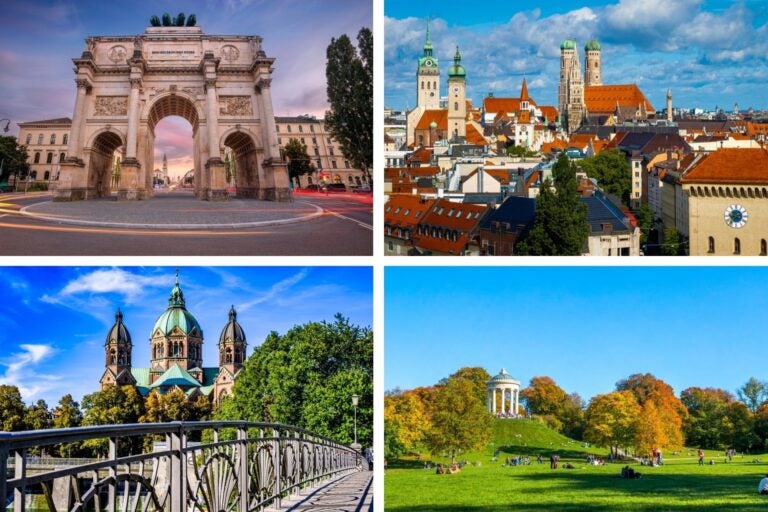
- Historical monuments: It is also free to visit monuments such as Feldherrnhalle or the gardens of the Englischer Garten.
- Oktoberfest: The famous international Bavarian festival does not charge admission to Theresienwiese, only for the drinks you consume.

How much does it cost to live in Munich?
If you’ve followed all the sections in this article, you’ll have noticed that the cost of living in Munich is among the highest in Germany, mainly due to rent, transport, and services. At the same time, local salaries are generally high, and the quality of life is excellent, which helps balance out the expenses and makes living in the city very comfortable.
For someone living alone, monthly expenses would be roughly $2,607 renting a studio on the outskirts. A couple could afford a two‑bedroom apartment and spend more on leisure, with a budget starting around $4,147. For a family with children, monthly costs rise to about $6,162, including rent, transport, schooling, entertainment, and groceries. So, do you think Munich could be the right fit for you?
Frequently asked questions about the cost of living in Munich
Yes, the cost of living in Munich is higher than in Berlin, Cologne, or Hamburg, especially when it comes to rent.
Yes, but it depends on where you live. With an average gross salary, you can live comfortably in the suburbs and spend moderately on leisure activities.
Yes, you can choose to live in well connected outer neighborhoods, rely on public transport, take advantage of free activities, and shop at discount supermarkets like Aldi or Lidl.
Despite Munich’s high cost of living, the city offers a great quality of life, plenty of job opportunities, and competitive salaries. It also has very efficient public services and is a safe place to live.
We recommend that you have at least $3,555-5,925 to cover your initial expenses for rent and deposit, food, and paperwork.
Plans that may interest you


Hi! I'm a Spanish-English translator working with Holafly, helping bring travel content to life for curious travelers. As a digital nomad with a passion for exploring, I'm always adding new spots to my bucket list. If you love to travel like me, stick around because you're in the right place to find inspiration for your next trip! ✈️🌍