Language


 No results found
Cost of living in Egypt in 2026 in dollars and euros
The cost of living in Egypt may be more affordable than you think. We can help you work out a budget for living in the land of wonders.

Beyond its pyramids and ancient temples, Egypt stands out as one of the most affordable havens for remote workers. With a vibrant mix of historic chaos and emerging modernity, living here lets you stretch your budget like in few places worldwide. However, to move around this country without surprises, you must understand how the cost of living in Egypt works.
In this guide, we’ll analyse every expense you’ll face if you decide to move to the banks of the Nile for a while.
Spoiler alert: You’ll be surprised by how cheap eating out or using private transport can be. On the other hand, although accommodation stays very affordable, finding the right comfort standard for work requires knowing where to look.
Stay right here to learn everything about the cost of living in Egypt, from the price of a river-view flat to what you’ll pay for traditional tea in a local market. Get ready to discover a land of contrasts, where history appears on every corner and your money goes much further than you imagine.
Cost of living in Egypt: Average accommodation prices
Accommodation in Egypt will, most likely, be the nicest surprise in your budget. Unlike major European or American capitals, your money goes a very long way here, letting you access spacious, well-located homes for a fraction of the price you’d pay elsewhere.
However, housing costs vary greatly if you settle in busy Cairo or in coastal paradises like Dahab or Hurghada, both very popular with the nomad community.
If you plan to immerse yourself in urban life, furnished apartments in safe, modern areas like Maadi or Zamalek in Cairo are the best option. These districts offer a calmer atmosphere, tree-lined streets, and nearby quality services, which are ideal for focusing on work.
- A one-bedroom flat with good furniture and air conditioning has an average monthly cost of €442 ($480), making it a great option if you want the full independence needed to organise your daily routine.
For those seeking an instant connection with other travellers and entrepreneurs, colivings in beach areas like Dahab are trending. These spaces are designed for remote work, offering ergonomic desks and shared areas that encourage creativity by the Red Sea.
- Living in a private room within this kind of community costs around €505 ($550) per month, with the advantage that utilities are usually included in the final price.
If you prefer the flexibility of digital platforms, a well-equipped Airbnb in a safe tourist area can cost around €782 ($850) per month.
On the other hand, mid-range hotels offer a practical solution if you don’t want to deal with contracts or maintenance, with monthly rates averaging €1,105 ($1,200). This last option is excellent if you value services like daily cleaning and 24-hour security without entering the luxury segment.
Eating in Egypt: Supermarket and restaurant prices
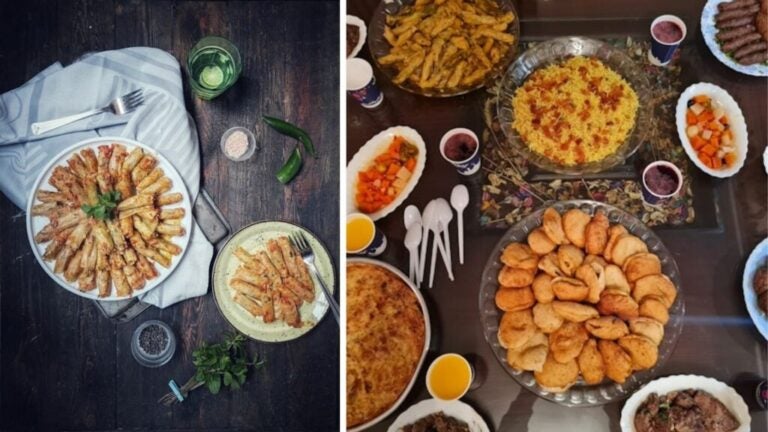
Food is, without doubt, one of the strongest points in the cost of living in Egypt. Besides being delicious, Egyptian cuisine has the advantage of being affordable.
As Egypt has strong agricultural production and a currency that favours foreigners, eating well here is extremely affordable. The key lies in knowing where to shop and, above all, in daring to try local food.
For everyday shopping, Carrefour and Spinneys are the most reliable international chains, with aisles full of options and clear prices. Here, you can fill your trolley with essentials without feeling you’re spending a fortune:
- Pack of pasta (500g): $0.70 (€0.64)
- Dozen large eggs: $1.55 (€1.43)
- Chicken breast (1 kg): $7.50 (€6.90)
- Good-quality beef (1 kg): $14.60 (€13.43)
- Milk (1 litre): $1.00 (€0.92)
- Branded chocolate bar: $1.20 (€1.10)
- Ground coffee (250 g): $3.50 (€3.22)
Keeping the fridge full will be very easy, especially if you add street markets for fruit and vegetables to your routine, where prices fall even more.
As for eating out, Egypt offers everything from street-food stalls, where a “Koshary” can cost under one dollar, to restaurants with Nile views. The food scene is vibrant and very affordable for residents. These are the average prices you’ll pay in local restaurants:
- Traditional breakfast (Foul and Falafel): $2.50 (€2.30)
- Lunch (full menu or main dish): $7.00 (€6.44)
- Full dinner in a mid-range restaurant: $13.50 (€12.42)
As you can see, in Egypt you can cook at home without spending much and still enjoy eating out far more often than in other countries.
Transport prices in Egypt
Getting around Egypt is an experience in itself, where transport costs stay incredibly low compared with Western standards.
Your mobility budget won’t be a major concern, which lets you choose between Cairo’s metro efficiency, transport apps, or the adventure of trains crossing the country.
Public transport is the backbone of cities like Cairo, and its prices are symbolic for a budget in dollars or euros:
- Metro ticket (short trip): $0.18 (€0.17)
- Public bus or minibus ride: $0.15 (€0.14)
- Taxi (base fare + 1 km): $0.35 (€0.32)
- Train journey (Cairo to Alexandria, tourist class): $4.50 (€4.15)
If you prefer the comfort of digital platforms to avoid constant bargaining with local taxi drivers, Uber and Careem work brilliantly in major cities.
- An average 15 to 20-minute ride through central Cairo usually costs around €2.30 ($2.50). For longer journeys to the airport, the price sits around €7.35 ($8.00).
For those who choose to drive or rent a vehicle, the related costs remain very competitive:
- Petrol per litre (92 octane): $0.30 (€0.28)
- Mandatory vehicle insurance (approximate annual cost): $60 (€55)
- Popular new vehicle (Toyota Corolla or similar): $24.500 (€22.540)
- Electric car charging (average kWh): $0.05 (€0,046)
In relaxed tourist areas like Dahab, the preferred means of transport is the bicycle. You can hire a good bike daily for around €3.70 ($4.00) or negotiate a monthly subscription for about €41.50 ($45), which works perfectly for moving between your accommodation and seaside cafés with internet.
Cost of living in Egypt: Healthcare services for foreigners
When we talk about the cost of living in Egypt, we can’t ignore the money you may need for medical care if you require it. Healthcare in the land of the pharaohs presents a landscape of contrasts that you should understand before arriving.
Although the country has a public healthcare system, it’s usually overloaded and may not meet remote workers’ expectations. For that reason, most foreigners living in cities like Cairo or Hurghada choose the private system, which offers modern facilities and professionals who speak English fluently.
Foreigners don’t get free access to public healthcare and, because of language and service barriers, it’s rarely the main recommendation.
In this context, the most sensible option is to have private medical insurance whether international or local, giving you access to top hospitals like the Anglo-American Hospital or the Saudi German Hospital.
The cost of private medical insurance in Egypt for a young person in 2026 is as follows:
- Basic private medical insurance (annual): $280.00 (€257)
- Comprehensive private medical insurance (annual): $520.00 (€478)
- Monthly travel insurance with medical cover: $45.00 (€41.50)
If you prefer to pay for individual services or need a quick consultation, prices outside insurance are still very reasonable. Private healthcare is high quality and much faster than the public sector. Here are some reference prices:
- General medical consultation (private): $15.00 (€13.80)
- Routine dental consultation: $25.00 (€23.00)
- Appendicitis operation (private clinic): $950.00 (€874)
As for pharmacies, Egypt is known for very low medicine prices. Most local pharmacies are well stocked, and you can find almost any international-brand treatment produced locally under licence. Some examples of over-the-counter medicines are:
- Box of paracetamol (20 tablets): $0.80 (€0.74)
- Cough syrup (100ml): $1.50 (€1.38)
- Basic antibiotics box (prescription required): $4.00 (€3.68)
Internet and call plan prices
If you’re a digital nomad, you’ll know internet access is essential for your work. Therefore, you’ll want to allocate part of your budget to securing a good connection.
The cost of staying online in Egypt is surprisingly low compared with the rest of the world. The country has made major investments in digital infrastructure, and although speeds can still vary in some areas, signals stay very stable in residential districts and tourist destinations.
If you decide to settle in a flat for a while, fixed internet will become your priority. The NBN doesn’t exist here, but local providers like Telecom Egypt (WE) offer very competitive fibre and ADSL plans. A standard high-speed monthly plan will let you make video calls and upload heavy files without issues:
- Fixed internet (30 Mbps speed – 140 GB): $5.00 (€4.60)
- Fixed internet (100 Mbps speed – 250 GB): $11.00 (€10.12)
- Fibre router (one-off initial payment): $25.00 (€23.00)
For your mobile phone, the options are varied and very affordable. The main operators are Vodafone, Orange, and Etisalat. You can buy a local SIM card almost anywhere by showing your passport. A monthly prepaid plan with enough data for browsing and social media has a very affordable average price:
- Mobile plan (10 GB of data + local minutes): $6.50 (€5.98)
- Mobile plan (20 GB of data + local minutes): $10.00 (€9.20)
If you’d rather avoid airport queues or dealing with local SIM registration, the Holafly monthly plans are the ideal solution. They let you land in Egypt and connect instantly to order an Uber or tell your family you arrived safely.
These plans are especially useful for nomads moving between cities, because they give you peace of mind and steady data access during workdays or desert trips. Also, if you cross borders within Africa or even move into Europe, you’ll stay connected, because the plans work in more than 160 countries worldwide.
Important: If you are a frequent traveler and want to stay connected without worrying about expensive roaming or looking for a new SIM at every destination, Holafly’s subscription plans are for you. With a single eSIM, enjoy internet in more than 170 countries for a fixed price and no surprises on your bill. Travel without limits and connect easily and securely! 🚀🌍
Cost of living in Egypt: Leisure and top attractions
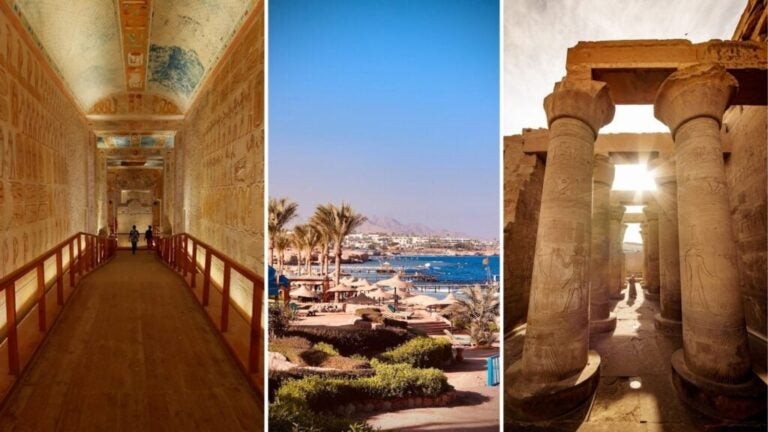
Egypt is an open-air museum offering unmatched cultural experiences at very affordable prices. The impact of leisure activities on your budget will be minimal compared with other destinations, which lets you enjoy spectacular plans every weekend.
From exploring the depths of the Red Sea to getting lost in Cairo’s historic markets, the offer is as varied as it is affordable. If you want to learn more, you can read this guide on how much it costs to travel to Egypt, where we also share tips to make the most of your money.
That said, let’s see how much it costs to discover some of Egypt’s great wonders or enjoy unforgettable experiences, such as a Nile cruise:
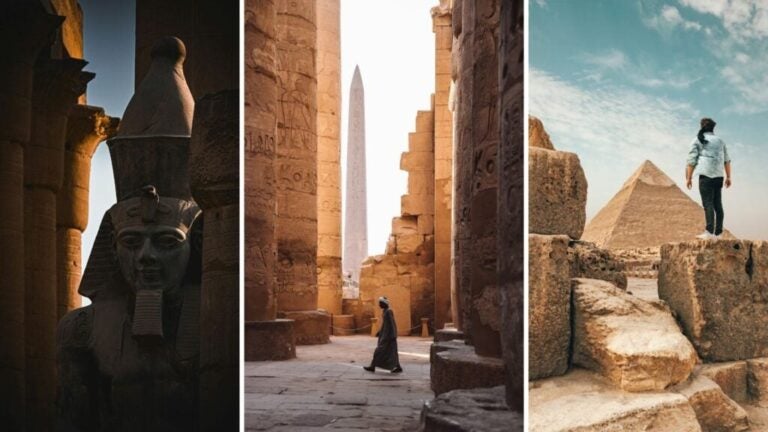
- Pyramids of Giza and the Great Sphinx: The ultimate wonder of the ancient world, just outside Cairo. General admission: $12.00 (€11.05)
- Karnak Temple in Luxor: A vast religious complex that transports you to the pharaohs’ era. Approximately €11.05 ($12).
- Introductory dive in the Red Sea: From €74.52 ($81). You can learn more about diving in Egypt here.
- Egyptian Museum in Cairo: Home to Tutankhamun’s treasures and thousands of unique archaeological pieces. Admission from €7.82 ($8.50).
- Nile cruise: A peaceful, magical way to travel between Luxor and Aswan. Approximately €460 ($500) for three to four nights, all inclusive.
- Valley of the Kings ticket (3 tombs): $14.00 (€12.88)
If you prefer more everyday leisure activities or plans for your free time, these are the average prices you’ll find in 2026:
- Cinema ticket (international release): $3.50 (€3.22)
- Giza Zoo ticket: $1.20 (€1.10)
- Local theatre ticket (standard performance): $8.00 (€7.35)
- Monthly streaming subscription (Netflix/EVP): $6.00 (€5.50)
- Monthly membership at a good gym: $18.00 (€16.55)
The advantage of living in Egypt is simple: Even with a tight budget, you can dine out and visit historical monuments often without hurting your savings.
So, how much does it cost to live in Egypt?
In 2026, Egypt stands out as one of the most competitive destinations for people wanting maximum value from their money. It’s a country of contrasts where you can live on very little if you adapt to local life, or enjoy international comforts for a fraction of European or US costs. The key to financial success here lies in balancing savings on essentials with spending on safety and comfort.
So you have a clear picture before packing, we’ve projected the total monthly budget for three different profiles, including accommodation in safe areas, balanced food, frequent transport, internet, and room for leisure activities:
- For one person: A digital nomad choosing a furnished flat in a good Cairo area or a Dahab community can live comfortably on around €782 ($850) per month. This amount covers all essential needs and still allows frequent dinners out and excursions.
- For a couple: By sharing housing costs, which form the biggest category, a couple can enjoy a very pleasant lifestyle on €1,150 ($1,250) per month. That includes better housing and a larger budget for shared activities.
- For a family of four: A family needing a three-bedroom flat in a residential area like Maadi, plus private education and healthcare, will need about €1,702 ($1,850) per month.
It’s important to note that these prices reflect a “comfortable” lifestyle for foreigners. If you choose a more modest lifestyle, costs can fall sharply, although that could mean sacrificing comforts such as constant air conditioning or high-speed internet.
Frequently asked questions about the cost of living in Egypt
Although credit cards are widely accepted in major cities and international chains like Carrefour, Egypt still runs mainly on cash. For local markets, tips (the famous “baksheesh”), and public transport, you should always carry Egyptian pounds. Ideally, use a card that doesn’t charge withdrawal fees at local cash machines.
Tipping in Egypt isn’t just a courtesy; it forms a key part of social and economic interaction. In restaurants, people usually leave between 10% and 15%, even if service already includes a charge. For small favours or delivery services, a small amount between 20 and 50 Egyptian pounds is highly appreciated and will make daily life much easier.
Egypt has gone through periods of high inflation and currency devaluation. This means that, although prices in local currency can rise, the cost of living stays relatively stable, or even falls in real terms, for people earning in dollars or euros. It’s always wise to check the official exchange rate before making important transactions.
It isn’t strictly mandatory by law to enter the country, but it’s highly recommended. Top private hospitals in Cairo require immediate payment or proof of insurance before treatment. Insurance with international cover will give you the peace of mind needed to enjoy your stay without worrying about emergency medical costs.