Language


 No results found
Cost of living in Bolivia: Food, transport, and more
A clear guide to the cost of living in Bolivia: rental prices, food, transportation, and healthcare. Keep reading!

Moving to Bolivia, whether for a few months or with plans to stay long term, often raises the same question: is it really that affordable, and how much do you need each month to live comfortably? In this guide to the cost of living in Bolivia, you’ll find a clear and realistic overview of the main everyday expenses, including rent, groceries, transportation, healthcare, and internet. While Bolivia is known for its relatively low housing and food prices compared to other countries in the region, not everything is as cheap as it may seem, and costs can vary depending on the city and your lifestyle.
Throughout this guide, we’ll walk you through each of these aspects so you can review the numbers at your own pace, compare your options, and decide whether Bolivia truly fits your budget and the lifestyle you’re aiming for.
Average cost of staying in Bolivia (2026)
In Bolivia, housing costs can vary significantly depending on the city. La Paz and Santa Cruz are generally more expensive than Cochabamba or Sucre, and prices also depend heavily on the level of comfort you’re looking for. To give you a practical point of reference without focusing on either high-end or very basic options, here are some typical price ranges for a comfortable and secure stay.
Hotels (mid-range)
If you’re looking at a solid mid-range hotel, well located, clean, with good reviews and standard amenities, in La Paz you can expect to pay roughly between $75 and $120 per night.
- Monthly estimate (30 nights): $2,250–3,600.
- Realistic tip: If you book by the week or outside of peak season, you can lower this considerably.
Furnished apartments (monthly rent)
For a “real life” experience (kitchen, washing machine or nearby laundry facilities, privacy, and space), rental prices in major cities are usually as follows:
- Furnished studio apartment (standard area): Around $245/month in La Paz as a reference.
- Furnished apartment ~85 m² (standard area): Around $358/month.
To give you a clearer idea, a one bedroom apartment in a central area typically costs between $270 and $405 per month, depending on the city. For example, prices in Cochabamba are usually lower than in Santa Cruz.
Airbnb
For stays of 28–30 nights, there are places that come fully “move-in ready” with amenities like a kitchen and Wi-Fi, often with a monthly discount. As a reference, long-term rentals in Sucre typically range from $478 to $784 for 28 nights, with higher prices for larger units or better locations.
- Reasonable range for a “comfortable Airbnb” per month: $500–1,000 depending on the city and neighborhood.
Colivings room in shared housing
In Bolivia, European-style coliving isn’t very common, so the closest option is usually a private room in a shared home, often with access to common areas and Wi-Fi. Monthly rents for furnished rooms generally fall between $216 and $519.
Cost of food in Bolivia
To get a realistic sense of food costs, it’s best to look at supermarket prices to see what cooking at home might cost, as well as restaurant prices geared toward locals. Keep in mind that prices can vary a lot by city and store, but these examples give you a pretty clear idea.
Prices in supermarkets
The following prices are based on Fidalga:
- Eggs (12): $2.35
- UHT milk (900 ml): $1.09
- Pasta (pre-cooked lasagna 360 g): $5.72
- Chocolate powder (400 g): $2.75
- Coffee (200 g): $16.65
- Chicken (breasts, 1 kg): $4.10
- Beef (1 kg): $6.79
Eating out
Here, the key is to consider two scenarios: set menu and mid-range restaurant.
- Lunch at an inexpensive restaurant (set menu): Approx. $2.90.
- Dinner for two at a mid-range restaurant (3 courses, without drinks): Approx. $17.37.
For breakfast, there isn’t really a “standard” price since it depends on whether you’re grabbing something quick like coffee and a pastry or going for a full brunch. As a reference, a cappuccino costs around $2.68.
Transportation prices in Bolivia
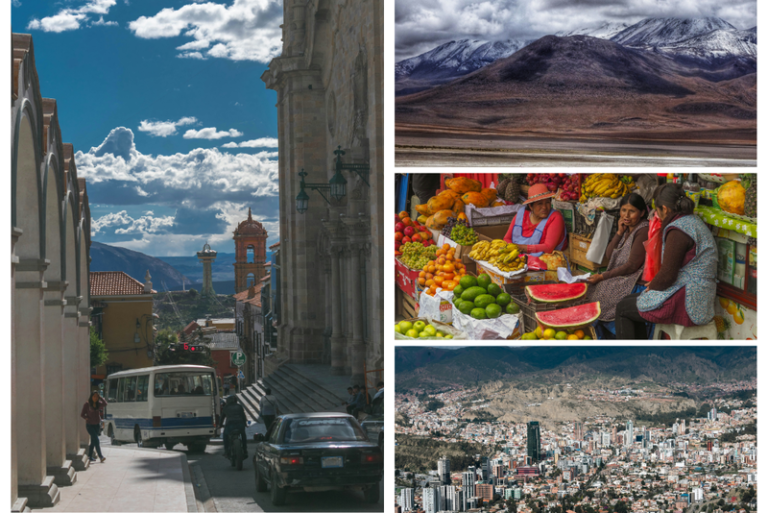
Transportation is generally one of the more affordable parts of living in Bolivia, especially if you use the same options as most locals, such as buses, taxis, or ride sharing apps. Even so, it is helpful to know the prices for each option to avoid unexpected costs.
Public transportation and taxis
There is no subway system in Bolivia. Urban transportation mainly consists of minibuses, micros, and trufis (shared routes).
- Urban public transportation: Around $0.30 per trip, with slight variations depending on the city.
- Taxi (initial fare): Approximately $1.45.
- Taxi per kilometer: Approximately $0.70/km.
At these prices, you can combine public transportation with taxis without your monthly expenses getting out of hand.
Uber and similar apps
Uber operates mainly in Santa Cruz de la Sierra and is used as an alternative to traditional taxis.
- Short urban trips (5–8 km): Usually cost between $2.50 and $4.50, depending on traffic and demand.
In practice, the price is not usually very different from a taxi, and the choice depends more on convenience or availability.
Gasoline and owning a car
A key factor in the cost of living in Bolivia is fuel, as it is subsidized by the government.
- Gasoline (1 liter): Around $0.54.
Thanks to this, owning a car is relatively inexpensive in terms of fuel consumption. However, electric vehicles are not yet widespread, and there is no clear charging network or standardized kWh prices for public use.
Bicycle rental
Bicycles are an option, but they are not a popular choice and there are no established public systems.
- Daily bicycle rental: Between $5 and $10 per day.
- Monthly subscriptions: These are not standardized and depend on private or local initiatives, so prices vary widely.
Vehicle insurance
Compulsory insurance is SOAT.
- Annual SOAT: Approximately $60–70 per year, depending on the type of vehicle.
Optional insurance policies, such as extended third-party, theft, or comprehensive coverage, usually cost between $250 and $500 per year, depending on the level of coverage.
Price of a new vehicle
As a reference for a popular and affordable car in different countries, including Bolivia:
- New Toyota Corolla: Around $24,000.
This is a common model due to its reliability, moderate fuel consumption, and ease of maintenance, which are important factors if you plan to live in the country.
Overall, transportation makes up a fairly manageable part of the cost of living in Bolivia, especially if you rely on public transport or taxis. Even if you have your own car, monthly expenses are generally low compared to other countries in the region.
Healthcare costs in Bolivia
Healthcare is one of those costs in Bolivia that people often overlook until it becomes necessary. The upside is that, in general, it is more affordable than in many other countries in the region, though the quality and ease of access can differ a lot between public and private providers.
Can foreigners use public healthcare in Bolivia?
Yes, Bolivia’s public healthcare system is available to foreigners, particularly in emergencies. In practice, though, it is mainly designed for residents, which can mean long wait times, extra paperwork, and limited access to specialists.
Private health insurance
Taking out private health insurance is a fairly common decision among foreigners, digital nomads, and people who plan to stay for several months.
- Basic private health insurance: From $50 to $120 per month, depending on age, coverage, and whether hospitalization is included.
- More comprehensive plans: These can cost over $150 per month, especially if they include higher-level private clinics.
This expense is often seen as a way to gain peace of mind and avoid large unexpected payments.
Private medical service prices
If you pay directly without insurance, these are typical ranges at private clinics:
- General medical consultation: Between $15 and $30.
- Consultation with a specialist: Around $25 to $50.
- Basic dental consultation (checkup): Between $20 and $40.
- Simple dental treatments (cleaning or filling): From $40 upwards.
- Appendicitis (surgery in a private clinic): Can range widely from $1,500 to $3,000, depending on the clinic and city.
Prices like these explain why many residents prefer to have insurance because a single procedure can completely change their monthly budget.
Over-the-counter medications
Common medications are usually affordable and easy to find in pharmacies:
- Paracetamol or ibuprofen: Between $1 and $3.
- Basic cold and flu medications: Around $3 to $6.
- Common antibiotics (prescription): Usually between $5 and $15.
Overall, healthcare is not usually the biggest expense in Bolivia, but it is one of the most important to plan for. Having insurance and knowing the cost of consultations helps you live more comfortably and avoid unexpected surprises.
Prices for internet and phone plans in Bolivia
In Bolivia, staying connected is usually quite affordable, but costs can vary depending on whether you rely on home internet, local mobile data, or an international plan for travel or remote work.
Fixed internet at home
In the main cities of Bolivia, such as La Paz, Santa Cruz and Cochabamba, home internet is typically offered through fiber optic or cable. Costs depend on the provider and the area, but the following ranges are fairly typical.
- Basic plans (20–30 Mbps): Around $25 to $35 per month.
- Intermediate plans (50–100 Mbps): Between $35 and $50 per month.
For everyday use like video calls, light remote work, and streaming, these speeds are usually enough, though connection stability can vary a lot from one neighborhood to another.
Local mobile plans
Mobile plans in Bolivia are designed for everyday use and are usually inexpensive:
- Prepaid or basic plans: From $5 to $10 per month, with local minutes and limited data packages.
- More comprehensive monthly plans: Between $10 and $20 per month, with domestic calls included and more data.
In practice, many people use their cell phones mainly for calls and messages, and rely on home Wi-Fi to work or consume content.
Mobile internet for traveling or remote working
If you plan to stay in Bolivia for a while, travel between countries, or work online without relying on Wi-Fi, a good option is a Holafly monthly plan.
These plans offer:
- Unlimited mobile data, without worrying about top-ups or usage.
- Coverage in over 160 countries, useful if Bolivia isn’t your only destination.
- A single monthly plan, with no local contracts or physical SIM changes.
For digital nomads, international students, or long-term travelers, it’s a convenient way to stay connected from day one while keeping your internet costs predictable.
Overall, internet and phone costs in Bolivia are generally manageable, but picking the right option can mean the difference between running low on data and being able to work and stay connected without worry.

Cost of leisure activities in Bolivia
Leisure is usually one of the more manageable expenses in Bolivia. Here are some examples of prices for common activities and tourist attractions.
- Going to the movies (Cinemark Bolivia): A standard ticket costs about $4.02 on Wednesdays with the promotional rate, $7.18 from Monday to Thursday, and up to $8.91 on weekends. It’s an affordable activity you can enjoy regularly.
- Municipal zoo (Santa Cruz): Tickets for local adults are around $2.16, $0.72 for children, and about $3.59 for foreign visitors, making it an affordable option even for families.
- Theater and cultural shows: Depending on the show, venue, and seat location, tickets usually range from $5.03 to $12.93, which is quite reasonable for regular cultural activities.
- Streaming platforms: Streaming services like Disney+ cost around $12.49 per month for the standard plan and $18.99 for the premium plan, while HBO Max is about $5.30 per month if you sign up for the annual plan.
- Tourist sites: For foreign visitors, admission to the archaeological site is around $14.37, making it one of the country’s top cultural attractions.
- Tourist sites: Access to the island usually costs around $4.31, normally included in tours of the salt flats.
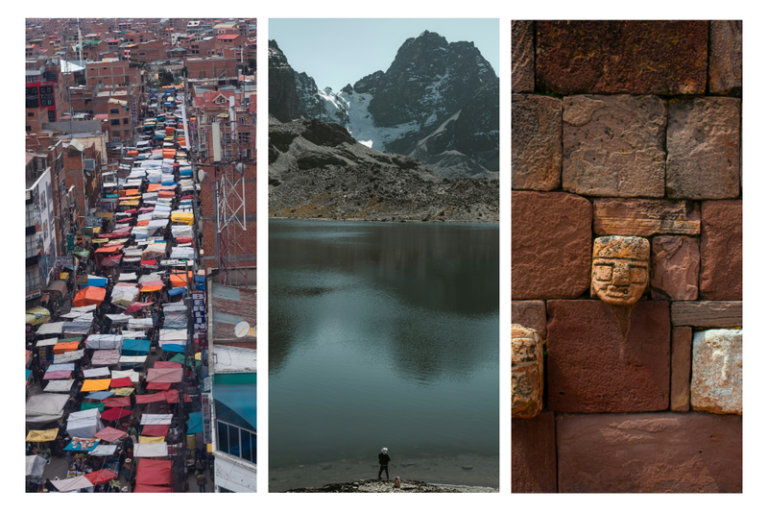
Overall, leisure activities fit comfortably within the cost of living in Bolivia, allowing you to enjoy movies, cultural events, and sightseeing without putting too much strain on your monthly budget.
How much does it cost to live in Bolivia?
In general, the cost of living in Bolivia allows for a comfortable lifestyle on a moderate budget. For a single person, monthly expenses usually fall between $600 and $900, while a couple can live quite comfortably on $900 to $1,300 per month, benefiting from the savings of sharing housing and utilities.
For a family of four, monthly expenses typically range from $1,400 to $2,000, depending on the city, type of housing, and the healthcare and education services chosen. Overall, Bolivia remains an attractive option for those looking to balance quality of life with affordable living, with costs generally lower than in many other countries in the region.
Frequently asked questions about the cost of living in Bolivia
No. Overall, the cost of living in Bolivia is lower than in many other countries in the region, especially for expenses like rent, transportation, and food. This makes it possible to live comfortably on a tighter budget.
Cities like Cochabamba and Sucre are generally more affordable than La Paz or Santa Cruz, particularly when it comes to rent and utilities. Still, the difference is usually not significant enough to completely determine your choice.
Yes. With an average income, it’s possible to cover basic expenses, rent a decent home, and enjoy a comfortable lifestyle. For many, this balance is one of the main advantages of living in Bolivia.
If you plan to stay for just a few months or a couple of years, renting is usually the most practical and flexible option. Buying a home involves extra paperwork and typically only makes sense for long-term stays.
Not necessarily. Healthcare and private education are generally more affordable than in many other countries, though having medical insurance or enrolling in private schools can raise monthly expenses depending on a family’s needs.
Plans that may interest you


Hi! I'm a Spanish-English translator working with Holafly, helping bring travel content to life for curious travelers. As a digital nomad with a passion for exploring, I'm always adding new spots to my bucket list. If you love to travel like me, stick around because you're in the right place to find inspiration for your next trip! ✈️🌍