



 Language
Can I work in the Maldives as an expat?
We'll tell you everything you need to know to work in the Maldives, from the requirements to the best opportunities for foreigners.

Working in the Maldives in 2026 is no longer just a dream reserved for adventurers or diving instructors, but a well-established professional reality for those looking to make a meaningful leap in their career.
Today, this destination has established itself as a global hub for premium services, ultra-luxury hospitality, and cutting-edge environmental conservation, attracting talent from all over the world who want to combine top-level professional opportunities with an unmatched natural setting.
Once known mainly as a honeymoon paradise, this archipelago of over 1,000 islands has now become a vibrant, multicultural place to work. With the launch of its “Vision 2030 Strategy,” the country has broadened its economy and is now welcoming professionals in fields like renewable energy, marine science, digital innovation, and sustainability.
By 2026, companies in the Maldives aren’t just hiring workers. They’re looking for people who can represent their brand and care about responsible luxury and protecting delicate ecosystems.
If you’re ready to swap the noise of the city for the calm of coral reefs, and office meeting rooms for strategy sessions by the Indian Ocean, this guide will show you how it all works. You’ll learn about the legal steps, the most in-demand roles, and where to find the best job opportunities to begin your life in paradise.
What are the benefits of working in the Maldives?
Working in the Maldives offers benefits that go far beyond simply being in paradise.
One of the biggest advantages of relocating to the islands is the expat benefits package. In most resort jobs, which are the main source of employment, contracts typically include accommodation, meals, and in many cases, return flights to your home country. As a result, much of your salary can effectively go straight into savings.
Safety in the islands is outstanding. Because the communities are small and often private, especially in resorts, crime is virtually non-existent. Life there offers a level of peace and calm that’s hard to find in big cities, letting you enjoy nature with complete freedom.
The multicultural experience is another major advantage. Working in the Maldives means living and collaborating with colleagues and guests from all over the world. This exposure helps you build a global network and develop a broader mindset, both of which are highly valued by international employers later on.
The multicultural experience is another major advantage. Working in the Maldives means living and collaborating with colleagues and guests from all over the world. This exposure helps you build a global network and develop a broader mindset, both of which are highly valued by international employers later on.
Job stability in the tourism and service sector in 2026 is another key advantage. With the country’s steady growth, companies are focused on retaining international talent by offering renewable contracts and clear career progression within major global hotel chains.
Finally, it’s the lifestyle and wellbeing that stand out. In your free time, you can go diving, snorkeling, or enjoy water sports. Life in the Maldives is slower and healthier, with the ocean as your daily way to relax.
What are the requirements for working in the Maldives?
To work in the Maldives in 2026, it’s important to understand that the country has a legal system designed to protect both its environment and its job market.
Foreign employment in the Maldives is tightly controlled through quotas and pre-approvals. In practice, this means you can’t just arrive and find work informally. Everything must follow a clear and formal legal process.
Here are the key requirements you need to know to enter and stay in the archipelago:
Sponsorship
In the Maldives, your right to live there is directly tied to your employer. You can’t enter the country on a tourist visa and try to find work on your own.
You must have a confirmed job offer from a company or resort that the Maldivian authorities have officially registered. That employer acts as your sponsor, takes legal responsibility for your stay, and is the only one who can start the work permit process with the Ministry of Economic Development.
Work Permit and Employment Approval (EA)
Before you set foot on the plane, your employer must apply for Employment Approval (EA) through the official system.
This is the preliminary approval document that confirms your role complies with local regulations and that the company has the necessary quota to hire a foreign worker. Once approved, you’ll receive an electronic copy that you must present when boarding your flight. Without it, airlines won’t let you travel for work purposes.
Work Visa
When you land at Velana International Airport, immigration officers will check your Employment Approval. At that point, you’ll be issued a temporary entry permit.
It’s important to remember that you have a strict 15-day window from your arrival to register your fingerprints and submit all required physical documents so your temporary visa can be converted into a permanent residence card.
Mandatory medical check-up
Once you arrive in the Maldives, you must undergo a comprehensive medical examination at a government-authorized medical facility.
This requirement is mandatory and essential to activate your long-term work visa. Its main purpose is to protect public health by screening for infectious diseases such as tuberculosis, hepatitis, or HIV.
Only after receiving a “fit-to-work” medical report will the Ministry of Homeland Security and Technology issue your official resident worker ID.
Employment contract and registration on “Xpat Online”
By 2026, labour processes are fully transparent through the Xpat Online portal. Your employment contract must be officially registered there using the eFaas digital ID system.
It’s important to check that your contract clearly includes not only your basic salary, but also the usual benefits in the islands, such as accommodation, meals, and annual flights home.
This digital record is your best legal protection against any labor disputes during your stay in paradise.
How to start working in the Maldives: Final tips
Living on a remote island can feel like a dream, but it does require flexibility. First, make sure you understand exactly where your job is based. If you’re working in a resort, you’ll be on a private island where most things are provided for you. But if you’re in Malé, the capital, or on a local island, you’ll need to cover your own expenses and follow more conservative rules around dress and behaviour.
When it comes to packing, less is more. Most resorts provide uniforms and casual clothing, and the weather is warm all year round. What you really do need is good sun protection, and ideally your own basic snorkelling gear, as you’ll likely be using it almost every day in your free time.
Also, keep in mind that the Maldives is a Muslim country, so authorities prohibit bringing alcohol or pork products into the country.
Another thing to keep in mind is language. While English is the main working language, knowing a third language such as Russian, Mandarin, French, or German can significantly improve your chances of landing a managerial role or a guest-facing position in larger resorts.
Finally, internet access can be a challenge if you rely on shared staff Wi-Fi. To stay connected and make video calls or use social media without problems, we suggest two options:
- Holafly’s monthly plans: They give you 25 GB or unlimited data in the Maldives and over 160 countries with a single subscription. They’re ideal for longer stays or if you’re planning to travel through several countries on the same trip. You sign up once, they renew automatically, and you can cancel anytime with no penalty.
- The eSIM for the Maldives: If your contract is short or you’re on a trial period, it’s a good option because you can pick the exact number of days you need and only pay for that. You’ll have unlimited data and a reliable connection throughout the islands.
In short, Holafly is the perfect solution for getting internet access right away without any hassle from local providers.

What kinds of jobs are available for foreigners in the Maldives?
The job market in the islands is highly divided. In 2026, most foreigners still work in luxury resorts, but the growth of local islands and the capital has expanded the range of opportunities.
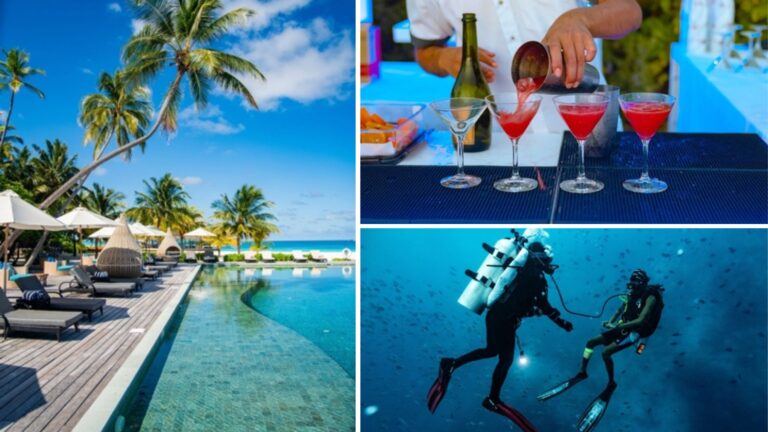
- Hospitality and resort management: This is the main sector. Jobs range from hotel managers and bilingual receptionists to sommeliers and even unique roles like “Barefoot Bookseller” in luxury island resorts. Most of these positions come with the well-known all-inclusive package for staff, covering accommodation, meals, and transport.
- Water sports and diving: The Maldives is one of the world’s top diving destinations. There’s strong demand for PADI instructors, snorkelling guides, and boat captains (dhonis) with international licences. If you’re a certified diver, this is a field with constant turnover and plenty of opportunities.
- Health and wellness: Nearly all resorts feature world-class spas. There are openings for therapists, yoga instructors, massage specialists trained in Eastern techniques, as well as personal trainers for fitness or tennis.
- Marine biology and conservation: Sustainability is a national priority. Many resorts hire resident marine biologists to lead coral restoration projects, protect sea turtles, and run environmental education programmes for guests.
- Construction and technical services: With the development of new artificial islands like Hulhumalé, there’s growing demand for civil engineers, electrical maintenance technicians, and specialists in desalination plants and renewable energy systems.
What are the jobs in highest demand for foreign workers?
If you’re aiming to secure a job with good benefits this year, it’s worth knowing that the job market in the islands has changed. It’s no longer just about basic service roles, but increasingly about highly specialised skills.
These are the profiles most sought after by recruiters in 2026:
1. Signature cuisine and fine pastries
Competition between resorts to earn or keep international recognition has raised the bar. There’s strong demand for chefs and pastry chefs skilled in fusion, Japanese, and Mediterranean cuisine, who can work to Michelin-level standards.
The ability to create personalized and sustainable culinary experiences is what truly tips the scales in today’s hiring processes.
2. Content creators and digital strategists
In 2026, paradise isn’t just something you experience, it’s something you share. Resorts now hire resident photographers, videographers, and social media managers who live on the island. The key is creating authentic, real-time content that connects emotionally with global audiences from within the hotel itself.
3. Resident health and wellness
Because of the Maldives’ geography, each resort operates like a self-contained micro-city. As a result, there is steady demand for doctors and nurses. These professionals not only handle guest emergencies, but also take care of the preventive healthcare needs of the hundreds of staff.
4. Sustainability managers (marine biologists & ESG managers)
This is, without a doubt, the fastest-growing role. Following the strict environmental regulations introduced in 2026, sustainability managers have become essential figures. Their work goes beyond coral protection; they oversee the resort’s carbon footprint, efficient desalination, and zero-waste systems.
5. Luxury curators and sommeliers
With the growth of ultra-luxury tourism, the traditional waiter role has become more specialised. Resorts now look for certified sommeliers and luxury retail staff for their exclusive boutiques, who can advise guests on wines, cigars, and high-end watches.
What are the financial benefits of working in the Maldives?
The first thing you need to know when planning your move to work in the Maldives is the local currency, the Maldivian rufiyaa (MVR). However, in the tourism sector, most transactions are negotiated and paid in US dollars (USD).
Net salaries in the Maldives tend to be very attractive because living expenses are almost non-existent. Most contracts include accommodation, meals, laundry services, and annual flights back to your home country.
The legal minimum wage for foreign workers is around $520 (8,000 MVR), but in reality, salaries in resorts are much more attractive. Entry-level hospitality staff typically earn between $600 and $1,000, while specialised roles such as chefs, diving instructors, or mid-level managers can make between $1,500 and $3,500.
The real “secret” behind salaries in the Maldives is the service charge. By law, all tourism businesses add a 10% service fee to bills, and this money is shared entirely among staff. During peak season, this bonus can even double your base salary, adding an extra $500 to $1,200 a month quite easily.
And how high is the cost of living on the islands? This is where the Maldives beats other destinations hands down. If you work at a resort:
- Rent: You live on the island, in shared or private rooms depending on your position.
- Meals: You have access to the staff cafeteria with full board.
- Transportation: You get around the island on foot, and the ferry to the airport is usually covered.
However, if you work in Malé (the capital), the situation is different. Malé is one of the most densely populated cities in the world, and prices are high:
- Rent (studio apartment in Malé/Hulhumalé): $800–1,200.
- Food: $300 per month.
- Utilities (electricity, water, and internet): $150.
By the way, if you’re planning to live in Malé or other local islands, make sure to check out our article on where to stay in the Maldives for a longer stay. It will give you a much clearer idea of the different options available.
Where can I find job opportunities in the Maldives?
Finding your way to a reef-surrounded workplace in 2026 takes a strategic approach, as the Maldives job market doesn’t work like a regular city where you can simply walk in and drop off a CV.
The search naturally begins online, where LinkedIn has established itself as the most powerful tool for foreign professionals.
In this network, simply having an updated profile isn’t enough. You also need to follow major hotel chains in the Maldives, like Four Seasons, Soneva, Marriott, and Hilton. Recruiters often post exclusive jobs and look for candidates in marketing, management, and sustainability among their followers.
Beyond general social media, there is a whole ecosystem of specialised job boards for those looking to work in the Maldives. The leading platform for luxury hospitality is CatererGlobal, which has a dedicated section for the archipelago, featuring roles such as chefs, sommeliers, and guest relations staff.
For those looking for a more local and direct source, Job-Maldives.com is still a go-to platform, with a constant stream of daily listings ranging from roles in remote resorts to administrative positions in service companies based in the capital, Malé.
If you’re focused on adventure and nature, you’ll need to use more specialised job sites. For diving instructors, the PADI Pros Site shows where guides are needed. For marine biologists and conservation experts, the best opportunities are usually on the careers pages of environmental foundations that work with hotels.
It’s also worth remembering the value of boutique recruitment agencies based in Southeast Asia and the Middle East, as they often act as the main gateway to “fly-in” job opportunities that include full relocation packages.
In 2026, success comes down to persistence and tailoring each application, showing not only strong technical skills but also the ability to adapt to life in the unique, remote setting of a coral island.
Frequently asked questions about working in the Maldives
Not for the tourism sector. English is the main working language in all resorts. Learning a few words in Dhivehi can help you connect with local colleagues, but it’s not required.
Yes, but it depends on logistics. Some resorts provide free transport to nearby local islands or to Malé on certain days. Many employees choose to stay on the island and make the most of staff facilities, such as the gym, staff bar, and private beach.
It’s a bit like living in a bubble. You’re with your coworkers 24/7, which can be intense but often leads to very strong friendships. At the same time, it helps to be sociable and open-minded, since you’ll be sharing living and leisure spaces with people from all over the world.
There is income tax in the Maldives, but for most foreign workers it is very low or even zero. In most cases, the salary in your contract is almost exactly what you receive.
This is one of the most common questions, and the short answer is: it depends on your contract. In 2026, most entry-level resort jobs include shared staff accommodation, which makes it difficult to bring family members. However, for mid-level or management roles, such as department heads or doctors, resorts often offer “family status,” which can include a private villa, schooling for children in Malé or support for online education, and healthcare coverage for the whole family. If that’s your goal, make sure “family status” is clearly stated in your offer before signing.
The dress code varies by setting. In resorts, staff usually wear lightweight uniforms suited to the tropical climate, and in some cases a very relaxed “no shoes” policy applies. Outside resort areas, such as in Malé or on local islands, people follow a more modest dress code because the Maldives is a conservative Muslim country, so they cover their shoulders and knees as a sign of respect.
Plans that may interest you


Hi! I'm a Spanish-English copywriter working with Holafly, helping bring travel content to life for curious travelers. As a digital nomad with a passion for exploring, I'm always adding new spots to my bucket list. If you love to travel like me, stick around because you're in the right place to find inspiration for your next trip! ✈️🌍