Language
Can I work in Berlin as an expat?
Come live and work in Berlin! Kickstart your career in the German capital. We’ll show you how in this article!

Germany offers great job opportunities for foreigners, especially in its capital. If you want to work in Berlin, this guide helps you understand how to get started and what sets the city apart from other European capitals. With its strong economy, modern lifestyle, and lively cultural scene, Berlin is an ideal place to balance professional growth with personal life.
We explain the general legal and academic requirements you’ll need to meet, as well as the main types of jobs currently in highest demand for international workers. You’ll also find out whether speaking German is necessary, what typical salaries look like, the cost of living, and where to start looking for job opportunities. Get ready to land the job you want in Berlin!
Advantages of working in Berlin
If you’re considering Germany’s capital as a place to try your luck and grow your career, it’s a great city for finding work as a foreigner. Its multicultural atmosphere creates plenty of job opportunities for people from all over the world, and it also offers a good balance between salaries and living costs. Here are all the benefits of working in Berlin:
- An international and multicultural city: It’s one of the most international cities in Europe, with a large expat community. This makes it much easier to settle in quickly and meet people who are in the same situation as you, whether to build professional connections or make new friends.
- Plenty of job opportunities: Berlin is often called the “European Silicon Valley” thanks to its thriving startup ecosystem. Key industries also include technology, marketing, communications, tourism, and hospitality.
- Affordable cost of living: Compared to other capitals like London or Paris, the cost of living in Berlin is slightly lower. It’s even around 15% cheaper than Munich.
- High quality of life and safety: Living in Berlin means enjoying a safe city with excellent infrastructure and efficient public services for its residents. Some of the safest neighborhoods include Charlottenburg-Wilmersdorf, Prenzlauer Berg, Friedrichshain, and Kreuzberg.
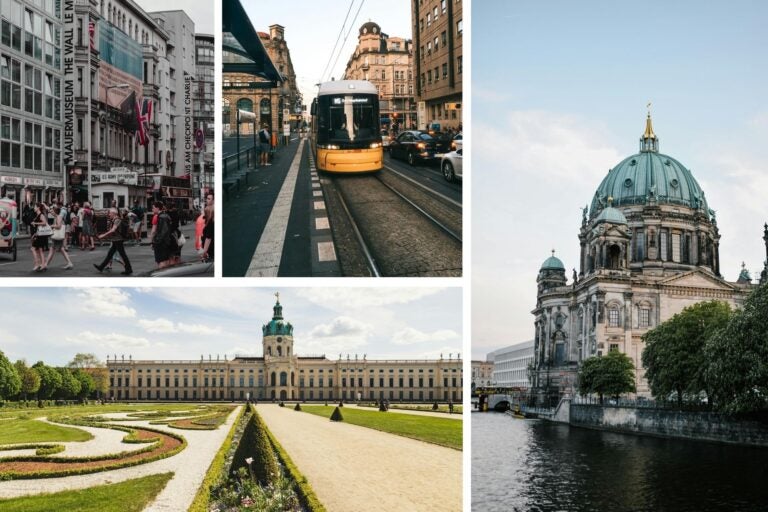
- Cultural life and leisure: This city is famous for its many museums, including Museum Island, a UNESCO World Heritage Site that is home to places like the Pergamon Museum and the Neues Museum. You can also visit the Brandenburg Gate, see remains of the Berlin Wall, or take part in popular festivals such as Karneval der Kulturen.
- Mobility and transportation: You can easily get anywhere in the city thanks to its extensive transport network, one of the best in Europe, which includes the U-Bahn, S-Bahn, buses, and trams.

Requirements for working in Berlin
Wondering if you’re eligible to work in Berlin? Foreigners can do so as long as they meet a few basic legal requirements, such as obtaining a visa, a work permit, or registering their address. Take a look at each of these to see whether working in the city is a realistic option for you.
- Visa or work permit: If you’re from the EU, you don’t need a visa to work in Berlin. However, if you’re a non-EU citizen, you’ll need to apply for a work visa at the German embassy in your home country, which usually requires having a job offer or employment contract.
- Identification document: You’ll need a valid national ID card if you’re an EU citizen, or a passport. In both cases, the document must be in good condition and valid for at least six months.
- Proof of residence: You’ll need to register your address at the city hall in the capital, as this is required to open a bank account, sign an employment contract, or set up utilities.
- Residence permit: If you plan to stay and work for more than 90 days, you’re required to register with the immigration office in order to obtain a residence permit.
- Tax ID number: Once you obtain your residence permit and register with the city hall, you’ll be assigned a tax identification number, which will be sent to you by mail.
- Language: You must have at least a basic level of German, and English is also highly valued in the tech sector.
- Health insurance: Public healthcare isn’t free, so you’ll need to pay monthly contributions to a health insurance plan that covers most medical expenses.
- Education or experience: You may need to submit or have your university degree or vocational qualifications translated, or provide proof of previous work experience.
Tips for starting a job in Berlin
Before jumping in, here are some practical tips to help you stand out from other candidates. They’ll also help you settle into the city faster, stay connected, and avoid common mistakes due to lack of information. Here are the key tips:
- Learn German: Having at least a basic level of the language will open more doors for you and make everyday life in the city much easier. You can enroll in in-person classes or use online platforms such as Preply, Italki, Babbel, or Duolingo.
- Tailor your resume to the German job market: Your CV should be clear and professional, highlighting your most relevant experience along with key achievements, and it should include a photo.
- Look for housing in advance: Finding accommodation in Berlin can take some time, so it’s best to start looking weeks or even months before your move. In the meantime, you can consider temporary options like hostels or coliving spaces.
- Open a bank account: You’ll need it to receive your monthly salary and handle everyday expenses like rent, electricity, water, and internet. It’s a good idea to open a bank account in Germany, as some employers don’t accept foreign accounts.
- Start networking right away: Attend events, connect with other professionals, and make use of platforms like LinkedIn. Many job opportunities are found through networking this way.
- Make sure you have a reliable internet connection: Don’t risk missing a video interview or an email appointment just because you don’t have enough data. To avoid this, you can get a Berlin eSIM from Holafly starting at $3.90 per day. If you need a longer-term plan, Holafly’s monthly plans are a great alternative, offering 5G coverage, 25 GB or unlimited data plans from $49.90 per month, with no long-term commitment.

Types of jobs in Berlin for foreigners
As mentioned earlier, working in Berlin is very much possible for foreigners, thanks to the city’s international character and strong demand for talent across various sectors. Your German level will largely determine the type of roles you can access, especially when it comes to more qualified positions. Take a look at the table below, where we’ve outlined some of the main job roles along with their descriptions and requirements:
| Sector | Description | Requirements |
| Tourism and Hospitality | Hotels, bars, restaurants, and events | Language skills, customer service, basic experience |
| Technology and Startups | Web development, programming, digital marketing, UX/UI design | Advanced English, technical knowledge, experience |
| Customer Service | Technical support, international call centers | English and other languages, communication skills |
| Marketing and Communications | Social media, advertising, digital content | Experience, creativity, advanced English |
| Logistics and Warehousing | Delivery drivers, warehouses, transportation | In some cases, a driver’s license |
| Education and Languages | Language teacher, international schools | Degree, teaching experience |
| Health and Care | Nursing, caregiving, elder care | Accredited degree, intermediate German |
| Freelance and Remote Work | Design, copywriting, IT, consulting | Registered self-employed, German digital nomad visa, and client portfolio |
The most in-demand jobs in Berlin for foreigners
Berlin’s job market is highly dynamic, creating strong demand for professionals across a wide range of sectors. Many positions are open to foreigners, even if you don’t have an advanced level of German. Below, we break down the job roles with the best opportunities for international candidates:
- Technology and IT: Tech companies concentrate most of their operations in areas like Mitte, Kreuzberg, and Prenzlauer Berg, where you can find roles such as web developer, software engineer, or data specialist.
- Tourism and hospitality: If you don’t have a good command of German or relevant experience, you can start as a waiter, hotel staff, or in event planning.
- Customer service: Many offices of international companies located in Mitte or Neukölln are looking for multilingual customer service representatives. Languages such as Spanish, English, French, and Italian are highly valued.
- Logistics and delivery: These roles don’t usually require advanced qualifications, although you may need a driver’s license for jobs like delivery driver, warehouse assistant, or driver in industrial areas such as Spandau or Marzahn-Hellersdorf.
- Health and care: There’s a strong demand for nurses with an intermediate level of German in hospitals such as Charité – Universitätsmedizin Berlin. Due to staff shortages, some employers even cover the cost of German language courses.
- Education and languages: You can often find work as an English or Spanish teacher at major universities in the city if you have a relevant degree and, in some cases, a teaching qualification or master’s degree.

Salaries and cost of living in Berlin
If you’re thinking about moving to Berlin for work as a foreigner, it’s important to have a clear picture of both your potential income and monthly expenses. On average, salaries range between $4,059 and $5,799 (€3,500–5,000) per month, depending on your experience and field. Tech roles tend to be better paid, while jobs in hospitality or customer service usually offer lower salaries.
When it comes to the cost of living in Berlin, housing will be your biggest expense. Prices start at around $1,390 (€1,200) for a studio in the city center, or about $927 (€800) for a private room in a coliving space. Overall, you’ll need to budget at least $2,320 (€2,000) per month for rent, food, transport, utilities, and leisure. On a basic salary, things can feel a bit tight by the end of the month, but an average income is usually enough to live comfortably. You can cut costs by sharing accommodation or choosing more affordable neighborhoods like Moabit, Wedding, or Neukölln, where rents start at around $811 (€700) and rooms from about $521 (€450).

Where can I find job opportunities in Berlin?
The good news is that finding a job in Berlin is relatively easy thanks to the wide range of digital platforms, agencies, and both local and European resources available. It’s a good idea to create a professional profile on these platforms and apply for roles that match your skills, experience, and level of German. In the table below, you’ll find an overview of the main options to consider:
| Type of resource | Description | Examples |
| Job boards | Online portals where job openings in various sectors are posted | Indeed, StepStone, LinkedIn, Glassdoor |
| Federal Employment Agency | Public service that helps people find jobs and offers career counseling | Bundesagentur für Arbeit |
| Private employment agencies | Companies that connect job seekers with employers | Randstad, Adecco, Hays |
| Specialized job portals | Platforms focused on specific sectors such as technology or startups | Berlin Startup Jobs, Stack Overflow Jobs |
| Public and European programs | Initiatives to facilitate labor mobility and international employment | EU programs such as EURES |
| Networking and events | Job fairs, meetups, and professional events | Events organized at venues such as Factory Berlin |
Frequently asked questions about working in Berlin
It depends on your nationality. If you’re from an EU country, you can work without a visa, but if you’re a non-EU citizen, you’ll need to obtain a specific work visa beforehand.
Not every job requires it, but some fields, such as nursing, do require it. With a basic level, you can access roles in logistics.
Finding a job in Berlin is generally quite straightforward. In sectors like hospitality or tourism, you might land a role within a couple of weeks, while positions with more demanding hiring processes can take a bit longer.
Yes, you must register with the city hall in order to work legally in Berlin, open a bank account, or handle other administrative procedures.
The most in-demand sectors in Berlin’s current job market include technology, hospitality, tourism, education, customer service, logistics, healthcare, and digital marketing.
Plans that may interest you

Hi! I'm a Spanish-English copywriter working with Holafly, helping bring travel content to life for curious travelers. As a digital nomad with a passion for exploring, I'm always adding new spots to my bucket list. If you love to travel like me, stick around because you're in the right place to find inspiration for your next trip! ✈️🌍