



 Language
Living in South Korea as a foreigner: What is it really like?
Thinking about living in South Korea as an expat? Discover the pros, challenges, costs, culture, and what daily life is really like.

More and more foreigners are choosing to move to South Korea for its unique mix of modern cities, efficient public transport, and a culture that combines tradition with technology. Living in South Korea means getting used to a different lifestyle, trying new foods, and experiencing a highly organized society.
This guide gives you a real look at what life in South Korea is like for foreigners, including the quality of life, its main pros and cons, and the key things you should think about before deciding to move there. If you’re considering spending time in this Asian country, getting a sense of everyday life will help you prepare and adjust more easily.
Quality of life in South Korea
Life in South Korea is about more than just its cultural appeal or the popularity of cities like Seoul, Busan, Daegu, and Incheon. The country offers a high quality of life thanks to its strong education system, organized society, developed economy, effective healthcare, and advanced digital infrastructure. Still, there are downsides too, including the high cost of living in major cities, intense academic pressure, and a demanding work culture.
Education: One of the country’s strengths
South Korea has long stood out for how strongly it prioritizes education. According to the OECD, it has the highest rate of tertiary education among people aged 25 to 34 across all member countries, with 71% having completed higher education compared to the OECD average of 48%. It also has one of the lowest dropout rates at the secondary level, with only around 1% of people in that age group not finishing upper secondary school.
For foreigners, this means being in a highly competitive environment, with prestigious universities and a culture that places great value on education. On the downside, there’s also significant academic pressure.
Safety
One of the things people often appreciate most about living in South Korea is how orderly everyday life feels. The country ranks 41st on the 2025 Global Peace Index, which is relatively strong by international standards. Official statistics also show that crime rates have generally declined over the past decade.
In the case of Seoul, Mercer ranked it 81st in its 2024 Quality of Living City Ranking. While it may not rank among the very top cities in Asia, Seoul still stands out for its infrastructure, advanced technology, and strong public services for international residents. In practice, that translates into reliable public transport, well-organized streets, and a city layout that generally makes it fairly easy for foreigners to settle in.
Economy, wages, and cost of living
South Korea has a stable and highly developed economy. OECD data shows that economic growth rebounded in 2024, mainly thanks to exports, while jobs stayed plentiful and unemployment remained low. This is one of the reasons the country attracts skilled workers, international students, and professionals in sectors such as technology, industry, and education.
When looking at disposable income, South Korea compares quite favorably to the OECD average. The OECD Economic Survey: Korea 2024 places median household disposable income at 31.9 thousand USD PPP, compared to an OECD average of 26.7 thousand USD PPP. In terms of wages, OECD data shows an average annual salary of 50,947 USD PPP in 2024.
As a basic labor reference, the 2026 minimum wage was set at 10,320 won per hour ($7.5), or 2,156,880 won per month ($1,570) based on the official 209-hour calculation. While this doesn’t fully reflect a foreigner’s real purchasing power on its own, it does give a sense of the country’s legal wage floor.
Healthcare system
South Korea’s healthcare system delivers strong, measurable results. According to Health at a Glance 2025 by the OECD, life expectancy in South Korea reaches 83.5 years, which is about 2.4 years above the OECD average. The country also records lower-than-average rates of preventable and treatable mortality, reinforcing the view that it has an effective healthcare system in terms of access and clinical outcomes.
Internet and digital life
South Korea’s mobile market is led by SK Telecom, KT, and LG U+. According to Opensignal (December 2025), SK Telecom was ranked the best network in the country, all three operators were among global 5G leaders, and KT also topped 5G download speeds. In simple terms, the country offers an exceptionally strong mobile network, making remote work, online study, navigation, food delivery, and digital services fast and reliable.
If you’re planning to stay in the country, staying connected quickly becomes essential rather than just a convenience. Holafly offers an eSIM for South Korea with unlimited data and fast activation, designed to help you avoid traditional roaming fees. For longer stays, it also provides monthly plans suited for trips of 30 days or more.

Advantages of living in South Korea
Moving to another country always takes some getting used to, but South Korea also has many benefits. That’s one reason why many foreigners choose to move there for study, work, or long-term stays. Its modern infrastructure, high level of safety, and advanced technology make everyday life relatively convenient.
Modern infrastructure and highly efficient public transportation
One of the first things that surprises people when they arrive in the country is how smoothly the cities run. South Korea has highly advanced urban infrastructure, with modern subways, high-speed trains, well-connected airports, and highly punctual public transport.
For example, the Seoul subway system covers much of the metropolitan area with over twenty lines and serves millions of passengers every day. The country also has the high-speed KTX train, which makes it possible to travel between cities like Seoul, Busan, or Daegu in just a few hours. For foreigners, this makes daily travel simple and convenient.
High level of safety
Safety is often one of the most appreciated aspects of living in South Korea. Crime rates are relatively low compared to those in many other developed countries, and a strong sense of public order is part of everyday life.
Walking around at night in cities like Seoul, Busan, or Incheon is generally safe, and public transport operates late into the night with relatively few safety concerns. This feeling of safety helps students, foreign professionals, and people living alone adapt more easily to life in South Korea.
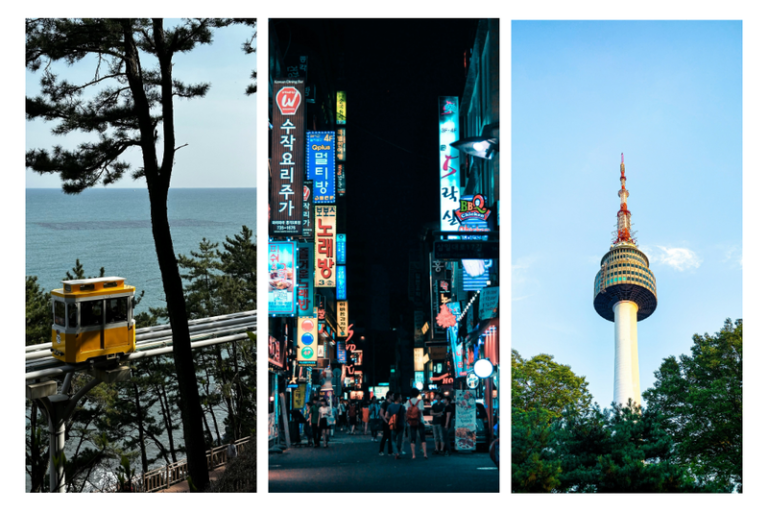
Digital connectivity and technology in everyday life
South Korea is considered one of the most digitally advanced countries in the world. Most people rely on high-speed internet and online services for everyday tasks, from mobile payments and food delivery apps to public transport and administrative services.
The country also has widespread 5G coverage and one of Asia’s leading technology hubs, with companies like Samsung, LG, and Naver leading innovation in electronics, AI, and digital services.
A wide range of cultural and culinary offerings
Life in South Korea also gives you access to a rich and diverse culture. You’ll find historic temples and royal palaces alongside modern districts filled with cafés and shops, where tradition and contemporary life exist side by side.
Food is an important part of everyday life in South Korea. Dishes like kimchi, bibimbap, and bulgogi are easy to find in both traditional restaurants and modern chains. On top of that, many cities have street markets, cultural festivals, and a lively nightlife scene.
Educational and career opportunities
South Korea also attracts many international students thanks to its universities and academic programs. Institutions like Seoul National University, Korea University, and Yonsei University are among the most well-known in Asia.
In terms of work, South Korea offers opportunities mainly in fields like technology, engineering, education, international trade, and the creative industries. While the job market can be competitive, many professionals see it as a valuable international experience.
Disadvantages of living in South Korea as a foreigner
Although South Korea offers many advantages in terms of safety, technology, and infrastructure, living there can also be challenging for foreigners. The language, the work culture, and the cost of living in certain cities can all have a big impact on how easily you adapt. Understanding these challenges before moving can help you set realistic expectations and adapt more easily to everyday life in the country.
Language barrier
One of the most common challenges when moving to South Korea is the language barrier. Korean is the main language used in everyday life, and English communication can still be limited outside universities and tourist areas.
Administrative tasks, medical appointments, renting a place, or dealing with banks are usually done mainly in Korean. Because of this, learning at least basic Korean or relying on translation apps is almost essential if you want to get by independently.
Demanding work culture
South Korea’s work culture can feel intense for many foreigners. Traditionally, the country has had long working hours and a strong expectation of loyalty and commitment to the company.
Although in recent years the government has introduced reforms to cap the workweek at 52 hours, many employees still feel pressure to stay late or take part in company activities outside working hours. For some expats, adjusting to this pace can be challenging.
High cost of living in major cities
The cost of living depends a lot on the city, but in places like Seoul, rent can be particularly high. Housing also works differently from many other countries, as some contracts require a large deposit called jeonse, which can be quite expensive.
On top of rent, things like transport, food, and entertainment in central areas can push monthly costs up. Because of this, many foreigners choose to live in neighborhoods farther from the city center or in smaller cities where living costs are lower.
Social pressure and competitiveness
South Korean society places a strong emphasis on academic and professional performance. This competitive mindset starts at school and continues into professional life, which can create a constant sense of pressure. Some foreigners find this environment motivating, while others see it as demanding or stressful. How well someone adapts often depends on their personal lifestyle and the specific work or study environment they’re in.
Cultural differences in everyday life
Social and cultural norms in South Korea can be quite different from those in other countries. Hierarchy, respect for age, and social formality all play an important role in everyday interactions.
For many foreigners, it takes time to understand these cultural norms. However, with curiosity and an open mind, most people eventually adapt and come to appreciate the country’s strong traditions.
Frequently asked questions about living in South Korea
Yes. To live in South Korea, you usually need a visa that matches your purpose of stay, such as a work, student, or temporary residence visa. Each type comes with its own requirements, and you typically arrange it before you travel through the relevant consulate or embassy.
Public transport is one of the country’s biggest strengths. Cities have modern subway systems, well-connected buses, and fast trains between regions. If you live in South Korea, getting around day to day is usually easy, safe, and affordable.
Finding housing is possible, but the rental system can feel quite different from what you might be used to. Many contracts require a large deposit, and central areas in cities like Seoul tend to be more expensive. That said, more affordable options are available in outer neighborhoods or in other cities.
Food is a big part of life in Korea. You can easily find dishes like kimchi, bibimbap, and Korean ramen in restaurants and markets. In big cities, there are also international restaurants and supermarkets with foreign products.
Adapting varies from person to person. Cultural differences, the language, and the work pace can all take some getting used to. That said, many people feel that South Korea’s safety, technology, and well-organized systems make daily life easier overall.
Plans that may interest you

Hi! I'm a Spanish-English copywriter working with Holafly, helping bring travel content to life for curious travelers. As a digital nomad with a passion for exploring, I'm always adding new spots to my bucket list. If you love to travel like me, stick around because you're in the right place to find inspiration for your next trip! ✈️🌍