







 Language


 No results found
Living in Romania as a foreigner: What is it really like?
If you want to find out what living in Romania is like, this guide will tell you about the quality of life there, the pros and cons, and more

Living in Romania has become an appealing choice for people looking for a high quality of life at a more affordable cost than in Western Europe. It’s especially attractive for remote workers, international students, and anyone wanting to settle in a European country with rich history, culture, and economic growth.
This country, situated between Central Europe and the Balkans, blends modern cities like Bucharest and Cluj‑Napoca with stunning natural landscapes such as the Carpathian Mountains and medieval towns in regions like Transylvania. In recent years, it has also emerged as a tech hub in Europe, boasting some of the fastest internet speeds on the continent.
For anyone thinking about moving to the country, it’s important to consider factors like safety, healthcare, cost of living, wages, digital connectivity, and job or study opportunities. All of these play a key role in what life is like for foreigners living in Romania.
This article offers an in‑depth look at what life in Romania is really like, using international data and practical insights that impact daily living. It will also help you decide if the country is a good fit for studying, working, or spending some time living in Europe.
Quality of life in Romania
The quality of life in Romania has improved significantly over the past two decades, especially since joining the European Union in 2007. While the country still lags behind Western Europe economically, many Romanian cities offer a good standard of living, solid digital infrastructure, and a relatively low cost of living.
Below, we examine some of the most important factors that influence the quality of life for foreigners.
Education system
Romania’s education system includes both public and private schools, as well as universities recognized across Europe. Many institutions offer programs in English, French, or German, making it easier for international students to adapt.
Some of the country’s top universities include the University of Bucharest, Babeș‑Bolyai University, and the Politehnica University of Bucharest, offering programs in engineering, medicine, economics, and social sciences.
Romania is also known for offering medical and dental programs at a lower cost than in Western Europe, attracting international students every year. Additionally, as part of the European Higher Education Area, degrees earned in the country are generally recognized across Europe.
In Romania, especially in Bucharest, there are international schools offering British, French, or American programs. This makes it much easier for families relocating with children to continue their education smoothly.
Social security and stability
Overall, Romania is considered a safe country in Europe. According to studies from Numbeo’s safety index and the Global Social Progress Index, its cities have moderate crime levels, and people generally feel secure in public spaces.
Most reported crimes are minor, such as petty theft or pickpocketing in tourist areas and on public transport. Violent crime, however, is relatively rare compared to other countries.
Cities like Cluj‑Napoca, Timișoara, and Brașov often rank among Europe’s most peaceful places to live, offering a friendly social environment and a relaxed atmosphere for foreign residents.
Economy, wages, and job opportunities
Romania’s economy has grown strongly since the 2010s. Industries like technology, financial services, engineering, and outsourcing have driven job opportunities in cities across the country.
Eurostat data shows that while wages in Romania are lower than in Western Europe, living costs are also more affordable. This allows tech workers and remote employees for international companies to maintain a good standard of living.
The most economically active cities are Bucharest, Cluj‑Napoca, Timișoara, and Iași. Cluj‑Napoca, in particular, has emerged as one of Eastern Europe’s leading tech hubs.
For those who work online or are digital nomads, Romania can be an attractive option due to its affordable housing, transportation, and food costs.
Healthcare system
Romania’s healthcare system includes both public and private services. The public system is government‑run and funded through social security contributions, while the private sector has expanded significantly in recent years.
In Romania’s main cities, private clinics provide modern care with shorter wait times and English‑speaking staff. Because of this, many foreigners prefer using private healthcare or international insurance.
Private medical centers such as Regina Maria and MedLife have well-equipped hospitals and clinics, particularly in Bucharest and Cluj-Napoca.
Compared to other European countries, the costs of private healthcare remain affordable.
Digital connectivity and the internet
One of the most striking things about living in Romania is its digital infrastructure. The country consistently ranks among the top in Europe for fixed‑line internet speed.
Providers such as Digi Communications, Orange Romania, and Vodafone Romania offer high-speed fiber-optic connections at affordable prices.
This makes Romania an appealing destination for digital nomads, freelancers, and remote workers. Online shopping and digital services are also widely available, especially in the country’s major cities.
As for mobile internet, coverage is good across most of the country, although it may be more limited in rural or mountainous areas.
If you’re planning to move or spend some time in the country, you might consider Holafly’s eSIM for Romania, which lets you stay connected reliably throughout your stay.
Holafly also offers monthly plans designed for frequent travelers or remote workers, giving mobile data in up to 160 countries without changing SIM cards. This is especially handy if you plan to travel to other European countries during your stay.
Important: If you are a frequent traveler and want to stay connected without worrying about expensive roaming or looking for a new SIM at every destination, Holafly’s subscription plans are for you. With a single eSIM, enjoy internet in more than 160 countries for a fixed price and no surprises on your bill. Travel without limits and connect easily and securely! 🚀🌍

Advantages of living in Romania
Moving to Romania can be a great option for those looking to live in Europe on a more affordable budget. In recent years, the country has become increasingly popular with remote workers, international students, and anyone wanting to settle in a dynamic environment with opportunities for growth.
Here are some of the main advantages of living in Romania as a foreigner.
Lower cost of living than in Western Europe
A major appeal of Romania is its affordable cost of living compared to Western Europe. Things like rent, transport, groceries, and utilities tend to be far cheaper than in countries such as Germany, France, or the Netherlands.
For example, renting an apartment in cities like Cluj‑Napoca, Timișoara, or Iași is often much cheaper than in other European cities of similar size and development. Even in Bucharest, the capital, prices are generally more affordable than in many other European capitals.
This means that professionals earning internationally or remote workers can enjoy a comfortable lifestyle without needing a very high salary.
Excellent internet connection
Romania is known for having some of the fastest internet in Europe. This comes from heavy investment in digital infrastructure and widespread fiber optic coverage in cities. Companies like Digi Communications, Orange Romania, and Vodafone Romania provide high-speed fixed and mobile internet at competitive prices.
For tech professionals, freelancers, or digital nomads, this connectivity is a major plus. Working from home, joining video calls, or managing online projects is usually smooth thanks to the reliable networks.
Growth of the technology sector
In recent years, several Romanian cities have emerged as tech centers in Eastern Europe. Cluj‑Napoca, in particular, has built a reputation as one of the region’s leading tech hubs.
International tech, outsourcing, and software development companies have set up offices in cities like Bucharest, Cluj‑Napoca, and Timișoara, boosting job opportunities in fields such as programming, engineering, and digital services.
This growth has also led to the rise of startups and coworking spaces, creating a supportive environment for entrepreneurs and digital professionals.
Nature and landscape diversity
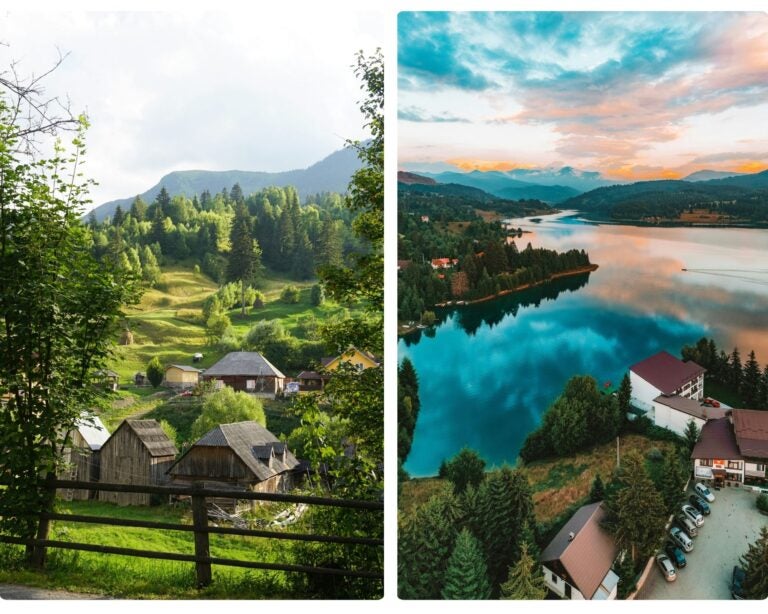
A major benefit of living in Romania is its access to nature. You can easily reach mountains, forests, beaches, and parks from most of the country’s main cities.
The Carpathian Mountains provide plenty of opportunities for hiking, skiing, and other outdoor adventures. There are also natural areas like the Danube Delta, one of Europe’s most important ecosystems for biodiversity.
The Black Sea coast also has several popular tourist spots that attract many visitors in the summer. This mix of natural beauty and compact cities makes weekend getaways and outdoor activities easy to enjoy.
A rich culture and European history
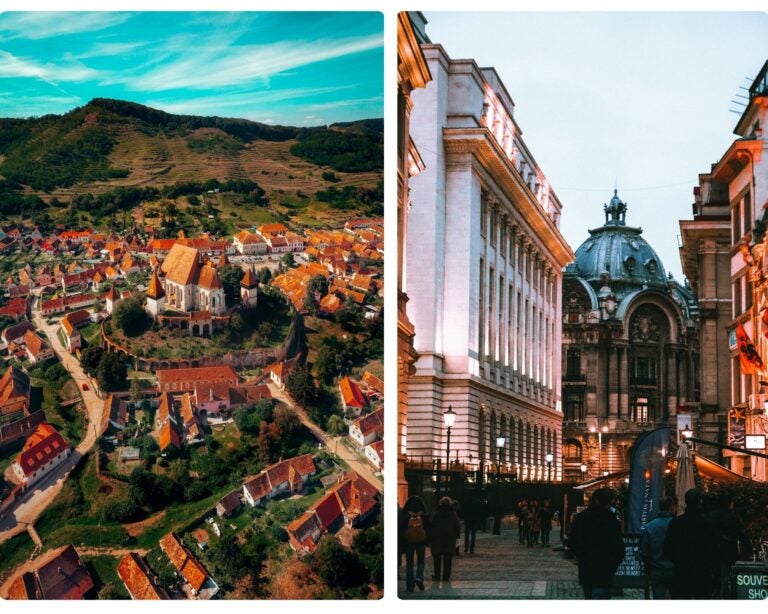
Romania has a rich cultural identity shaped by Balkan, European, and Ottoman influences. This can be seen in its architecture, cuisine, and festivals. Cities like Brașov, Sibiu, and Sighișoara still boast well-preserved medieval old towns that draw visitors from around the world.
Notable landmarks include Bran Castle, famously linked to the Dracula legend, and the historic monasteries of the Bucovina region. For anyone interested in European history, living in Romania offers easy access to a rich and varied cultural heritage.
Drawbacks of living in Romania as a foreigner
Although Romania has a lot to offer international residents, there are challenges to be aware of before relocating. Knowing what to expect can help you prepare and make the most of living in the country.
Lower wages than in other European countries
One of the main drawbacks of living in Romania is that local salaries are still lower than in much of Western Europe. Even though the economy has grown in recent years, average incomes remain below those in countries like Spain, France, or Germany.
This can be a challenge for those seeking local jobs outside of the tech sector or international companies. In such cases, wages may feel limited compared to other European destinations.
For this reason, many foreigners living in Romania work remotely or for international companies.
Uneven infrastructure between cities and rural areas
Although Romania’s major cities have experienced significant development, there are still notable differences between urban and rural areas.
Major cities like Bucharest, Cluj‑Napoca, and Timișoara have modern infrastructure, public transit, and advanced digital services. In smaller towns and rural areas, however, these facilities can be limited, affecting access to healthcare, transportation, and everyday products or services.
For those planning to live in the country, settling in cities with greater economic and technological development is usually more convenient.
Bureaucracy in certain administrative procedures
As is the case in many European countries, certain administrative procedures can be slow or complicated for foreigners.
Tasks like registering your residence, starting a business, or obtaining certain permits can take time and require extra paperwork. While Romania has made progress in digitalizing administrative processes, some procedures still need to be done in person at government offices.
Therefore, many people choose to consult with immigration specialists or local attorneys to expedite certain processes.
Language barrier
Romania’s official language is Romanian, part of the Romance language family. While it has some similarities to Spanish, French, and Italian, it can be tricky to pick up for beginners.
In larger cities and professional settings, many young people and tech professionals speak English. However, in rural areas or when dealing with official paperwork, English may be less common. Learning some basic Romanian can make daily life and social integration much easier over time.
Cold winters in some regions
Romania has a continental climate, which means that winters can be quite cold in mountainous areas or in the interior of the country.
Between December and February, temperatures can drop below freezing in several regions, including cities like Brașov and Cluj‑Napoca. For those coming from warmer climates, adjusting to the cold can take some time. Still, many cities are well-equipped for winter, with infrastructure designed to handle the cold.
Frequently asked questions about living in Romania
Overall, living in Romania is more affordable than in many Western European countries. Costs like rent, public transport, and groceries are usually lower than in places like Germany or France.
Yes, Romania is considered a safe country within Europe. Rates of violent crime are low compared to many other international destinations.
You can get by in Romania without knowing the language, particularly in big cities like Bucharest or Cluj‑Napoca, where English is widely spoken. In workplaces, universities, and tech firms, English is often the main language used.
The country’s healthcare system includes both public and private services. While the public system is available to residents who pay into social security, many foreigners prefer private clinics for their faster service.
Yes, Romania has become an appealing destination for digital nomads and remote professionals. The country stands out for its strong digital infrastructure and some of the fastest internet speeds in Europe.
Plans that may interest you


Hi! I'm a Spanish-English translator working with Holafly, helping bring travel content to life for curious travelers. As a digital nomad with a passion for exploring, I'm always adding new spots to my bucket list. If you love to travel like me, stick around because you're in the right place to find inspiration for your next trip! ✈️🌍
