



 Language


 No results found
Living in Murcia as a foreigner: What is it really like?
Need a change of scenery? Find out what it would be like to live in Murcia and work remotely in a place with over 300 days of sunshine a year.

Choosing to settle in this sunny city in southern Spain is a smart move. With more than 300 days of sunshine a year and a lower cost of living than many of the country’s major cities, it offers a great quality of life. It might not have the same international reputation as Madrid, Seville, or Barcelona, but living in Murcia as a foreigner has a way of pleasantly surprising people.
Do you know the phrase that became popular to describe this Spanish city? “Murcia, how beautiful you are!” If you want to see it for yourself, in this article we will look at what life there is really like, including its quality of life and aspects such as the healthcare system, education, safety in the streets, and how salaries compare with the monthly cost of living in the city. We will also explore the benefits it can offer if you decide to live there as a digital nomad, student, or long term visitor, as well as the main drawbacks we have identified, with the aim of helping you decide whether Murcia fits your lifestyle, your plans, and your budget.
What is the quality of life like in Murcia?
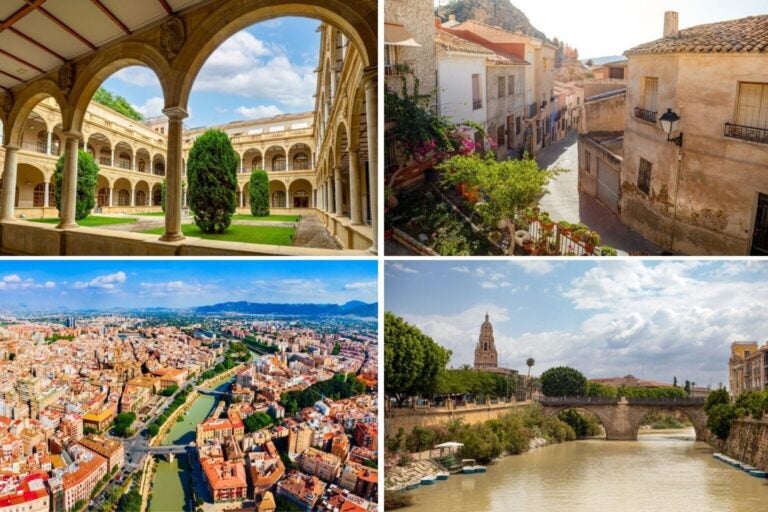
If you are not quite sure where it is on the map, living in Murcia means settling in the southeast of Spain, one of the country’s 17 autonomous communities. It borders Alicante to the north, Almería to the south, Granada to the west, and has the Mediterranean coast to the east. Murcia is the seventh most populated city in Spain, with more than 472,000 residents in the city itself and over 1.6 million people across the wider region. Now that you know where it is, let’s look at the quality of life you can expect there.
Study in Murcia
If you are planning to move to Murcia as a student, perhaps after receiving a scholarship from one of its institutions, you will discover that the city is well known for the quality of its education and universities. The University of Murcia is one of the oldest universities in Spain, while the Polytechnic University of Cartagena has a strong reputation in technical and engineering fields. For those interested in acting, the city center is home to the Higher School of Dramatic Art, where notable actors such as Cristina Alcázar and Jaime Lorente from Money Heist began their training.
There are also international schools and bilingual centers designed to help foreign families settle in more easily. According to the latest OECD indicators, Spain’s education system is on par with those of other European countries, although in Murcia the costs tend to be more affordable.
Find out if Murcia is a safe place to live
Living in Murcia tends to be safer than in larger Spanish cities such as Madrid or Barcelona, partly because of its mid sized scale and its strong neighborhood life. Crime rates are relatively low, with most incidents limited to minor theft, according to data used in European urban quality of life rankings. Some of the city’s calmest and safest neighborhoods include:
- La Flota: A modern residential neighborhood with wide, well-lit streets, recommended for families looking for peace and quiet.
- Juan Carlos I: A recently developed area with new gated communities, close to parks and shopping centers. Recommended for nomads and young people.
- The center: High police presence, lots of activity, leisure, and culture. Ideal for students and nomads.
- Vistalegre: A traditional neighborhood, close to universities and hospitals, with a great student atmosphere.
Economy and salaries
A big reason so many foreigners choose Murcia is that, while salaries may be lower than in larger Spanish cities, the overall cost of living is much more manageable. Rent, transport, food, and leisure are all more affordable here than in other parts of Spain, and the city remains competitive compared to other European destinations. For example, on Idealista, you can rent a studio for around $533 or a two-bedroom apartment starting at $622.
The average monthly salary is around $1,500, below the national average, but enough to enjoy a comfortable lifestyle. If you plan to work for a local company, the city’s economy is mainly driven by the service sector, advanced agriculture, food processing, logistics, and tourism.
Healthcare system in Murcia
Another key factor when living in Murcia is understanding how the healthcare system works and how you can access it as a foreigner. The city is part of Spain’s National Health System, which is ranked among the best in the world according to sources like the Global Social Progress Index and OECD evaluations. You have several options to take advantage of healthcare services:
- European Union (EU) citizens: You can apply for the European Health Insurance Card (EHIC) in your home country, which gives you the same access to healthcare as any local resident.
- Non-EU foreigners: If you work for a company in Murcia and contribute to Spanish social security, you will also have access to free healthcare.
- Foreigners who do not pay social security contributions: Another option is a special plan that gives you access to public healthcare for a monthly fee of around $71 for those under 65 and $186 for those over 65. To join, you must be officially registered in the city and have lived there for at least a year.
- Private insurance: Another option is to get private health insurance, which allows you to receive care at private clinics and avoid long waiting times.
Several hospitals in the city are highly regarded in national rankings and receive positive reviews from both patients and healthcare professionals. For instance, Hospital Clínico Universitario Virgen de la Arrixaca, Santa Lucía, and Morales Meseguer are listed among the 100 most reputable hospitals in Spain according to the Merco Salud 2025 ranking.
Internet connectivity and quality
One of the main reasons many digital nomads choose to settle in Murcia is its excellent digital infrastructure. According to reports, over 96% of households in the city have internet access, with nearly 86% using fixed broadband. Fiber optic coverage reaches almost the entire city, offering speeds up to 1 Gbps, making it easy to work remotely, stream content, or have stable video calls.
If you want even more reliability, Holafly’s monthly plans offer 5G coverage throughout the city with a fast and secure connection, perfect for working remotely. You can choose between a 25 GB plan or unlimited data starting at $49.90 per month with no long-term commitment. The same eSIM and plan also let you travel to over 160 destinations and connect multiple devices at once. If you need service for a shorter period, Holafly also offers a Spain eSIM with unlimited data for just the days you require.
Important: If you are a frequent traveler and want to stay connected without worrying about expensive roaming or looking for a new SIM at every destination, Holafly’s subscription plans are for you. With a single eSIM, enjoy internet in more than 160 countries for a fixed price and no surprises on your bill. Travel without limits and connect easily and securely! 🚀🌍

Discover 5 advantages of living in Murcia
Before deciding to move to a new city or country, it is helpful to know the benefits it can offer. Living in Murcia comes with many advantages, not just in services and safety, but also in other areas, which we will outline next.
- Privileged Mediterranean climate: Enjoy more than 300 days of sunshine a year, with mild winters and little rain, perfect if you feel the cold.
- Affordable cost of living: Compared to cities like Madrid, Barcelona, or Bilbao, living in Murcia is more affordable, with lower costs for rent, food, transportation, and entertainment, making it easier to enjoy a comfortable lifestyle.
- Proximity to the sea and nature: Within an hour’s drive, you can reach the Mar Menor, Mediterranean beaches, natural parks like El Valle, and mountain areas such as Sierra Espuña, all perfect for weekend trips if you love being outdoors.
- Good internet access and digital services: The city has several coworking spaces, making it easy to work remotely and enjoy digital life.
- Local cuisine: Murcian cuisine is known for its fresh ingredients, especially fruits and vegetables, and features delicious dishes like zarangollo, meat pie, michirones, paparajotes, and the region’s famous vegetable rice.

What are the disadvantages of living in Murcia as a foreigner?
The benefits of living in Murcia are tempting enough to make you want to move there for a while, but it’s important to look at the full picture, including some of the downsides, particularly for international visitors. Here are a few to consider:
- Very hot summers: Expect temperatures to exceed 40°C in summer, which can be difficult if you are not used to extreme heat.
- Fewer international job opportunities: The job market in Murcia is smaller than in larger Spanish cities like Madrid or Barcelona, especially for highly skilled positions or roles in multinational companies.
- Relying on Spanish: English is not as widely spoken here as in more touristy destinations, so knowing Spanish is essential for fully integrating into Murcian culture and handling administrative tasks.
- Room for improvement in public transportation: While it gets the job done, public transportation in Murcia is not as extensive or fast as in major cities with metro systems.
- Low international visibility: Because fewer people know Murcia internationally, fewer digital nomads and expat communities live there, which can make it harder for you to connect with other foreign adventurers.
In short, living in Murcia comes with far more advantages than drawbacks. You can beat the summer heat with air conditioning or work from a terrace with views of the Mar Menor while soaking up the sun, all at a lower cost than in many European cities, giving you the chance to save money and enjoy everything the city has to offer.
Frequently asked questions about living in Murcia
Yes, living in Murcia means being in a city with low crime rates, mostly limited to minor incidents like occasional theft. Some of the quietest neighborhoods include La Flota, Vistalegre, and Juan Carlos I.
It depends on the sector, as there are opportunities in services, high-tech agriculture, tourism, and logistics, but with more limited opportunities than in other large cities.
Murcia hosts many lively celebrations, including Semana Santa, the Bando de la Huerta, and the Entierro de la Sardina, among the most famous. The city also offers museums, theaters, and a wide range of concerts.
Murcia’s Región de Murcia International Airport (RMU) is in Corvera, around 25 km from the city center, and is easily reachable by bus or taxi in about half an hour.
Of course, living in Murcia means plenty of sunny days and great weather to go hiking in Sierra Espuña, kayaking on the Mar Menor, or cycling and running in urban parks like El Valle and Carrasco.
Plans that may interest you


Hi! I'm a Spanish-English translator working with Holafly, helping bring travel content to life for curious travelers. As a digital nomad with a passion for exploring, I'm always adding new spots to my bucket list. If you love to travel like me, stick around because you're in the right place to find inspiration for your next trip! ✈️🌍